
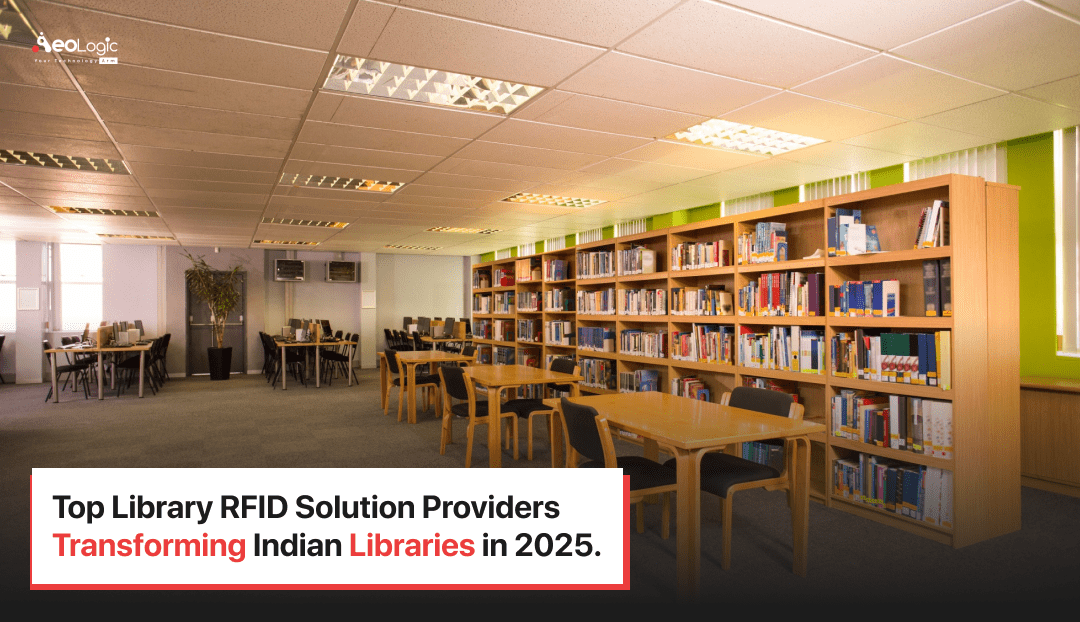
Libraries have long served as essential centers for preserving and sharing knowledge, supporting education, research, and learning across generations. Despite the rise of digital platforms, libraries continue to play a significant role in providing reliable information and academic resources worldwide. According to the IFLA Library Map of the World, there are more than 2 million libraries globally. India holds one of the largest library ecosystems as an individual nation, with approximately 1.5 million libraries, including nearly 1.3 million school libraries—the highest number in the world. As libraries continue to modernize in 2026, the adoption of advanced technologies such as Library RFID Solution systems is becoming increasingly important to improve inventory management, automate operations, strengthen security, and enhance the overall user experience.
Importance of Library RFID Solution
Traditional library operations involve multiple manual processes including book issuance, returns, catalog updates, inventory audits, and tracking misplaced books. These tasks consume significant time and often result in human errors. Managing thousands or even millions of books manually becomes increasingly difficult for educational institutions.
Library RFID Solutions simplify these operations through automation. RFID tags attached to books enable quick identification using radio frequency signals without requiring direct scanning. This allows libraries to process multiple books simultaneously and maintain accurate records.
RFID implementation offers several operational benefits. Libraries can reduce waiting time during borrowing and returns, minimize book losses, improve inventory visibility, strengthen security systems, and optimize staff productivity. Rather than spending time on repetitive tasks, librarians can focus more on supporting students and improving services.
As libraries continue digitizing operations in 2026, RFID technology is becoming less of a luxury and more of a necessity.
Role of RFID Solutions in Indian Libraries
RFID solutions use Radio Frequency Identification technology to identify and track tagged items automatically. A typical RFID library system consists of RFID tags, readers, antennas, security gates, kiosks, and software integration with library management systems.
When implemented correctly, RFID creates an automated ecosystem inside libraries. Book borrowing becomes faster through self-service kiosks. Inventory audits that previously required weeks can be completed in hours. Security gates help detect unauthorized removals of books. Staff members can instantly locate misplaced items using handheld RFID readers.
For educational institutions handling large volumes of resources, these improvements significantly increase operational efficiency.
Indian libraries are increasingly adopting RFID systems because they support modernization goals while improving overall user experience.
Also Read: Library RFID Solutions for Efficient Book Management – 2025
Top Library RFID Solution Providers Transforming Indian Libraries In 2025
Various library RFID solution providers in India are transforming Indian libraries in 2025. Here are a few top mentioned below.
Aeologic Technologies
Aeologic Technologies provides RFID-powered solutions designed to simplify library management. Their services support inventory automation, RFID tagging, circulation management, security systems, and self-service operations.
Libraries adopting automated systems benefit from improved operational speed and reduced manual workload.
Also Read: RFID Asset Management Solutions for Your Operation
Vivid RFID solutions
Vivid Solutions is generally a custom software development company in India that develops a lot of solutions powered by different technologies. They also provide RFID-powered library solutions for library management in India. In 2025, their key offerings for libraries in India are RFID tags for book traceability, self-service kiosks for check/check out, inventory management tools, a security gate system, an automated book sorting system, etc.
Invengo
Invengo is a Chinese-based RFID solution provider company that was established in 1999. This service provider company has been established across various regions in the world but has the most strong footprint in India. Their key offerings in the transformation of libraries in India in 2025 are RFID labels for books, journals, and media, self-checkout kiosks and book return systems, inventory management with handheld RFID readers, and security gate systems.
Tata Consultancy Services(TCS)
TCS or Tata Consultancy Services is one of India’s most popular and widely developed IT service provider companies that also provided library RFID solutions in 2025. TCS has been developed at a global level but is an India-based company. The key offerings or services in terms of library RFID solutions by TCS are RFID-enabled book tracking, automated inventory management, customizable RFID-based library management systems, data analytics, etc.
Kaba system
Kaba is an RFID-powered library solutions service provider company that also provides services across the globe including India. This company will play an important role in transforming libraries in India in 2025 with its 150 years of experience. This service provider company’s most key offerings include RFID self-checkout and check-in systems, security gates and anti-theft systems, RFID book tags, and inventory management. The main goal of the Kaba System is to provide security solutions and automation solutions for libraries to enhance their efficiency.
Techno RFID Solutions
Techno RFID Solutions is one of the best enterprises to get services for library management in India. They offer services across India including various underdeveloped regions too. The key offerings are automated library management systems using RFID, RFID-enabled self-checkout stations, book return and sorting systems, and security and surveillance systems using RFID tags.
Why Aeologic Technologies is Emerging as a Preferred Library RFID Solution Provider in India
As RFID adoption increases, choosing the right implementation partner becomes essential. Among various providers, Aeologic Technologies is emerging as a recognized solution provider for Library RFID Solutions in India.
Aeologic focuses on delivering end-to-end RFID implementation services including RFID tagging, smart inventory management, anti-theft security systems, automated circulation management, and self-service kiosks. The company also supports integration with existing library management software, helping institutions modernize without disrupting current operations.
One major advantage of scalable RFID deployment is flexibility. Libraries differ significantly in size and requirements. School libraries may need simple automation systems, whereas universities and research institutions often require advanced tracking capabilities. Customized implementation helps organizations adopt RFID according to operational needs and budget.
Technical support, integration assistance, and workflow customization are becoming increasingly important factors in selecting RFID providers in 2026. Providers capable of supporting long-term digital transformation are gaining stronger adoption.
Challenges with The RFID Solutions Providers
The RFID solutions providers also possess some challenges that can interrupt the implementation of RFID solutions. Here are a few key challenges mentioned below.
-
- Finding a good service provider for RFID library solutions can be a tough task as there are many who claim to be best but in actuality, there are a lot of differences.
-
- Best RFID solutions providers also charge the implementation cost too much which cannot be affordable for small libraries in India.
-
- Most people are moving towards the way of getting information via the internet so it could be a concern to profit after implementing costly solutions for physical libraries.
Also Read: Benefit Analysis of RFID Library Solutions
NFC + RFID: The Future of Smart Libraries
RFID technology continues evolving, and one emerging trend is the integration of NFC (Near Field Communication) with traditional RFID systems.
NFC allows users to interact with systems using smartphones and mobile devices. Combining NFC and RFID creates opportunities for smarter library experiences including mobile-based borrowing, digital authentication, virtual memberships, and faster access to resources.
Future smart libraries may allow users to locate books, authenticate memberships, reserve resources, or complete transactions using mobile applications integrated with RFID infrastructure.
As smart campuses and digital education environments expand, NFC + RFID integration may become an important trend in library modernization beyond 2026.
Feature Comparison Between Major RFID Providers
Libraries evaluating RFID partners often compare implementation capability, support, customization, and scalability.
| Provider | RFID Tagging | LMS Integration | Self Check Kiosk | Inventory Automation | Security Gates | Customization |
|---|---|---|---|---|---|---|
| Aeologic | Yes | Yes | Yes | Yes | Yes | High |
| Invengo | Yes | Moderate | Yes | Yes | Yes | Moderate |
| TCS | Yes | Yes | Limited | Yes | Moderate | High |
| Vivid | Yes | Moderate | Yes | Yes | Moderate | Moderate |
| Kaba | Yes | Limited | Yes | Moderate | Strong | Moderate |
Government Digitization Initiatives Supporting RFID Adoption
India’s focus on digitization and educational modernization is indirectly increasing demand for library automation technologies.
Programs promoting Digital India, smart education infrastructure, and institutional modernization encourage educational organizations to improve operational efficiency through technology adoption.
Universities, schools, and public institutions are gradually investing in automation systems supporting transparency, accessibility, and efficient resource management.
Library RFID Solutions align with these objectives by helping institutions manage resources more effectively while improving user experience.
Future Trends in Library Automation
Library automation is expected to evolve beyond traditional RFID systems. Emerging trends include:
Artificial intelligence for predictive inventory management, smart shelves, cloud-based monitoring systems, mobile-enabled access, NFC integration, analytics-driven decision making, and automated recommendation systems.
Libraries adopting modern technologies may improve operational efficiency while enhancing user satisfaction.
Final Words
RFID solutions have been implemented worldwide, with India being one of the largest consumers of these technologies. India holds the most number of libraries as an individual nation in the world and libraries should be managed efficiently. RFID-powered library solutions are doing their best to manage and transform libraries in 2025 in India.
There are many RFID solutions provider companies in India like Aeologic to Kaba System that provide the best solutions including library RFID solutions. There could be various challenges too with the RFID solutions providers like cost factors, finding a good enterprise, guarantee, etc but these RFID-powered library solutions providers can play an important role in transforming libraries in India in 2025.
FAQs
Q1. Which RFID companies serve libraries in India?
Several companies provide Library RFID Solutions in India, including Aeologic Technologies, Invengo, TCS, Vivid RFID Solutions, Kaba System, and Techno RFID Solutions. These providers offer services such as RFID tagging, inventory automation, self-check kiosks, and security systems.
Q2. How much does library RFID cost in India?
Library RFID implementation costs vary based on library size and requirements. RFID tags may cost ₹8–₹25 each, while security gates, readers, kiosks, and software integration can increase total deployment costs from a few lakhs to several lakhs.
Q3. What is RFID self-checkout for libraries?
RFID self-checkout allows library users to borrow and return books independently using automated kiosks. It reduces waiting time, minimizes staff workload, and improves circulation efficiency without requiring manual processing by librarians.
Q4. How does RFID improve library management?
RFID improves library management by automating book tracking, inventory audits, issue-return processes, and theft prevention. It increases operational efficiency, reduces human errors, and helps libraries provide faster and more organized services.
Q5. Is RFID better than barcode for libraries?
RFID is generally more advanced than barcode systems because it allows contactless scanning, faster inventory management, multiple-item reading, and stronger security features. Barcode systems are cheaper, but RFID offers greater automation and efficiency.

I’m Deepika Pandey, an SEO strategist and content writer with 6+ years of experience. I create SEO-friendly content that drives traffic and engages readers. I combine data insights with creativity to help businesses grow their online presence effectively.