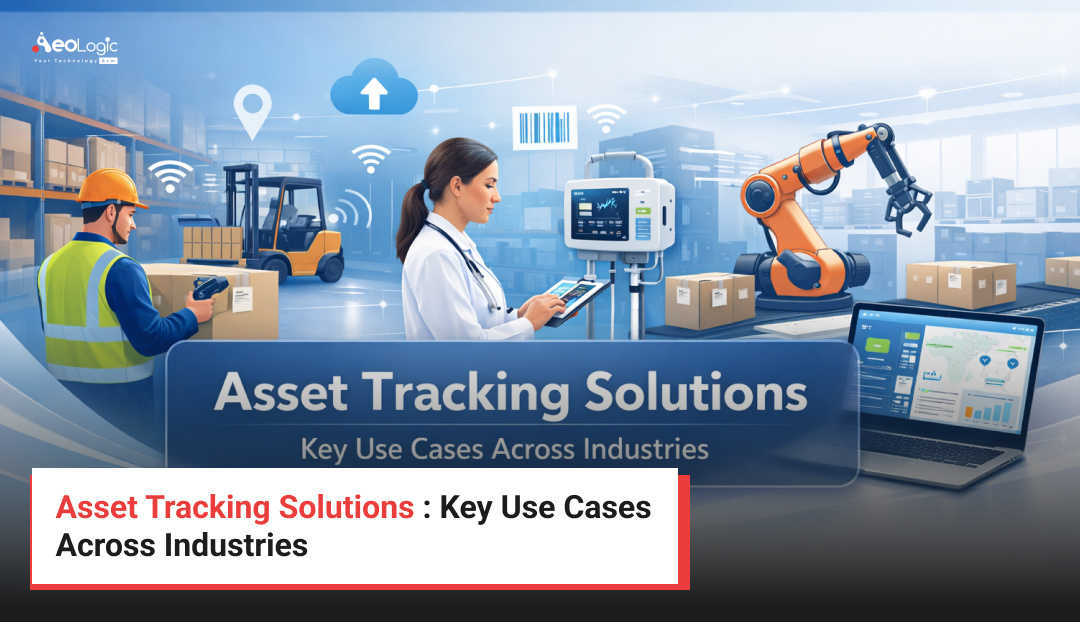
To remain competitive in the fast-paced, asset-intensive business world of today, companies need to have total visibility and control over their physical assets. Productivity, cost control, and operational continuity are all directly impacted by effective asset management, whether it is in the form of tools on construction sites, fleet vehicles in logistics, medical devices in hospitals, or equipment in manufacturing facilities. The use of sophisticated Asset Tracking Solutions has increased due to the growing demand for real-time monitoring and lifecycle control.
Spreadsheets and standalone barcode systems are examples of traditional manual methods that frequently fail as businesses grow across multiple locations and manage thousands of movable and fixed assets. Current tracking technologies offer data-driven insights, condition monitoring, real-time location intelligence, and centralized dashboards. By integrating smart tracking systems into core operations, businesses can reduce losses, improve utilization, ensure compliance, and make strategic decisions backed by accurate data.
What Are Asset Tracking Solutions?
Technology-driven systems known as asset tracking solutions assist businesses in tracking, managing, and maximizing their physical assets over the course of their lives. These systems provide real-time visibility and actionable insights by combining cloud-based software platforms with hardware elements like Bluetooth beacons, RFID tags, GPS units, and Internet of Things sensors.
To put it simply, they respond to three important business inquiries:
- What location is the asset?
- What state is it in right now?
- What is its use?
Businesses can reduce downtime, increase operational transparency, and make analytics-supported decisions by centralizing asset data.
 Why Asset Tracking Matters for Modern Enterprises
Lack of visibility directly results in revenue leakage for businesses that oversee thousands of assets spread across several locations. Performance can be severely impacted by equipment misplacement, unauthorized use, and maintenance delays.
The following are supported by strategic asset management:
- Lower operating expenses
- Increased productivity of the workforce
- Improved adherence to regulations
- Improved risk management and security
- Improved planning for the asset lifecycle
Digital tracking is becoming more and more important to sectors like government, healthcare, logistics, construction, and aviation in order to preserve accountability and efficiency.
Core Components of Effective Asset Tracking Solutions
Several technologies and organized procedures must be integrated for the implementation to be successful.
Tracking Technologies
- RFID (Radio Frequency Identification) for tracking warehouses and inventory
- GPS tracking for automobiles and fleet management
- Bluetooth Low Energy (BLE) for positioning indoors
- IoT sensors for condition tracking (vibration, temperature, and humidity)
- Barcode and QR Systems for Economical Monitoring
Software Platform
- Dashboard in the cloud
- Analytics of real-time data
- Alerts and reporting
- Modules for asset lifecycle management
Connectivity Infrastructure
- LPWAN, cellular networks, and Wi-Fi
- API connections to CMMS, WMS, or ERP systems
Framework for Governance and Processes
- Standards for asset tagging
- Workflows for data validation
- Integration of maintenance scheduling
Asset Tracking Solutions in Various Industries
Healthcare
Wheelchairs, ventilators, and infusion pumps are among the thousands of mobile medical devices that hospitals oversee. Real-time tracking speeds up equipment searches, deters theft, and enhances the standard of patient care. Additionally, condition monitoring sensors guarantee adherence to medical regulations.
Example: By using RFID-based tracking to maximize utilization, a chain of hospitals with multiple locations was able to cut equipment procurement costs by 18%.
Manufacturing
Tools, equipment, and production components are essential to factories. Predictive maintenance techniques are supported by digital asset visibility, which also lessens production delays brought on by lost tools.
Key Impact:
- Reduced downtime
- longer lifespan of the equipment
- Better planning for production
Logistics & Supply Chain
Continuous tracking is necessary for high-value shipments, pallets, containers, and fleet vehicles. Route optimization, fuel efficiency, and delivery accuracy are all improved by GPS and Internet of Things-based systems.
Mini Case Use: Within a year, a logistics company increased on-time delivery performance from 82% to 96% by implementing GPS-enabled tracking.
Construction
It is common practice to move heavy tools and equipment between locations. Tracking enhances project cost control, guarantees accountability, and lowers theft.
Retail
Retailers keep tabs on warehouse stock, high-value inventory, and store fixtures. Stock accuracy is increased and shrinkage is avoided with real-time monitoring.
Step-by-Step Approach to Implementing an Asset Tracking Strategy
Step 1: Define Business Objectives
Identify if operational efficiency, security, compliance, or cost reduction are the objectives.
Step 2: Classification of Assets
Sort assets according to their risk level, mobility, and value.
Step 3: Select Technology
Depending on the needs of the industry and your budget, pick RFID, GPS, BLE, or IoT.
Step 4: Integration with Enterprise Systems
Assure smooth communication with maintenance, WMS, or ERP systems.
Step 5: Pilot Testing
Before implementing across the entire company, conduct a controlled pilot to gauge ROI.
Step 6: Continuous Optimization
Use analytics dashboards to monitor performance and improve strategies.
Key Benefits of Asset Tracking Solutions
- Asset visibility in real time
- Decreased theft and loss of assets
- Enhanced rates of utilization
- Reduced expenses for upkeep and downtime
- Enhanced readiness for audits and compliance
- Improved decision-making with data analytics
Depending on the scale of deployment, organizations frequently attain quantifiable ROI in 6–12 months.
Common Challenges
Even though asset tracking solutions have quantifiable operational benefits, careful planning is necessary for successful implementation. The organizational, financial, and technical complexities involved are often underestimated by many organizations. A closer look at the most typical issues that businesses encounter is provided below.
High Initial Investment and ROI Justification
Costs associated with hardware (RFID tags, GPS units, and Internet of Things sensors), software licensing, system integration, and network configuration are associated with the deployment of tracking infrastructure. Large businesses that oversee thousands of assets may need to make significant upfront capital expenditures.
In addition to technology, other expenses include continuing maintenance, process redesign, and training.
Integration with Legacy Systems
Many businesses use outdated ERP, maintenance, or warehouse management systems that weren’t made to handle real-time tracking data. Data silos and synchronization problems may arise when contemporary tracking platforms are integrated with antiquated infrastructure.
Data Accuracy and Tagging Errors
Accurate data entry and tagging are essential to any tracking system’s efficacy. System dependability may be jeopardized by improper asset registration, damaged labels, or improper tagging.
For instance, GPS devices may experience signal interference, and improperly positioned RFID tags may not be detected.
Infrastructure and Connectivity Limitations
Whether via satellite systems, cellular networks, Wi-Fi, or LPWAN, reliable connectivity is essential to asset tracking technologies. Connectivity issues can make systems less effective in remote locations, big warehouses, subterranean facilities, or building sites.
Best Practices for Asset Tracking Solutions
- Start with valuable assets.
- Select platforms that are scalable.
- Effectively train staff
- Create policies for data governance.
- Review performance metrics on a regular basis.
Future Trends in Asset Tracking
Analytics powered by AI and intelligent automation are driving the future of asset tracking solutions.
Among the new trends are:
- Predictive maintenance using AI
- Using digital twins to model the asset lifecycle
- Using blockchain to verify assets
- 5G-enabled lightning-fast data transfer
- Advanced analytics to predict usage
Asset intelligence will transition from reactive tracking to predictive and autonomous decision-making as Industry 4.0 picks up speed.
Conclusion
Asset tracking solutions give businesses operational control, data-driven intelligence, and real-time visibility in a business environment that is becoming more and more competitive. Digital asset management promotes quantifiable efficiency and cost optimization in a variety of industries, including manufacturing, healthcare, logistics, and retail.
Businesses looking to put in place intelligent and scalable asset tracking systems can work with knowledgeable technology partners like Aeologic Technologies to create tailored, sector-specific solutions that optimize return on investment and provide long-term operational value. Now is the ideal moment to assess and put into place a tracking strategy that supports your company’s objectives if you’re prepared to turn asset visibility into a strategic competitive advantage.
People Also Ask (FAQs)
Q1. What are Asset Tracking Solutions and how do they work?
Asset tracking solutions are technological systems that use barcodes, RFID, GPS, or Internet of Things sensors to keep an eye on tangible assets. They gather information on the location, condition, and usage of assets in real time. Cloud-based platforms that offer dashboards, alerts, and analytics are used to process this data. These insights are used by organizations to optimize operations, enhance maintenance, and minimize loss.
Q2. Which industries benefit most from asset tracking systems?
Industries such as healthcare, manufacturing, logistics, construction, retail, aviation, and government benefit significantly. Structured asset visibility programs can increase productivity, compliance, and cost control in any industry that handles valuable or mobile assets.
Q3. What is the difference between inventory management and asset tracking?
While asset tracking keeps an eye on long-term physical assets used for operations, inventory management concentrates on tracking goods for sale. Systems for tracking assets place a strong emphasis on maintenance planning, utilization tracking, and lifecycle management.
Q4. How much does it cost to implement asset tracking?
Scale, technology type, and integration complexity all affect costs. Small deployments using barcode systems are affordable, while enterprise-level IoT and RFID deployments require higher investment but deliver faster ROI through efficiency gains.
Q5. Can asset tracking integrate with ERP systems?
Yes, modern platforms integrate with ERP, WMS, and CMMS systems through APIs. Better operational decision-making, automated reporting, and synchronized asset data are all guaranteed by integration.
Q6. Is asset tracking suitable for small businesses?
Indeed. As operational needs increase, small businesses can upgrade from scalable and affordable solutions like barcode or QR-based tracking.

Project Lead with 9+ years of experience in Web Technologies and AI. Expert in leading end-to-end development of scalable, AI-driven solutions. Driving innovation through smart architecture, agile execution, and team leadership.