
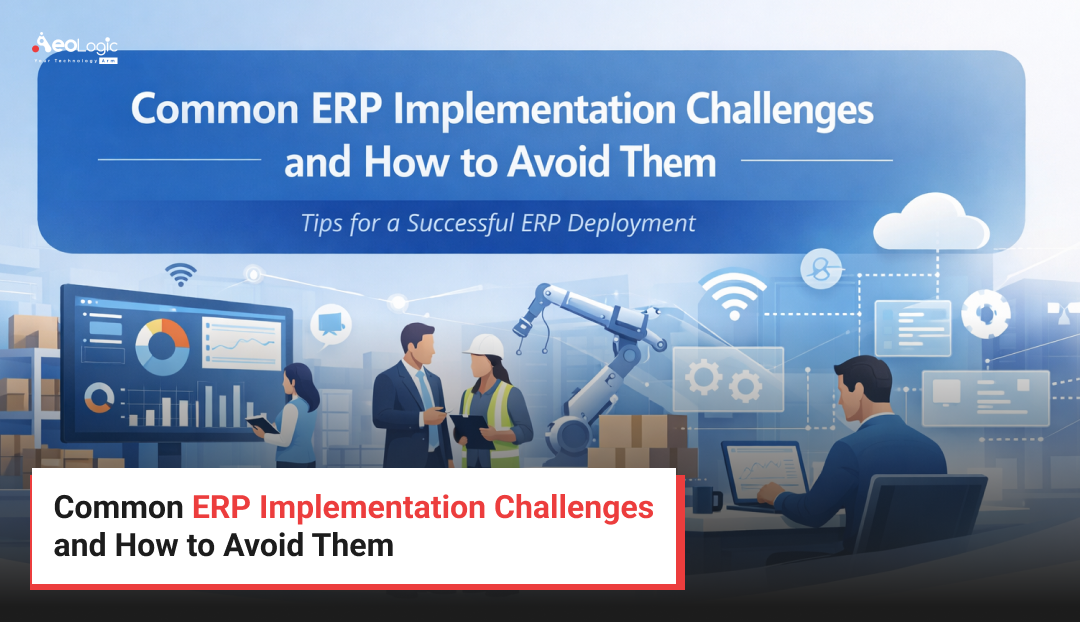
Operations are streamlined by ERP systems, but delays, overspending, and inefficiencies are frequently caused by ERP implementation challenges. To guarantee a seamless deployment and optimize return on investment, businesses need to be aware of these risks.
Taking Care of ERP Implementation Early challenges help organizations improve adoption, prevent disruptions, and succeed in the long run. Better alignment between technology, procedures, and corporate objectives is ensured by a strategic, well-thought-out approach.
What Are ERP Implementation Challenges?
ERP systems enhance collaboration, boost business agility, and facilitate scalability when implemented properly. Resolving ERP implementation issues guarantees improved return on investment, more efficient operations, and sustained success in digital transformation.
 Why ERP Implementation Matters for Businesses
ERP deployment is a business transformation project that transforms workflows, increases operational efficiency, and improves visibility. It is more than just a technology upgrade. Real-time decision-making, process optimization, and redundancy reduction are all made possible by a well-executed ERP system. However, operations may be disrupted and return on investment may be limited if ERP implementation challenges are not addressed.
Strategic ERP implementation gives businesses a competitive advantage through increased scalability, agility, and data-driven insights. For long-term success, it is therefore crucial to comprehend and reduce risks.
Core Components of ERP Implementation Challenges and a Successful ERP Implementation
A number of interrelated elements are necessary for an ERP implementation to be successful. While stakeholder engagement ensures organizational buy-in, strategic planning makes sure that business objectives line up with system capabilities. Accurate departmental integration and migration depend heavily on data management.
To guarantee that users successfully adopt the system, change management and training are also essential. The ERP system’s ability to meet the needs of the company is also influenced by integration, customization, and technology choice.
Step-by-Step Strategy to Overcome ERP deployment challenges
Step 1: Define Clear Objectives and Scope
Establishing the ERP project’s scope and business objectives must be the first steps for organizations. Projects that lack clarity frequently grow out of control, resulting in delays and higher expenses. A clear roadmap guarantees quantifiable results and aids in team alignment.
Step 2: Choose the Right ERP Solution
Choosing the appropriate ERP platform is essential. Scalability, industry relevance, and integration capabilities should be the main criteria used by businesses when evaluating solutions. One of the most prevalent ERP implementation challenges is a misalignment between business requirements and ERP features.
Step 3: Build a Strong Implementation Team
Smooth execution is ensured by a committed team made up of external experts and internal stakeholders. Throughout the implementation process, leadership participation is crucial to promoting accountability and decision-making.
Step 4: Focus on Data Quality and Migration
Despite being frequently overlooked, data migration is essential to ERP success. Maintaining data completeness, accuracy, and consistency improves system reliability and avoids operational interruptions.
Step 5: Prioritize Change Management and Training
ERP projects can be derailed by employee resistance. To guarantee that users comprehend the advantages of the system and successfully implement it, organizations must spend money on training initiatives and communication plans.
Step 6: Test, Monitor, and Optimize
Prior to deployment, extensive testing aids in the early detection of problems. Continuous optimization and post-implementation monitoring guarantee that the system adapts to changing business requirements.
Common ERP Implementation Challenges and How to Avoid Them
Lack of precise requirements causes a misalignment between business needs and system capabilities, making it one of the biggest obstacles to ERP implementation. By carrying out thorough requirement analysis and incorporating important stakeholders early on, this can be prevented.
Poor project management is another issue that frequently leads to missed deadlines and budget overruns. Control can be maintained by employing tried-and-true techniques and putting structured project governance into practice.
Another significant obstacle is resistance to change. Because they are afraid of disruption, employees might be reluctant to adopt new systems. By encouraging a collaborative culture and offering sufficient training, organizations can get past this.
Risks also arise from data migration problems, particularly when old systems hold data that is out-of-date or inconsistent. Errors are reduced when data audits and cleansing procedures are carried out prior to migration.
Finally, excessive customization can raise maintenance expenses and make implementation more difficult. Wherever feasible, implementing standard ERP functionalities guarantees scalability and easier deployment.
Technologies and Tools Supporting ERP Implementation
Advanced technologies like automation, artificial intelligence, and cloud computing are used in modern ERP implementations. While AI-driven analytics offer more profound insights into business performance, cloud-based ERP systems offer flexibility and scalability.
Real-World Use Cases and Examples of ERP Implementation Challenges
Manufacturing companies that use ERP to improve inventory control and production scheduling frequently run into problems integrating it with legacy systems. They can increase operational efficiency and decrease downtime by implementing a phased rollout strategy and carrying out thorough system testing. Businesses using ERP for supply chain visibility in the retail industry usually have trouble with inconsistent data from various sources. Accurate forecasting and inventory management are made possible by addressing this through centralized governance and data standardization. In a similar vein, service-based businesses use ERP to optimize resource allocation and financial operations, guaranteeing improved decision-making and transparency while reducing manual error and raising overall productivity.
Best Practices for Successful ERP Implementation
Clear communication, strong leadership, and ongoing monitoring are the keys to successful ERP projects. Organizations should concentrate on keeping flexibility during the implementation process and coordinating ERP goals with business objectives.
Long-term success is ensured by frequent system updates, user feedback, and performance reviews. Overcoming ERP Implementation Challenges also heavily relies on cooperation between business units and IT teams.
Future Trends in ERP deployment challenges
With the incorporation of new technologies, ERP systems are changing quickly. Predictive analytics is being improved by artificial intelligence, and process manual intervention is being decreased by automation. Because of their scalability and affordability, cloud-native ERP solutions are quickly taking the lead. Furthermore, industry-specific ERP solutions are becoming more popular, allowing businesses to better meet particular business needs. Businesses are overcoming traditional ERP implementation challenges and achieving faster return on investment thanks to these advancements.
People Also Ask (FAQs)
Q1. What are ERP Implementation Challenges?
The challenges that organizations encounter when implementing ERP include technical difficulties, data migration issues, and user resistance. To overcome these obstacles, effective planning, stakeholder participation, and ongoing oversight are necessary for successful execution.
Q2. How long does ERP implementation take?
The complexity of the project, the size of the organization, and the requirements for customization all affect how long ERP implementation takes. It usually takes a few months to more than a year. Delays can be minimized with careful planning and resource allocation.
Q3. Why do ERP implementations fail?
Uncertain requirements, a lack of stakeholder involvement, poor data quality, and insufficient training are common reasons why ERP implementations fail. To reduce these risks, effective project management and transparent communication are crucial.
Q4. How can companies reduce ERP implementation risks?
By setting clear goals, choosing the best ERP solution, guaranteeing data accuracy, and funding employee training, businesses can lower risks. Additionally, ongoing testing and monitoring aid in the early detection and resolution of problems.
Q5. What is the role of change management in ERP?
By preparing staff for new procedures and systems, change management guarantees a seamless transition. It entails support, training, and communication to help users successfully adjust to ERP systems and lessen resistance.
Q6. Is cloud ERP better than on-premise ERP?
Compared to on-premise solutions, cloud ERP provides more flexibility, scalability, and lower upfront costs. However, the decision is based on long-term objectives, security requirements, and business needs.

With a strong foundation in software and a growing expertise in AI, I specialize in building smart, scalable solutions that drive digital transformation