
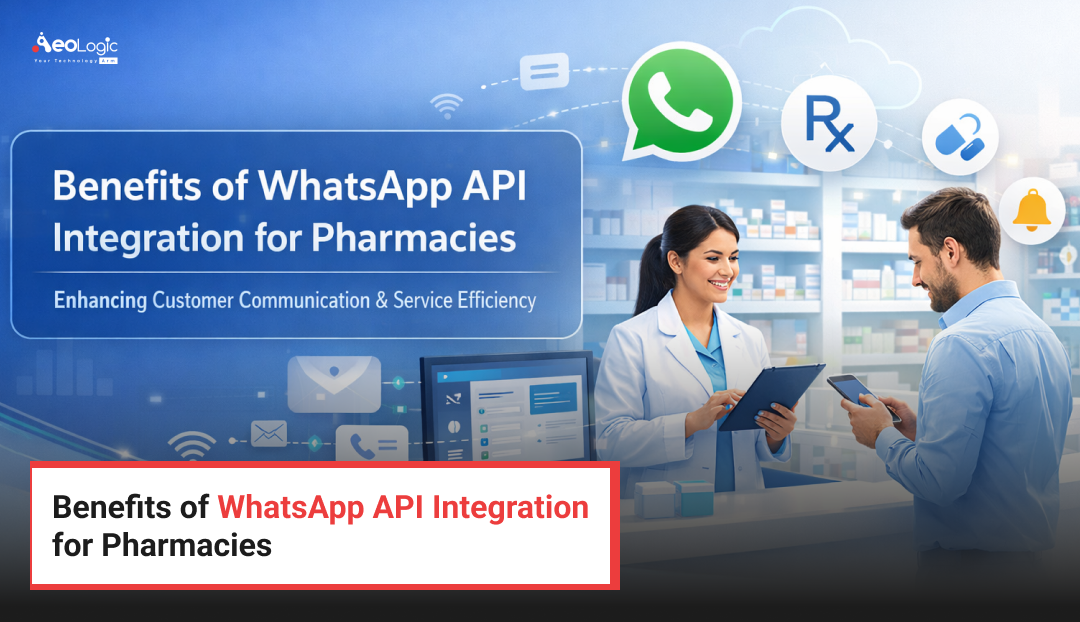
Pharmacies are expected to provide better communication, quicker service, and more individualized customer experiences in the rapidly changing healthcare industry of today. This is where WhatsApp API Integration is transforming how pharmacies operate and interact with patients.
Pharmacies can use WhatsApp, which has billions of active users, to improve patient engagement, automate processes, and expedite communication. Integrating messaging platforms into pharmacy operations is becoming strategically necessary for scalability and customer satisfaction as the use of digital health grows.
What is WhatsApp API Integration for Pharmacies?
WhatsApp API Integration refers to the use of WhatsApp Business API to connect pharmacy systems with the WhatsApp platform for automated, secure, and scalable communication. Unlike the standard WhatsApp Business app, the API allows pharmacies to send notifications, manage customer queries, automate prescription updates, and integrate with CRM or ERP systems.
It guarantees compliance, data security, and real-time communication while allowing pharmacies to effectively manage high patient interaction volumes. In a world where mobile devices rule, this integration serves as a digital link between pharmacy operations and patient expectations.
Why WhatsApp Business API Integration Matters in the Pharmacy Sector
Pharmacies deal with time-sensitive communication, prescription management, and patient trust. Delays or miscommunication can directly impact patient health and business credibility. By adopting WhatsApp API Integration, pharmacies can ensure instant communication, reduce manual workload, and create a seamless patient experience.
In situations like order confirmations, medication reminders, and emergency responses, this strategy becomes even more important. Additionally, it helps pharmacies maintain their competitiveness in a healthcare ecosystem that is becoming more digital, where customer loyalty is defined by speed and convenience.
 Core Components of WhatsApp API Integration in Pharmacy Systems
A well-designed system consists of several interrelated parts that guarantee efficient operations and improved communication.
The messaging automation engine is essential because it allows pharmacies to automatically send refill alerts, prescription updates, and appointment reminders. CRM integration guarantees synchronization of patient data, enabling tailored interactions according to medical requirements and past purchases.
Ensuring compliance with healthcare regulations and safeguarding sensitive patient data require secure communication protocols. Furthermore, by managing routine inquiries like medication availability, store hours, and order tracking, chatbot functionality improves efficiency and lessens the workload.
Step-by-Step Strategy to Implement WhatsApp Business API Integration
Step 1
Starts with determining business goals, after which pharmacies specify use cases like order notifications, patient engagement, and customer support within a WhatsApp API Integration framework. A targeted implementation strategy is ensured by this clarity.
Step 2
Entails establishing the infrastructure and choosing a trustworthy API provider. Pharmacies need to make sure the platform facilitates safe data handling, automation, and scalability.
Step 3
Emphasizes system integration, in which the API is linked to pre-existing pharmacy software, including CRM tools, billing platforms, and inventory systems. Operational effectiveness and smooth data flow are guaranteed by this step.
Step 4
Involves creating workflows for communication. To ensure uniformity and compliance, pharmacies should develop structured messaging templates for order updates, prescription alerts, and reminders.
Step 5
Is optimization and testing. The system needs to be tested for accuracy, delivery rates, and user experience prior to full deployment. Over time, constant observation aids in improving communication tactics.
Key Benefits of WhatsApp API Integration for Pharmacies
When pharmacies use this technology, customer engagement and operational efficiency both significantly increase.
Real-time patient interaction is made possible by faster and more dependable communication. Automated reminders increase medication schedule adherence and decrease missed prescriptions. When patients receive timely updates and individualized support, customer satisfaction rises.
Automation lowers operational costs by reducing human error and manual labor. Additionally, pharmacies learn a lot from their interactions with customers, which helps them plan their inventory and provide better services.
Real-World Use Cases in Pharmacy Operations
In real-world situations, pharmacies utilize WhatsApp API Integration to send reminders for prescription refills, guaranteeing that patients never forget important drugs. Order tracking, where clients get real-time updates on the delivery of their medications, is another popular use case.
Some pharmacies have put in place chatbot-based systems that can provide prompt answers to questions regarding the availability of medications or offer substitutes. Others use it for post-purchase interaction, exchanging health advice and dosage guidelines, which strengthens long-term client relationships and fosters trust.
Technologies and Platforms Involved in WhatsApp API Integration
The proper mix of technologies is essential to WhatsApp API Implementation’s success. CRM programs facilitate the management of patient information and interaction personalization. Chatbots with AI improve automation and offer prompt responses.
Prescriptions, billing, and inventory are all synchronized with communication workflows thanks to integration with pharmacy management systems. Together, these technologies form a networked ecosystem that boosts productivity and quality of service.
Common Challenges
Pharmacies often face integration complexity when connecting WhatsApp API Integration with existing systems like CRM, billing, and inventory. Without proper planning, this can lead to data inconsistencies and operational disruptions.
Ensuring data privacy and compliance is another significant challenge. Strict adherence to healthcare regulations, secure messaging protocols, and restricted access are necessary when handling sensitive patient data in order to prevent data breaches or misuse.
Best Practices for Success with WhatsApp API Integration
Pharmacies should design clear and structured communication workflows to avoid overwhelming users with excessive messages. Using approved templates and maintaining message relevance helps build trust and ensures compliance with platform policies.
Long-term success requires consistent optimization and monitoring. Pharmacies can continuously enhance engagement and operational efficiency by refining strategies through the analysis of message performance, response rates, and patient feedback.
Future Trends in Pharmacy Communication
The future of pharmacy communication is becoming increasingly digital and intelligent. With advancements in AI and automation, WhatsApp API Integration is expected to evolve into a more predictive and personalized communication tool.
Pharmacies will be able to anticipate patient needs, automate complex workflows, and integrate with telemedicine platforms. Voice-enabled interactions, AI-driven recommendations, and deeper analytics will further enhance patient engagement and operational efficiency.
Conclusion
The adoption of WhatsApp API Integration is redefining how pharmacies communicate, operate, and grow in a digital-first healthcare environment. From improving patient engagement to automating workflows and reducing operational costs, it offers a comprehensive solution for modern pharmacy challenges. As the industry continues to evolve, pharmacies that embrace this technology will gain a significant competitive advantage.
To successfully implement and scale this solution, partnering with experienced technology providers like Aeologic Technologies can help ensure seamless integration, compliance, and long-term success.
People Also Ask (FAQs)
Q1. What is WhatsApp API Integration and how does it help pharmacies?
Pharmacies can integrate their systems with WhatsApp through the WhatsApp API Implementation, enabling scalable and automated communication. It facilitates the effective transmission of customer support messages, order updates, and prescription reminders. This increases patient engagement, decreases manual labor, and speeds up response times. To improve customer satisfaction and streamline operations, pharmacies can also integrate it with inventory and CRM systems.
Q2. Is WhatsApp API secure for handling patient data?
Yes, the WhatsApp Business API is designed with strong encryption and security protocols, making it suitable for handling sensitive information. Pharmacies must, however, establish secure workflows and guarantee adherence to healthcare data regulations. Verified templates, data encryption, and appropriate access control all contribute to patient confidentiality and trust.
Q3. How can pharmacies automate communication using WhatsApp?
By establishing workflows for order confirmations, delivery updates, and prescription reminders, pharmacies can automate communication. Chatbots can respond quickly to frequently asked questions, and CRM integration guarantees tailored messages. Automation boosts productivity and customer satisfaction by lowering human labor and guaranteeing consistent communication.
Q4. What are the costs involved in WhatsApp API Implementation?
Message volume, integration complexity, and API provider are some of the variables that affect the cost. Pharmacies usually pay for platform services and message usage. Long-term advantages like lower operating costs and increased efficiency make it a cost-effective solution, even though the initial setup might involve some investment.
Q5. Can small pharmacies benefit from WhatsApp API Implementation?
Yes, automating repetitive tasks and enhancing customer communication can greatly benefit small pharmacies. By providing quicker service and more individualized experiences, it helps them compete with bigger chains. Through this integration, small pharmacies can increase customer loyalty and efficiency even with limited resources.
Q6. How does WhatsApp API improve patient engagement?
It allows for individualized, real-time communication with patients via support messages, updates, and reminders. For convenience, patients favor messaging apps, which makes it simpler for pharmacies to stay in touch. Stronger customer relationships and better medication schedule adherence result from this.

Project Lead with 9+ years of experience in Web Technologies and AI. Expert in leading end-to-end development of scalable, AI-driven solutions. Driving innovation through smart architecture, agile execution, and team leadership.