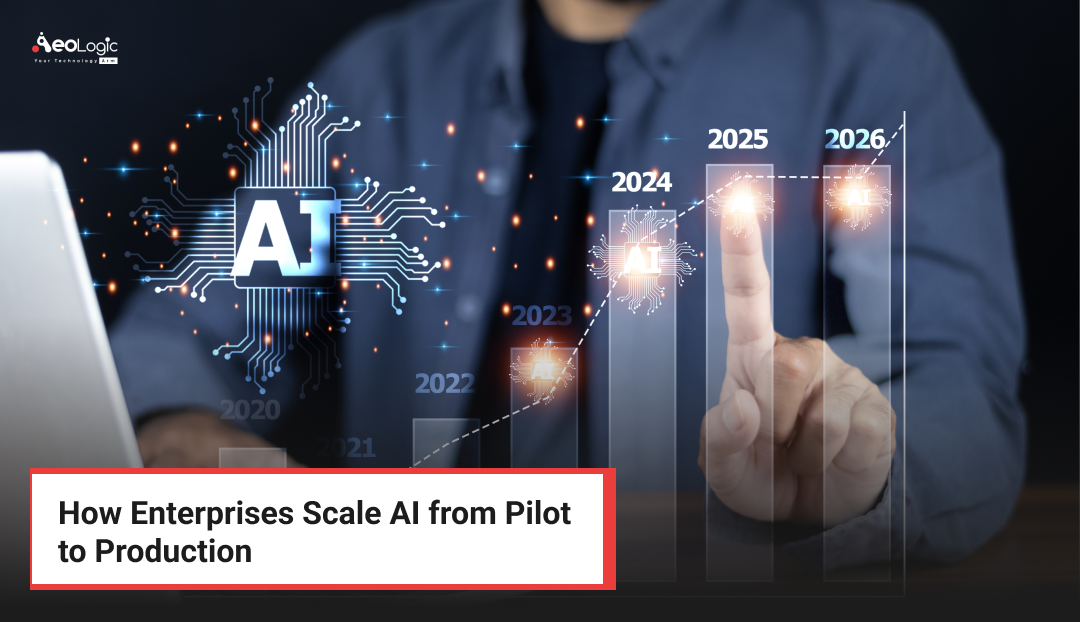
Artificial intelligence has moved beyond experimentation and is now a core driver of enterprise innovation, efficiency, and competitive advantage. However, while many organizations successfully build AI pilots, only a small percentage manage to scale them into full production systems. This gap between experimentation and execution is where Enterprise AI Deployment becomes critical. It represents the structured approach required to transform promising AI prototypes into scalable, reliable, and business-critical solutions.
Enterprises today are investing heavily in AI to automate processes, enhance decision-making, and unlock new revenue streams. Yet, the journey from pilot to production is complex, involving technical, operational, and organizational challenges. Without a well-defined strategy, AI initiatives often remain stuck in proof-of-concept stages, failing to deliver real business value. Understanding how to scale AI effectively is essential for enterprises aiming to achieve long-term success in the digital economy.
What is Enterprise AI Deployment?
Enterprise AI Deployment refers to the process of integrating, scaling, and operationalizing AI models and solutions across an organization’s systems, workflows, and business functions. It goes beyond building machine learning models and focuses on delivering real-world impact by embedding AI into production environments.
In simple terms, it is the transition from experimentation to execution. While pilot projects validate the feasibility of AI use cases, deployment ensures that these solutions are reliable, scalable, secure, and aligned with business objectives. This involves integrating AI models with existing enterprise systems, ensuring data consistency, and maintaining performance over time.
AI Implementation in Enterprises also includes continuous monitoring, updating models, and managing infrastructure to ensure consistent results. It is not a one-time process but an ongoing lifecycle that evolves with business needs and technological advancements.
Why AI Implementation in Enterprises Matters?
The importance of Enterprise AI Deployment lies in its ability to unlock the true value of AI investments. Many organizations invest significant resources in developing AI models but fail to realize their potential due to challenges in scaling and integration. Deployment bridges this gap by ensuring that AI solutions are effectively utilized across the organization.
In real-world scenarios, enterprises require AI systems that can handle large volumes of data, operate in real time, and integrate seamlessly with existing workflows. Deployment ensures that these requirements are met, enabling organizations to achieve measurable outcomes such as improved efficiency, reduced costs, and enhanced customer experiences.
Moreover, enterprise deployment enables standardization and governance, ensuring that AI systems operate reliably and ethically. It also allows organizations to scale AI initiatives across departments, creating a unified and data-driven ecosystem.
 Enterprise AI Deployment Framework and Key Pillars
Data Readiness and Management
Data is the foundation of any AI system. Enterprises must ensure that data is accurate, consistent, and accessible across systems. Data pipelines should be designed to handle large volumes of structured and unstructured data while maintaining quality and security.
Model Development and Validation
Developing robust AI models requires careful training, testing, and validation. Models must be evaluated for accuracy, bias, and performance before deployment. This ensures that they deliver reliable results in real-world scenarios.
Infrastructure and Scalability
Scalable infrastructure is essential for handling the computational demands of AI systems. Cloud platforms, edge computing, and distributed architectures enable enterprises to scale their AI solutions efficiently.
Integration with Business Systems
AI models must be integrated with enterprise applications such as ERP, CRM, and operational systems. This ensures seamless data flow and enables AI-driven decision-making across the organization.
Governance and Compliance
Enterprises must establish governance frameworks to ensure that AI systems operate ethically and comply with regulations. This includes monitoring performance, managing risks, and ensuring transparency.
Step-by-Step Strategy for Scaling AI from Pilot to Production
Step 1: Identify High-Impact Use Cases
The first step involves selecting use cases that offer significant business value. These should align with organizational goals and have clear success metrics. Focusing on high-impact areas increases the likelihood of successful scaling.
Step 2: Build a Strong Data Foundation
Enterprises must ensure that data is clean, consistent, and readily available for successful Enterprise AI Deployment. This involves setting up data pipelines, integrating data sources, and implementing data governance practices.
Step 3: Develop and Test AI Models
AI models should be developed using best practices and tested rigorously to ensure accuracy and reliability. This step includes validating models against real-world scenarios.
Step 4: Design Scalable Architecture
A scalable architecture is essential for handling increasing workloads. Enterprises should leverage cloud platforms and distributed systems to ensure flexibility and scalability.
Step 5: Integrate with Existing Systems
Integration ensures that AI solutions can interact with enterprise applications and workflows. This step is critical for enabling real-time decision-making and automation.
Step 6: Monitor and Optimize Performance
Continuous monitoring is essential to ensure that AI systems perform as expected. Enterprises should track performance metrics and make necessary adjustments to improve outcomes.
Step 7: Scale Across the Organization
Once validated, AI solutions can be scaled across departments and use cases. This creates a unified AI-driven ecosystem that delivers consistent value.
Key Benefits and Advantages of Enterprise AI Deployment
AI Implementation in Enterprises offers numerous benefits for organizations aiming to leverage AI at scale. It enhances operational efficiency by automating processes and reducing manual effort. This leads to faster decision-making and improved productivity.
Another significant advantage is cost optimization. By streamlining operations and reducing errors, enterprises can achieve significant cost savings. AI-driven insights also enable better resource allocation and strategic planning.
AI Implementation in Enterprises improves customer experiences by enabling personalized interactions and faster response times. It also enhances innovation by providing a platform for developing new products and services. Additionally, it ensures scalability, allowing organizations to expand their AI initiatives as their needs evolve.
Real-World Use Cases and Applications
Predictive Analytics in Finance
Financial institutions use AI to predict market trends, assess risks, and detect fraud. Deployment ensures that these models operate in real time and deliver accurate insights.
Intelligent Customer Support
AI-powered chatbots and virtual assistants are used to enhance customer support. Enterprise AI Deployment enables these systems to handle large volumes of queries efficiently.
Supply Chain Optimization
Enterprises use AI to optimize supply chain operations by predicting demand, managing inventory, and improving logistics. Deployment ensures seamless integration with supply chain systems.
Healthcare Diagnostics
AI is used in healthcare to analyze medical data and assist in diagnostics. Deployment ensures that these systems are reliable and accessible to healthcare professionals.
Technologies and Tools Supporting Enterprise AI Deployment
AI Implementation in Enterprises relies on a range of technologies and tools to ensure scalability and efficiency. Machine learning frameworks such as TensorFlow and PyTorch are used for model development. Data processing tools like Apache Spark enable efficient handling of large datasets.
Cloud platforms such as AWS, Microsoft Azure, and Google Cloud provide scalable infrastructure for deploying AI solutions. Containerization tools like Docker and orchestration platforms like Kubernetes enable efficient management of AI applications.
MLOps platforms play a crucial role in automating the deployment lifecycle, including model training, testing, and monitoring. These tools ensure that AI systems are continuously optimized and maintained.
Challenges in Enterprise AI Deployment
Scaling AI from pilot to production presents several challenges for enterprises. One of the primary challenges is data complexity. Managing large volumes of data from multiple sources can be difficult, especially when data quality is inconsistent.
Another challenge is integration with legacy systems. Many enterprises rely on outdated infrastructure, which may not support modern AI technologies. This creates barriers to deployment and scalability.
Talent shortage is also a significant issue. Finding skilled professionals with expertise in AI, data engineering, and MLOps can be challenging. Additionally, ensuring model reliability and avoiding bias are critical concerns that must be addressed.
Best Practices for Scaling AI in Enterprises
To overcome these challenges, enterprises should adopt best practices for successful AI deployment. Building a strong data foundation is essential for ensuring accurate and reliable results. Organizations should invest in data governance and quality management.
Collaboration between cross-functional teams is another key factor in successful Enterprise AI Deployment. Aligning IT, data science, and business teams ensures that AI initiatives are aligned with organizational goals. Continuous monitoring and optimization are also crucial for maintaining performance.
Enterprises should adopt MLOps practices to streamline the deployment lifecycle and ensure consistency. Investing in training and upskilling employees helps address talent shortages and fosters a culture of innovation.
Future Trends and Evolution of Enterprise AI Deployment
The future of AI Implementation in Enterprises is shaped by advancements in technology and increasing adoption across industries. One of the key trends is the rise of automated machine learning, which simplifies model development and deployment.
Another trend is the integration of AI with edge computing, enabling real-time processing and decision-making. This is particularly relevant for industries such as manufacturing and healthcare.
Generative AI is also playing a significant role in transforming enterprise applications. It enables organizations to create new content, automate processes, and enhance customer experiences. As AI technologies continue to evolve, enterprises will increasingly focus on building scalable and resilient AI systems.
Conclusion
Enterprise AI Deployment is the key to unlocking the full potential of artificial intelligence in modern organizations. By transitioning from pilot projects to scalable production systems, enterprises can achieve significant improvements in efficiency, innovation, and competitiveness.
As AI continues to evolve, adopting a structured and strategic approach to deployment will be essential for success. Organizations looking to accelerate their AI journey and build scalable solutions can partner with Aeologic Technologies to leverage cutting-edge expertise and drive sustainable growth in the AI-driven era.
People Also Ask (FAQs)
Q1. What is Enterprise AI Deployment?
AI Implementation in Enterprises is the process of integrating and scaling AI solutions within an organization’s systems and workflows. It involves transitioning AI models from pilot stages to production environments where they can deliver real business value. This includes ensuring scalability, reliability, and integration with existing systems. Deployment also involves continuous monitoring and optimization to maintain performance and adapt to changing requirements.
Q2. Why do many AI projects fail to scale?
Many AI projects fail to scale due to challenges such as poor data quality, lack of integration with existing systems, and insufficient infrastructure. Organizations often focus on building models without considering deployment requirements. Additionally, lack of skilled talent and unclear business objectives can hinder scaling efforts. Addressing these challenges requires a structured approach to deployment.
Q3. What is the role of MLOps in AI deployment?
MLOps plays a critical role in automating and managing the AI deployment lifecycle. It ensures that models are continuously trained, tested, and monitored. MLOps practices improve efficiency, reduce errors, and enable faster deployment of AI solutions. It also helps maintain consistency and reliability in production environments.
Q4. How can enterprises ensure successful AI deployment?
Enterprises can ensure successful deployment by building a strong data foundation, adopting scalable infrastructure, and integrating AI with existing systems. Collaboration between teams and continuous monitoring are also essential. Following best practices and leveraging advanced tools can significantly improve outcomes.
Q5. What industries benefit from AI Integration in Enterprises?
Industries such as finance, healthcare, manufacturing, retail, and logistics benefit significantly from AI deployment. These sectors use AI for predictive analytics, automation, and decision-making, improving efficiency and customer experiences.
Q6. What are the key challenges in AI Integration in Enterprises?
Key challenges include data complexity, integration issues, talent shortages, and ensuring model reliability. Organizations must address these challenges to achieve successful deployment and maximize the value of AI investments.

I’m a Software Developer with 9 years of experience building scalable web and mobile applications. Currently focused on React.js and React Native, I specialize in creating high-performance, user-friendly interfaces that drive business outcomes.
My background spans cross-platform development using Flutter, and native Android development, giving me a strong understanding of the entire mobile ecosystem. I’ve contributed to products in EdTech, Healthcare, and Enterprise SaaS—helping scale apps to 100K+ users and improving performance, reliability, and user engagement.
I’m passionate about clean architecture, modular design, and seamless user experiences. Whether it’s setting up robust state management with Redux Toolkit, optimizing API integrations with GraphQL/REST, or automating workflows with CI/CD pipelines (GitHub Actions)—I focus on writing maintainable code and delivering value to both users and stakeholders.