
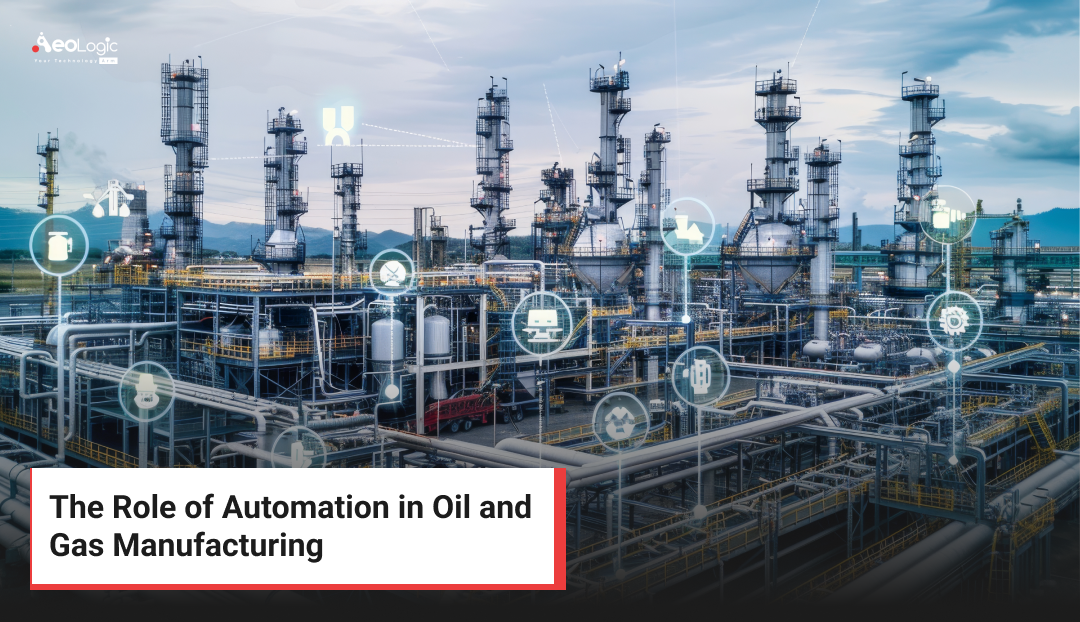
Walk into a modern refinery or processing plant today, and it looks very different from twenty years ago. Operators once stood at valve stations and turned wheels by hand. Today, control rooms are filled with monitors and real-time data dashboards. Robotic systems also handle tasks that once required several people and involved significant risk. That shift has a name: Oil and Gas Manufacturing Automation. It has become an important force reshaping how energy companies produce, refine, and deliver hydrocarbons.
This isn’t a story about robots replacing people, even though that fear comes up often. It is about an industry operating in some of the world’s harshest environments. Automation gives companies tools to work smarter, safer, and more predictably.
In this guide, we’ll explore what Oil and Gas Manufacturing Automation involves. We’ll also explain why it matters, the technologies behind it, and how companies use it across upstream, midstream, and downstream operations.
What is Oil and Gas Manufacturing Automation?
Oil and gas manufacturing automation uses control systems, software, sensors, and machinery. These technologies perform tasks across exploration, extraction, processing, and distribution with minimal manual intervention.
Automated systems can monitor conditions and make adjustments in real time. They can also flag problems before they become serious.
At its core, this type of automation combines three elements: hardware, software, and connectivity. Hardware includes sensors, actuators, and robotic equipment. Software includes control logic, analytics platforms, and AI models. Connectivity allows equipment to communicate with each other and central systems.
It’s worth noting that automation in this industry isn’t a single technology — it’s a layered system. A control valve automatically adjusting flow rate is automation. So is a machine learning model predicting when a compressor will fail. Both fall under the same umbrella, just at different levels of sophistication.
Why Automation Matters More Than Ever in Oil and Gas
A few converging pressures explain why oil and gas manufacturing automation has moved from “nice to have” to “necessary.”
Workforce shortages. Skilled labor in this industry is aging out faster than new talent is entering. Automation helps fill operational gaps without requiring a proportional increase in headcount.
Safety demands. Oil and gas facilities deal with flammable materials, high pressure systems, and remote or offshore locations. Every task that can be automated is one less opportunity for a human injury.
Cost pressure. Commodity price swings force operators to run leaner. Automated systems reduce downtime, catch inefficiencies, and lower the cost per barrel produced or refined.
Environmental accountability. Regulators and investors increasingly expect tighter emissions monitoring and leak detection — something automated sensor networks handle far more consistently than manual inspection rounds.
Data availability. The rise of industrial sensors and cloud computing means companies finally have the infrastructure to collect and act on operational data at scale.
Put together, these factors mean automation isn’t just an efficiency play anymore — it’s becoming a baseline requirement for staying competitive and compliant.
Key Technologies Behind Oil and Gas Manufacturing Automation
SCADA and DCS Systems
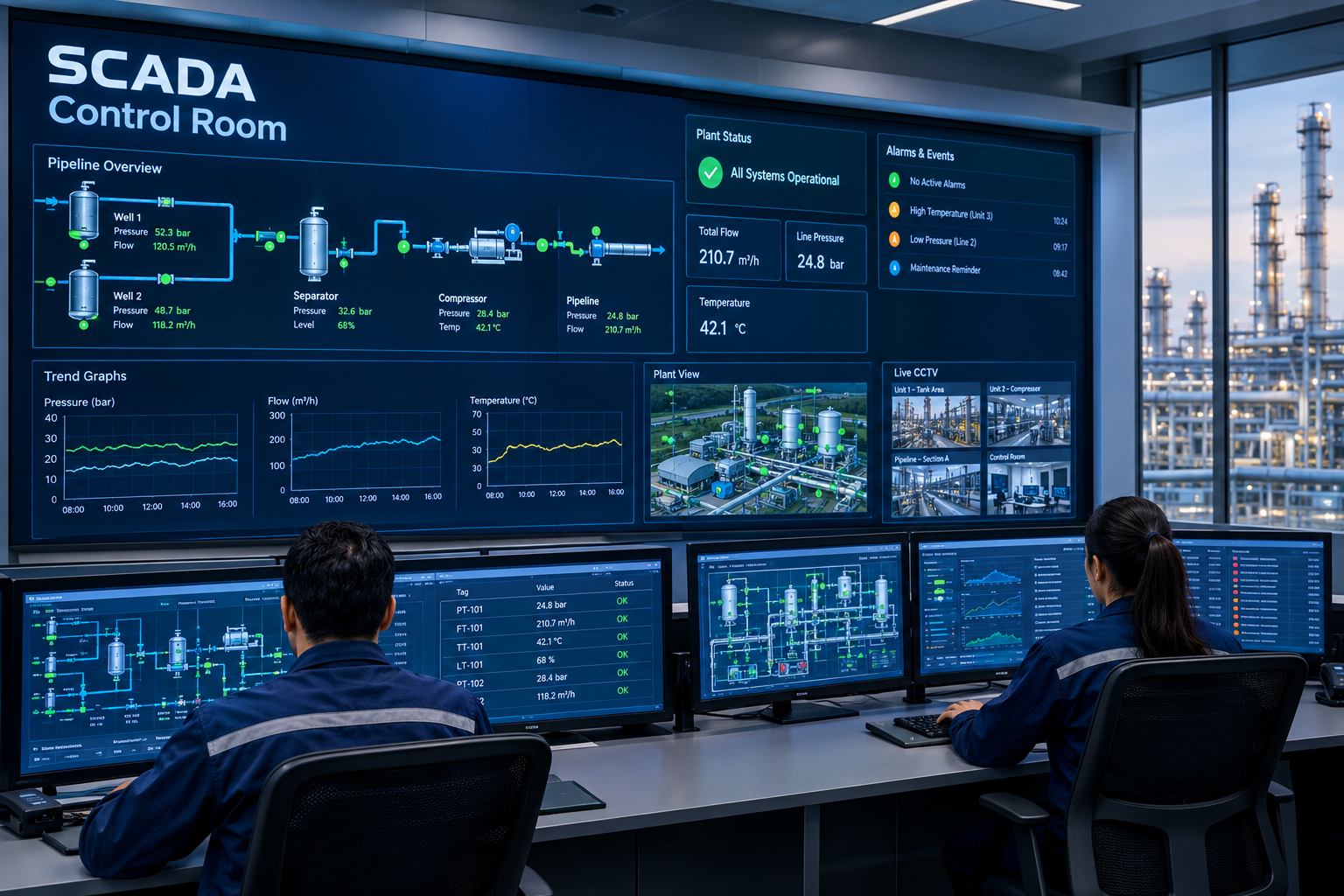
Supervisory Control and Data Acquisition (SCADA) systems and Distributed Control Systems (DCS) form the backbone of most oil and gas automation setups. SCADA systems let engineers monitor pipelines, wellheads, and processing units from a centralized location, often hundreds of miles away. DCS handles the fine-grained control loops inside a single plant, adjusting temperature, pressure, and flow continuously.
Programmable Logic Controllers (PLCs)
PLCs are the workhorses of physical automation on the plant floor. They execute the logic that opens valves, starts pumps, and shuts down equipment when a sensor detects an unsafe condition — all in milliseconds, without waiting for a human decision.
Industrial Internet of Things (IIoT)
IIoT sensors attached to pipelines, storage tanks, and rotating equipment continuously stream data on vibration, temperature, pressure, and flow. This data feeds directly into analytics platforms, giving operators visibility they simply didn’t have a decade ago.
Robotics and Drones
Robotic crawlers inspect pipeline interiors for corrosion. Drones fly over remote well pads and flare stacks to check for leaks or structural issues. These tools reduce the need to send personnel into confined or elevated spaces.
Artificial Intelligence and Machine Learning
AI models trained on historical equipment data can predict failures before they happen, optimize drilling parameters in real time, and even help geologists interpret seismic data faster than traditional methods.
Digital Twins
A digital twin is a virtual replica of a physical asset — a refinery unit, a well, or an entire pipeline network. Engineers can simulate changes, stress-test scenarios, and plan maintenance without touching the real equipment first.
Where Automation Shows Up: Upstream, Midstream, and Downstream
| Segment | Common Automation Applications | Primary Benefit |
|---|---|---|
| Upstream (Exploration & Production) | Automated drilling rigs, real-time reservoir monitoring, robotic well intervention | Fewer people in high-risk drilling zones |
| Midstream (Transport & Storage) | Pipeline SCADA monitoring, automated leak detection, smart valve control | Faster leak response, reduced product loss |
| Downstream (Refining & Distribution) | DCS-controlled refining units, automated quality testing, robotic packaging and loading | Consistent product quality, higher throughput |
This spread shows that oil and gas manufacturing automation isn’t confined to one part of the value chain — it touches every stage, from the wellhead to the fuel pump.
Benefits of Oil and Gas Manufacturing Automation
- Improved worker safety by removing people from hazardous manual tasks like tank gauging or valve operation in toxic-gas environments.
- Higher operational efficiency through continuous, precise control that reduces waste and downtime.
- Predictive maintenance that catches equipment issues before they cause costly unplanned shutdowns.
- Better regulatory compliance thanks to continuous emissions and leak monitoring rather than periodic manual checks.
- Lower operating costs over time, as automated systems reduce the labor hours needed for routine monitoring and adjustment.
- More consistent product quality, since automated control loops don’t suffer from fatigue or human variability.
- Faster decision-making, as real-time dashboards replace delayed manual reporting.
Common Challenges in Adopting Automation
Automation isn’t a plug-and-play upgrade, and it’s worth being honest about the obstacles.
High upfront investment. Retrofitting legacy plants with modern sensors and control systems requires significant capital, and the return isn’t always immediate.
Cybersecurity risk. Connecting industrial control systems to networks creates new attack surfaces. A breach in a SCADA system can have physical, not just financial, consequences.
Integration with legacy equipment. Many facilities run on decades-old infrastructure that wasn’t designed to communicate with modern digital systems, making integration a genuine engineering challenge.
Workforce transition. Existing staff often need retraining to work alongside automated systems, and some resist the change out of concern over job security.
Data overload. Sensors can generate more data than teams know how to use. Without the right analytics layer, automation investments can underdeliver.
Best Practices for Implementing Automation Successfully
- Start with a clear pain point — a specific safety risk, a recurring maintenance issue, or a bottleneck — rather than trying to automate everything at once.
- Audit existing infrastructure before purchasing new systems, so investments integrate with what’s already in place instead of duplicating it.
- Prioritize cybersecurity from day one, including network segmentation between IT and operational technology (OT) systems.
- Invest in workforce training alongside the technology itself, so staff understand how to interpret and act on automated alerts.
- Pilot before scaling. Test automation on one unit, well pad, or pipeline segment before rolling it out company-wide.
- Choose interoperable systems that follow open industry standards, avoiding vendor lock-in that limits future flexibility.
- Track measurable outcomes — downtime reduction, incident rates, cost per unit produced — to justify further investment.
The Future of Oil and Gas Manufacturing Automation
Looking ahead, a few trends stand out. Autonomous drilling operations are advancing quickly, with some rigs already capable of making real-time adjustments without a human operator in the loop for routine decisions. AI-driven predictive analytics are becoming more accurate as companies accumulate years of sensor data to train their models. Remote operations centers are consolidating control of multiple facilities into a single hub, reducing the need for on-site staffing at every location. And as the industry faces growing pressure to lower its carbon footprint, automated emissions monitoring and methane leak detection are becoming standard rather than optional.
The direction is clear: oil and gas manufacturing automation is moving from isolated pilot projects toward being the default way facilities are designed and operated.
Conclusion
Oil and Gas Manufacturing Automation isn’t a distant, futuristic concept—it is already reshaping how wells are drilled, how pipelines are monitored, and how refineries and processing facilities operate every day. From automated control systems and predictive maintenance to intelligent monitoring, robotics, and real-time data analysis, automation is helping oil and gas companies improve operational visibility while reducing unnecessary downtime and safety risks. Organizations that embrace these technologies can gain greater control over complex processes, improve resource utilization, strengthen compliance, and respond more quickly to changing operational conditions.
As the industry continues to evolve, Aeologic Technologies helps businesses explore and implement technology-driven solutions that support automation, intelligent operations, data integration, and digital transformation. A successful automation strategy, however, is not simply about introducing new technology. It requires organizations to identify the right operational challenges, evaluate existing infrastructure, establish strong cybersecurity practices, and ensure that employees have the skills required to work effectively with increasingly automated systems. A phased approach can allow companies to begin with high-impact use cases, measure results, and gradually expand automation across their facilities and processes.
The long-term value of automation will come from creating connected and intelligent operations rather than automating individual tasks in isolation. When equipment, production systems, workers, and operational data work together, companies can gain a more complete understanding of their processes and make faster, more informed decisions. Predictive technologies can help identify potential equipment failures before they interrupt production, while real-time monitoring can provide greater awareness of safety and environmental conditions. These capabilities can become increasingly important as oil and gas companies face pressure to improve efficiency, maintain regulatory compliance, control costs, and build more resilient operations.
Frequently Asked Questions
Q1. What does automation mean in the context of oil and gas manufacturing?
It refers to using control systems, sensors, robotics, and software to manage production, processing, and distribution tasks with minimal human intervention, improving safety and operational consistency across the value chain.
Q2. What are the biggest benefits of automating oil and gas operations?
The biggest benefits include improved worker safety, reduced unplanned downtime through predictive maintenance, lower operating costs over time, more consistent product quality, and better compliance with environmental regulations through continuous monitoring.
Q3. Which parts of oil and gas operations benefit most from automation?
Drilling operations, pipeline monitoring, and refinery process control tend to see the biggest gains, since these areas involve repetitive, high-risk, or precision-dependent tasks that automated systems handle more reliably than manual methods.
Q4. What technologies are used in oil and gas manufacturing automation?
Common technologies include SCADA and DCS control systems, programmable logic controllers, IIoT sensors, robotics and drones for inspection, artificial intelligence for predictive analytics, and digital twins for simulation and planning.
Q5. Is automation safe for oil and gas facilities?
Yes, when implemented correctly, automation improves safety by removing workers from hazardous manual tasks. However, it introduces new cybersecurity risks that require dedicated protection for industrial control systems and networks.
Q6. How does automation help with regulatory compliance?
Automated sensors continuously track emissions, leaks, and equipment conditions, generating real-time data and records that make it easier to demonstrate compliance compared to relying on periodic manual inspections.
Q7. What is predictive maintenance in oil and gas automation?
Predictive maintenance uses sensor data and analytics to identify signs of equipment wear or failure before a breakdown occurs, allowing maintenance teams to intervene proactively rather than reacting to unplanned outages.
Q8. Do small and mid-sized oil and gas companies use automation too?
Yes, though adoption often starts smaller — such as automated monitoring on a handful of wells or a single processing unit — before expanding, since full plant-wide automation requires more significant capital investment.
Q9. How is artificial intelligence used in oil and gas manufacturing?
AI is used to analyze sensor and historical data for predictive maintenance, optimize drilling and production parameters in real time, and support faster interpretation of geological and reservoir data.
Q10. What skills do workers need as automation increases in this industry?
Workers increasingly need skills in data interpretation, control system maintenance, industrial cybersecurity, and cross-disciplinary knowledge that bridges traditional field operations with digital and software systems.