The retail industry is undergoing a massive transformation driven by evolving customer expectations, digital disruption, and the need for real-time decision-making. In this dynamic environment, Agentic AI in Retail is emerging as a powerful innovation that enables businesses to operate with greater intelligence, autonomy, and efficiency. Retailers today are not only competing on price and product availability but also on experience, personalization, and operational excellence.
Traditional retail systems often rely on manual processes or rule-based automation, which limits their ability to adapt to rapidly changing market conditions. Agentic AI introduces a new paradigm where systems can independently analyze data, make decisions, and execute actions with minimal human intervention. From inventory management and supply chain optimization to personalized customer engagement, this technology is redefining how retail businesses function in a highly competitive landscape.
What is Agentic AI in Retail?
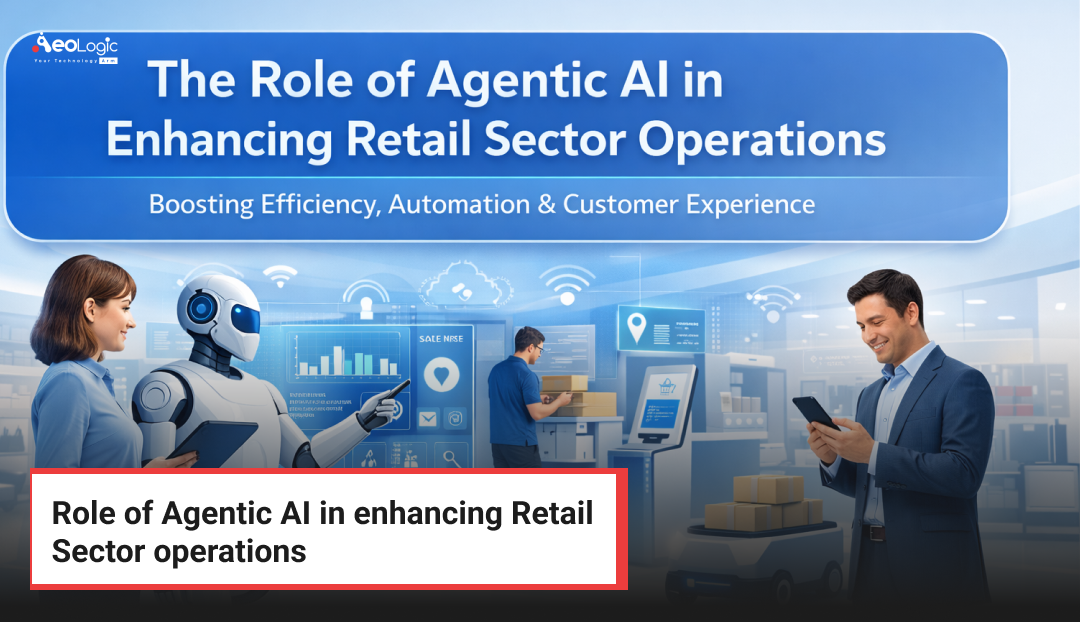
Agentic AI in Retail refers to the use of autonomous, intelligent AI agents that can independently manage and optimize retail operations. These systems are designed to understand context, learn from data, and take actions without constant human supervision. Unlike traditional AI models that follow predefined instructions, agentic AI systems operate with a level of autonomy that allows them to adapt to changing conditions in real time.
In simple terms, agentic AI acts as a digital decision-maker within retail ecosystems. It can monitor sales trends, predict customer behavior, manage inventory levels, and even automate customer interactions. By integrating advanced technologies such as machine learning, natural language processing, and real-time analytics, agentic AI enables retailers to move from reactive to proactive operations.
This capability is particularly valuable in retail environments where speed, accuracy, and adaptability are critical. Whether it is optimizing pricing strategies or ensuring product availability, agentic AI empowers retailers to make smarter decisions at scale.
Why AI Agents in Retail Operations Matters?
The importance of Agentic AI in Retail lies in its ability to address key challenges faced by modern retailers. The industry is characterized by fluctuating demand, complex supply chains, and increasing customer expectations. Traditional systems often struggle to keep up with these demands, leading to inefficiencies and missed opportunities.
Agentic AI enables retailers to respond dynamically to market changes by analyzing real-time data and making informed decisions. For example, it can adjust pricing based on demand patterns, optimize inventory distribution, and personalize customer experiences. This level of agility is essential for staying competitive in today’s fast-paced retail environment.
Additionally, agentic AI helps reduce operational costs by automating repetitive tasks and improving resource utilization. It also enhances customer satisfaction by delivering personalized and seamless shopping experiences. As a result, retailers can achieve higher profitability and long-term growth.
 Core Components of Agentic AI in Retail
Autonomous Decision-Making Systems
At the heart of agentic AI are systems capable of making independent decisions. These systems analyze data from multiple sources, evaluate scenarios, and determine the best course of action. This reduces reliance on manual intervention and ensures faster responses to changing conditions.
Real-Time Data Analytics
Retail operations generate vast amounts of data, including sales transactions, customer interactions, and supply chain information. Agentic AI processes this data in real time, providing actionable insights that drive decision-making.
Customer Behavior Intelligence
Understanding customer preferences and behavior is crucial for retail success. Agentic AI analyzes customer data to identify patterns and predict future behavior, enabling personalized marketing and improved customer engagement.
Workflow Automation
Agentic AI automates various retail processes such as inventory management, order processing, and customer service. This improves efficiency and reduces the likelihood of errors.
Step-by-Step Strategy to Implement AI Agents in Retail Operations
Step 1: Assess Current Retail Operations
The first step involves evaluating existing processes, identifying inefficiencies, and understanding areas where automation can deliver maximum impact. This provides a clear foundation for implementing Agentic AI in Retail.
Step 2: Define Business Objectives
Retailers must establish clear goals such as improving customer experience, optimizing inventory, or increasing sales. These objectives guide the implementation process and ensure alignment with business priorities.
Step 3: Build a Data Infrastructure
A robust data infrastructure is essential for agentic AI. Retailers need to integrate data from various sources, ensure data quality, and establish real-time data pipelines.
Step 4: Select and Train AI Models
Choosing the right AI models and training them on relevant datasets is critical. These models should be capable of understanding retail dynamics and making accurate predictions.
Step 5: Integrate with Existing Systems
Agentic AI must be integrated with existing retail systems such as ERP, CRM, and e-commerce platforms. This ensures seamless data flow and operational efficiency.
Step 6: Monitor and Optimize
Continuous monitoring and optimization are necessary to ensure that the system performs effectively and adapts to changing conditions.
Key Benefits and Advantages of Agentic AI in Retail
Agentic AI is transforming retail operations by enabling smarter decision-making and improved efficiency. One of the key benefits is enhanced customer experience, as retailers can deliver personalized interactions based on customer preferences and behavior.
Another advantage is improved inventory management. Agentic systems can predict demand, optimize stock levels, and reduce waste. This ensures that products are available when needed, minimizing stockouts and overstock situations.
Cost reduction is also a significant benefit. By automating processes and improving efficiency, retailers can lower operational costs and increase profitability. Additionally, agentic AI enhances agility, allowing retailers to respond quickly to market changes and customer demands.
Real-World Use Cases and Applications
Personalized Shopping Experiences
Agentic AI in Retail enables retailers to provide personalized recommendations based on customer behavior and preferences. This enhances customer satisfaction and increases sales.
Inventory Optimization
Retailers use agentic AI to manage inventory levels, predict demand, and optimize supply chain operations. This ensures efficient resource utilization and reduces costs.
Dynamic Pricing
Agentic AI can adjust prices in real time based on demand, competition, and market conditions. This helps retailers maximize revenue and stay competitive.
Customer Support Automation
AI-powered chatbots and virtual assistants provide instant customer support, improving response times and enhancing customer experience.
Technologies and Tools Involved in Agentic AI in Retail
AI Agents in Retail Operations is powered by a combination of advanced technologies. Machine learning algorithms enable predictive analytics and decision-making. Natural language processing supports customer interactions and communication.
Cloud computing provides scalable infrastructure for data storage and processing. Additionally, IoT devices and sensors collect real-time data from physical stores, enabling seamless integration between online and offline channels.
Conclusion
Agentic AI in Retail is fundamentally reshaping how modern retail businesses operate, compete, and grow in an increasingly digital and customer-centric environment. By enabling intelligent, autonomous, and context-aware decision-making, it allows retailers to move beyond traditional automation and embrace a more proactive, data-driven approach to operations. From enhancing customer engagement and personalizing shopping experiences to optimizing inventory, pricing, and supply chain processes, agentic AI is unlocking new levels of efficiency and agility across the retail ecosystem.
People Also Ask (FAQs)
Q1. What is Agentic AI in Retail?
Intelligent AI Systems in Retail refers to autonomous AI systems that manage and optimize retail operations. These systems analyze data, make decisions, and execute actions without constant human intervention. They improve efficiency, enhance customer experience, and enable retailers to respond quickly to market changes.

Project Lead with 9+ years of experience in Web Technologies and AI. Expert in leading end-to-end development of scalable, AI-driven solutions. Driving innovation through smart architecture, agile execution, and team leadership.