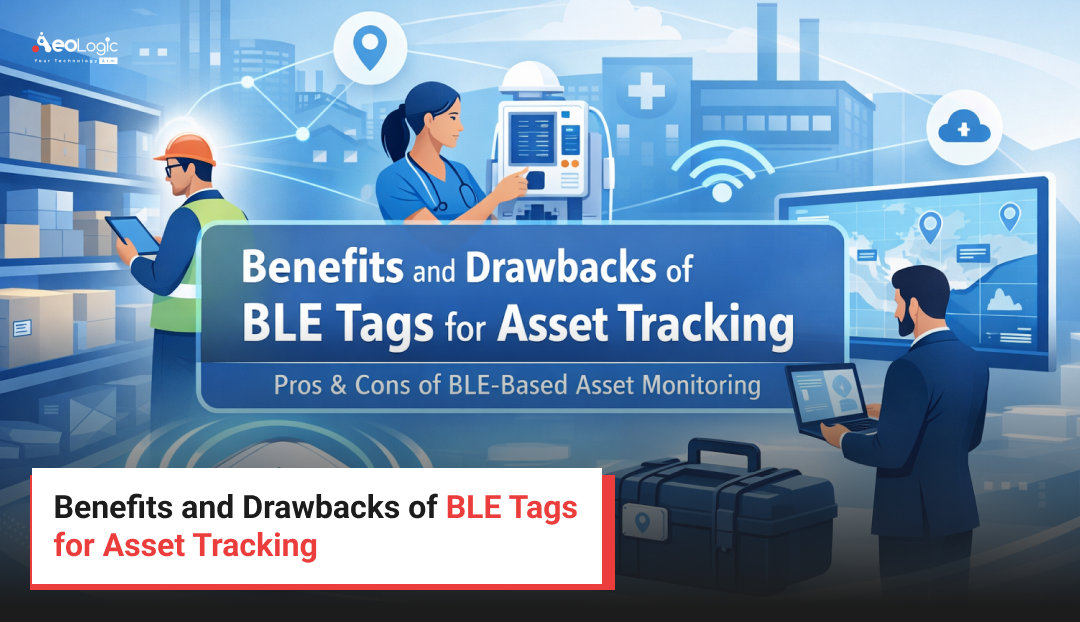
Organisations are constantly under pressure to obtain real-time visibility into their physical assets in the data-driven, efficiency-focused business environment of today. Asset tracking has evolved from a “nice-to-have” to a crucial operational necessity for everything from manufacturing equipment and IT hardware to medical devices and shipping containers. BLE Tags for Asset Tracking is one technology that is becoming increasingly popular in this field because of its low power consumption, scalability, and compatibility with contemporary IoT ecosystems.
As organisations scale operations and digitise asset management, BLE Tags for Asset Tracking are emerging as a practical alternative to GPS and traditional RFID solutions. Knowing the benefits and drawbacks of BLE-based systems is crucial for businesses looking to implement smarter tracking solutions in order to make wise investment choices.
This blog explores how BLE-based asset tracking works, its business benefits and drawbacks, implementation strategies, real-world applications, and future trends for modern enterprises.
What Are BLE Tags and How Do They Work?
BLE (Bluetooth Low Energy) tags are small wireless devices that use the Bluetooth Low Energy protocol to send signals on a regular basis. These signals are converted into location or status data within an asset tracking platform by gateways, smartphones, or fixed receivers.
BLE tags are designed for short- to mid-range tracking and indoor environments, in contrast to GPS or active RFID. They are frequently used to keep an eye on the presence, mobility, and proximity of assets in offices, campuses, hospitals, and warehouses. Batteries can last months or even years due to their low energy design, which makes them appropriate for widespread use.
Why BLE-Based Asset Tracking Matters for Businesses
Productivity, cost management, and compliance are all directly impacted by asset visibility. Poor decision-making, needless purchases, and operational delays are the results of lost or underutilised assets.
Organisations can increase utilisation rates, cut down on search time, and decrease manual asset audits by deploying BLE Tags for Asset Tracking. This is particularly important for sectors like enterprise IT, manufacturing, healthcare, and logistics, where asset loss or downtime can affect service quality and interfere with core operations.
 Key Components of a BLE Asset Tracking System
BLE Beacons and Tags
BLE tags broadcast unique identifiers and are affixed to assets. In addition to tracking location, some sophisticated tags have sensors for motion, temperature, or humidity.
Gateways and Receivers
Gateways use Wi-Fi, Ethernet, or cellular networks to transmit data to the backend system after capturing BLE signals. System performance and location accuracy are directly impacted by placement density.
Platform for Asset Tracking Software
Incoming data processing, asset location visualisation, alert generation, and integration with enterprise systems such as ERP, WMS, or CMMS are all done by the software layer. For long-term value realisation, analytics and reporting are essential.
Step-by-Step Approach to Implement BLE Asset Tracking
Step 1: Define Tracking Goals
Determine which assets must be tracked, the degree of accuracy needed, and the business issues you want to address (loss prevention, utilisation, compliance, etc.).
Step 2: Determine the Readiness of the Infrastructure
To ascertain gateway placement and scalability requirements, assess current network coverage, power availability, and physical layout.
Step 3: Select the Right Tags and Platform
Select BLE tags according to their sensor capabilities, durability, and battery life. Make sure the software platform complies with security standards, analytics, and integrations.
Step 4: Pilot, Enhance, and Expand
To verify accuracy and ROI, run a pilot project. Prior to implementing enterprise-wide, use insights to optimise gateway placement and workflows.
Benefits of BLE Tags for Asset Tracking
- Long battery life and less maintenance are made possible by low power consumption.
- More affordable than active RFID or GPS solutions
- Simple deployment with current Bluetooth-capable gadgets
- Scalable for monitoring thousands of assets across locations
- High compatibility with contemporary cloud and IoT platforms
As a result, BLE Tags for Asset Tracking have become a preferred choice for organisations seeking scalable, low-maintenance asset visibility solutions across indoor environments.
Because of these benefits, BLE solutions are appealing to businesses looking for quick returns on investment without making significant infrastructure investments.
Drawbacks and Limitations to Consider
- It is not appropriate for long-distance outdoor tracking due to its limited range in comparison to GPS.
- Gateway density and placement have a significant impact on location accuracy.
- Environments with a lot of metal or noise can cause signal interference.
- Even though battery replacements are rare, large-scale planning is still necessary.
Organisations can create realistic expectations and, when necessary, hybrid tracking strategies by being aware of these limitations.
Real-World Use Cases and Examples
BLE-based tracking is used in hospitals to keep an eye on medical devices like infusion pumps, which speeds up searches and enhances patient care. In order to reduce loss and increase workflow efficiency, manufacturing facilities use BLE tags to track tools and returnable assets.
BLE tracking ensures accountability and expedites audits without human intervention by managing laptops, servers, and high-value devices in large offices and IT enterprises.
Technologies and Tools Involved
To provide precise and useful insights, BLE asset tracking systems rely on a mix of hardware, software, and network infrastructure. Fundamentally, assets are equipped with BLE tags or beacons that broadcast signals continuously at programmable intervals. BLE gateways, access points, or mobile devices pick up these signals, which are then sent via Wi-Fi, Ethernet, or cellular networks to centralised platforms. Sensor-enabled tags that record motion, temperature, vibration, or humidity data are also used in advanced deployments, allowing condition monitoring in addition to location tracking. These technologies together form the technical backbone of modern BLE Tags for Asset Tracking deployments across enterprise environments.
Cloud-based asset tracking systems are essential for data processing, integration, and visualization from a software perspective. Dashboards, real-time maps, alert engines, analytics modules, and reporting tools are frequently included in these platforms. BLE systems can communicate with enterprise apps like ERP, WMS, CMMS, and EAM systems through integration technologies like REST APIs, IoT middleware, and message brokers. AI and machine learning tools are used to analyze movement patterns, predict asset utilization, and support smarter operational decisions.
Common Challenges and Best Practices
Achieving consistent location accuracy in complex environments is one of the most prevalent challenges in BLE asset tracking. Factors such as metal structures, signal interference, poor gateway placement, and high device density can impact system performance. Inadequate planning is another common problem, whereby companies apply tags without properly specifying use cases, accuracy standards, or success criteria. This frequently results in underutilized systems that don’t provide the anticipated return on investment.
Strategic planning and ongoing optimization are key components of best practices. Determining the ideal gateway location and signal coverage requires thorough site surveys prior to deployment. Before scaling, organizations should begin with a pilot project to verify performance and optimize configurations. User training, regular battery monitoring, standardized tagging procedures, and clear asset classification are all equally crucial. Combining BLE with complementary technologies where needed and reviewing analytics periodically ensures long-term system effectiveness and business value.
Future Trends in BLE Asset Tracking
The development of IoT, analytics, and hybrid positioning technologies will have a significant impact on BLE asset tracking in the future. For use cases that previously required higher-precision technologies, these enhancements make BLE more competitive.
In order to obtain end-to-end visibility, businesses are simultaneously shifting to hybrid tracking models that integrate BLE with RFID, UWB, GPS, and computer vision. Integration with AI-driven analytics, digital twins, and predictive maintenance platforms is becoming more common, enabling proactive decision-making rather than reactive tracking. BLE-based asset tracking will remain a fundamental component of more expansive, intelligent enterprise ecosystems as smart factories, hospitals, and campuses develop.

With a strong foundation in software and a growing expertise in AI, I specialize in building smart, scalable solutions that drive digital transformation