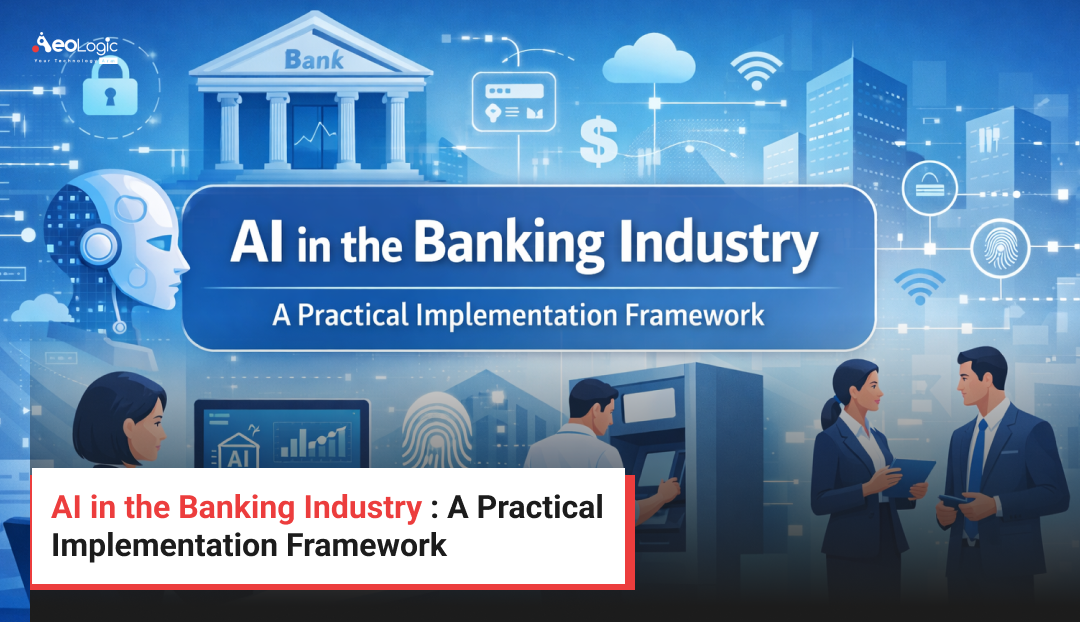
The global banking sector is undergoing a profound transformation as institutions strive to become more agile, data-driven, and customer-centric. At the center of this shift is AI in the Banking Industry, which is redefining how financial services are delivered, risks are managed, and customer experiences are personalized. As digital expectations rise and competition intensifies from fintech disruptors, banks are increasingly turning to artificial intelligence to enhance operational efficiency, reduce costs, and unlock new growth opportunities.
However, implementing AI in banking is not simply about adopting new technologies. It requires a structured framework that aligns business objectives, data strategies, and regulatory compliance. Financial institutions must move beyond experimentation and focus on scalable, enterprise-grade AI deployments. This blog presents a comprehensive and practical implementation framework designed to help banks successfully integrate AI into their core operations.
What is AI in the Banking Industry?
AI in the Banking Industry refers to the use of advanced technologies such as machine learning, natural language processing, and predictive analytics to automate processes, improve decision-making, and deliver enhanced financial services. These systems analyze large volumes of structured and unstructured data to identify patterns, detect anomalies, and generate actionable insights.
In practical terms, AI enables banks to automate routine tasks such as customer onboarding, transaction monitoring, and fraud detection while also supporting complex functions like credit scoring and risk assessment. Unlike traditional systems, AI continuously learns and adapts, allowing banks to respond dynamically to changing market conditions and customer behaviors.
The integration of AI transforms banking operations from reactive to proactive, enabling institutions to anticipate customer needs, mitigate risks, and optimize performance across all business functions.
Why AI in the Banking Industry Matters?
The importance of AI in the Banking Industry lies in its ability to address critical challenges faced by financial institutions. Banks operate in a highly competitive and regulated environment where efficiency, accuracy, and customer satisfaction are paramount. Traditional systems often struggle to meet these demands due to their limited scalability and reliance on manual processes.
AI-driven solutions enhance operational efficiency by automating repetitive tasks and reducing human errors. They also improve risk management by analyzing vast datasets in real time, enabling early detection of fraud and compliance issues. Furthermore, AI enhances customer experience by providing personalized services, faster responses, and seamless interactions.
In addition, regulatory compliance is becoming increasingly complex. AI helps banks interpret and adhere to evolving regulations by automating reporting and monitoring processes. This not only reduces compliance costs but also minimizes the risk of penalties.
 AI in the Banking Industry: Core Components of the Implementation Framework
Data Infrastructure and Governance
A robust data foundation is essential for successful AI implementation. Banks must ensure that data is accurate, consistent, and accessible across systems. Effective data governance frameworks help maintain data quality, security, and compliance with regulatory requirements.
AI Models and Algorithms
AI models form the core of intelligent banking systems. These models are trained on historical data to perform tasks such as fraud detection, credit scoring, and customer segmentation. Continuous training and validation are necessary to maintain accuracy and reliability.
Integration with Core Banking Systems
Seamless integration with existing systems such as core banking platforms, CRM systems, and payment gateways is critical. This ensures that AI solutions can access real-time data and deliver actionable insights.
Security and Compliance Frameworks
Given the sensitive nature of financial data, security and compliance are paramount. AI systems must adhere to strict regulatory standards and incorporate robust security measures to protect data and ensure trust.
AI in the Banking Industry: Step-by-Step Implementation Strategy
Step 1: Define Business Objectives
The first step in implementing AI is to identify clear business goals. Banks must determine whether they aim to improve customer experience, enhance risk management, or optimize operations. Clear objectives provide direction and ensure alignment with organizational priorities.
Step 2: Assess Current Capabilities
Banks should evaluate their existing infrastructure, data quality, and technological capabilities. This assessment helps identify gaps and areas that require improvement before AI implementation.
Step 3: Build a Scalable Data Ecosystem
A strong data ecosystem is crucial for AI success. This involves integrating data from multiple sources, ensuring data quality, and establishing governance frameworks.
Step 4: Select Appropriate AI Use Cases
Choosing the right use cases is essential for achieving quick wins and demonstrating value. Common use cases include fraud detection, customer service automation, and credit risk assessment.
Step 5: Develop and Train AI Models
AI models should be developed and trained using relevant datasets. Continuous monitoring and refinement are necessary to ensure accuracy and adaptability.
Step 6: Integrate and Deploy Solutions
AI solutions must be integrated into existing workflows and systems. This ensures seamless operation and maximizes impact.
Step 7: Monitor, Optimize, and Scale
Ongoing monitoring and optimization are essential to maintain performance. Successful implementations can be scaled across different business units.
Key Benefits and Advantages
AI is delivering significant benefits to the banking sector by transforming operations and enhancing customer experiences. One of the most notable advantages is improved efficiency, as automation reduces manual effort and accelerates processes. This leads to faster service delivery and lower operational costs.
Another key benefit is enhanced risk management. AI systems can analyze large volumes of data to detect fraudulent activities and assess credit risks more accurately. This reduces financial losses and improves decision-making.
AI also enables personalized customer experiences by analyzing customer behavior and preferences. Banks can offer tailored products and services, increasing customer satisfaction and loyalty. Additionally, AI improves compliance by automating regulatory reporting and monitoring processes.
Real-World Use Cases and Applications
Fraud Detection and Prevention
AI systems analyze transaction patterns to identify suspicious activities in real time. This helps banks prevent fraud and protect customer assets.
Customer Service Automation
Chatbots and virtual assistants provide instant support to customers, improving response times and reducing workload on human agents.
Credit Risk Assessment
AI models evaluate creditworthiness by analyzing financial data, enabling more accurate and efficient lending decisions.
Personalized Banking Services
AI enables banks to offer customized products and recommendations based on individual customer preferences and behaviors.
Technologies and Tools Powering AI in Banking
Challenges in Enterprise AI Agent Design and Architecture
Implementing AI in banking comes with several challenges that organizations must address. Data quality and integration issues can impact the accuracy of AI models. Banks often operate with legacy systems that may not be compatible with modern AI technologies, creating integration complexities.
Regulatory compliance is another major challenge. Financial institutions must ensure that AI systems adhere to strict regulations and maintain transparency in decision-making. Additionally, there is a need for skilled professionals who can develop and manage AI solutions.
Security concerns also play a significant role. Protecting sensitive financial data is critical, and any breach can have severe consequences. Addressing these challenges requires careful planning and robust strategies.
Best Practices for Enterprise AI Agent Architecture
To ensure successful AI implementation, banks should adopt best practices such as building a strong data foundation and investing in modern infrastructure. Collaboration between business and technology teams is essential to align AI initiatives with organizational goals.
Banks should also focus on explainable AI to ensure transparency and build trust with regulators and customers. Continuous monitoring and optimization help maintain system performance and adapt to changing conditions.
Training employees and fostering a culture of innovation are also critical for success. By embracing these best practices, banks can maximize the benefits of AI and achieve sustainable growth.
Future Trends and Evolution
The future of AI in the Banking Industry is marked by rapid advancements and increasing adoption. One of the key trends is the integration of generative AI, which enables more advanced customer interactions and decision-making capabilities.
Another trend is the rise of autonomous banking systems that can operate with minimal human intervention. These systems leverage real-time data and advanced analytics to deliver highly efficient and personalized services.
Open banking and API-driven ecosystems are also gaining traction, enabling seamless integration and collaboration between financial institutions and third-party providers. As technology evolves, AI will continue to play a central role in shaping the future of banking.
Conclusion
AI in the Banking Industry is transforming the financial sector by enabling smarter operations, enhanced customer experiences, and improved risk management. By adopting a structured implementation framework, banks can successfully integrate AI into their operations and achieve sustainable growth.
Organizations looking to leverage AI-driven solutions can partner with Aeologic Technologies to build scalable, secure, and innovative banking systems that drive digital transformation and long-term success.
People Also Ask (FAQs)
Q1. What is AI in the Banking Industry?
AI in the Banking Industry refers to the use of artificial intelligence technologies to automate processes, enhance decision-making, and improve customer experiences in financial institutions. It involves the use of machine learning, natural language processing, and data analytics to analyze large datasets and generate insights. AI enables banks to detect fraud, assess credit risk, and provide personalized services, making operations more efficient and effective.
Q2. How is AI used in banking?
AI is used in banking for various applications such as fraud detection, customer service automation, credit scoring, and risk management. It helps analyze data in real time, identify patterns, and make informed decisions. AI-powered chatbots provide instant customer support, while predictive analytics improve lending decisions and operational efficiency.
Q3. What are the benefits of AI in banking?
The benefits of AI in banking include improved efficiency, enhanced customer experience, better risk management, and cost reduction. AI automates repetitive tasks, reduces errors, and provides actionable insights. It also enables personalized services and helps banks comply with regulatory requirements.
Q4. What challenges do banks face in AI adoption?
Banks face challenges such as data quality issues, integration with legacy systems, regulatory compliance, and security concerns. Addressing these challenges requires investment in infrastructure, skilled talent, and robust governance frameworks.
Q5. Is AI secure for banking operations?
AI can be secure when implemented with proper security measures and compliance frameworks. Banks must ensure data protection, transparency, and regular audits to mitigate risks and maintain trust.
Q6. What is the future of AI in banking?
The future of AI in banking includes advancements in generative AI, autonomous systems, and open banking ecosystems. These innovations will enhance efficiency, personalization, and collaboration in the financial sector.

I’m a Software Developer with 9 years of experience building scalable web and mobile applications. Currently focused on React.js and React Native, I specialize in creating high-performance, user-friendly interfaces that drive business outcomes.
My background spans cross-platform development using Flutter, and native Android development, giving me a strong understanding of the entire mobile ecosystem. I’ve contributed to products in EdTech, Healthcare, and Enterprise SaaS—helping scale apps to 100K+ users and improving performance, reliability, and user engagement.
I’m passionate about clean architecture, modular design, and seamless user experiences. Whether it’s setting up robust state management with Redux Toolkit, optimizing API integrations with GraphQL/REST, or automating workflows with CI/CD pipelines (GitHub Actions)—I focus on writing maintainable code and delivering value to both users and stakeholders.