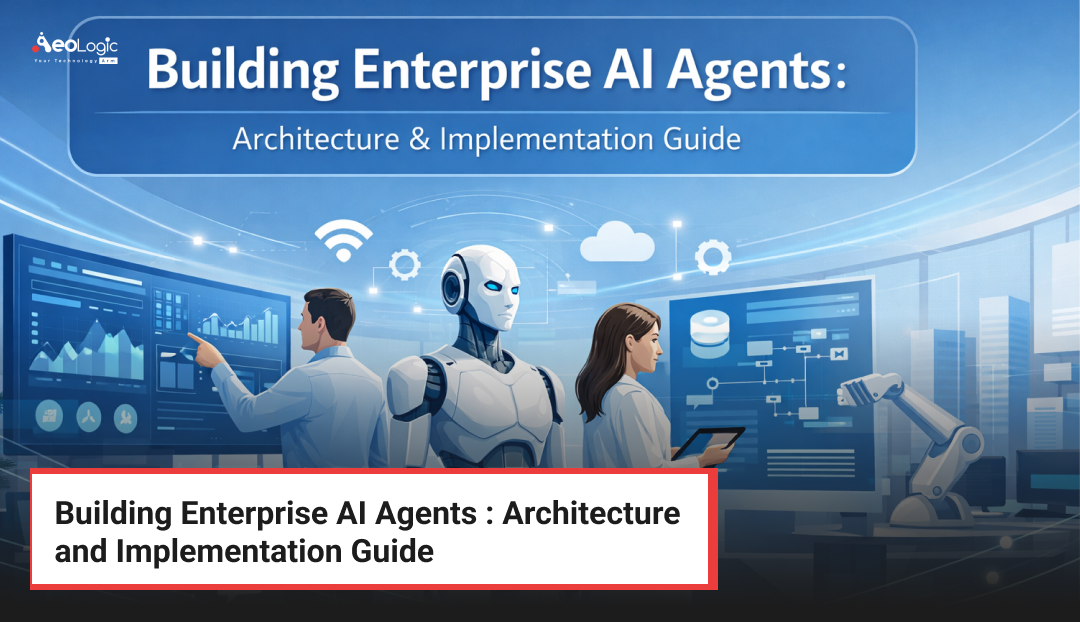
As enterprises accelerate their digital transformation journeys, artificial intelligence is evolving beyond predictive analytics and automation into autonomous, decision-capable systems. At the center of this shift lies Enterprise AI Agent Architecture, a structured approach to designing intelligent agents that can perceive, reason, and act within complex business environments. These AI agents are no longer limited to simple task execution; they are becoming integral to enterprise workflows, enabling real-time decision-making, process orchestration, and continuous optimization.
Modern organizations are dealing with massive volumes of data, distributed systems, and dynamic customer expectations. Traditional software systems struggle to keep pace with this complexity. Enterprise AI agents, powered by robust architectures, offer a scalable and adaptive solution. They can operate across departments, integrate with existing systems, and continuously learn from interactions. This makes them highly valuable for enterprises seeking efficiency, agility, and innovation in a competitive landscape.
What is Enterprise AI Agent Architecture?
Enterprise AI Agent Architecture refers to the design framework and structural blueprint used to build intelligent agents capable of autonomous decision-making within enterprise systems. It defines how different components such as data pipelines, reasoning engines, learning models, and execution layers interact to create a cohesive and functional AI system.
In simple terms, it is the backbone that enables AI agents to function effectively in real-world business scenarios. These architectures incorporate various layers, including perception, cognition, and action, allowing agents to understand their environment, process information, and execute tasks accordingly. Unlike traditional applications, enterprise AI agents are dynamic, adaptive, and capable of continuous improvement.
The architecture also ensures seamless integration with enterprise ecosystems such as ERP systems, CRM platforms, cloud infrastructures, and IoT devices. This interconnected design enables AI agents to operate across multiple domains, providing end-to-end automation and intelligence.
Why AI Agent Architecture for Enterprises Matters for Enterprises
The importance of Enterprise AI Agent Architecture lies in its ability to enable scalable, reliable, and efficient AI deployments across organizations. Enterprises are increasingly adopting AI to automate processes, enhance customer experiences, and drive innovation. However, without a well-defined architecture, these initiatives often face challenges related to scalability, integration, and performance.
A robust architecture ensures that AI agents can handle complex workflows, process large datasets, and interact with multiple systems seamlessly. It also provides the flexibility to adapt to changing business requirements and technological advancements. This is particularly important in industries such as finance, healthcare, manufacturing, and retail, where operational efficiency and accuracy are critical.
Moreover, AI Agent Architecture for Enterprises supports governance, security, and compliance. It enables organizations to implement controls, monitor performance, and ensure transparency in AI-driven decisions. This is essential for building trust and achieving regulatory compliance.
 Core Components of Enterprise AI Agent Architecture
Perception Layer
The perception layer is responsible for collecting and processing data from various sources. This includes structured data from databases, unstructured data from documents, and real-time data from sensors or APIs. The layer transforms raw data into meaningful inputs that can be analyzed by the AI system.
Cognitive and Reasoning Layer
This layer forms the intelligence core of the AI agent. It uses machine learning models, natural language processing, and decision-making algorithms to analyze data and generate insights. The reasoning engine evaluates different scenarios and determines the best course of action.
Action and Execution Layer
The action layer is responsible for executing decisions made by the AI agent. It interacts with enterprise systems to perform tasks such as updating records, triggering workflows, or sending notifications. This layer ensures that insights are translated into tangible outcomes.
Learning and Feedback Loop
Continuous learning is a key feature of enterprise AI agents. The feedback loop enables the system to learn from past actions, improve accuracy, and adapt to new conditions. This ensures long-term efficiency and effectiveness.
Integration and Orchestration Layer
This component ensures seamless connectivity between AI agents and enterprise systems. It enables coordination across multiple agents and workflows, ensuring smooth operation within complex environments.
AI Agent Architecture for Enterprises Framework and Design Principles
Designing an effective Enterprise AI Agent Architecture requires adherence to certain principles that ensure scalability, reliability, and performance. One of the key principles is modularity, where different components are designed as independent modules. This allows for flexibility and easier updates.
Another important principle is interoperability. The architecture should support integration with diverse systems and technologies. This ensures that AI agents can operate across different platforms and environments.
Scalability is also critical, as enterprise systems often need to handle large volumes of data and transactions. The architecture should be designed to scale horizontally and vertically based on demand. Additionally, security and compliance must be built into the architecture to protect sensitive data and ensure regulatory adherence.
Step-by-Step Implementation Strategy
Step 1: Define Business Objectives and Use Cases
The first step in building enterprise AI agents within an Enterprise AI Agent Architecture is to identify the specific business problems to be solved. This involves defining clear objectives and selecting use cases where AI can deliver maximum value.
Step 2: Design the Architecture Blueprint
Once the objectives are defined, the next step is to design the architecture. This includes selecting the appropriate components, technologies, and frameworks required to build the AI agent.
Step 3: Develop Data Infrastructure
A robust data infrastructure is essential for AI systems. Organizations need to establish data pipelines, ensure data quality, and integrate data sources to enable effective analysis.
Step 4: Build and Train AI Models
AI models should be developed and trained using relevant datasets. This step involves selecting algorithms, tuning parameters, and validating model performance.
Step 5: Integrate with Enterprise Systems
The AI agent must be integrated with existing enterprise systems such as ERP, CRM, and cloud platforms. This ensures seamless data flow and execution of tasks.
Step 6: Deploy and Monitor
Deployment involves implementing the AI agent in a production environment. Continuous monitoring is essential to ensure performance, reliability, and accuracy.
Step 7: Optimize and Scale
Organizations should continuously optimize the system based on feedback and performance metrics. Once validated, the solution can be scaled across different departments and use cases.
Key Benefits and Advantages of Enterprise AI Agent Architecture
Enterprise AI agents offer significant advantages for organizations. They enhance operational efficiency by automating complex workflows and reducing manual intervention. This leads to faster decision-making and improved productivity.
Another key benefit is improved accuracy. AI agents analyze large volumes of data and provide precise insights, reducing the risk of errors. They also enable real-time decision-making, allowing organizations to respond quickly to changing conditions.
Cost optimization is another advantage, as automation reduces operational expenses. Additionally, enterprise AI agents improve customer experiences by providing personalized and timely interactions.
Real-World Use Cases and Applications
Intelligent Customer Support
AI agents built on Enterprise AI Agent Architecture are used to provide automated customer support, handling queries, resolving issues, and improving response times. This enhances customer satisfaction and reduces workload on support teams.
Process Automation
Enterprise AI agents automate repetitive tasks such as data entry, invoice processing, and report generation. This improves efficiency and allows employees to focus on strategic activities.
Fraud Detection and Risk Management
AI agents analyze transaction data to identify suspicious activities and mitigate risks. This is particularly valuable in financial services and insurance industries.
Supply Chain Optimization
AI agents optimize supply chain operations by analyzing demand patterns, managing inventory, and ensuring timely delivery of goods.
Technologies and Tools Involved in Enterprise AI Agent Architecture
Building enterprise AI agents involves a combination of advanced technologies. Machine learning frameworks such as TensorFlow and PyTorch are used for model development. Natural language processing tools enable understanding of human language.
Cloud platforms such as AWS, Azure, and Google Cloud provide scalable infrastructure. APIs and microservices facilitate integration with enterprise systems. Additionally, orchestration tools and workflow engines enable coordination across multiple processes.
Key Challenges in AI Agent System Architecture for Enterprises
Implementing enterprise AI agents presents several challenges that organizations must address. Data quality and availability can significantly impact the performance, reliability, and accuracy of AI models. Inconsistent, incomplete, or siloed data often leads to poor outcomes and limits the effectiveness of intelligent systems. Integration with legacy systems may also pose difficulties, as many enterprises still operate on outdated infrastructure that is not designed for modern AI capabilities.
Another challenge is ensuring transparency and explainability of AI decisions. Organizations need to build trust by providing clear insights into how decisions are made, especially in regulated industries where accountability is critical. Security and privacy concerns must also be addressed to protect sensitive data from breaches or misuse. Additionally, managing change across teams and aligning stakeholders with AI-driven transformation can be complex, requiring strong leadership and governance frameworks.
Best Practices for Enterprise AI Agent Architecture
To overcome these challenges, organizations should adopt best practices such as maintaining high-quality, well-governed data and ensuring robust governance frameworks that define clear policies for AI usage and monitoring. Investing in employee training and upskilling is equally important, as it enables teams to understand, trust, and effectively work alongside AI systems. Collaboration between technical and business teams is essential for successful implementation, ensuring alignment between strategic goals and technological execution.
Continuous monitoring and optimization are also critical to ensure long-term success and performance consistency. Organizations should establish feedback loops to refine models and improve outcomes over time. Additionally, focusing on scalability and flexibility allows enterprises to adapt to changing business requirements and technological advancements. Adopting a phased implementation approach, starting with pilot projects, further reduces risk and improves overall adoption rates.
Future Trends and Evolution
The future of Enterprise AI Agent Architecture is evolving rapidly with advancements in generative AI, multi-agent systems, and autonomous decision-making capabilities. Enterprises are increasingly moving towards fully autonomous ecosystems where multiple AI agents collaborate, communicate, and coordinate across different business functions. This shift will enable organizations to achieve higher levels of efficiency, innovation, and operational intelligence.
Another key trend is the integration of AI with edge computing, enabling real-time decision-making closer to the data source. This is particularly important for industries such as manufacturing and healthcare, where latency and speed are critical factors. Additionally, advancements in explainable AI and ethical AI frameworks will play a significant role in building trust and ensuring compliance. As AI technologies continue to evolve, AI Agent Architecture for Enterprises will become the backbone of intelligent, scalable, and future-ready enterprise systems.
Conclusion
Enterprise AI Agent Architecture is the foundation for building intelligent, autonomous systems that can transform enterprise operations. By enabling scalable, efficient, and adaptive AI solutions, it empowers organizations to achieve greater innovation and competitiveness.
As enterprises continue to embrace AI, adopting a robust architecture will be essential for success. Organizations looking to build advanced AI agent systems can collaborate with Aeologic Technologies to develop scalable, secure, and future-ready solutions tailored to their business needs.
People Also Ask (FAQs)
Q1. What is Enterprise AI Agent Architecture?
AI Agent Architecture for Enterprises refers to the framework used to design and build intelligent agents that operate within enterprise systems. These agents can analyze data, make decisions, and execute tasks autonomously. The architecture includes components such as data pipelines, reasoning engines, and execution layers, enabling seamless integration and efficient operation.
Q2. How do enterprise AI agents work?
Enterprise AI agents work by collecting data from various sources, analyzing it using AI models, and executing actions based on insights. They operate through interconnected layers that enable perception, reasoning, and action. This allows them to automate processes and improve efficiency.