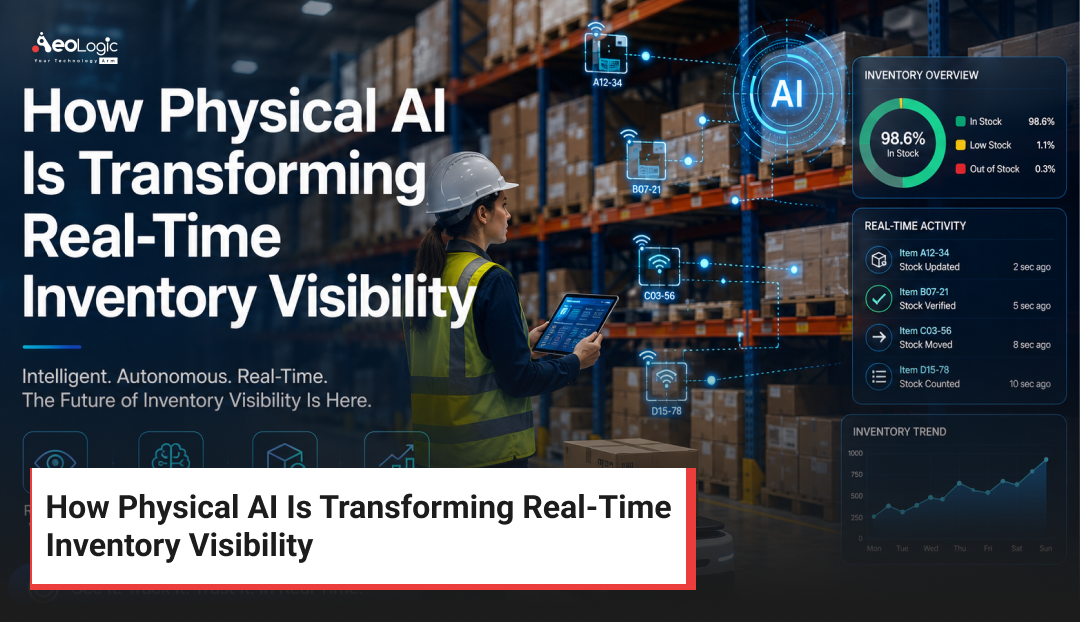
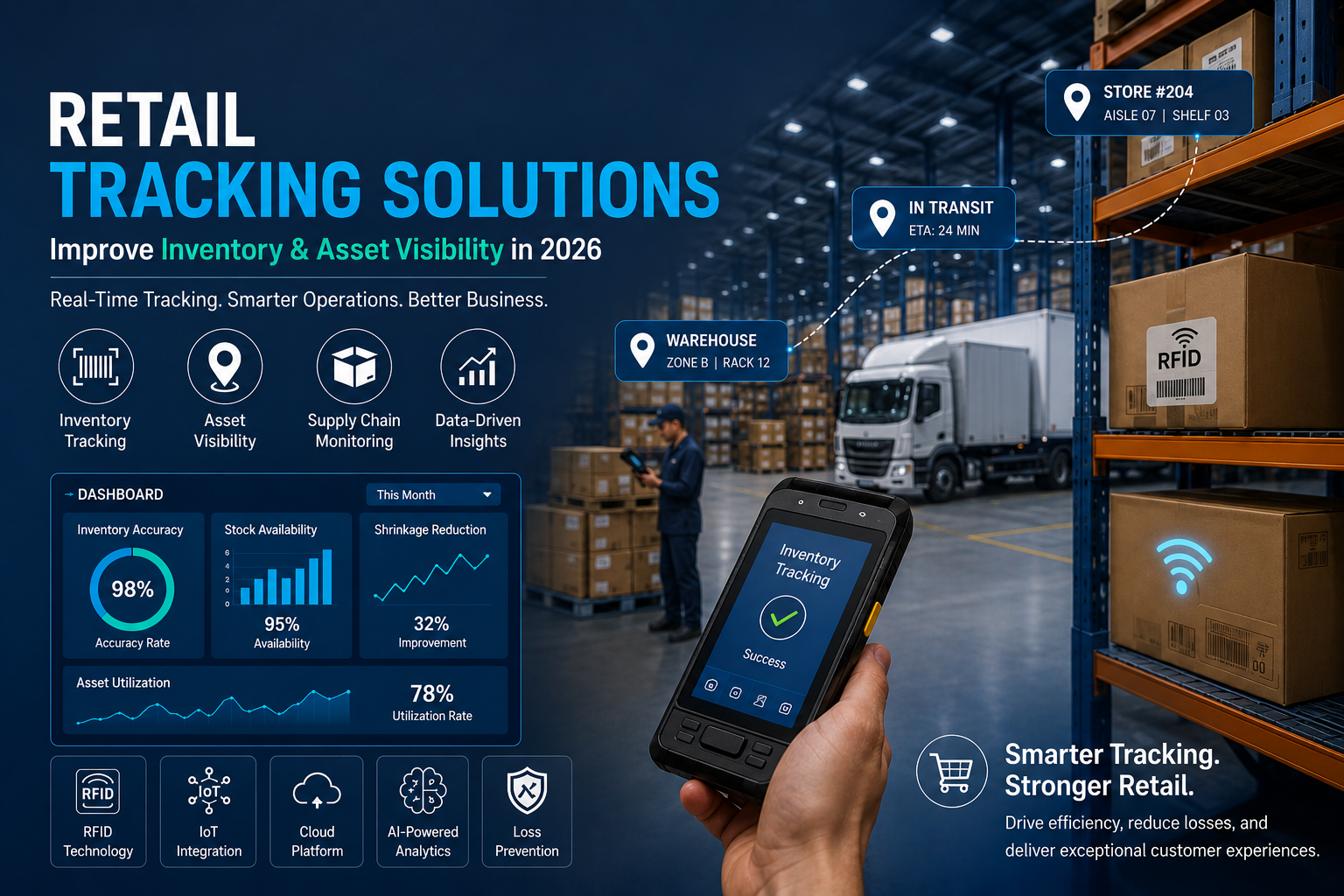
A decade ago, retail was very different, with customers’ expectations of service, delivery, and live speed growing at a staggering pace, as has the pressure to keep businesses running efficiently. Ten years ago, retail was significantly different, fueled by the rise in customer expectations, omnichannel commerce, the expectation of fast delivery, and pressure to keep businesses running efficiently. Competition is no longer just on product quality or price – it’s on speed, accuracy, visibility and customer experience. This is where Retail Tracking Solutions are playing a vital role in real-time data and visibility into inventory, asset use and supply chain performance. Retailers without visibility tend to experience stock discrepancies, late stock replenishment, lost inventory, over carrying costs and customer frustration due to out-of-stock product.
There are many moving parts in a modern retail operation, from warehouses to distribution centers, storefronts to online, suppliers, logistics providers and internal assets. It can be very inefficient and error-prone to manage all these layers manually. That’s where smart tracking technologies can help a business achieve transparency in their operations. Automated identification systems, cloud-based monitoring platforms, RFID, IoT sensors, bar code technology, and AI analytics allow retailers to get the real-time data they need on inventory and asset location.
What Are Retail Tracking Systems and Why Do Businesses Need Them?
In simple terms, Retail Tracking Solutions refer to the process and technologies used for monitoring products, inventory, assets, and operational resources throughout their lifecycle within a retail environment. This monitoring can start at the point that goods are received to a warehouse until the product reaches the shelves or the customer. The main goal is to offer real-time, accurate visibility into the movement, availability and usage of items and stocks, helping retailers to be more efficient, less loss-prone, and more agile in making business decisions.
Traditional inventory practices were primarily spreadsheet-driven, based on periodic audits, and manual counting. These methods might have worked for smaller companies, but in the modern retail world, it’s all about quick access to data and automation. The retail landscape is more complicated than ever with the rise of e-commerce, multiple fulfillment models, and geographically dispersed stock.
Tracking technologies overcome many of these problems by keeping up to date digital records of inventory and assets. Items moving in or out of the structures can be automatically identified, stock levels continuously monitored, anomalies detected and predictive insights on future demand produced. This means more control over operations and quicker response to market fluctuations.
Seeing is believing for retailers. Inaccurate inventory intelligence has a direct impact on revenue, operational efficiency, customer loyalty and profitability.
Why Retail Tracking Solutions Matter More in 2026?
Retail Tracking Solutions are gaining in significance along with changes in consumer habits and operations. By today’s standards, customers demand accurate product availability, quicker deliveries, and a smooth buying process – whether online or in-store. One mistake in inventory can cause product cancellations, loss of customer experience and damage to reputation.
Meanwhile, retailers are facing growing expectations to reduce costs. If there is an overstocking situation, the capital is blocked and the cost of storage is incurred, and if it is understocking, then it is sales loss.
Another change has occurred in the way businesses perceive inventory management in the wake of global supply chain disruptions. In today’s business climate, there is an increased focus on resilience and transparency, which means systems need to keep a track on goods as they’re being moved and stored. Real-time visibility enables speedy decision making in the event of an incident and helps organizations stay in continuity.
The financial implications are equally significant. These factors, in combination can cause significant losses annually due to inventory inaccuracies, shrinkage, theft and misplaced assets. Intelligent monitoring systems aid in detecting irregularities at an earlier stage, thereby enhancing accountability and minimizing operational losses.
Core Technologies Transforming Retail Visibility
The growth of retail monitoring systems is being fueled by new technologies that are building interdependent systems instead of discrete workflows. The use of RFID has expanded in recent years due to the ability to scan more than one item at a time without physically scanning them. Compared to the usual barcode systems, RFID offers a greater speed and reduces labor-intensive inventory checks.
Connected sensors are helping to provide continuous tracking with IoT devices. Retailers can keep real-time tracking of movements, environmental changes, equipment usage and inventory status. This is especially useful in the industries that have temperature-sensitive or high value goods.
AI is being introduced to tracking systems that has predictive capabilities. AI can predict future demand trends, the risks, suggest reordering frequencies and make intelligent buying decisions, rather than just providing an inventory update.
Cloud platforms have changed the way access is gained as Retail Tracking Solutions can now monitor all locations from one single place. Real-time operational data enables decision makers to be responsive, collaborate and make faster data-driven business decisions in a distributed retail environment.
Analytics platforms further strengthen visibility by converting raw operational data into actionable insights. This allows businesses to continuously refine their processes, identify inefficiencies, and understand performance trends.
 How Businesses Implement Tracking Systems: A Step-by-Step Approach
Successful implementation requires more than installing software. To realize long-term value, organizations should have a plan and operation that are aligned.
Step 1: Assess Existing Operational Challenges
The first step in inventory and asset management for businesses is to identify recurring problems. Typical issues are stock discrepancies, slow replenishment, shrinkage, or inventory not being seen from one location to another. Knowing these gaps will clarify what priorities to focus on in implementation.
Step 2: Establish Tracking Objectives
Knowing the goals dictates the sort of technology needed. Some companies put focus on inventory accuracy, others on loss prevention, warehouse efficiency or even on optimizing the omnichannel fulfillment.
Step 3: Select Appropriate Technologies
The selection of technology for Retail Tracking Solutions is determined by these factors: operational complexity, product categories, readiness of the infrastructure and scalability requirements. These technologies are all unique and can support various retail business needs such as managing inventory visibility, tracking assets or optimizing operations, depending on the specific use case.
Step 4: Integrate with Existing Enterprise Systems
With integration with ERP, warehouse management systems, point of sale software and supply chain applications, tracking systems provide more powerful results. Integration allows information to flow easily throughout departments.
Step 5: Train Employees and Standardize Processes
Technology adoption succeeds when employees understand workflows and operational expectations. Training helps to decrease resistance while increasing implementation outcomes.
Step 6: Monitor Performance Continuously
Follow up implementation with continuous performance monitoring. It’s crucial for businesses to evaluate how accurate their inventories are, how efficient their processes are, the reduction in shrinkage, and how much more return on investment they’re seeing over time.
Business Benefits of Retail Tracking Solutions Beyond Inventory Accuracy
Tracking systems are commonly implemented in organisations that the expectation is that inventory will improve, but the benefits go beyond that. Increased visibility enables greater operational agility, accuracy in predicting, cost optimisation and loss reduction. Manual counting is reduced and employees can concentrate on more strategic work.
Customer satisfaction is also enhanced considerably as inventory details reduce disappointments due to stock and help to fulfill orders quickly. Enhanced service experiences can help to build customer loyalty and drive repeat sales.
Better asset utilisation and stock optimisation from a financial viewpoint will release working capital and avoid over spending. Profitable in the long run usually goes along with reducing the waste in operations.
Real-World Retail Applications
Intelligent monitoring systems are now being employed more and more by large retail chains to keep inventory in both the online and physical store in sync. Retailers use RFID to help them manage their stock more accurately and for rapid stock replenishment. Tracking technologies are used in grocery stores to track perishables and minimise spoilage. The importance of visibility tools to electronics retailers for loss prevention and high-value inventory management.
Retail Tracking Solutions are becoming a growing feature in luxury brands as the technology is used to identify and verify products, track their journey and enhance brand protection. Automation-powered tracking systems are also crucial for warehouse-heavy retailers, enabling them to speed up order processing, make real-time inventory decisions, and boost productivity in their multiple facilities.
The examples show that there is no restriction on the uses of tracking systems for one retail sector – it works for organizations in a variety of sectors.
Challenges Businesses Face While Implementing Retail Tracking Solutions
While there are benefits, there are often challenges in implementing them. Sometimes, organizations don’t anticipate the complexity of integration or process changes need to match technology changes. Inadequate employee training may hinder system effectiveness and/or disjoined data environments may restrict visibility benefits.
A frequent problem is the choice of technologies without taking into account the future expansion. As companies grow, they might face constraints when systems are not designed to accommodate expansion.
Optimization and leadership commitment are the two key elements of success—along with strategic planning, of course—that are not a one-time deployment.
Future Trends Shaping Retail Visibility
Retail Tracking Solutions will rely more on AI-powered automation, predictive analytics, digital twins, autonomous inventory monitoring and enhanced IoT ecosystems to provide smarter operational visibility in the coming years. Intelligent systems are shifting to a proactive decision-making paradigm, allowing businesses to preempt risks and make informed decisions before disruptions happen, leading to more accurate forecasting, optimized inventory flow, and enhanced supply chain resilience for retailers.
Hyper-personalization can also impact inventory management, as retailers need to make more accurate predictions about purchases. Demand for end-to-end traceability and transparent supply chains are likely to increase as a result of sustainability efforts.
The future of retail is likely to be the businesses able to weave together visibility, automation and intelligent forecasting into a whole operational ecosystem.
Conclusion
With the increasing complexity of retail environments and expectations rising, visibility has transformed from being an operational advantage to a strategic necessity. Companies that have the ability to track stock flow, make the most of resources and react swiftly to shifts in demand will have a greater advantage in the long run. Businesses can optimize their tracking systems, boost operational efficiency, minimize losses, and enhance their supply chain’s resilience by investing in Retail Tracking Solutions.
For businesses wanting scalable retail visibility solutions, they must consider partners who have experience in RFID, IoT integration, automation, and enterprise solutions. By providing businesses with cutting-edge digital transformation technology to enhance tracking capabilities, inventory intelligence, and operational performance, Aeologic Technologies ensures businesses stay ready for the future.
People Also Ask (FAQs)
Q1. What are Retail Tracking Solutions and how do they work?
Retail Tracking Solutions are technologies used to monitor inventory, products, and assets throughout retail operations. They typically combine identification methods such as RFID or barcodes with cloud platforms, analytics tools, and enterprise systems. These technologies provide real-time visibility into stock levels, product movement, and operational performance. Businesses use them to improve accuracy, reduce losses, optimize replenishment, and strengthen customer experience.
Q2. Why is inventory visibility important in retail?
Inventory visibility helps businesses understand stock availability, movement patterns, and replenishment needs in real time. Improved visibility reduces stockouts, minimizes overstocking, strengthens fulfillment performance, and improves customer satisfaction. It also supports better forecasting and operational planning.
Q3. Which industries benefit most from retail tracking technologies?
Retail sectors including fashion, grocery, electronics, luxury goods, pharmaceuticals, and omnichannel commerce benefit significantly. However, any business managing distributed inventory or assets can gain operational advantages from improved visibility systems.
Q4. Is RFID better than barcode tracking?
RFID and barcode systems serve different needs. RFID enables faster, automated scanning without direct line-of-sight requirements, while barcode systems remain cost-effective and widely adopted. Selection depends on operational goals and budget.
Q5. Can tracking systems reduce retail losses?
Yes. Improved monitoring helps identify shrinkage, unauthorized movement, misplaced inventory, and theft earlier. Greater transparency increases accountability and reduces avoidable losses.