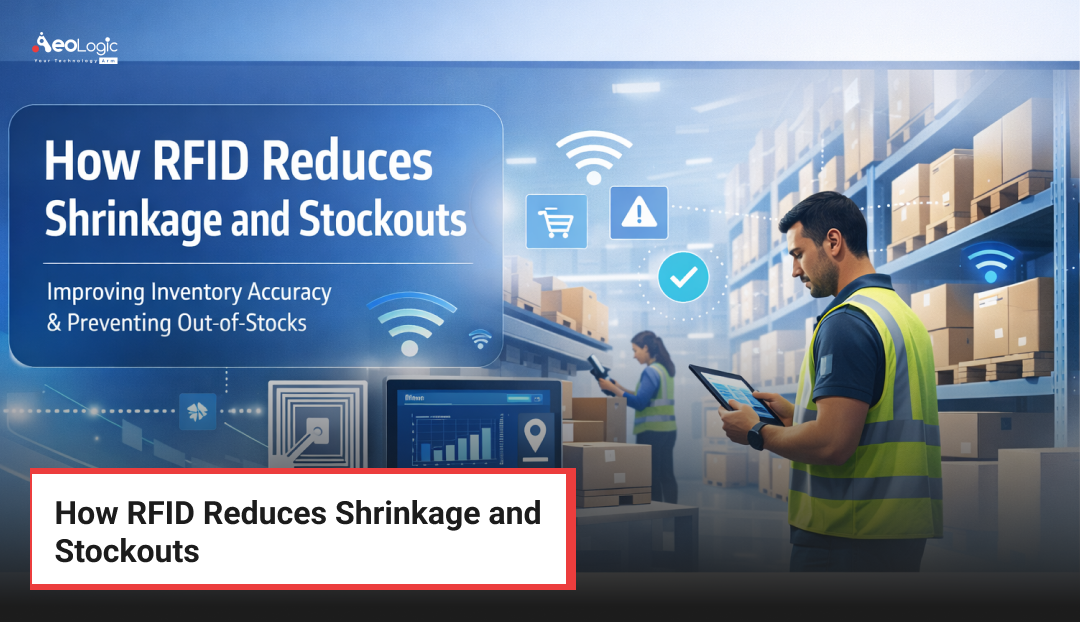
In today’s fast-paced and highly competitive business environment, inventory accuracy is no longer a back-office concern—it is a strategic priority. Organizations across retail, manufacturing, logistics, and healthcare face persistent challenges related to inventory shrinkage and stockouts, both of which directly impact revenue, customer satisfaction, and operational efficiency. This is where RFID for Shrinkage and Stockouts emerges as a transformative solution, enabling real-time visibility and precise control over inventory movements.
Shrinkage—caused by theft, misplacement, administrative errors, or damage—and stockouts—resulting from poor inventory tracking and demand forecasting—can silently erode profits. Traditional inventory management systems often rely on manual scanning or barcode technologies that lack real-time tracking capabilities. As a result, businesses operate with limited visibility, leading to inaccuracies and inefficiencies.
What is RFID and How Does It Work?
RFID, or Radio Frequency Identification, is a wireless technology that uses electromagnetic fields to automatically identify and track tags attached to objects. Each RFID tag contains a microchip and antenna that transmit data to RFID readers, enabling seamless tracking without the need for line-of-sight scanning.
Unlike barcodes, RFID allows multiple items to be scanned simultaneously and from a distance. This capability significantly improves speed, accuracy, and efficiency in inventory management. RFID systems typically consist of tags, readers, antennas, and software platforms that process and analyze the captured data.
In the context of inventory management, RFID enables continuous tracking of products throughout the supply chain—from warehouses to retail shelves—providing unparalleled visibility and control.
Why RFID for Shrinkage and Stockouts Matters?
Business Impact and Operational Relevance
Inventory shrinkage and stockouts are not isolated issues; they are interconnected problems that can disrupt the entire supply chain. Shrinkage leads to financial losses and inaccurate inventory records, while stockouts result in lost sales and diminished customer trust.
Implementing RFID for Shrinkage and Stockouts helps organizations address these issues proactively by offering real-time data and actionable insights. Businesses can identify discrepancies immediately, track inventory movement accurately, and ensure optimal stock levels at all times.
The importance of this technology becomes even more evident in industries with high inventory turnover or complex supply chains. Retailers, for instance, must maintain accurate stock levels across multiple locations, while manufacturers need precise tracking of raw materials and finished goods. RFID provides the visibility required to achieve these objectives.
 How RFID for Shrinkage and Stockouts Works in Practice?
Real-Time Inventory Visibility
One of the most significant advantages of RFID is its ability to provide real-time visibility into inventory. Unlike traditional systems that rely on periodic updates, RFID continuously tracks item movements, ensuring that inventory data is always accurate.
This real-time visibility allows businesses to detect discrepancies immediately. For example, if an item is removed from a warehouse without proper authorization, the system can trigger an alert, enabling quick investigation and resolution.
Automated Inventory Tracking
RFID eliminates the need for manual scanning, reducing human error and improving efficiency. Inventory counts can be conducted automatically and frequently, ensuring that records are always up to date.
This automation is particularly beneficial in large warehouses or retail stores where manual inventory checks are time-consuming and prone to inaccuracies. With RFID, businesses can perform inventory audits in a fraction of the time.
Enhanced Demand Forecasting
Accurate inventory data is essential for effective demand forecasting. RFID provides detailed insights into product movement and sales patterns, enabling businesses to predict demand more accurately.
By understanding which products are selling quickly and which are not, organizations can adjust their inventory levels accordingly, reducing the risk of stockouts and overstocking.
Key Components of an RFID System
RFID Tags
RFID tags are attached to individual items, pallets, or containers. These tags store unique identification data and can be either passive or active, depending on the application requirements.
RFID Readers and Antennas
Readers and antennas capture data from RFID tags and transmit it to the central system. These components can be installed at entry and exit points, shelves, or handheld devices for mobile scanning.
Middleware and Software
The software layer processes the captured data and integrates it with existing inventory management systems. Advanced analytics tools provide insights into inventory trends, enabling informed decision-making.
Step-by-Step Implementation Strategy
Step 1: Assess Business Requirements
Organizations must begin by evaluating their current inventory management challenges and identifying areas where RFID can provide the most value. This includes understanding shrinkage sources, stockout frequency, and operational bottlenecks.
Step 2: Define Objectives and KPIs
Clear objectives should be established, such as reducing shrinkage by a specific percentage or improving inventory accuracy. Key performance indicators (KPIs) help measure the success of the implementation.
Step 3: Select the Right RFID Solution
Choosing the appropriate RFID hardware and software is critical. Factors such as tag type, reader range, and system integration capabilities must be considered.
Step 4: Pilot Testing
Before full-scale deployment, organizations should conduct pilot tests to evaluate system performance and identify potential issues. This phase helps refine the implementation strategy.
Step 5: Full Deployment and Integration
Once the pilot is successful, the RFID system can be deployed across the organization. Integration with existing systems ensures seamless data flow and operational efficiency.
Step 6: Training and Change Management
Employees must be trained to use the new system effectively. Change management strategies help ensure smooth adoption and minimize resistance.
Benefits of RFID in Reducing Shrinkage and Stockouts
RFID technology delivers measurable improvements across various aspects of inventory management. It enhances inventory accuracy by providing real-time data, reducing discrepancies between recorded and actual stock levels. It also improves operational efficiency by automating processes, allowing employees to focus on higher-value tasks.
Another significant advantage is the reduction in theft and loss. With continuous tracking and monitoring, unauthorized movements can be detected immediately. Additionally, RFID supports better decision-making by providing actionable insights into inventory trends and demand patterns.
The technology also enhances customer satisfaction by ensuring product availability. Businesses can maintain optimal stock levels, reducing the likelihood of stockouts and improving the overall shopping experience.
Real-World Use Cases and Applications
Retail Industry
In retail, RFID is used to track merchandise from distribution centers to store shelves. This ensures accurate inventory levels and reduces shrinkage caused by theft or misplacement. Retailers can also use RFID to improve shelf replenishment, ensuring that popular items are always available.
Manufacturing Sector
Manufacturers use RFID to track raw materials and finished goods throughout the production process. This improves inventory accuracy and reduces the risk of production delays caused by stockouts.
Healthcare Industry
In healthcare, RFID is used to track medical supplies and equipment. This ensures that critical items are always available when needed, reducing the risk of stockouts and improving patient care.
Logistics and Warehousing
RFID enables real-time tracking of shipments and inventory within warehouses. This improves efficiency, reduces errors, and ensures timely delivery of goods.
Technologies and Tools Supporting RFID
RFID systems are often integrated with other technologies to enhance their capabilities. Internet of Things (IoT) platforms enable seamless connectivity between devices, while cloud-based solutions provide scalable data storage and processing.
Advanced analytics and artificial intelligence tools further enhance the value of RFID by providing predictive insights and automated decision-making. These technologies work together to create a comprehensive inventory management ecosystem.
Common Challenges and How to Overcome Them
High Initial Investment
One of the primary challenges of RFID implementation is the initial cost of hardware and software. However, the long-term benefits often outweigh the upfront investment.
Integration Complexity
Integrating RFID with existing systems can be complex. Organizations should work with experienced vendors and ensure proper planning to address this challenge.
Data Management
RFID generates large volumes of data, which must be managed effectively. Implementing robust data analytics tools can help organizations derive meaningful insights from this data.
Employee Resistance
Change management is crucial for successful implementation. Training programs and clear communication can help employees adapt to the new system.
Best Practices for Successful Implementation
Organizations should start with a clear strategy and well-defined objectives. Pilot testing is essential to identify potential issues and refine the implementation approach. Collaboration with experienced technology partners can also improve the chances of success.
Regular monitoring and evaluation ensure that the system continues to deliver value. Businesses should also invest in employee training to maximize the benefits of RFID technology.
Future Trends in RFID Technology
The future of RFID is closely tied to advancements in IoT, artificial intelligence, and data analytics. As these technologies evolve, RFID systems will become more intelligent and capable of providing deeper insights into inventory and supply chain operations.
Emerging trends include the use of smart shelves, automated checkout systems, and predictive analytics. These innovations will further enhance the ability of businesses to reduce shrinkage and prevent stockouts.
Another significant trend is the increasing adoption of RFID in e-commerce and omnichannel retail. As businesses strive to provide seamless customer experiences, real-time inventory visibility will become even more critical.
Conclusion
In an era where operational efficiency and customer satisfaction are critical to business success, adopting advanced technologies is no longer optional. RFID for Shrinkage and Stockouts provides a powerful solution to some of the most persistent challenges in inventory management. By enabling real-time visibility, automating processes, and delivering actionable insights, RFID helps organizations reduce losses, prevent stockouts, and improve overall performance.
As businesses continue to evolve and embrace digital transformation, RFID will play an increasingly important role in shaping the future of inventory management. Companies looking to stay competitive should consider investing in RFID solutions to enhance their operations and achieve sustainable growth.
For organizations seeking expert guidance and end-to-end RFID implementation, Aeologic Technologies offers innovative solutions tailored to modern business needs. Now is the time to leverage RFID technology and transform your inventory management strategy for long-term success.
People Also Ask (FAQs)
Q1. What is RFID for Shrinkage and Stockouts and how does it work?
RFID for Shrinkage and Stockouts refers to the use of Radio Frequency Identification technology to monitor and manage inventory in real time. It works by attaching RFID tags to items, which are then tracked using readers and antennas. This system provides continuous visibility into inventory movements, enabling businesses to detect discrepancies, prevent theft, and maintain optimal stock levels. By automating data capture, RFID eliminates manual errors and ensures accurate inventory records, helping organizations reduce losses and improve efficiency.
Q2. How does RFID reduce inventory shrinkage?
RFID reduces inventory shrinkage by providing real-time tracking and monitoring of items throughout the supply chain. It enables businesses to identify unauthorized movements, detect theft, and quickly locate misplaced items. The technology also improves inventory accuracy, reducing errors caused by manual processes. With continuous visibility, organizations can take proactive measures to prevent losses and ensure that inventory records match actual stock levels.
Q3. Can RFID help prevent stockouts?
Yes, RFID plays a crucial role in preventing stockouts by providing accurate and up-to-date inventory data. Businesses can monitor stock levels in real time and receive alerts when inventory falls below a certain threshold. This enables timely replenishment and ensures that products are always available to meet customer demand. Additionally, RFID supports better demand forecasting by providing insights into sales patterns and inventory trends.
Q4. What industries benefit the most from RFID technology?
RFID technology is widely used across various industries, including retail, manufacturing, healthcare, and logistics. Retailers benefit from improved inventory accuracy and reduced shrinkage, while manufacturers use RFID to track raw materials and production processes. In healthcare, RFID ensures the availability of critical supplies, and in logistics, it enhances shipment tracking and warehouse management. Any industry that relies on efficient inventory management can benefit from RFID.
Q5. What are the challenges of implementing RFID?
Implementing RFID can be challenging due to factors such as high initial costs, integration complexity, and data management requirements. Organizations may also face resistance from employees who are unfamiliar with the technology. However, these challenges can be addressed through proper planning, pilot testing, and training programs. Working with experienced vendors and adopting best practices can also help ensure a successful implementation.
Q6. Is RFID better than barcode systems?
RFID offers several advantages over barcode systems, including the ability to scan multiple items simultaneously and without line-of-sight. This results in faster and more accurate inventory tracking. While barcode systems are cost-effective and widely used, they require manual scanning and are more prone to errors. RFID, on the other hand, provides real-time visibility and automation, making it a more advanced solution for inventory management.

Currently, as a Senior Manager of Technology, I oversee a dynamic team, ensuring the delivery of high-quality software solutions that meet the evolving needs of our clients. A seasoned technology leader with over a decade of experience in the software development industry, I have been instrumental in driving the end-to-end software development lifecycle since my career inception in 2011.