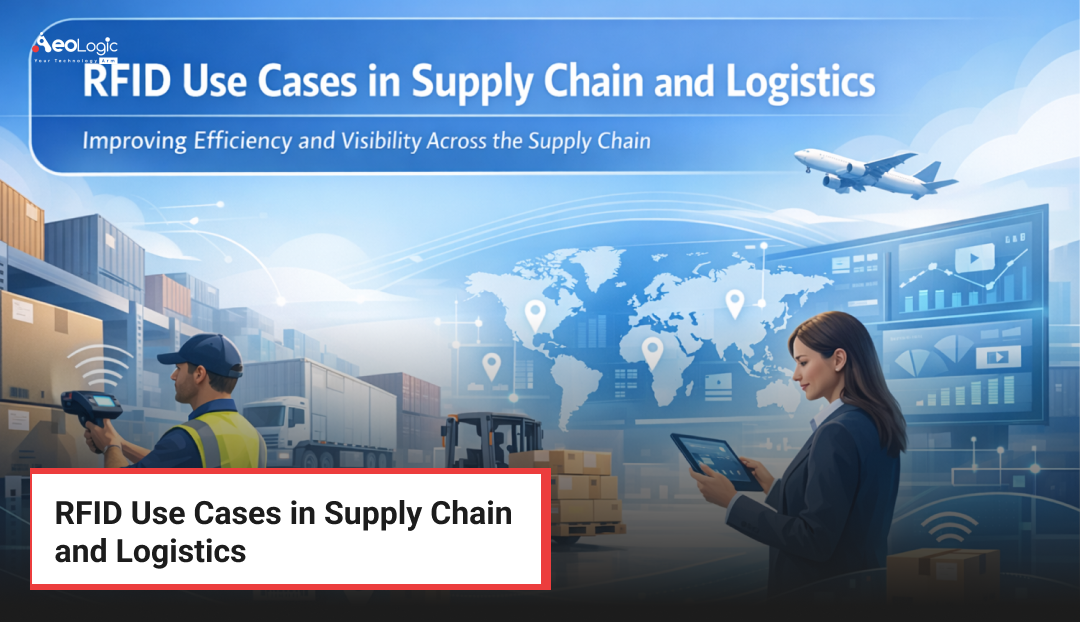
In today’s fast-moving global trade environment, visibility, accuracy, and speed define success. RFID use cases in supply chain and logistics are transforming how organizations track assets, manage inventory, and optimize operations. Unlike traditional barcode systems, RFID enables real-time, automated data capture without manual intervention.
For businesses looking to lower errors, increase transparency, and boost operational efficiency, this makes it extremely valuable. RFID is becoming a key component of smart, data-driven logistics as companies grow and supply chains become more intricate.
What is RFID in Supply Chain & Logistics?
Using electromagnetic fields, Radio Frequency Identification (RFID) is a wireless technology that tracks and identifies tags affixed to objects. RFID systems in supply chain and logistics are made up of tags, readers, and software platforms that collaborate to collect and process data instantly.
Because RFID use cases in supply chain and logistics don’t require line-of-sight scanning like barcodes do, it can track multiple items at once. This feature greatly increases automation, speed, and accuracy in distribution centers, transportation networks, and warehouses. It makes it possible for businesses to keep an eye on products as they progress through the supply chain.
 Why RFID Matters for Modern Supply Chains
Due to their increased interconnectedness, supply chains now require greater transparency than in the past. Companies need to guarantee on-time delivery, effectively manage inventory, and react swiftly to disruptions. By lowering manual dependencies and offering real-time insights, RFID is essential to accomplishing these goals.
By using RFID, businesses can improve compliance, decrease shrinkage, and track products at a fine level. Additionally, it facilitates improved decision-making by providing precise data, which is necessary for logistics operations forecasting, planning, and optimization.
Key RFID Use Cases in Supply Chain and Logistics
RFID’s broad range of useful applications across various supply chain functions is what is driving its adoption. RFID provides end-to-end visibility and control in supply chain and logistics, from warehouse operations to last-mile delivery.
Inventory Management and Real-Time Tracking
RFID eliminates the need for manual counting and allows for continuous inventory level monitoring. Real-time stock movement tracking helps businesses maintain accurate inventory records and minimize inconsistencies.
In addition to preventing stockouts and overstocking, this enhances demand forecasting. Additionally, it shortens search times and boosts operational effectiveness by enabling warehouse managers to find items instantly.
Warehouse Automation and Smart Operations
By facilitating automated product check-ins and check-outs, RFID technology improves warehouse automation. Data is immediately recorded as objects move through RFID gates, doing away with the need for manual scanning.
This results in increased accuracy, lower labor costs, and quicker processing times. RFID-powered smart warehouses can also interface with warehouse management systems to improve storage and expedite processes.
Asset Tracking and Equipment Monitoring
Pallets, containers, and handling equipment are examples of high-value assets that logistics companies frequently deal with. RFID ensures that these resources are used effectively by tracking them across various locations.
Real-time tracking enhances asset lifecycle management and lowers the chance of theft or loss. Additionally, it offers information on asset usage trends, which aids businesses in allocating resources as efficiently as possible.
Shipment Tracking and Visibility
As shipments travel through the supply chain, RFID offers end-to-end visibility. Businesses are able to track the location and status of goods in real time, from dispatch to delivery.
By facilitating precise delivery estimates and prompt problem solving, this raises customer satisfaction. Additionally, it improves coordination among various logistics process stakeholders.
Retail and Omnichannel Fulfillment
RFID ensures accurate inventory visibility across stores and warehouses, facilitating seamless omnichannel operations in retail supply chains. Faster order fulfillment and effective stock replenishment are made possible by this.
RFID can also be used by retailers to boost customer satisfaction, decrease shrinkage, and improve in-store operations.
Core Components of an RFID System
The smooth integration of multiple components is essential for an RFID implementation to be successful. RFID tags store unique identifying information and are affixed to objects. This information is recorded by RFID readers and sent to backend systems.
Step-by-Step Strategy for Implementing RFID
An organized strategy in line with corporate goals is necessary for the successful adoption of RFID.
Step 1:
Starts with determining precise use cases and establishing precise objectives, like increasing inventory accuracy or cutting operating expenses.
Step 2:
Involves choosing the appropriate RFID hardware and software in accordance with operational needs and the surrounding environment.
Step 3:
Emphasizes pilot testing to confirm functionality and spot possible issues prior to widespread implementation.
Step 4:
In order to guarantee smooth data flow and process automation, RFID must be integrated with current enterprise systems.
Step 5:
Is ongoing optimization and monitoring, in which companies examine performance indicators and improve their implementation for optimal effectiveness.
Key Benefits of RFID in Supply Chain Operations
RFID has many benefits that have an immediate effect on the effectiveness and performance of businesses. It makes the supply chain more visible and makes it possible to track assets and products in real time. By reducing human error and automating data collection procedures, it increases accuracy.
By cutting labor costs and processing time, RFID use cases in supply chain and logistics significantly improve operational efficiency. It facilitates improved decision-making by providing timely and precise data insights. Additionally, RFID offers thorough tracking and audit trails, which enhance security and compliance.
Technologies and Tools Supporting RFID
To fully realize their potential, RFID systems are frequently combined with cutting-edge technologies. Platforms for the Internet of Things (IoT) allow devices to share data and connect in real time. Large data volumes can be processed and stored in scalable ways thanks to cloud computing.
Organizations can extract useful insights from RFID data with the aid of artificial intelligence and advanced analytics. Improved coordination and smooth operations are guaranteed by integration with enterprise systems like supply chain management platforms and ERP.
Common Challenges in RFID Implementation
Organizations must overcome the practical and strategic challenges associated with RFID implementation in supply chain environments as soon as possible. The significant upfront costs associated with tags, readers, infrastructure, and system integration are among the most prevalent problems. Aligning RFID with current IT architecture can be difficult and time-consuming for many businesses, particularly those with legacy systems.
RFID performance is also impacted by environmental factors in RFID use cases in supply chain and logistics. If left unchecked, metal surfaces, liquids, and signal interference can all lower read accuracy. Underutilization of the system can also result from insufficient training and a lack of internal expertise. Another issue is data overload, since RFID creates vast amounts of real-time data that need to be efficiently processed and examined in order to provide value.
Best Practices for Successful RFID Adoption in RFID Use Cases in Supply Chain and Logistics
Instead of starting with a technology-first strategy, organizations should start with a well-defined business objective to ensure a successful RFID deployment. Designing a targeted and economical implementation strategy is aided by the identification of precise use cases and quantifiable results. Before scaling, companies can test performance, find gaps, and improve processes by starting with a pilot project.
Accuracy and dependability depend on selecting the appropriate hardware and tag type based on the operating environment. To guarantee smooth data flow, integration with current enterprise systems needs to be carefully planned. Stakeholder participation and ongoing training promote adoption among teams. RFID continues to provide long-term operational and strategic value thanks to routine monitoring, performance assessment, and system optimization.
Future Trends in RFID for Logistics
Future developments in digital technologies will have a significant impact on RFID in supply chain and logistics. Supply chains are becoming smarter and more transparent thanks to RFID’s integration with IoT, AI, and blockchain.
RFID adoption is anticipated to increase across industries as costs continue to decline. RFID is a key component of next-generation logistics solutions thanks to innovations like battery-assisted tags and real-time location systems that are further improving capabilities.
Conclusion
RFID is no longer a futuristic concept but a practical solution driving efficiency and transparency in modern supply chains. The growing adoption of RFID use cases in supply chain and logistics highlights its ability to transform operations, reduce costs, and improve decision-making.
Investing in RFID is a calculated step toward more intelligent, data-driven logistics for companies trying to maintain their competitiveness. Businesses like Aeologic Technologies are assisting companies in implementing customized RFID solutions that enable long-term growth and actual operational value.
People Also Ask (FAQs)
Q1. What are RFID use cases in supply chain and logistics?
RFID use cases in supply chain and logistics include inventory tracking, warehouse automation, shipment visibility, and asset management. RFID increases accuracy and efficiency by enabling real-time data capture without the need for manual scanning. Companies use it to improve operational control, lower losses, and track the movement of goods. Additionally, it facilitates quicker decision-making and improved demand forecasting. RFID is essential for maintaining transparency and streamlining logistics procedures at various stages as supply chains grow more intricate.
Q2. How does RFID improve supply chain efficiency?
By automating data collection and doing away with manual procedures, RFID increases supply chain efficiency. It makes it possible to track shipments and inventory in real time, which cuts down on mistakes and delays. Using precise data insights, businesses can swiftly locate bottlenecks and streamline processes. Additionally, RFID improves stakeholder coordination, guaranteeing seamless operations. It assists organizations in proactively responding to disruptions and upholding high standards of service quality by offering constant visibility.
Q3. What is the difference between RFID and barcode systems?
While RFID uses radio waves to read multiple tags at once without direct visibility, barcode systems require line-of-sight scanning. For large-scale operations, this makes RFID quicker and more effective. Furthermore, compared to barcodes, RFID tags are more robust and have a larger data storage capacity. Because of these benefits, RFID is a popular option in contemporary supply chain settings where accuracy and speed are crucial.
Q4. Is RFID expensive to implement in logistics?
RFID implementation involves initial costs related to hardware, software, and integration. However, the long-term benefits often outweigh these costs. Improved productivity, lower labor costs, and fewer losses result in a high return on investment for businesses. The cost of RFID technology has also decreased over time, making it more accessible to organizations of all sizes. Careful planning and phased implementation can help manage costs effectively.
Q5. Can RFID be integrated with existing systems?
Yes, RFID can be integrated with existing enterprise systems such as ERP, warehouse management systems, and supply chain platforms. Middleware solutions enable seamless data exchange between RFID devices and backend systems. Proper integration is essential for maximizing the value of RFID and achieving end-to-end visibility in supply chain operations.
Q6. What industries benefit most from RFID in logistics?
Retailers use it for inventory management and omnichannel fulfillment, while manufacturers rely on it for tracking raw materials and finished goods. Healthcare organizations use RFID for asset tracking and patient safety, and logistics companies benefit from improved shipment visibility and operational efficiency. Its versatility makes it applicable across diverse sectors.

Currently, as a Senior Manager of Technology, I oversee a dynamic team, ensuring the delivery of high-quality software solutions that meet the evolving needs of our clients. A seasoned technology leader with over a decade of experience in the software development industry, I have been instrumental in driving the end-to-end software development lifecycle since my career inception in 2011.