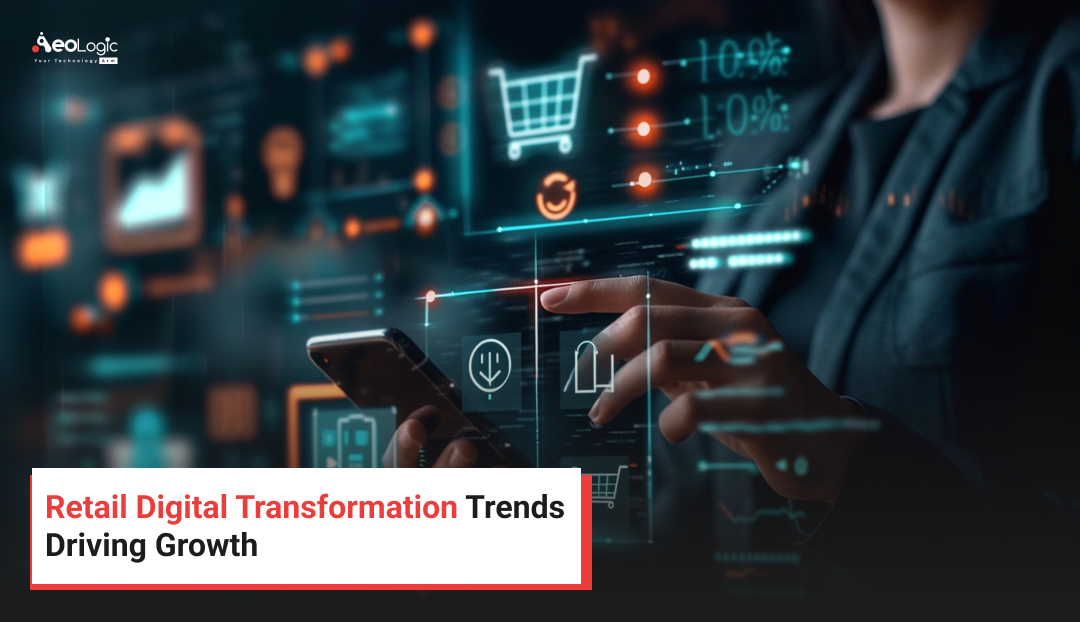
One of the biggest changes in the retail sector’s history is currently taking place. Conventional brick-and-mortar stores now face competition from global eCommerce behemoths, digital-first brands, and quickly shifting consumer expectations in addition to the store next door. Retail digital transformation is now essential for survival and long-term growth rather than a strategic advantage.
Consumers now demand seamless online and offline experiences, speed, ease, and personalisation. They want easy mobile browsing, in-store availability checks, tailored offers, and seamless purchases. Retailers who don’t adjust to these demands run the risk of losing customers’ trust, market share, and relevance.
Adopting new technologies is only one aspect of retail digital transformation. It involves modernising operations, rethinking business models, and making intelligent use of data to produce meaningful customer experiences. Digital transformation is changing how retail businesses function and expand, from omnichannel strategies and smart supply chains to AI-powered recommendations.
What Digital Transformation in Retail Actually Means
Recognising the fundamental idea
The strategic integration of digital technologies in every aspect of a retail business is known as retail digital transformation. Retailers’ internal operations and interactions with partners, suppliers, and customers are altered. The objective is to use innovation and data-driven decision-making to increase productivity, improve customer satisfaction, and spur long-term growth.
Retail digital transformation entails a more profound change than basic digitisation, like converting paper records to digital files. It includes redesigning processes, upgrading legacy systems, training teams, and building a culture that embraces continuous improvement and innovation.
Beyond merely embracing technology
Many retailers erroneously think that implementing a point-of-sale system or starting an eCommerce website counts as digital transformation. In actuality, the goal of retail digital transformation is to build a networked ecosystem in which people, technology, and procedures all function together harmoniously.
Every facet of retail is affected by this change, including pricing strategies, marketing, logistics, customer interaction, inventory management, and after-sales support. When done properly, it allows retailers to operate with more agility, personalise experiences at scale, and react to changes in the market more quickly.
 The Significance of Retail Digital Transformation in the Current Era
Modifying the behaviour of consumers
Consumers today are empowered by technology. They read reviews, do online product research, instantly compare prices, and demand transparency from brands. Convenience—same-day delivery, simple returns, and uniform experiences across channels—is another requirement they have.
Retailers can better meet these demands by investing in digital transformation. Businesses can anticipate customer needs and provide tailored experiences that foster loyalty by utilising real-time data and sophisticated analytics.
Enhanced rivalry and disruption of the market
The retail industry is now more competitive due to the emergence of digital-native brands and international marketplaces. These days, businesses that use automation and cutting-edge technology to operate on a massive scale compete with small and mid-sized retailers.
Digital transformation in retail aids in levelling the playing field. With the correct digital tools, retailers can streamline operations, cut expenses, and set themselves apart through better customer experiences rather than just price.
Cost reduction and operational effectiveness
Outdated technology, disjointed systems, and manual procedures frequently result in errors, inefficiencies, and increased operating expenses. Retailers can automate processes, optimise supply chains, and obtain real-time operational visibility through digital transformation.
In addition to cutting expenses, this increased efficiency frees up teams to concentrate on higher-value tasks like strategic planning and customer engagement.
Principal Advantages of Digital Retail Transformation
Improved client satisfaction
Delivering consistent and customised customer experiences is one of the biggest advantages of retail digital transformation. Retailers can create a single customer view by combining data from various touchpoints, including social media, mobile apps, online stores, and physical locations.
This enables companies to provide customised suggestions, focused promotions, and easy shopping experiences that boost customer satisfaction and retention.
Making decisions based on data
Every day, retailers produce enormous amounts of data, but most of it is wasted if they don’t have the appropriate tools. Real-time data collection, analysis, and action are made possible for businesses through digital transformation.
Retailers can forecast demand, identify trends, optimise pricing, and make growth-promoting decisions with the help of sophisticated analytics and dashboards.
Increased scalability and agility
Consumer tastes and market conditions shift quickly. Digital transformation in retail offers the adaptability required for rapid change. Retailers can scale operations up or down without significant disruptions thanks to automation, modular systems, and cloud-based platforms.
This flexibility is particularly helpful during busy times of the year, when new products are introduced, or when there are unforeseen changes in the market.
Better supply chain and inventory management
In the retail industry, inventory mismanagement is a frequent problem. Stockouts result in lost sales, while overstocking causes waste. Real-time inventory visibility across channels and locations is made possible by digital transformation tools.
Retailers can optimise stock levels, lower carrying costs, and increase fulfilment accuracy by utilising automation and predictive analytics.
The Practical Applications of Retail Digital Transformation
Developing an omnichannel shopping experience
Consumers today switch between online and offline channels with ease. Businesses can provide a true omnichannel experience where customers can browse online, purchase in-store, return items via mail, or pick them up curbside without any hassles thanks to retail digital transformation.
To ensure consistency in pricing, inventory, and customer information, this calls for integrated systems that share data across channels.
Using client information to customise
In retail, personalisation is a potent growth engine. Retailers can deliver relevant content and offers by analysing customer behaviour, preferences, and purchase history thanks to digital transformation.
For instance, customised email campaigns can increase engagement and conversion rates, and AI-driven recommendation engines can make product recommendations based on browsing habits.
Automating processes and procedures
Automation is essential to the digital transformation of retail. Automation lowers manual labour and increases accuracy, from AI-powered chatbots for customer service to automated order processing.
Additionally, retailers can free up staff members to concentrate on strategic initiatives by using robotic process automation to handle repetitive back-office tasks.
Retail Digital Transformation’s Industry Applications
Retail fashion and clothing
In the fashion industry, consumer expectations are high and trends change swiftly.Fashion retailers can anticipate demand, manage rapidly changing inventory, and customise shopping experiences with the aid of digital transformation.
Digital tools that improve customer engagement and decrease returns include virtual fitting rooms, AI-based size recommendations, and social commerce integrations.
Retail groceries and food
In order to facilitate online ordering, home delivery, and click-and-collect services, grocery stores are progressively implementing digital transformation. While data analytics aids in the optimisation of pricing and promotions, real-time inventory systems guarantee precise stock availability.
Through cutting-edge tracking technologies, digital transformation also promotes food safety and supply chain transparency.
Consumer goods and electronics
By providing comprehensive product information, comparison tools, and tailored recommendations, electronics retailers profit from digital transformation. CRM systems that are integrated aid in customer relationship management and post-purchase assistance.
Demand management is another area where predictive analytics is useful.
Technologies Driving the Digital Transformation of Retail
SaaS platforms and cloud computing
Scalable and adaptable retail systems are built on cloud-based solutions. They lower infrastructure costs, enable real-time data access, and integrate various applications for retailers.
Faster deployment and simpler updates are made possible by software-as-a-service platforms, which facilitate the adoption of new features.
Machine learning and artificial intelligence
AI and machine learning are changing how retailers perceive and interact with consumers. Recommendation engines, demand forecasting, dynamic pricing, and fraud detection are all powered by these technologies.
AI assists retailers in making more informed decisions and providing more pertinent experiences by learning from data patterns.
Smart retail and the Internet of Things
Smart shelves, linked point-of-sale systems, and RFID tags are examples of IoT devices that offer real-time insights into customer behavior and inventory movement. These technologies improve accuracy, reduce shrinkage, and enhance operational visibility.
Obstacles in the Digital Transformation of Retail and Solutions
Although there are many advantages to retail digital transformation, the process is rarely straightforward. Many retailers suffer from poor execution, organizational resistance, and strategy gaps rather than a lack of technology. Early awareness of these issues enables businesses to plan more efficiently and steer clear of expensive errors.
Organizational resistance to change
Internal resistance is one of the main obstacles to the digital transformation of retail. Managers and staff who are accustomed to the current systems are frequently reluctant to implement new workflows or tools. The implementation of transformation initiatives may be slowed down and their overall impact diminished by this resistance.
Training and effective communication are the answers. Retail executives must clarify the need for change and how it will benefit the company. Investing in upskilling programs and involving teams early in the process creates ownership and reduces fear of change.
Integration problems and legacy systems
Many retailers continue to use antiquated legacy systems that are difficult to integrate with contemporary digital platforms. These systems raise maintenance costs, restrict scalability, and produce data silos.
The best modernization strategy is a phased one. Retailers can gradually move to cloud-based platforms and use APIs to connect current systems rather than replacing everything at once. This reduces disruption while enabling steady progress toward full retail digital transformation.
Privacy and data security issues
Concerns about data security and compliance increase as retailers gather more consumer data. Cyberattacks, data breaches, and regulatory requirements can pose serious risks to business reputation and trust.
Regular audits, robust cybersecurity frameworks, and adherence to data protection laws are crucial. In order to build trust through responsible data practices, retailers should also be open about how they gather and use customer data.
Best Practices for Digital Retail Transformation Success
Create a well-defined transformation strategy first
A clear strategy that is in line with corporate objectives should always be the first step in any retail digital transformation. Clarity guarantees that technology investments yield quantifiable value, regardless of the goal—improving customer experience, boosting operational efficiency, or entering new markets.
Retailers can monitor their progress and sustain momentum by using a roadmap that includes both short-term successes and long-term benchmarks.
Put an emphasis on customer-centric design
The customer experience should be improved by all digital initiatives. Retailers are more likely to succeed if they put the needs of their customers first, including convenience, personalization, and consistency.
Customer journey mapping facilitates the identification of opportunities and problems where digital tools can be truly beneficial. This strategy guarantees the continued relevance and impact of transformation initiatives.
Invest in adaptable and scalable technologies
Given the dynamic nature of retail, technological decisions should facilitate future expansion. Retailers can quickly adjust to shifting demands thanks to cloud platforms, modular architectures, and open integrations.
Scalable solutions allow for ongoing improvement without significant reinvestment and lower the risk of technology becoming outdated.
Create a culture that is data-driven
Transformation is driven by people, not just technology. Retailers need to promote data-driven decision-making at every organizational level.
Unlocking the full potential of retail digital transformation requires training teams on analytics tools, integrating data into daily workflows, and making insights easily accessible.
Future Patterns Influencing the Digital Transformation of Retail
AI-powered hyper-personalization
Deeply customized experiences are the way of the future for retail. AI-driven systems will analyze real-time behavior, preferences, and context to deliver tailored content, pricing, and recommendations at an individual level.
Retailers who spend money on sophisticated personalization will strengthen their bonds with customers and boost their lifetime value.
Extension of immersive retail encounters
Virtual and augmented reality technologies are becoming more widely available. Customers can explore virtual stores, visualize products, and engage with brands in novel ways thanks to these tools.
Immersion experiences create captivating journeys that increase conversion and brand loyalty by bridging the gap between online and physical retail.
Automation throughout the value chain of retail
Automation will continue to spread into marketing, customer service, and merchandising in addition to supply chains and warehouses. Intelligent replenishment systems, automated pricing engines, and chatbots driven by AI will become commonplace elements of retail digital transformation.
This change lowers operational complexity and facilitates quicker decision-making.
Eco-friendly and conscientious retail methods
Digital transformation is also supporting sustainability goals. Retailers are using data to reduce waste, optimize logistics, and improve energy efficiency.
Responsible brands are becoming more and more valued by consumers, and digital tools enable retailers to measure and openly share their sustainability initiatives.
Conclusion
Physical locations and conventional sales models no longer define retail. Experiences, data, and the capacity for rapid change adaptation define it. Retail Digital Transformation has become the foundation for growth, resilience, and long-term competitiveness in an increasingly digital world.
Digital transformation enables retailers to confidently meet contemporary expectations and upcoming challenges by improving customer experiences, streamlining operations, and enabling personalization and scalability. The most successful companies are those that take a strategic approach to change, emphasizing people, procedures, and technology.
By providing cutting-edge digital solutions suited to changing business requirements, companies like Aeologic Technologies assist retailers on this journey, assisting brands in transforming operations and unlocking sustainable growth.
Frequently Asked Questions
Q1. What is retail digital transformation?
Retail digital transformation is the integration of digital technologies across retail operations to improve customer experience, streamline processes, and drive data-driven growth.
Q2. Why is the digital transformation of retail important nowadays?
It is crucial because technology, competition, and consumer behavior are all evolving quickly. Retailers can remain efficient, customer-focused, and relevant with the aid of digital transformation.
Q3. How much time does the digital transformation of retail take?
Depending on the size, objectives, and complexity of the company, different timelines apply. The majority of retailers adopt a phased strategy, making initial improvements in a matter of months while continuously improving.
Q4. Which technologies are frequently employed in the digital transformation of retail?
Cloud platforms, artificial intelligence, data analytics, IoT, automation tools, and omnichannel commerce solutions are examples of common technologies.
Q5. Can the digital transformation of the retail industry help small retailers?
Yes, increasing productivity, tailoring customer experiences, and more successfully competing with bigger brands can all be very beneficial to small retailers.
Q6. What are the main obstacles to the digital transformation of retail?
Lack of a clear plan, data security issues, legacy systems, and resistance to change are some of the main obstacles.
Q7. How can retailers assess their digital transformation’s effectiveness?
Success can be measured through KPIs such as customer satisfaction, conversion rates, operational efficiency, inventory accuracy, and revenue growth.

Manoj Kumar is a seasoned Digital Marketing Manager and passionate Tech Blogger with deep expertise in SEO, AI trends, and emerging digital technologies. He writes about innovative solutions that drive growth and transformation across industry.
Featured on – YOURSTORY | TECHSLING | ELEARNINGINDUSTRY | DATASCIENCECENTRAL | TIMESOFINDIA | MEDIUM | DATAFLOQ