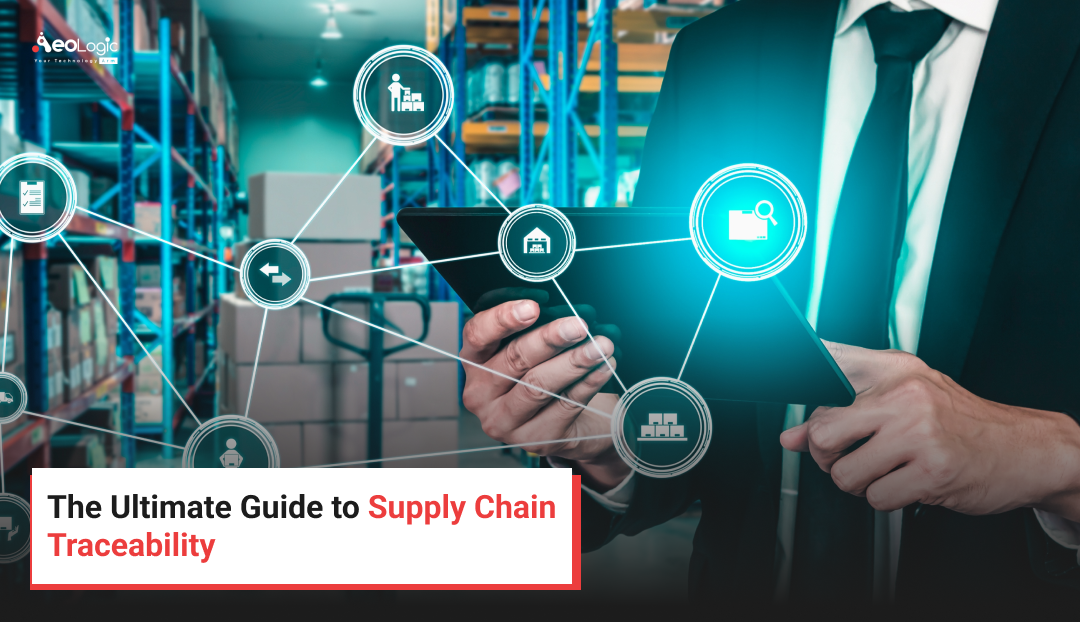
Supply chains are more complicated than ever in the fast-paced, hyperconnected global economy of today. Before reaching the final consumer, goods now go through a number of suppliers, manufacturers, warehouses, logistics companies, and retailers. Scale and efficiency are made possible by this complexity, but there are risks associated with it as well, including counterfeiting, delays, noncompliance, problems with quality, and lack of visibility. At this point, Supply Chain Traceability is no longer an optional improvement but rather a strategic requirement.
Regulators, consumers, and partners are putting increasing pressure on modern businesses to be transparent about the origins, handling, and future destinations of their products. Traceability is essential to fostering resilience and trust throughout supply networks, whether it is in the areas of food safety, pharmaceutical integrity, ethical sourcing, or operational efficiency.
The Definition of Supply Chain Traceability
The ability to monitor, track, and confirm the flow and transformation of products, materials, and information throughout the whole supply chain lifecycle—from the procurement of raw materials to the final delivery and beyond—is known as supply chain traceability.
Fundamentally, traceability provides answers to three important questions:
- What is the origin of this product?
- At each stage, what happened to it?
- Where is it at the moment?
Supply Chain Traceability offers end-to-end visibility into processes, ownership, conditions, and compliance data related to a product, in contrast to basic tracking, which primarily concentrates on location or shipment status.
Traceability systems record and connect information like:
- Origin of the raw materials
- Lot and batch numbers
- Details of manufacturing
- Conditions of storage
- Events related to transportation
- Managing and processing documents
- Timelines for delivery and distribution
Businesses are able to precisely track products both forward and backward through the supply chain thanks to this interconnected data.
The Significance of Supply Chain Traceability in the Modern World
Global supply chains are no longer predictable or linear. These dynamic ecosystems are impacted by shifting consumer expectations, regulatory changes, climate disruptions, and geopolitical shifts. Lack of visibility in this setting can easily result in monetary loss or harm to one’s reputation.
For a number of reasons, supply chain traceability has become crucial.
There has been a significant shift in consumer trust. Consumers now expect transparency regarding ethical sourcing, sustainability, and product origins. Brands that are unable to produce evidence run the risk of becoming less credible.
Pressure from regulators is still growing. Governments are imposing more stringent requirements for traceability and reporting in a variety of industries, including electronics, food, pharmaceuticals, and automobiles.
Exposure to risk has grown. Without traceability systems in place, theft, supplier failures, contamination, recalls, and counterfeiting can spread quickly.
Uncertainty is converted into useful intelligence through traceability. It enables businesses to react more quickly, lower risk, and continue operations even in the face of disruptions.
 Supply Chain Traceability’s Principal Advantages
Supply chain traceability implementation yields quantifiable business benefits in a number of areas.
Among the most immediate advantages are improved visibility and control. Businesses get real-time information about inventory levels, product movement, and process status at every node.
When companies can pinpoint the precise locations of defects and isolate impacted batches without interfering with the entire supply chain, improved quality assurance becomes feasible.
Recalls that are quicker and more accurate greatly minimise financial loss and damage to one’s reputation. Companies can focus on particular lots or shipments rather than recalling every product.
By eliminating the burden of manual reporting, automated data capture and audit-ready records lead to stronger regulatory compliance.
When waste, bottlenecks, and inefficiencies become apparent and quantifiable, cost optimisation takes place.
Particularly in delicate industries, consumer confidence rises when brands are able to confirm the authenticity, origin, and handling conditions of their products.
Traceability makes it possible to make quick decisions in the event of supplier failures, demand spikes, or supply disruptions, which increases resilience.
The Practical Application of Supply Chain Traceability
Identification, data collection, integration, and analytics are all used in the operation of supply chain traceability.
A unique identifier is given to each product, component, or batch. This identifier could be a barcode, RFID tag, QR code, serial number, or digital token.
Every touchpoint along the product’s journey through the supply chain records data. This covers production processes, quality assurance, storage circumstances, transportation incidents, and ownership transitions.
Data that has been captured is sent to either distributed or centralised systems, where it is connected to the digital record of the product. As a result, a continuous history is created that can be viewed instantly or examined at a later time.
Advanced traceability systems ensure smooth data flow across operations by integrating with enterprise platforms like ERP, WMS, TMS, and MES.
When a problem occurs, companies can either look forward to identify impacted clients or areas or look backward to find the underlying causes.
Supply chain data is no longer a reactive record but rather a strategic asset thanks to this closed-loop visibility.
How Companies Make Strategic Use of Supply Chain Traceability
Supply chain traceability is being used by forward-thinking companies as a source of competitive advantage in addition to compliance.
Traceability is used by manufacturers to increase production efficiency, decrease scrap, and guarantee uniform quality across facilities.
Retailers use traceability to verify product authenticity, minimize stockouts, and manage inventory more precisely.
Traceability is essential for logistics companies to monitor handling conditions, optimize routes, and increase delivery dependability.
Traceability insights are used by procurement teams to assess supplier performance, reduce risk, and assist with ethical sourcing programs.
Supply Chain Traceability is a marketing differentiator used by brand owners to increase consumer loyalty by offering transparency.
Traceability essentially transforms supply chains from reactive to predictive, allowing for more intelligent choices at every stage.
Applications of Supply Chain Traceability in Industry
Supply Chain Traceability is not sector-specific. Its impact spans across industries with unique requirements and challenges.
Food and Drinks
For food safety, contamination avoidance, and regulatory compliance, traceability is essential. In order to guarantee freshness, authenticity, and quick recall capability, businesses track ingredients from farms to processing facilities to retail shelves.
Medicines and Healthcare
By preventing counterfeit medications, guaranteeing cold chain compliance, and upholding batch-level accountability throughout distribution, traceability in this industry safeguards patient safety.
Production and Industrial Products
Traceability is used by manufacturers to monitor parts, oversee warranties, regulate quality, and satisfy compliance requirements for intricate assemblies.
Consumer goods and retail
Retailers can manage returns, verify sourcing claims, lower shrinkage, and give customers product transparency with the aid of traceability.
Aerospace and Automobile
These sectors depend on traceability to precisely handle recalls, maintain safety compliance, and track parts over extended lifetimes.
Transportation and Storage
Traceability enhances shipment visibility, inventory accuracy, and operational efficiency across storage and transportation networks.
Methods and Technologies Driving Supply Chain Traceability
In order to collect, store, and analyze data, modern supply chain traceability depends on a variety of digital technologies cooperating.
Barcodes, RFID, and QR codes are examples of automatic identification technologies that allow for quick and precise data collection without the need for human intervention.
IoT sensors ensure product integrity during transportation by keeping an eye on environmental factors like temperature, humidity, shock, and location.
Scalable infrastructure for storing and retrieving traceability data across international operations is offered by cloud platforms.
Blockchain technology makes it possible to create safe, unchangeable records that increase stakeholder trust.
AI and advanced analytics turn unprocessed traceability data into insights for process optimization, risk identification, and forecasting.
Data silos are eliminated by system integration, which guarantees traceability solutions integrate seamlessly with current enterprise systems.
The right combination of technologies depends on industry requirements, scale, and regulatory complexity.
Implementing Supply Chain Traceability Presents Difficulties
Supply Chain Traceability has advantages, but there are drawbacks as well.
When information is dispersed among disparate systems and partners, data fragmentation is a frequent problem.
Adoption of suppliers can be challenging, particularly when working with small or geographically scattered vendors.
Without a clear ROI strategy, the initial investment in infrastructure and technology may seem high.
When using manual inputs or inconsistent formats, data accuracy and standardization continue to be issues.
As more data is shared across digital platforms, cybersecurity risks rise.
These difficulties are real, but they can be overcome with the correct strategy and preparation.
Useful Ways to Address Traceability Issues
Clear objectives that are connected to business outcomes rather than just technology are the foundation of successful traceability initiatives.
Consistency and usability are increased when partners standardize data formats and procedures.
Organizations can start small, demonstrate value, and scale gradually through phased implementation.
Programs for engaging suppliers foster cooperation and guarantee adoption throughout the supply chain.
Automation improves data reliability and lowers human error.
Selecting scalable, adaptable platforms guarantees that the system can change to meet changing business requirements.
Traceability is no longer a one-time project but rather a sustainable capability with the appropriate approach.
Top Techniques for Developing Efficient Supply Chain Traceability
Businesses that are successful with supply chain traceability adhere to a few standard best practices.
Based on risk, regulations, and customer expectations, they establish traceability requirements.
Instead of concentrating on discrete tracking points, they emphasize end-to-end visibility.
Rather than treating traceability as a separate system, they incorporate it into core operations.
They use automation, validation, and governance to guarantee data quality.
In order to promote improvement rather than merely compliance, they constantly examine traceability data.
To encourage adoption among teams and partners, they make investments in change management.
By following these procedures, traceability is guaranteed to provide long-term benefits rather than just temporary compliance.
Prospects for Supply Chain Traceability
Rising expectations and digital transformation will shape supply chain traceability in the future.
AI-powered predictive traceability will foresee disruptions before they happen.
Supply chain digital twins will optimize performance by simulating scenarios.
Global traceability standards will be driven by increased regulatory harmonization.
Traceability data will become more and more important in sustainability reporting.
Consumer-facing transparency tools will become more common, especially in retail and food.
Traceability will evolve from a defensive requirement into a strategic growth enabler.
Supply Chain Traceability’s Greater Business Value
The benefits go beyond compliance and visibility as companies advance in their traceability journey. Operational intelligence and strategic decision-making are based on supply chain traceability.
Because supply forecasts are based on actual movement rather than conjecture, executives are more confident in them. Operations teams minimise firefighting by promptly identifying the underlying causes of delays or defects. Finance teams see better working capital management, fewer penalties, and fewer write-offs.
Additionally, traceability fosters creativity. Businesses can improve processes, packaging, or sourcing strategies with quantifiable results when they comprehend how products behave throughout the supply chain.
Traceability is a fundamental component of contemporary supply chain management because of this deeper value.
Goals for Sustainability and Traceability
Nowadays, sustainability is more of a business requirement than a marketing ploy. Regulators, investors, and customers demand quantifiable results.
In order to validate sustainability claims, supply chain traceability is essential. It offers evidence of responsible manufacturing, waste reduction, carbon footprint tracking, and ethical sourcing.
Sustainability initiatives remain assumptions in the absence of traceability. They become credible, reportable, and auditable with traceability.
Selecting the Appropriate Traceability Method
There isn’t a traceability model that works for everyone. The industry, scale, regulatory environment, and business objectives all influence the appropriate strategy.
Granular, batch-level traceability is necessary for high-risk industries. While smaller companies might concentrate on key nodes, global enterprises require multi-tier visibility.
The key is aligning technology, processes, and people around clear objectives rather than chasing complexity.
Conclusion
Supply Chain Traceability is no longer a regulatory checkbox or a back-office function. It is a strategic capability that determines how competitive, transparent, and resilient a company can be in the unstable global environment of today.
Businesses that make traceability investments benefit from increased confidence, control, and clarity throughout their supply networks. They unlock operational efficiencies that propel long-term growth, strengthen customer trust, and react to change more quickly.
Traceability will continue to be the foundation of wise, accountable, and future-ready operations as supply chains develop. Businesses that take action now put themselves in a position to lead through disruption rather than just survive it.
Aeologic Technologies assists companies in creating and implementing intelligent, scalable supply chain traceability solutions that match technology to actual operational requirements, facilitating performance, visibility, and compliance throughout the whole supply ecosystem.
Frequently Asked Questions
Q1. What is Supply Chain Traceability in simple terms?
The ability to follow a product’s origin, its progress through each stage, and its final destination is known as supply chain traceability.
Q2. What distinguishes tracking from supply chain traceability?
While traceability records comprehensive product history, processes, transformations, ownership changes, and data throughout the entire supply chain lifecycle, tracking primarily concentrates on location and movement.
Q3. Which sectors most require supply chain traceability?
Traceability is crucial for ensuring safety, regulatory compliance, quality control, recalls, and consumer trust in the food, pharmaceutical, manufacturing, retail, automotive, and logistics industries.
Q4. Is it costly to implement supply chain traceability?
Modern digital solutions allow for scalable, phased implementation with automation, efficiency gains, and measurable ROI over time, though costs vary depending on scale and complexity.
Q5. Is supply chain traceability beneficial to small businesses?
Indeed, even simple traceability increases operational visibility, lowers risks, promotes compliance, boosts productivity, and strengthens consumer confidence for small businesses.
Q6. Which technologies are frequently employed in supply chain traceability?
Depending on the industry, scale, and traceability requirements, barcodes, RFID, IoT sensors, cloud-based platforms, data analytics, and blockchain technologies are frequently utilised.
Q7. How is compliance aided by supply chain traceability?
It offers precise, transparent, and auditable records that satisfy legal requirements, streamline reporting, facilitate quicker audits, and enhance inspection preparedness.

Manoj Kumar is a seasoned Digital Marketing Manager and passionate Tech Blogger with deep expertise in SEO, AI trends, and emerging digital technologies. He writes about innovative solutions that drive growth and transformation across industry.
Featured on – YOURSTORY | TECHSLING | ELEARNINGINDUSTRY | DATASCIENCECENTRAL | TIMESOFINDIA | MEDIUM | DATAFLOQ