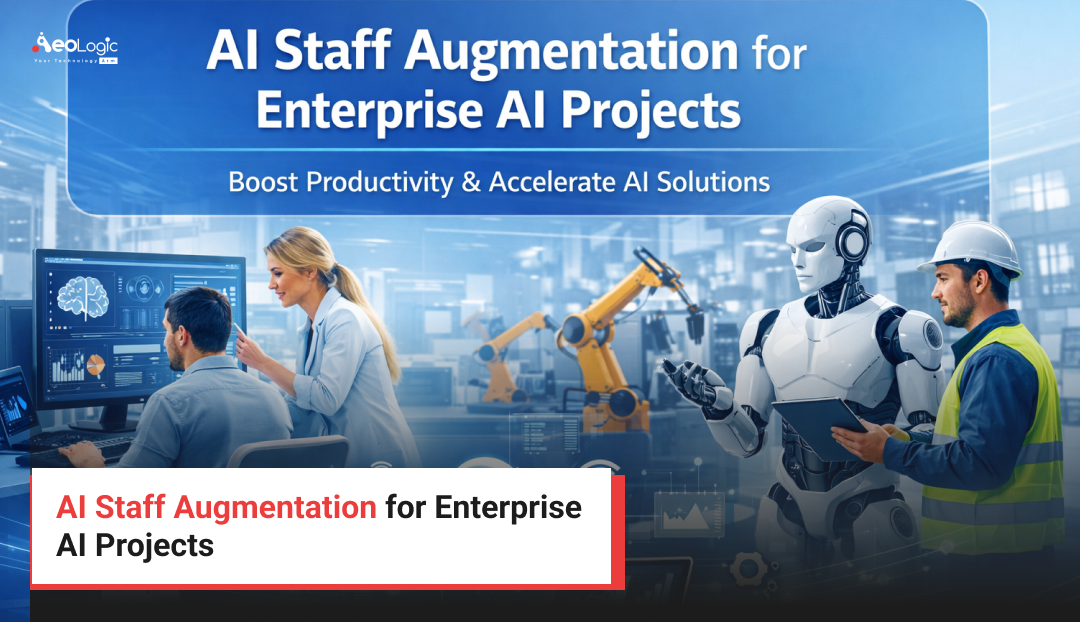
In today’s rapidly evolving digital landscape, enterprises are racing to adopt artificial intelligence to gain a competitive edge, improve operational efficiency, and unlock new revenue streams. However, one of the biggest challenges organizations face is accessing the right talent with deep expertise in AI technologies. This is where AI Staff Augmentation emerges as a strategic solution, enabling businesses to extend their internal teams with highly skilled professionals on demand.
As enterprise AI projects become more complex and resource-intensive, relying solely on in-house teams can slow down innovation and execution. AI staff augmentation allows organizations to bridge skill gaps, accelerate project timelines, and ensure successful deployment of AI initiatives. It offers flexibility, scalability, and access to specialized expertise, making it an essential approach for modern enterprises navigating the AI-driven transformation.
What is AI Staff Augmentation?
AI Staff Augmentation is a strategic outsourcing model where organizations hire external AI experts, engineers, and specialists to work alongside their in-house teams on a temporary or project-specific basis. These professionals bring specialized knowledge in areas such as machine learning, data science, natural language processing, and AI engineering.
Unlike traditional outsourcing, staff augmentation focuses on collaboration rather than delegation. The augmented team members integrate seamlessly into existing workflows, tools, and processes, enabling organizations to maintain control over their projects while benefiting from external expertise. This model is particularly valuable for enterprises undertaking complex AI initiatives that require niche skills not readily available internally.
By leveraging AI staff augmentation, businesses can scale their teams dynamically based on project requirements, ensuring that they have the right talent at the right time without the long-term commitment of full-time hiring.
Why AI Staff Augmentation Matters for Enterprises
The importance of AI Staff Augmentation lies in its ability to address critical challenges faced by enterprises in implementing AI solutions. One of the primary challenges is the global shortage of skilled AI professionals. Hiring and retaining top talent can be time-consuming and expensive, often delaying project timelines.
AI staff augmentation provides immediate access to a pool of experienced professionals, enabling organizations to accelerate development and deployment. It also allows businesses to stay competitive by adopting the latest AI technologies and methodologies without investing heavily in internal training.
Another key factor is flexibility. Enterprise AI projects often have fluctuating resource requirements. Staff augmentation enables organizations to scale their teams up or down based on project needs, optimizing costs and ensuring efficient resource utilization. This adaptability is crucial in a fast-paced technological environment.
 Core Components of AI Staff Augmentation
Talent Acquisition and Integration
A critical component of staff augmentation is sourcing the right talent with relevant expertise. This involves identifying skilled professionals who can seamlessly integrate into the organization’s existing teams and contribute effectively to ongoing projects.
Skill Specialization
AI projects require expertise in various domains such as machine learning, deep learning, computer vision, and data engineering. Staff augmentation ensures access to specialists with deep knowledge in these areas, enhancing the quality and efficiency of project execution.
Collaboration and Communication
Effective collaboration between in-house and augmented teams is essential for success. Clear communication channels, shared goals, and aligned workflows ensure that all team members work cohesively towards project objectives.
Project Scalability
Staff augmentation enables organizations to scale their teams dynamically. This flexibility allows enterprises to respond quickly to changing project requirements and market demands.
Step-by-Step Strategy for Implementing AI Staff Augmentation
Step 1: Identify Skill Gaps and Project Needs
The first step involves evaluating current team capabilities and identifying gaps in skills required for AI projects. This helps in determining the specific expertise needed for augmentation.
Step 2: Define Objectives and Scope
Organizations should clearly define project goals, timelines, and deliverables. This ensures that augmented staff align with business objectives and contribute effectively to project success.
Step 3: Choose the Right Augmentation Partner
Selecting a reliable partner with a proven track record in AI talent delivery is crucial. The partner should provide skilled professionals who can integrate seamlessly into the organization’s ecosystem.
Step 4: Onboard and Integrate Teams
Effective onboarding ensures that augmented staff understand the organization’s processes, tools, and culture. This facilitates smooth collaboration and productivity.
Step 5: Monitor Performance and Optimize
Continuous monitoring and feedback help in optimizing team performance. Organizations should assess progress regularly and make necessary adjustments to ensure project success.
Key Benefits and Advantages
AI staff augmentation offers significant advantages for enterprises aiming to scale their AI initiatives. It enhances operational efficiency by providing access to specialized expertise without the need for long-term hiring commitments. This reduces recruitment costs and accelerates project timelines.
Another major benefit is flexibility. Organizations can scale their teams based on project requirements, ensuring optimal resource utilization. This adaptability allows businesses to respond quickly to changing market demands and technological advancements.
AI staff augmentation also improves innovation by bringing fresh perspectives and diverse skill sets into the organization. External experts contribute new ideas and approaches, driving better outcomes and fostering a culture of continuous improvement.
Real-World Use Cases and Applications
Enterprise AI Product Development
Organizations developing AI-driven products often require expertise in multiple domains. Staff augmentation enables them to bring in specialists for specific tasks, ensuring high-quality product development and faster time-to-market.
Data Engineering and Analytics
AI projects rely heavily on data. Augmented teams can assist in building data pipelines, managing large datasets, and implementing advanced analytics solutions.
Automation and Process Optimization
Enterprises use AI to automate processes and improve efficiency. Staff augmentation provides the necessary expertise to design and implement automation solutions tailored to business needs.
AI Model Development and Deployment
Developing and deploying AI models requires specialized skills. Augmented professionals help in building, training, and optimizing models, ensuring accurate and reliable outcomes.
Technologies and Tools Involved
AI staff augmentation leverages a wide range of technologies and tools to deliver effective solutions. Machine learning frameworks such as TensorFlow and PyTorch are commonly used for model development. Data processing tools like Apache Spark enable efficient handling of large datasets.
Cloud platforms such as AWS, Azure, and Google Cloud provide scalable infrastructure for AI projects. Additionally, collaboration tools and project management platforms facilitate seamless communication and coordination بين teams, ensuring smooth execution of projects.
Challenges and Best Practices
Challenges
While AI staff augmentation offers numerous benefits, it also comes with challenges that organizations must address. One of the primary challenges is ensuring seamless integration between in-house and augmented teams. Differences in work culture, communication styles, and processes can impact collaboration and productivity.
Another challenge is maintaining data security and confidentiality. Since external professionals have access to sensitive information, organizations must implement robust security measures to protect their data. Additionally, managing performance and ensuring alignment with business objectives can be complex, especially in large-scale projects.
Best Practices
To overcome these challenges, organizations should adopt best practices such as establishing clear communication channels and defining roles and responsibilities. This ensures that all team members are aligned and working towards common goals.
Investing in strong onboarding processes helps augmented staff understand organizational workflows and expectations. Regular performance monitoring and feedback enable continuous improvement and ensure that projects stay on track.
Organizations should also prioritize data security by implementing strict access controls and compliance measures. Building a collaborative culture that encourages knowledge sharing and teamwork further enhances the success of staff augmentation initiatives.
Future Trends and Evolution
The future of AI Staff Augmentation is closely tied to the rapid advancements in AI technologies and the increasing demand for specialized skills. As enterprises continue to adopt AI at scale, the need for flexible and scalable talent solutions will grow significantly.
One of the emerging trends is the integration of remote and global talent pools, enabling organizations to access expertise from across the world. This will further enhance the diversity and quality of augmented teams.
Another trend is the use of AI-driven talent matching platforms that connect organizations with the right professionals based on project requirements. These platforms leverage data and analytics to ensure optimal team composition.
As AI technologies evolve, staff augmentation will become more sophisticated, enabling enterprises to build highly efficient and agile teams capable of driving innovation and growth.
Conclusion
AI Staff Augmentation is transforming how enterprises execute AI projects by providing flexible access to specialized talent and enabling faster innovation. It empowers organizations to overcome skill shortages, optimize resources, and achieve their AI objectives with greater efficiency.
As AI continues to reshape industries, adopting staff augmentation strategies will be essential for staying competitive. Enterprises looking to accelerate their AI journey and build high-performing teams can partner with Aeologic Technologies to leverage expert-driven solutions and drive sustainable growth.
People Also Ask (FAQs)
Q1. What is AI Staff Augmentation?
AI Staff Augmentation is a model where organizations hire external AI professionals to work alongside their internal teams on specific projects. These experts bring specialized skills in areas such as machine learning and data science, helping organizations bridge skill gaps and accelerate project execution. This approach allows businesses to scale their teams dynamically and access high-quality talent without long-term commitments.
Q2. How does AI staff augmentation benefit enterprises?
AI staff augmentation benefits enterprises by providing access to specialized expertise, reducing hiring costs, and accelerating project timelines. It enables organizations to scale their teams based on project requirements and ensures efficient resource utilization. Additionally, it fosters innovation by bringing diverse perspectives and skills into the organization.
Q3. Is AI staff augmentation better than outsourcing?
AI staff augmentation differs from outsourcing in that it focuses on collaboration rather than delegation. Augmented staff work as part of the internal team, giving organizations greater control over projects. This makes it a preferred choice for enterprises that want to maintain oversight while benefiting from external expertise.
Q4. What skills are required for AI staff augmentation?
Skills required for AI staff augmentation include machine learning, data science, natural language processing, and AI engineering. Professionals should also have strong problem-solving abilities and experience with AI tools and technologies. These skills ensure effective contribution to enterprise AI projects.
Q5. How do companies choose the right augmentation partner?
Companies should evaluate potential partners based on their expertise, experience, and track record in delivering AI solutions. It is important to choose a partner that provides skilled professionals who can integrate seamlessly into existing teams and align with business objectives.
Q6. What are the risks of AI staff augmentation?
Risks include data security concerns, integration challenges, and potential misalignment with business goals. Organizations can mitigate these risks by implementing strong governance frameworks, ensuring clear communication, and selecting reliable partners.

With a strong foundation in software and a growing expertise in AI, I specialize in building smart, scalable solutions that drive digital transformation