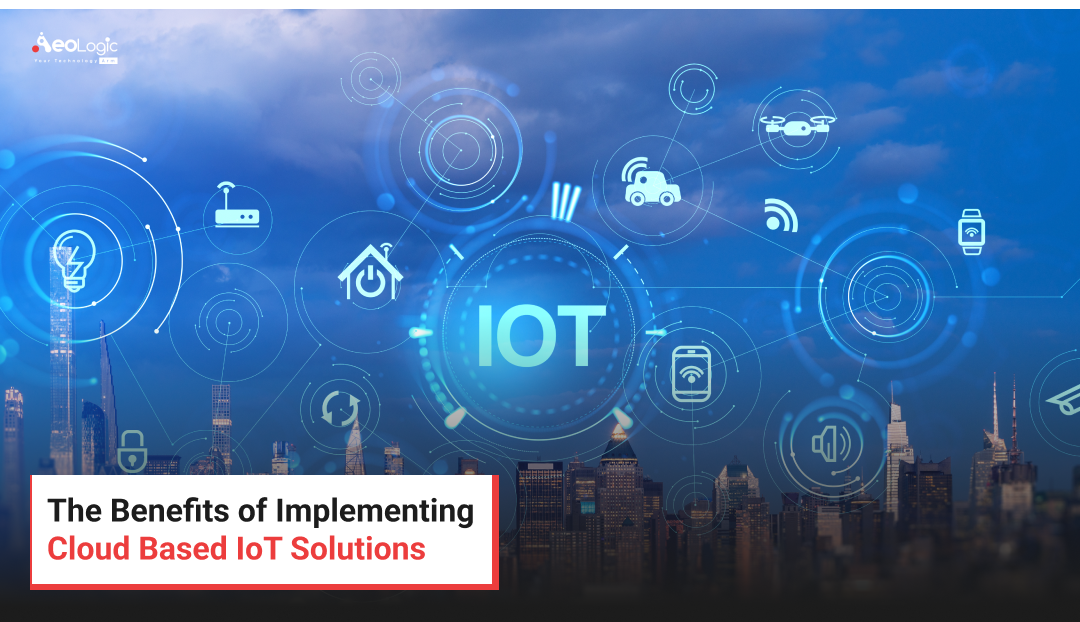
Connected devices are no longer a futuristic concept — they’re already running factory floors, tracking shipments, and keeping hospital equipment online around the clock. But as the number of sensors, gateways, and smart devices grows, businesses are discovering that traditional, on-premise infrastructure simply can’t keep pace. This is where Cloud-Based IoT Solutions come in. By moving data storage, processing, and device management to the cloud, organizations can scale faster, cut costs, and unlock insights that would otherwise sit buried in disconnected systems.
In this guide, we’ll break down exactly why Cloud-Based IoT Solutions are becoming the default choice for companies serious about digital transformation — and what you need to know before implementing them.
What are Cloud-Based IoT Solutions?
Cloud-Based IoT Solutions combine the Internet of Things (IoT) — the network of physical devices embedded with sensors and software — with cloud computing infrastructure. Instead of storing and processing device data on local servers, these solutions send data to remote cloud platforms, where it can be analyzed, stored, and acted upon in real time.
In simple terms, your smart devices collect the data, and the cloud does the heavy lifting of turning that data into something useful. This typically includes:
- Device connectivity management — onboarding, authenticating, and tracking thousands of devices
- Data ingestion and storage — capturing streams of sensor data without losing anything
- Analytics and machine learning — spotting patterns, anomalies, and predictions
- Dashboards and APIs — turning raw readings into decisions people can actually act on
Cloud-Based IoT Solutions are systems that connect physical devices to cloud infrastructure for data storage, processing, and remote management — eliminating the need for costly on-site servers while enabling real-time insights at scale.
 Why Businesses are Moving Toward Cloud-Based IoT Solutions
A decade ago, most IoT deployments ran on local servers maintained by in-house IT teams. That worked fine when a company had a few hundred connected sensors. It stops working once that number climbs into the thousands or spans multiple sites, countries, and device types.
Cloud-Based IoT Solutions solve this by shifting the heavy computational work off local hardware. Instead of buying more servers every time a business adds a new factory line or a new fleet of delivery vehicles, companies simply provision more capacity in the cloud — often within minutes. That shift in flexibility, combined with lower upfront investment, is the core reason adoption keeps climbing across manufacturing, healthcare, retail, agriculture, and logistics.
Key Benefits of Cloud-Based IoT Solutions
Here’s where things get practical. Below are the benefits that consistently show up when organizations move their IoT infrastructure to the cloud.
Scalability Without Infrastructure Headaches
One of the biggest advantages of Cloud-Based IoT Solutions is elastic scalability. Adding a thousand new sensors doesn’t mean buying new servers, provisioning new storage, or hiring more IT staff. Cloud platforms scale up (or down) automatically based on demand, so businesses only pay for what they actually use. A retailer piloting smart shelf sensors in five stores can expand to five hundred stores without rearchitecting anything.
Cost Efficiency and Reduced Capital Expenditure
On-premise IoT infrastructure requires significant upfront capital: servers, cooling systems, networking equipment, and dedicated staff to maintain it all. Cloud-based platforms replace that capital expense with a predictable operating expense. Businesses pay for storage and compute as they go, which frees up budget for other priorities and makes it far easier to justify a pilot project to leadership.
Real-Time Data Access and Analytics
Sensor data is only valuable if you can act on it quickly. Cloud platforms process incoming data streams in real time, flagging anomalies — like a refrigeration unit drifting out of temperature range — the moment they happen, rather than hours or days later during a scheduled report. This immediacy is one of the clearest reasons teams choose Cloud-Based IoT Solutions over legacy, batch-based systems.
Enhanced Security and Compliance
It’s a common misconception that keeping data on-site is inherently safer. In practice, major cloud providers invest heavily in encryption, identity management, intrusion detection, and compliance certifications (SOC 2, ISO 27001, HIPAA, and others) that most individual companies couldn’t replicate on their own. A well-configured cloud-based deployment often ends up more secure than a self-managed server room.
Remote Monitoring and Device Management
With devices spread across warehouses, vehicles, farms, or hospitals, physically checking on each one isn’t realistic. Cloud dashboards let teams monitor device health, push firmware updates, and troubleshoot issues remotely — from anywhere with an internet connection. This is especially valuable for distributed or multi-site operations.
Faster Innovation and Time-to-Market
Building IoT infrastructure from scratch can take months. Cloud providers offer pre-built services — device registries, messaging protocols, analytics pipelines — that let development teams focus on the application itself instead of the plumbing underneath it. That shortens the path from prototype to production significantly.
Improved Reliability and Uptime
Leading cloud providers run redundant data centers across multiple regions, with automatic failover if one location goes down. For IoT deployments where downtime means lost data or a missed safety alert, that redundancy is hard to match with a single on-site server.
Seamless Integration With Existing Systems
Cloud-Based IoT Solutions are generally built to connect with other cloud services — ERP systems, CRM platforms, business intelligence tools — through APIs. That means sensor data doesn’t just sit in isolation; it can feed directly into the systems a business already uses to make decisions.
Cloud-Based IoT Solutions vs. Traditional On-Premise IoT
The table below summarizes how the two approaches compare across the factors businesses care about most.
| Factor | Cloud-Based IoT Solutions | Traditional On-Premise IoT |
|---|---|---|
| Upfront cost | Low — pay-as-you-go | High — hardware purchase required |
| Scalability | Elastic, near-instant | Limited by physical capacity |
| Maintenance | Handled largely by the provider | Managed entirely in-house |
| Security updates | Continuous, automated | Manual, often delayed |
| Accessibility | Remote, from any device | Typically local-network only |
| Disaster recovery | Built-in redundancy | Requires separate planning |
Real-World Use Cases of Cloud-Based IoT Solutions
Manufacturing: Factories use cloud-connected sensors to monitor equipment vibration and temperature, catching early signs of failure before a breakdown halts production.
Healthcare: Remote patient monitoring devices send vital signs to the cloud, alerting care teams the moment a reading falls outside a safe range.
Agriculture: Soil moisture and weather sensors feed cloud platforms that help farmers automate irrigation and reduce water waste.
Logistics and fleet management: GPS and temperature sensors on delivery trucks stream data to the cloud, giving dispatchers live visibility into location and cargo condition.
Smart buildings: HVAC, lighting, and occupancy sensors connect to cloud dashboards that automatically adjust energy usage based on real-time occupancy patterns.
Challenges to Consider Before Implementing Cloud-Based IoT Solutions
No technology is without trade-offs, and Cloud-Based IoT Solutions are no exception. Before implementation, it’s worth weighing:
- Connectivity dependency — devices need a stable internet connection to communicate with the cloud, which can be a constraint in remote locations.
- Data privacy — sensitive data moving off-site requires careful attention to where it’s stored and who can access it.
- Vendor lock-in — switching cloud providers later can be costly if a platform relies heavily on proprietary tools.
- Latency for time-critical actions — some use cases (like industrial safety shutoffs) may still need local, edge-based processing alongside the cloud.
- Integration complexity — connecting legacy equipment to a modern cloud platform sometimes requires additional gateways or middleware.
Best Practices for Implementing Cloud-Based IoT Solutions
- Start with a clear use case. Pilot one measurable problem — like reducing equipment downtime — before scaling company-wide.
- Choose a platform that fits your industry. Healthcare, manufacturing, and agriculture each have different compliance and connectivity needs.
- Plan for security from day one. Build in device authentication and data encryption rather than adding it later.
- Combine cloud and edge where it makes sense. Use edge processing for time-sensitive actions and the cloud for storage, analytics, and long-term trends.
- Train your team. The best platform won’t help if staff don’t know how to use the dashboards and alerts it produces.
- Monitor cost as you scale. Set budget alerts so data volume growth doesn’t lead to surprise bills.
How to Choose the Right Cloud-Based IoT Platform
When evaluating providers, look for:
- Strong, well-documented security and compliance certifications
- Flexible pricing that scales with device count and data volume
- Easy integration with your existing software stack
- Reliable uptime guarantees (SLAs)
- Support for the specific device protocols your hardware uses
- Responsive technical support and clear onboarding documentation
Getting this choice right matters more than almost any other decision in the rollout — it determines how much of the benefit of Cloud-Based IoT Solutions your organization actually captures.
Conclusion
Cloud-Based IoT Solutions have moved from a nice-to-have to a near-essential part of how modern businesses manage connected devices. They remove the capital burden of on-premise servers, scale effortlessly as device counts grow, strengthen security through enterprise-grade cloud infrastructure, and turn raw sensor data into real-time decisions. From manufacturing floors to hospital rooms to delivery fleets, the benefits show up wherever physical operations need to be monitored and managed at scale.
The businesses gaining the most value aren’t necessarily those with the most sensors — they’re the ones implementing Cloud-Based IoT Solutions strategically, with clear use cases, the right platform, and security built in from day one.
At AeoLogic Technologies, we help businesses explore smarter IoT solutions to improve connectivity, scalability, and operational efficiency. If your organization still relies on disconnected, on-premise IoT infrastructure, now is the time to consider a cloud-based approach. Start with a focused pilot project and scale with confidence as your needs grow.
Frequently Asked Questions
Q1. What industries benefit most from Cloud-Based IoT Solutions?
Manufacturing, healthcare, logistics, agriculture, and smart buildings see the fastest returns, since each relies on monitoring distributed equipment or conditions in real time. Any industry managing multiple connected devices across locations can benefit from the scalability and remote visibility these solutions provide.
Q2. Is cloud or edge computing better for IoT?
Neither replaces the other — most effective deployments use both. Edge computing handles time-sensitive, local processing (like an emergency shutoff), while cloud computing handles storage, long-term analytics, and remote management. Cloud-Based IoT Solutions typically work alongside edge devices rather than instead of them.
Q3. How long does it take to implement a Cloud-Based IoT Solution?
A focused pilot project can often launch within a few weeks, while a full enterprise rollout across multiple sites may take several months. Timeline depends on the number of devices, integration complexity, and how much legacy infrastructure needs to be connected.
Q4. Do small businesses need Cloud-Based IoT Solutions?
Small businesses can benefit significantly, since cloud platforms remove the need for large upfront hardware investment. Pay-as-you-go pricing means a small operation can start with a handful of sensors and scale only as the business grows.
Q5. What is the difference between IoT and Cloud-Based IoT Solutions?
IoT refers broadly to connected physical devices with sensors and software. Cloud-Based IoT Solutions specifically describe IoT systems where data storage, processing, and device management happen on cloud infrastructure rather than local servers.
Q6. Can Cloud-Based IoT Solutions work with existing legacy equipment?
Yes, in most cases. Legacy equipment typically connects through gateways or middleware that translate its data into a format the cloud platform can ingest, though this does add a layer of integration work to plan for.

I’m a Software Developer with 9 years of experience building scalable web and mobile applications. Currently focused on React.js and React Native, I specialize in creating high-performance, user-friendly interfaces that drive business outcomes.
My background spans cross-platform development using Flutter, and native Android development, giving me a strong understanding of the entire mobile ecosystem. I’ve contributed to products in EdTech, Healthcare, and Enterprise SaaS—helping scale apps to 100K+ users and improving performance, reliability, and user engagement.
I’m passionate about clean architecture, modular design, and seamless user experiences. Whether it’s setting up robust state management with Redux Toolkit, optimizing API integrations with GraphQL/REST, or automating workflows with CI/CD pipelines (GitHub Actions)—I focus on writing maintainable code and delivering value to both users and stakeholders.