
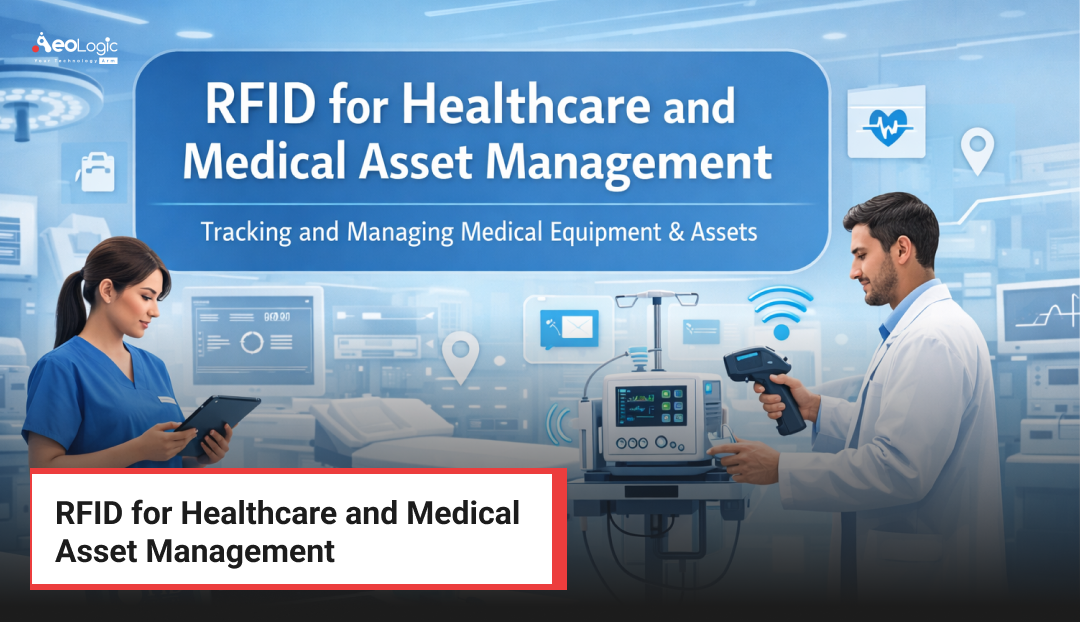
In today’s healthcare world, operational efficiency, patient safety, and real-time visibility are no longer nice-to-haves; they are necessary for survival and growth. RFID in Healthcare is a game-changing technology that lets hospitals, clinics, and large medical facilities keep track of their assets, manage their inventory, and make their workflows run more smoothly with unmatched accuracy.
Healthcare systems all over the world are always under pressure to provide excellent care for patients while also dealing with more complicated operations. RFID is changing the way healthcare systems work by making it easier to find important medical equipment right away, making sure they follow the rules, and lowering operational costs. It gives smarter hospitals a digital backbone by making automation, accuracy, and actionable insights possible.
This comprehensive guide explores how RFID is revolutionizing medical asset management, covering its fundamentals, importance, components, implementation strategies, real-world applications, challenges, and future trends shaping the healthcare ecosystem.
What is RFID for Healthcare and Medical Asset Management?
RFID (Radio Frequency Identification) is a wireless communication technology that uses electromagnetic fields to identify and track tags attached to objects automatically. In healthcare environments, RFID systems are deployed to monitor medical equipment, pharmaceuticals, patient movement, and staff workflows in real time.
RFID does not need line-of-sight scanning like barcodes do. This makes it possible to keep track of several things at once, even in busy hospitals where assets move around a lot.
An RFID in Healthcare ecosystem usually has four main parts: RFID tags, readers, antennas, and a central software platform. Assets like infusion pumps, wheelchairs, surgical instruments, and medication trays have tags on them. RFID readers placed around the building read these tags and store unique identification data.
Middleware and integrated software systems process the data that has been collected and give users dashboards, alerts, and analytics. This lets healthcare managers make smart choices based on data that is up to date.
Medical asset management powered by RFID ensures that essential equipment is always available, reduces manual intervention, minimizes errors, and enhances the overall quality of healthcare delivery.
Why RFID in Healthcare Matters for Modern Medical Systems
Operational Efficiency and Cost Optimization
Every day, hospitals and other healthcare facilities take care of thousands of assets, from expensive equipment to everyday items. Without automated tracking systems, assets can be lost, not used enough, or too much.
RFID lets you keep an eye on where and how assets are being used at all times, making sure they are used to their fullest potential. This cuts down on unnecessary purchases, stops people from hoarding assets, and cuts down on waste in operations. In the long run, this saves a lot of money and makes the company’s finances better.
Enhanced Patient Safety and Care Quality
In an emergency, getting medical equipment quickly is very important. RFID makes it easy for healthcare workers to find important equipment right away, which speeds up response times and improves patient outcomes.
In addition, RFID minimizes human errors in patient identification and medication administration. By ensuring the right patient receives the right treatment at the right time, it significantly enhances patient safety.
Regulatory Compliance and Transparency
Healthcare organizations have to follow strict rules that make sure they keep accurate records and reports. RFID systems keep track of how assets are used, when they need maintenance, and where they have been.
This level of openness helps healthcare providers stay in line with the rules, avoid fines, and keep everyone accountable across all operations.
 Core Components of RFID-Based Medical Asset Management
RFID Tags and Their Role
In RFID in Healthcare, RFID tags are tiny electronic devices that have microchips and antennas built into them. There are three types of these tags: passive, active, and semi-passive, and they all store unique identification data.
Passive tags are cheap and work by picking up the reader’s signal, so they are good for keeping track of inventory. Active tags, on the other hand, have their own power source and can read data from farther away. This makes them perfect for keeping track of valuable assets in real time.
RFID Readers and Antennas
RFID readers are in charge of getting information from tags. They can be fixed at entry points, put on walls, or carried around by staff.
Antennas improve signal transmission and make sure that data is collected correctly in different areas, such as patient wards, storage areas, and operating rooms.
Middleware and Data Processing
Middleware connects hardware and software systems. It sorts, processes, and filters raw data that RFID readers have gathered.
This data is then sent to central systems for analysis, which lets people make decisions and keep an eye on things in real time.
Software Platforms and Analytics
Advanced RFID software platforms come with dashboards, reporting tools, and the ability to analyze data. These platforms help healthcare organizations keep track of how their assets are being used, find ways to make their operations more efficient, and improve them.
Integration with AI-driven analytics further enhances predictive capabilities, allowing for proactive maintenance and resource planning.
Integration with Existing Healthcare Systems
RFID solutions work perfectly with Hospital Information Systems (HIS), Enterprise Resource Planning (ERP) systems, and inventory management platforms.
This integration makes sure that all the data is in one place, which makes it easier for different departments to talk to each other and makes the whole operation run more smoothly.
Key Applications of RFID in Healthcare
Medical Equipment Tracking
One of the most important uses for RFID is to keep track of medical equipment in real time. Hospitals can keep track of where ventilators, infusion pumps, and diagnostic machines are and how they are doing.
This cuts down on the time spent looking for equipment, raises the rates of use, and makes sure that important devices are always available when needed.
Inventory and Pharmaceutical Management
RFID makes it possible to keep track of medicines and medical supplies with great accuracy. It lets healthcare providers see their inventory levels in real time, which helps them keep the right amount of stock on hand.
It also helps find medications that have expired or been recalled, which keeps patients safe and follows the rules.
Patient Tracking and Identification
We use RFID wristbands to keep track of where patients are going and make sure they are who they say they are. This is especially helpful in big hospitals where there are a lot of patients coming and going.
It lowers the chance of misidentifying a patient, makes sure the right medicine is given, and makes everything safer overall.
Staff Tracking and Workflow Optimization
RFID can be used to keep an eye on how staff move around and look at how work flows. This helps find problems and make the best use of the people who work for you.
Healthcare organizations can boost productivity and cut down on operational bottlenecks by making workflows more efficient.
Step-by-Step Implementation Strategy
Step 1: Assess Organizational Needs
Start by looking at the problems that already exist in asset management, inventory control, and workflow processes. Find gaps and figure out where RFID can be useful.
Step 2: Define Clear Objectives
Set goals that you can measure, like cutting down on the time it takes to find equipment, making better use of assets, or making patients safer. Clear goals help the process of putting things into action.
Step 3: Select Appropriate Technology
Pick RFID tags, readers, and software that fit your needs. Think about things like the environment, the type of asset, and the range of tracking.
Step 4: Design System Architecture
Make sure that all areas are covered by planning where to put RFID readers and antennas. Plan the system architecture so that data can flow without any problems.
Step 5: Conduct Pilot Testing
Use RFID in a small area to see how well it works and find any problems that might come up. Use what you learned from the pilot to make the system better.
Step 6: Full-Scale Deployment
Put the system into use throughout the company. Make sure that the installation is done correctly and that it works with the systems that are already in place.
Step 7: Staff Training and Change Management
Teach healthcare workers how to use RFID systems correctly. Help people who don’t want to change by making them aware of it and supporting them.
Step 8: Continuous Monitoring and Improvement
Check the system’s performance on a regular basis and make any changes that are needed. Long-term success comes from constant improvement.
Benefits of RFID in Healthcare for Medical Asset Management
RFID technology changes the way healthcare works by letting you see where assets are and how they are being used in real time. This significantly reduces the time healthcare staff spend searching for critical equipment, leading to faster response times and improved operational efficiency across departments.
It also saves a lot of money by making the best use of assets and cutting down on unnecessary purchases. Healthcare organizations can avoid overstocking, lose less equipment, and make better purchasing decisions, all of which will improve their financial performance.
RFID also makes data more accurate by getting rid of mistakes made when entering data by hand and making sure that the information is always correct and reliable. This makes it easier to follow the rules by using automated reporting and detailed audit trails. It also helps you make better decisions, keeps patients safer by making sure they can find the right equipment quickly, and makes it easier to follow the rules.
Real-World Use Cases and Case Studies
Large Hospital Network Transformation
A network of multi-specialty hospitals used RFID in Healthcare to keep track of thousands of assets across multiple locations. The system reduced equipment loss, improved utilization, and streamlined overall operations.
Smart Inventory Management
A healthcare provider used RFID to make managing inventory easier. The system let people see stock levels in real time, cut down on waste, and made the supply chain work better.
Emergency Response Optimization
RFID made it easy for emergency departments to get to life-saving equipment quickly. This cut down on response times by a lot and made patients’ outcomes better.
Technologies and Tools Powering RFID in Healthcare Systems
A mix of cutting-edge technologies makes RFID solutions work.
IoT lets devices connect to each other without any problems, making a network of systems that are all connected.
Cloud computing lets you store and process data on a large scale, which lets you access it in real time.
Artificial intelligence improves predictive analytics, which lets you make decisions before they happen.
Data analytics tools show how assets are used, which helps improve operations.
Mobile apps let staff access RFID data while on the go, which makes them more flexible and efficient.
Common Challenges in Healthcare RFID Solutions
When healthcare organizations set up RFID systems, they often have to pay a lot of money up front for things like hardware, software, setting up the infrastructure, and integrating the systems. Additionally, integrating RFID with legacy healthcare systems such as HIS or ERP can be complex, requiring technical expertise, customization, and careful planning to ensure seamless data flow and system compatibility.
Data security and privacy are still very important in healthcare settings because they deal with sensitive patient and operational data. There are strict rules and standards that RFID systems must follow to make sure that communication is encrypted and access is controlled. Any weaknesses in the system can lead to data breaches, so strong cybersecurity measures and regular audits are necessary to keep trust and compliance.
If staff members don’t want to use new technology, it can have a big effect on how well RFID works. Healthcare workers might not want to do it because they aren’t sure how to do it, they are afraid of change, or they are worried about having more work to do. To get people to use RFID-enabled workflows and make the transition go smoothly, they need to be trained properly, be told clearly what the benefits are, and get ongoing support.
Best Practices for Successful Implementation of RFID in Healthcare
To reduce risks and make sure the deployment goes smoothly, it’s important to use a phased implementation approach. Before expanding, healthcare organizations should start with a pilot project in one department to test the system, find problems, and improve processes. This method cuts down on interruptions, guarantees a better return on investment, and lets the whole company adjust slowly.
Choosing a trustworthy tech partner with a lot of experience in healthcare is very important for success. The right partner can help you come up with a solution that meets your operational needs and compliance standards. Also, investing in training for employees and structured change management makes sure that users adopt the system, lowers resistance, and lets teams use it effectively.
Because healthcare data is so private, it is very important to follow data protection rules. Companies need to use strong security measures, encryption, and access controls. Regular system audits, performance monitoring, and timely updates help make sure that healthcare operations are always reliable, safe, and running at their best.
Future Trends in RFID for Healthcare
Innovation and digital transformation are what will shape the future of RFID in healthcare.
When combined with AI and machine learning, it will be possible to do predictive maintenance and make better decisions.
Real-Time Location Systems (RTLS) will help you keep track of your assets more accurately and make your business run more smoothly.
Blockchain technology could make data safer and more open.
The use of smart hospitals and digital twins will make RFID even more important in healthcare systems.
RFID will become a key part of smart, data-driven operations as healthcare systems change.
Conclusion
RFID in Healthcare is redefining how medical institutions operate by enabling real-time visibility, improving efficiency, and enhancing patient care. From asset tracking to inventory management and workflow optimization, RFID provides a comprehensive solution for modern healthcare challenges.
As the industry continues to embrace digital transformation, RFID will play a critical role in building smarter, safer, and more efficient healthcare systems.
Organizations looking to adopt advanced medical asset management solutions can rely on RFID Solutions Company in India for innovative, scalable, and customized RFID solutions tailored to healthcare needs. Aeologic Technologies offers advanced RFID-based systems designed to improve efficiency, accuracy, and real-time tracking in healthcare environments.
People Also Ask (FAQs)
Q1. What is RFID in Healthcare and how does it work?
In healthcare, RFID is a technology that uses radio waves to keep track of and manage patients, assets, and inventory. It works by putting RFID tags on things or people, which readers can then find. The data is transmitted to a central system for processing, enabling real-time visibility and automation. This cuts down on mistakes made by hand, makes things run more smoothly, and improves patient care.
Q2. How does RFID improve medical asset management?
RFID improves asset management by providing real-time tracking and visibility. It eliminates manual processes, reduces asset loss, and ensures optimal utilization. Healthcare providers can monitor equipment usage, schedule maintenance, and improve operational efficiency.
Q3. What are the key benefits of RFID in hospitals?
RFID helps hospitals keep track of their assets in real time, which cuts down on the time it takes to find important equipment and makes operations run more smoothly. It helps save money by stopping asset loss and making the best use of what you have. Additionally, it enhances patient safety through accurate identification and medication tracking. RFID also ensures better regulatory compliance by maintaining automated records and delivers actionable insights that support faster, data-driven decision-making across departments.
Q4. Is RFID secure for healthcare environments?
When used with strong encryption protocols, role-based access controls, and a secure network infrastructure, RFID systems can be very safe. Healthcare organizations must follow strict rules for protecting data, like HIPAA, and check their systems on a regular basis. RFID solutions can protect sensitive patient and operational data from unauthorized access or breaches by combining authentication mechanisms and monitoring tools.
Q5. What challenges are associated with RFID implementation?
There can be problems with implementing RFID, such as a high initial cost, the difficulty of integrating the system with older infrastructure, and worries about data privacy. Also, staff who don’t want to use new technology may slow down the rollout. But you can get past these problems by making a good plan, rolling out the changes in stages, picking the right technology partner, and giving your staff thorough training and change management programs.
Q6. How is RFID different from barcode systems?
RFID differs from barcode systems as it does not require direct line-of-sight scanning and can read multiple tags simultaneously from a distance. This enables faster and more efficient data capture in busy healthcare environments. Unlike barcodes, RFID tags can store more data and are more durable, making them suitable for real-time tracking and large-scale asset management in hospitals.

Currently, as a Senior Manager of Technology, I oversee a dynamic team, ensuring the delivery of high-quality software solutions that meet the evolving needs of our clients. A seasoned technology leader with over a decade of experience in the software development industry, I have been instrumental in driving the end-to-end software development lifecycle since my career inception in 2011.