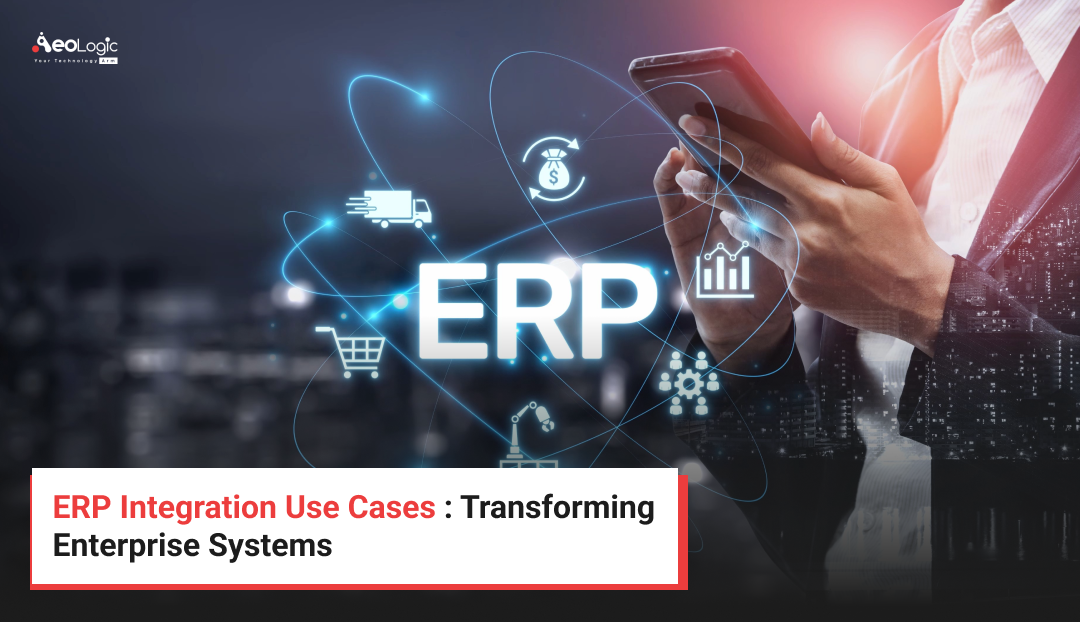
In today’s digital business world, companies use many different software systems to keep track of their finances, operations, human resources, supply chains, and customer relationships. However, when these systems work alone, they make data silos, slow things down, and make it hard to see what’s going on. This is where ERP Integration Use Cases become very important. Businesses can make their workflows more efficient, their data more accurate, and their decisions better by linking enterprise resource planning systems to other programs.
Businesses that want to stay competitive, flexible, and able to grow need to integrate their ERP systems. Integrated ERP ecosystems give you powerful tools that help your business grow and run smoothly. These tools include automating financial reporting and giving you real-time visibility into your supply chain.
What is ERP Integration?
ERP integration is the process of linking an ERP system to other business tools, databases, and applications so that data can move freely and processes can be automated throughout the company. Integrated systems talk to each other in real time instead of working in separate places. This keeps information consistent and accurate.
APIs, middleware platforms, cloud connectors, or custom-built interfaces can all help with this integration. It lets businesses sync data between different systems, like CRM, HRMS, eCommerce platforms, and third-party tools. This makes a single digital ecosystem that helps businesses run smoothly.
Why ERP Integration Use Cases Matter for Modern Enterprises?
In today’s world, businesses work in complicated environments where data is created at many different points of contact. Organizations that don’t have integration run into problems like having to enter the same data more than once, getting reports that don’t match, and having to wait to make decisions. ERP integration solves these problems by making sure that all of the systems work together as one.
Integration is important for more than just making things run more smoothly. It helps departments work together better, makes the customer experience better, and makes it easier to grow. When sales and finance systems are linked, for instance, invoices can be made automatically from sales data, which cuts down on the need for manual work and mistakes.
Integration also makes real-time analytics possible, which means that decision-makers can get accurate information right away. This gives businesses the ability to quickly respond to changes in the market and customer needs.
ERP integration implementations in Enterprise Systems
ERP Integration Use Cases show how businesses can use connected systems to solve real-world problems. These use cases come from many different fields and functions, showing how ERP integration can be used in many different ways to improve operations and spark new ideas.
Finance and Accounting Integration
Combining ERP with financial systems makes sure that financial data is managed correctly and in real time. The ERP system automatically records transactions from different departments, so you don’t have to enter data by hand.
This integration makes it easier to follow the rules, report on finances faster, and manage cash flow better. It also lowers the chance of mistakes and inconsistencies, making sure that financial information is always accurate and up to date.
CRM and Sales Integration
When CRM and ERP systems work together, businesses can see all of their customer data in one place. Sales teams can see the amount of stock, prices, and order history right from the CRM interface.
This integration makes sales more efficient and customers happier by allowing for faster response times and more personalized interactions. It also makes sure that customer data is the same across all systems, which cuts down on mistakes and duplication.
Supply Chain and Inventory Management
When ERP is connected to supply chain and inventory systems, you can see stock levels, demand forecasts, and logistics operations in real time. This helps businesses keep the right amount of inventory, cut down on stockouts, and speed up order fulfillment.
Businesses can make their supply chains more efficient and streamline their operations by linking suppliers, warehouses, and distribution channels. This integration is especially useful for the retail and manufacturing sectors.
Human Resource Management Integration
By combining ERP with HR systems, companies can keep track of employee data, payroll, attendance, and performance all in one place. This cuts down on the number of systems needed and makes administration easier, making it one of the most impactful ERP Integration Use Cases for improving workforce management efficiency.
It also makes sure that labor laws are followed and makes the employee experience better by giving them accurate and timely information. Instead of doing manual tasks, HR teams can focus on strategic initiatives.
eCommerce and ERP Integration
Businesses that sell things online need to connect their ERP system with their eCommerce platforms so they can keep track of orders, inventory, and customer information. This integration makes sure that the ERP system automatically processes orders that are placed on the website.
It lets you update your inventory in real time, keep track of your orders accurately, and give your customers a smooth experience. Companies can grow their businesses without having to worry about syncing data by hand.
Key Components of ERP Integration Use Cases
To successfully integrate ERP, you need a clear architecture and the right parts. These parts make sure that systems can talk to each other without any problems and that data can be shared quickly.
The first part is integration middleware, which connects different apps to each other. It makes it easier to change and route data, making sure that systems can work together.
APIs are very important because they let apps talk to each other. They let systems share data in real time, which makes integration flexible and scalable.
Data mapping and transformation are also very important parts. They make sure that data from different systems is consistent and fits with the ERP structure.
To keep sensitive data safe and make sure that rules are followed, security and compliance mechanisms are very important. To protect their integrated systems, businesses need to put in place strong security measures.
Step-by-Step ERP Integration Strategy
Step 1: Define Business Objectives
The first step in ERP Integration Use Cases is to identify the goals and objectives of the integration. Organizations must understand what they aim to achieve, whether it is improving efficiency, reducing costs, or enhancing customer experience.
Clear objectives provide direction and help in selecting the right integration approach and tools.
Step 2: Assess Existing Systems
Companies must look at their current systems, processes, and data structures. This evaluation helps find places where things can be combined, problems that might come up, and ways to make things better.
To make a good integration plan, you need to know how the current infrastructure works.
Step 3: Choose the Right Integration Approach
There are different ways to integrate, like point-to-point integration, middleware-based integration, and cloud-based integration platforms. The decision depends on how complicated and scalable the organization needs it to be.
Choosing the right approach makes sure that integration is quick and long-lasting.
Step 4: Data Mapping and Standardization
To make sure that everything is the same, data from different systems needs to be mapped and standardized. This means figuring out how to format, structure, and relate data.
Correctly mapping data reduces mistakes and makes sure that systems can share data correctly.
Step 5: Implementation and Testing
Once the design for the integration is done, companies can move forward with the implementation. This includes setting up middleware, configuring systems, and making APIs.
It is important to do a lot of testing to make sure that the integration works as planned and meets business needs.
Step 6: Deployment and Monitoring
The integration is put into use in the production environment after testing is successful. To find and fix any problems, you need to keep an eye on things all the time.
Regular updates and maintenance ensure the long-term success of the integration.
Benefits of ERP Integration Use Cases
There are many benefits to integrating ERP that can help businesses run more smoothly and efficiently. It gets rid of data silos, which makes it easy for systems and departments to talk to each other.
Organizations get better data accuracy because information is automatically synced between systems. This makes it easier to make decisions and cuts down on mistakes.
Integration also boosts productivity by automating tasks that need to be done over and over again and cutting down on manual work. Workers can concentrate on strategic tasks that help the business.
Another big benefit is that customers will have a better experience. Businesses can offer faster and more accurate services with integrated systems, which makes customers happier.
Another big plus is that it can grow. Integrated systems can easily change to meet the needs of the business and support growth without needing major changes to the infrastructure.
Real-World Examples and Use Cases
Many businesses have successfully used ERP Integration Use Cases to change the way they do business. For example, a manufacturing company combined its ERP system with tools for managing the supply chain and inventory so that it could see production and stock levels in real time.
This integration helped the company cut down on inventory costs, make better plans for production, and fill orders more quickly. The company became more efficient and its customers were happier as a result.
For instance, a retail company connected its ERP system to its eCommerce platform and CRM system. This made it easy for the business to keep track of orders, stock, and customer information.
The integration made operations run more smoothly, cut down on mistakes, and allowed for more personalized interactions with customers, which led to more sales and repeat business.
Technologies and Tools for ERP Integration Use Cases
ERP integration uses a number of technologies and tools that make it easy for systems to connect with each other. Enterprise service buses (ESB) and other middleware platforms offer a centralized way to integrate different systems.
API management platforms let applications talk to each other in a safe and scalable way. They allow data to be exchanged in real time and make sure that integration goes smoothly.
iPaaS (Integration Platform as a Service) is another name for cloud-based integration platforms. They provide flexible and scalable ways to connect cloud and on-premise systems.
ETL (Extract, Transform, Load) processes and data integration tools are used to control the flow of data and make sure that systems are all consistent.
These technologies are very important for making integration work and for supporting digital transformation projects.
Key Challenges in ERP System Integration Applications
There are often a lot of problems with ERP Integration Use Cases that businesses need to carefully manage to make sure implementation works effectively. Data inconsistency is a common problem. This happens when different systems store and process data in different ways. If integration isn’t done correctly, this can cause mistakes, duplication, and reports that aren’t reliable. Also, old systems may not work with new integration technologies, which makes it hard to set up seamless connectivity without a lot of customization or upgrades.
Another big problem is security and governance. Because ERP integration involves sharing sensitive business data across many platforms, any weaknesses can put the company at risk of things like data breaches or violations of rules. Moreover, managing multiple integration points can increase system complexity, making monitoring, troubleshooting, and maintenance more difficult over time if not properly structured.
Best Practices for ERP Integration Use Cases
Companies should start with a clear plan and well-defined goals to make sure that ERP integration goes smoothly. To keep systems consistent, it’s important to set up standard data formats and rules for how to use them. Choosing the right integration method, such as API-based, middleware, or cloud platforms, is also very important for making sure that the system can grow and last for a long time.
Also, keeping an eye on, testing, and improving integration performance is very important. To keep sensitive data safe, businesses should spend money on strong security measures like encryption and access controls. Regular audits, performance checks, and system updates help keep the integration efficient, safe, and in line with changing business needs.
Future Trends in ERP Integration
New technologies and changing business needs are shaping the future of ERP Integration Use Cases. Artificial intelligence and machine learning are playing a crucial role in enhancing how these integrations function, enabling smarter automation, predictive insights, and more efficient data synchronization across enterprise systems.
These technologies make it possible to do predictive analytics, make decisions automatically, and automate smart processes. They make integrated systems work better and faster.
Another big trend is cloud computing, which is when more businesses start using cloud-based ERP systems and integration platforms. This gives you more options, makes it easier to grow, and saves you money.
The growth of the Internet of Things (IoT) is also affecting ERP integration because connected devices make a lot of data that needs to be added to ERP systems.
As technology gets better, ERP integration will get better too. This will help businesses become more efficient and come up with new ideas.
Conclusion
ERP Integration Use Cases play a vital role in transforming enterprise systems by enabling seamless connectivity, real-time data exchange, and process automation. Organizations that invest in ERP integration can achieve higher efficiency, improved decision-making, and enhanced customer experiences.
As businesses continue to evolve in a digital-first world, integrating ERP systems with other applications is essential for staying competitive and agile. By adopting the right strategies, tools, and best practices, organizations can unlock the full potential of their ERP systems.
If you are looking to implement robust ERP integration solutions tailored to your business needs, Aeologic Technologies offers expertise and innovative approaches to help you achieve seamless digital transformation and long-term success.
People Also Ask (FAQs)
Q1. What are ERP Integration Use Cases?
Real-world examples of ERP integration applications show how ERP systems can work with other programs to make processes easier and more efficient. These use cases involve connecting ERP with HR, finance, supply chain, eCommerce, and CRM systems. Companies can get rid of data silos, automate workflows, and make better decisions by using these integrations. Businesses that want to improve their operations and go digital need them.
Q2. Why is ERP integration important for businesses?
ERP integration is important because it lets data flow smoothly between different systems, which cuts down on mistakes and manual work. It makes operations more efficient, increases the accuracy of data, and gives you real-time information to help you make better decisions. Businesses can quickly adapt to changes in the market and customer needs, which makes them more competitive and helps them grow.
Q3. What are the common methods of ERP integration?
API-based integration, middleware integration, and cloud-based integration platforms are all common ways to connect ERP systems. API-based integration lets systems talk to each other in real time, and middleware gives you a central way to handle integrations. Cloud-based platforms make it easy to connect cloud and on-premise systems in a way that can grow and change as needed.
Q4. What challenges do organizations face during ERP integration?
When integrating ERP, companies have to deal with problems like inconsistent data, systems that don’t work together, and security issues. It may be hard to integrate new systems with old ones because old systems may not support new methods. You can get around these problems by planning ahead, standardizing your data, and using the right tools.
Q5. How long does ERP integration take?
How long it takes to integrate ERP depends on how complicated the systems are and how big the integration is. It could take a few weeks or a few months. The timeline is affected by things like the amount of data, the number of systems, and the need for customization. Planning and carrying out the work correctly can help make sure it gets done on time.
Q6. What industries benefit most from ERP integration?
ERP integration is very helpful for businesses in fields like manufacturing, retail, healthcare, logistics, and finance. These fields depend on many systems and need real-time data to work well. Integration makes things run more smoothly, makes things easier to see, and improves performance overall.

With a strong foundation in software and a growing expertise in AI, I specialize in building smart, scalable solutions that drive digital transformation