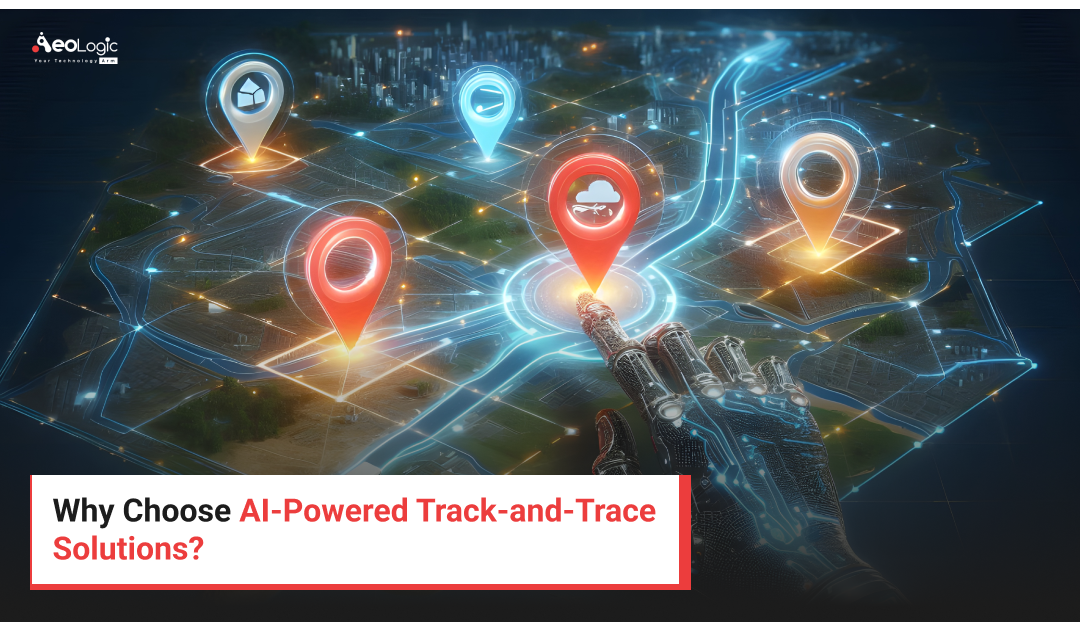
Businesses across manufacturing, logistics, retail, healthcare, pharmaceuticals, and supply chain operations are under growing pressure to know where products, assets, shipments, and materials are at every stage of their journey. AI-Powered Track-and-Trace Solutions help organizations achieve greater visibility by combining intelligent technologies with real-time tracking capabilities. Traditional tracking methods often depend on manual data entry, barcode scanning, spreadsheets, disconnected systems, and periodic status updates. While these methods may work for basic operations, they can become inefficient as businesses grow and supply chains become more complex.
Modern organizations need more than simple location tracking. They need continuous visibility, accurate data, faster decision-making, and the ability to identify potential disruptions before they affect operations. This is where AI-Powered Track-and-Trace Solutions are becoming increasingly valuable. By combining artificial intelligence with technologies such as RFID, IoT, GPS, sensors, computer vision, cloud platforms, and analytics, businesses can transform tracking data into actionable operational intelligence.
What are AI-Powered Track-and-Trace Solutions?
AI-powered track-and-trace solutions are intelligent systems designed to monitor the movement, location, condition, and status of products, assets, shipments, or materials throughout their lifecycle. Unlike conventional tracking platforms that primarily record and display information, AI-enabled systems can analyze large volumes of real-time and historical data to identify patterns, detect anomalies, predict potential problems, and support automated decisions.
These solutions can collect information from RFID tags, barcode systems, GPS devices, IoT sensors, warehouse management systems, enterprise applications, transportation platforms, and other connected technologies. Artificial intelligence then processes this information to provide businesses with a more complete understanding of what is happening across their operations.
For example, a logistics company can use an intelligent tracking system to monitor shipment movement while analyzing historical delivery data, traffic conditions, environmental factors, and route information. Instead of simply showing where a shipment is, the system can identify potential delays and provide early visibility into delivery risks.
 Why Traditional Track-and-Trace Methods Are No Longer Enough
Traditional tracking systems often provide valuable basic information, but they can struggle when businesses need real-time visibility across complex operations. Manual processes can introduce errors, while disconnected databases may create information gaps between warehouses, suppliers, transportation providers, and customers.
Another challenge is that traditional systems often operate reactively. A business may discover that a shipment has been delayed only after the expected delivery time has passed. Similarly, an inventory team may identify a missing asset only after a manual reconciliation process.
Modern supply chains require a more proactive approach. Businesses need systems that can continuously analyze operational information and help teams identify risks before they become major problems. AI changes track-and-trace from a simple monitoring activity into an intelligent decision-support capability.
Key Benefits of AI-Driven Tracking
Real-Time Visibility Across Operations
One of the most important advantages of AI-enabled tracking is improved visibility. Businesses can monitor products, assets, vehicles, and shipments as they move through different operational stages.
Data from RFID, GPS, IoT sensors, mobile devices, and other sources can be combined into centralized platforms. This gives managers a more comprehensive view of operations instead of requiring them to check multiple systems individually.
Real-time visibility can be particularly valuable in industries where timing, location, and product condition directly affect business performance. Logistics providers, manufacturers, retailers, pharmaceutical companies, and healthcare organizations can use this information to improve coordination and operational control.
Predictive Insights for Better Decision-Making
Tracking data becomes significantly more valuable when businesses can use it to anticipate future events. AI algorithms can analyze historical and real-time information to identify patterns associated with delays, equipment issues, inventory shortages, delivery problems, or operational bottlenecks.
For example, if a particular route repeatedly experiences delays under certain conditions, an AI-enabled system can identify that pattern and support better planning. Similarly, unusual movement or inactivity of an important asset can trigger an alert before the issue creates a larger operational problem.
This predictive capability allows organizations to move from responding to problems toward anticipating them.
Improved Supply Chain Transparency
Supply chain transparency has become increasingly important as organizations work with multiple suppliers, logistics partners, warehouses, and distribution centers. A lack of visibility can make it difficult to determine where delays or inefficiencies are occurring.
AI-Powered Track-and-Trace Solutions can connect information from different stages of the supply chain and create a unified view of product movement. Businesses can use this information to understand shipment progress, identify bottlenecks, monitor supplier performance, and improve coordination between operational teams.
Greater transparency can also support customer communication by providing more accurate and timely shipment information.
Automated Anomaly Detection
Large-scale operations generate enormous amounts of tracking data every day. Manually reviewing all of this information is time-consuming and makes it difficult for employees to identify subtle problems.
AI can continuously examine tracking data and recognize unusual patterns. A shipment moving outside its expected route, an asset remaining inactive for an unusual period, or a temperature-sensitive product experiencing abnormal environmental conditions can potentially be identified automatically.
Instead of waiting for employees to discover these issues manually, intelligent systems can generate alerts and direct attention toward events that require investigation.
How AI Enhances RFID, IoT, and GPS Tracking
AI does not necessarily replace existing tracking technologies. Instead, it can make the data generated by these technologies more useful.
RFID systems can capture information about tagged products and assets, while IoT sensors can collect information about temperature, humidity, vibration, location, and other environmental conditions. GPS can provide location information for vehicles and shipments. Computer vision can support automated identification and monitoring in warehouses, factories, and distribution facilities.
AI can bring these different data streams together and analyze them within a unified environment. This creates an intelligent tracking ecosystem where businesses can move beyond collecting data toward understanding what that data means.
For example, an IoT sensor may report that the temperature of a shipment has increased. An AI-enabled system can combine that information with shipment type, delivery route, expected arrival time, and historical patterns to determine whether the event requires immediate attention.
Applications Across Different Industries
Manufacturing
Manufacturers can use intelligent tracking systems to monitor raw materials, work-in-progress inventory, finished products, tools, and production assets. AI can help identify production bottlenecks, unusual movement patterns, and potential inventory issues.
Connecting track-and-trace data with manufacturing systems can also improve production planning and asset utilization.
Logistics and Transportation
In logistics, tracking visibility is essential for managing shipments, fleets, routes, and delivery schedules. AI can analyze transportation data to identify potential delays, optimize operational planning, and improve estimated arrival information.
This can help logistics providers improve service reliability while giving customers better visibility into shipment progress.
Retail and E-Commerce
Retailers and e-commerce businesses need accurate inventory information across warehouses, stores, fulfillment centers, and delivery networks. Intelligent tracking can help organizations understand inventory movement and reduce visibility gaps.
AI can also identify unusual inventory patterns and support better demand and replenishment decisions when tracking data is integrated with other business systems.
Healthcare and Pharmaceuticals
Healthcare and pharmaceutical organizations often need strict control over medical equipment, medicines, vaccines, and temperature-sensitive products. AI-enabled tracking can combine location information with environmental monitoring to provide greater visibility throughout the product lifecycle.
This can help organizations identify potential handling or transportation issues earlier and maintain better operational records.
What to Consider Before Implementing an AI Tracking System
Implementing an intelligent tracking platform requires more than selecting an AI technology. Organizations should first identify the business problems they want to solve and determine which assets, products, processes, or shipments require visibility.
Data quality is another important consideration. AI models depend on reliable information, so organizations should ensure that data from RFID, IoT, GPS, ERP, WMS, TMS, and other systems can be collected and integrated effectively.
Scalability should also be considered. The tracking infrastructure should be capable of handling increasing numbers of assets, locations, transactions, and data sources as the business expands.
Security and access control are equally important because track-and-trace platforms can contain sensitive operational information. Businesses should establish appropriate authentication, authorization, encryption, monitoring, and governance mechanisms.
Finally, organizations should evaluate integration capabilities. A tracking platform delivers greater value when it can work with existing enterprise applications instead of creating another isolated technology environment.
 The Future of Intelligent Track-and-Trace
The future of tracking is moving toward increasingly autonomous and predictive operations. As AI, IoT, edge computing, computer vision, digital twins, and cloud technologies continue to develop, organizations will be able to create more connected operational environments.
Future AI-Powered Track-and-Trace Solutions are likely to provide deeper predictive capabilities, automated workflows, intelligent alerts, and more contextual decision support. Instead of simply showing where an item is, intelligent systems can increasingly explain what is happening, identify why it may be happening, and recommend the next operational action.
Digital twins can further enhance this capability by creating virtual representations of physical assets, facilities, and supply chain processes. When combined with real-time tracking information, these environments can help organizations simulate scenarios and understand the potential impact of operational changes.
The growing use of edge AI can also enable faster analysis closer to where data is generated. This can be valuable in warehouses, factories, vehicles, and other environments where immediate responses are important.
Conclusion
Track-and-trace is evolving from a basic visibility function into an intelligent business capability. Organizations no longer need to depend entirely on manual monitoring and historical reporting when modern technologies can provide continuous operational insight.
AI-Powered Track-and-Trace Solutions bring together tracking technologies, connected devices, analytics, and artificial intelligence to help organizations improve visibility, identify anomalies, anticipate risks, and make faster decisions. When properly integrated with existing business systems, these solutions can support more transparent, responsive, and data-driven operations.
For organizations managing complex supply chains, valuable assets, sensitive products, or time-critical shipments, intelligent tracking can provide the foundation for more connected and proactive operations. Aeologic Technologies helps businesses adopt intelligent tracking solutions with reliable data, scalable technology, and implementation strategies aligned with long-term operational growth.
FAQs
Q1. What are AI-Powered Track-and-Trace Solutions?
AI-Powered Track-and-Trace Solutions use artificial intelligence, IoT, RFID, GPS, sensors, and analytics to monitor products, assets, shipments, and materials throughout their lifecycle. They can analyze real-time data, identify unusual patterns, predict potential disruptions, and provide actionable insights for better operational decision-making.
Q2. How do AI-Powered Track-and-Trace Solutions improve supply chain visibility?
These solutions combine data from multiple sources into a centralized tracking environment. Businesses can monitor shipment locations, inventory movement, asset status, and operational conditions in real time. AI can also identify gaps, delays, and unusual activities, helping teams gain greater visibility across different stages of the supply chain.
Q3. What technologies are used in AI-powered track-and-trace systems?
AI-powered tracking systems can integrate technologies such as RFID, GPS, IoT sensors, barcode scanning, computer vision, cloud computing, edge computing, and data analytics. Artificial intelligence processes the information collected from these technologies to generate insights, detect anomalies, and support predictive decision-making.
Q4. Can AI-powered tracking help reduce supply chain delays?
Yes. AI can analyze historical and real-time operational data to identify patterns associated with delays. By detecting potential risks earlier, businesses can take corrective action, adjust routes, improve planning, and respond to disruptions before they significantly affect deliveries or other supply chain activities.
Q5. Which industries can benefit from AI-powered track-and-trace technology?
Industries such as manufacturing, logistics, retail, e-commerce, healthcare, pharmaceuticals, automotive, and distribution can benefit from intelligent tracking. The technology can help organizations monitor inventory, shipments, equipment, vehicles, raw materials, finished products, and temperature-sensitive goods.
Q6. How does AI improve traditional RFID and GPS tracking?
Traditional RFID and GPS systems primarily collect and provide tracking information. AI adds an intelligence layer that can analyze this data, identify anomalies, recognize patterns, predict potential problems, and generate actionable insights. This helps businesses move from basic tracking toward predictive and proactive operations.
Q7. What should businesses consider before implementing an AI-powered tracking solution?
Businesses should evaluate their tracking requirements, data quality, existing technology infrastructure, integration capabilities, scalability, security, and expected business outcomes. It is also important to identify specific operational challenges that the solution should address and develop an implementation strategy that can support future growth.