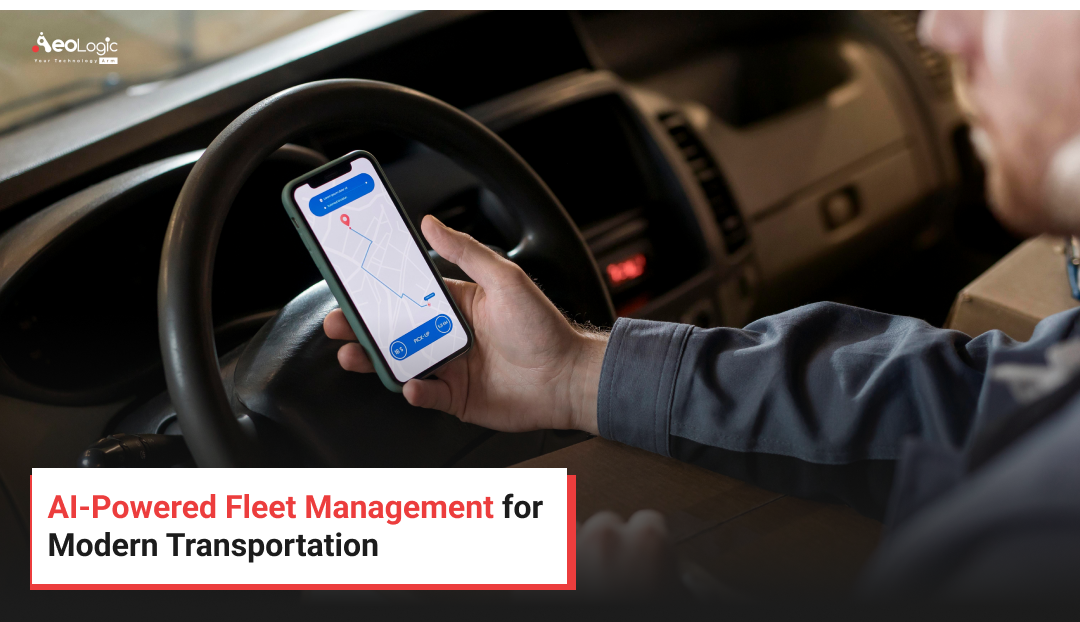
Transportation companies run on thin margins and tight schedules, and a single breakdown or missed delivery window can ripple through an entire supply chain. That’s exactly why AI-Powered Fleet Management has moved from a buzzword to a baseline expectation for fleets of every size. Instead of relying on spreadsheets, guesswork, and reactive maintenance, fleet managers now use intelligent software that predicts problems before they happen, plans the fastest routes in real time, and keeps drivers safer on the road.
This guide breaks down what AI-Powered Fleet Management actually means, how it works under the hood, and why it’s becoming the standard approach for modern transportation operations — whether you’re running three delivery vans or three thousand long-haul trucks.
What is AI-Powered Fleet Management?
AI-Powered Fleet Management is the use of artificial intelligence, machine learning, and real-time data analytics to monitor, optimize, and automate the operation of vehicle fleets — covering everything from route planning and fuel usage to driver safety and predictive maintenance. Unlike traditional fleet management, which relies on manual tracking and after-the-fact reporting, AI-Powered Fleet Management continuously learns from fleet data to make proactive recommendations.
At its core, this approach combines three layers of technology:
- Telematics hardware — GPS units, onboard sensors, and diagnostic ports that collect raw vehicle data.
- AI and machine learning models — algorithms that interpret that data to spot patterns, predict failures, and recommend actions.
- A management dashboard — the interface fleet managers use to view insights and act on them.
 Why Modern Transportation Needs AI-Powered Fleet Management
The transportation industry is under pressure from several directions at once: rising fuel costs, driver shortages, tighter delivery windows, and growing regulatory scrutiny around emissions and safety. Traditional fleet management simply wasn’t built to handle this level of complexity.
The Limits of Traditional Fleet Management
Conventional systems are largely reactive. A truck breaks down, and only then does the team scramble for a replacement. A driver takes a long, inefficient route, and nobody notices until the fuel bill arrives. These blind spots cost real money and real time.
How AI Changes the Equation
AI-Powered Fleet Management flips this model from reactive to proactive. Instead of waiting for a problem to surface, the system flags early warning signs — unusual engine vibration patterns, a drop in tire pressure, or a driver’s braking habits that suggest fatigue — and alerts the fleet manager before it becomes a costly incident.
Core Benefits of AI-Powered Fleet Management
1. Predictive Maintenance
Rather than servicing vehicles on a fixed schedule or waiting for a breakdown, AI-Powered Fleet Management analyzes sensor data (engine temperature, oil pressure, mileage patterns) to predict when a part is likely to fail. This reduces unplanned downtime and extends vehicle lifespan.
2. Smarter Route Optimization
AI models factor in live traffic, weather, road closures, and delivery priorities to calculate the most efficient route — adjusting in real time rather than relying on a static plan made at the start of the day.
3. Improved Driver Safety
AI-powered dash cams and telematics can detect harsh braking, distracted driving, and signs of fatigue, giving fleet managers the data they need to coach drivers and reduce accident rates.
4. Lower Fuel Costs
By combining route optimization with driving-behavior analysis (idling time, harsh acceleration, speeding), AI-Powered Fleet Management helps fleets cut fuel consumption meaningfully without buying a single new vehicle.
5. Better Regulatory Compliance
Automated logging of hours of service, inspection records, and emissions data makes it far easier to stay compliant with transportation regulations and avoid costly fines.
6. Data-Driven Decision Making
Fleet managers gain access to dashboards and reports that turn raw vehicle data into clear, actionable insights — helping with everything from budgeting to vehicle replacement planning.
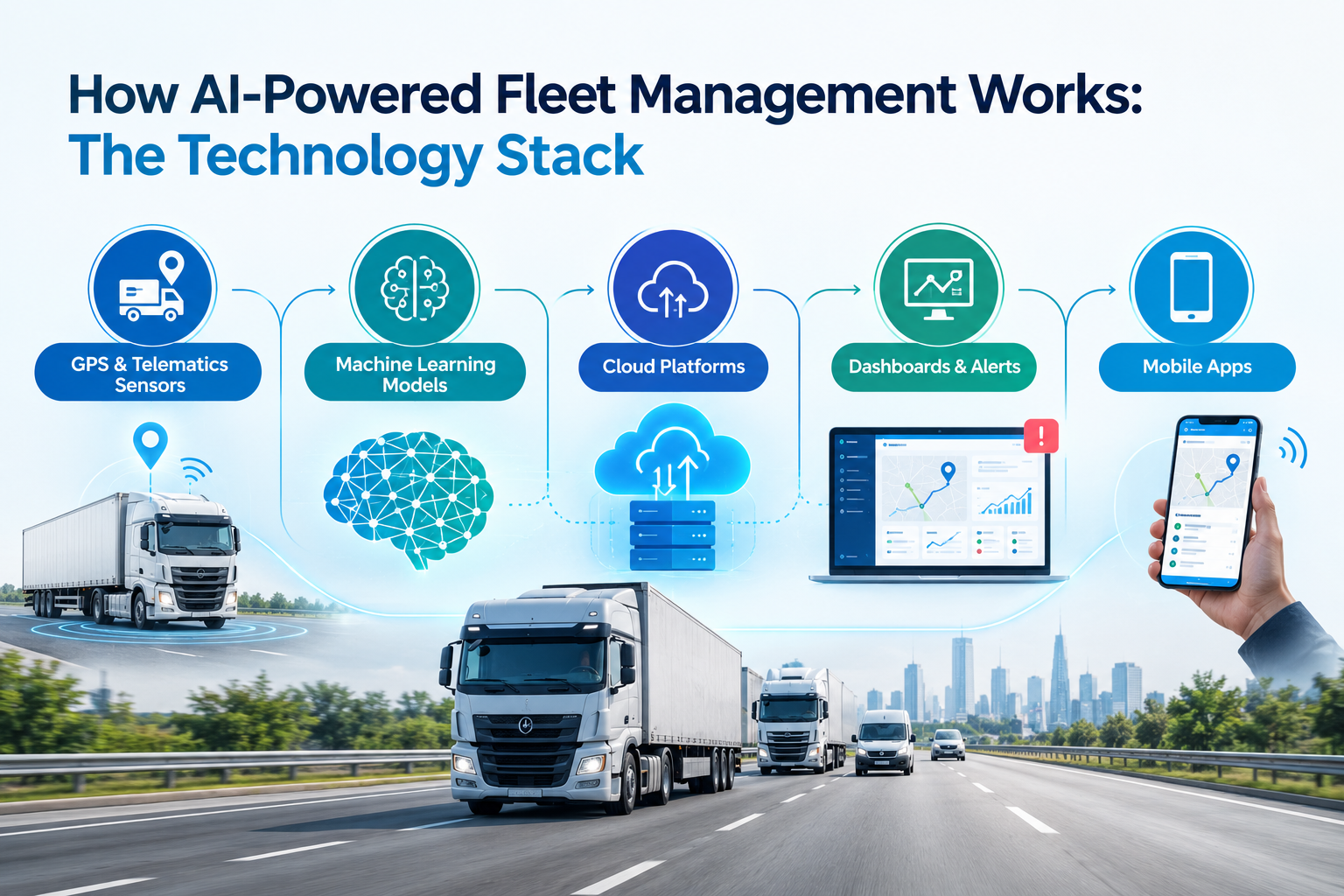
How AI-Powered Fleet Management Works: The Technology Stack
| Component | Function |
|---|---|
| GPS & Telematics Sensors | Capture location, speed, engine diagnostics, and driver behavior data |
| Machine Learning Models | Analyze historical and real-time data to detect patterns and predict issues |
| Cloud Platforms | Store and process large volumes of fleet data for instant access |
| Dashboards & Alerts | Translate AI insights into clear actions for fleet managers |
| Mobile Apps | Give drivers real-time route updates, alerts, and communication tools |
 Key Use Cases of AI-Powered Fleet Management
Last-Mile Delivery Optimization
E-commerce companies, courier providers, food delivery platforms, and logistics businesses operate in environments where delivery speed, route efficiency, and customer expectations directly influence operational costs and customer satisfaction. AI-Powered Fleet Management can analyze real-time traffic conditions, delivery locations, vehicle availability, driver schedules, historical delivery patterns, and time-window requirements to determine more efficient routes and stop sequences. Instead of relying on fixed routes that may quickly become inefficient because of traffic congestion, road closures, weather conditions, or unexpected delivery changes, AI systems can continuously evaluate available information and recommend route adjustments. This helps fleet operators reduce unnecessary mileage, improve vehicle utilization, and increase the number of deliveries that can be completed within a working shift.
Long-Haul Trucking
Long-haul transportation presents a different set of challenges because vehicles may travel hundreds or thousands of miles across highways, cities, and different operating environments. A vehicle breakdown in the middle of a long-distance journey can create significant financial and operational consequences, including delayed shipments, emergency repair expenses, missed delivery commitments, and additional driver or vehicle costs. AI-powered fleet solutions can monitor vehicle health using information from sensors, telematics systems, maintenance records, engine data, tire information, and other connected devices. By identifying unusual patterns before they develop into major failures, fleet operators can move from reactive maintenance toward a more predictive approach.
Public Transit and Municipal Fleets
Public transportation agencies and municipal organizations manage fleets that operate under strict schedules, budget constraints, maintenance requirements, and public-service expectations. Buses, waste collection vehicles, emergency service vehicles, utility fleets, and other municipal assets need to remain available and reliable because disruptions can directly affect communities. AI-driven fleet systems can analyze vehicle utilization, route performance, passenger demand, maintenance history, traffic patterns, and operating conditions to help organizations make better decisions about fleet deployment. For public transit operators, this can support more efficient scheduling and route planning while helping reduce unnecessary vehicle movement.
Electric Vehicle (EV) Fleet Management
The transition from conventional vehicles to electric vehicles introduces new operational considerations for fleet managers. Unlike traditional fleets, EV operations require careful management of battery levels, charging schedules, charging infrastructure, energy consumption, and driving range. AI can analyze vehicle usage patterns, route distances, traffic conditions, battery health, weather conditions, and charging-station availability to help determine when and where vehicles should charge. This becomes particularly important for businesses operating large EV fleets, where unplanned charging requirements can disrupt schedules and reduce vehicle availability.
Common Challenges in Adopting AI-Powered Fleet Management
Adopting AI-Powered Fleet Management isn’t without hurdles. Being aware of these challenges in advance makes implementation smoother:
- Upfront investment — hardware, software licensing, and integration costs can be significant for smaller fleets.
- Data quality issues — AI models are only as good as the data feeding them; poorly maintained sensors produce unreliable predictions.
- Driver resistance — some drivers view monitoring technology as surveillance rather than a safety tool, so clear communication matters.
- Integration complexity — connecting AI fleet platforms with existing ERP, dispatch, or maintenance systems can take time.
- Change management — staff need training to trust and act on AI-generated recommendations rather than falling back on old habits.
Best Practices for Implementing AI-Powered Fleet Management
- Start with clear goals. Decide whether your priority is cutting fuel costs, reducing accidents, or improving on-time delivery rates before choosing a platform.
- Pilot before scaling. Test AI-Powered Fleet Management on a subset of vehicles to validate results before a fleet-wide rollout.
- Invest in data quality. Ensure sensors and telematics devices are properly installed and maintained.
- Involve drivers early. Explain how the technology benefits them (fewer breakdowns, safer routes) rather than framing it purely as oversight.
- Review AI recommendations regularly. Treat the system as a decision-support tool, not an autopilot — human judgment still matters.
- Measure ROI continuously. Track fuel savings, downtime reduction, and accident rates to justify and refine the investment.
AI-Powered Fleet Management vs. Traditional Fleet Management
| Factor | Traditional Fleet Management | AI-Powered Fleet Management |
|---|---|---|
| Maintenance approach | Scheduled or reactive | Predictive, based on real-time data |
| Route planning | Static, manually planned | Dynamic, continuously optimized |
| Safety monitoring | Limited, often after incidents | Proactive, real-time alerts |
| Fuel management | Manual tracking | AI-driven efficiency recommendations |
| Decision-making | Experience-based | Data-driven, with human oversight |
The Future of AI-Powered Fleet Management
Looking ahead, AI-Powered Fleet Management is expected to become more deeply connected with autonomous vehicle technology, advanced driver-assistance systems (ADAS), and smart city infrastructure. As machine learning models continue to improve, fleet operators can benefit from more accurate predictions, smarter route planning, proactive maintenance, and better driver safety insights. AI solutions are also becoming more accessible to small and mid-sized businesses, making intelligent fleet operations less dependent on large technology budgets. This evolution will help transportation companies improve efficiency, reduce operating costs, respond faster to changing conditions, and build more connected and sustainable fleet operations.
Key Takeaways
- AI-Powered Fleet Management uses artificial intelligence and real-time data to make fleet operations proactive instead of reactive.
- Core benefits include predictive maintenance, route optimization, improved driver safety, and lower fuel costs.
- Successful adoption depends on data quality, driver buy-in, and clear implementation goals.
- The technology is becoming essential, not optional, for competitive modern transportation operations.
Conclusion
AI-Powered Fleet Management is reshaping how transportation companies operate — turning scattered vehicle data into clear, actionable insight that saves money, improves safety, and keeps deliveries on schedule. Fleets that adopt this approach early gain a real operational edge over those still relying on spreadsheets and guesswork.
If your organization is ready to reduce downtime, cut fuel costs, and make smarter decisions with your fleet, now is the time to explore an AI-Powered Fleet Management solution that fits your operation’s size and goals. Aeologic Technologies can help businesses adopt intelligent fleet solutions designed to improve visibility, efficiency, predictive maintenance, and overall transportation performance.
Frequently Asked Questions
Q1. What industries benefit most from AI-Powered Fleet Management?
Logistics, e-commerce delivery, long-haul trucking, public transit, and construction fleets all benefit, since each relies heavily on efficient routing, vehicle uptime, and driver safety to stay profitable.
Q2. Is AI-Powered Fleet Management expensive to implement?
Costs vary by fleet size and platform, but many providers offer scalable, subscription-based pricing, making it accessible to small and mid-sized fleets, not just large enterprises.
Q3. Does AI-Powered Fleet Management replace human fleet managers?
No. It supports human decision-making by surfacing insights and predictions; fleet managers still interpret the data and make final operational calls.
Q4. How does AI-Powered Fleet Management improve driver safety?
It uses dash cams and sensors to detect risky behaviors like harsh braking, speeding, or fatigue, giving managers real-time alerts and data for targeted driver coaching.
Q5. Can small fleets use AI-Powered Fleet Management?
Yes. Many platforms offer entry-level tiers designed for smaller fleets, scaling features and pricing as the business grows.
Q6. How does AI help reduce fuel costs in fleet operations?
By optimizing routes, reducing idling time, and flagging inefficient driving habits, AI-Powered Fleet Management can meaningfully lower fuel consumption across a fleet.
Q7. What is predictive maintenance in fleet management?
Predictive maintenance uses AI to analyze vehicle data and forecast when a component is likely to fail, allowing repairs to happen before a breakdown occurs.

Project Lead with 9+ years of experience in Web Technologies and AI. Expert in leading end-to-end development of scalable, AI-driven solutions. Driving innovation through smart architecture, agile execution, and team leadership.