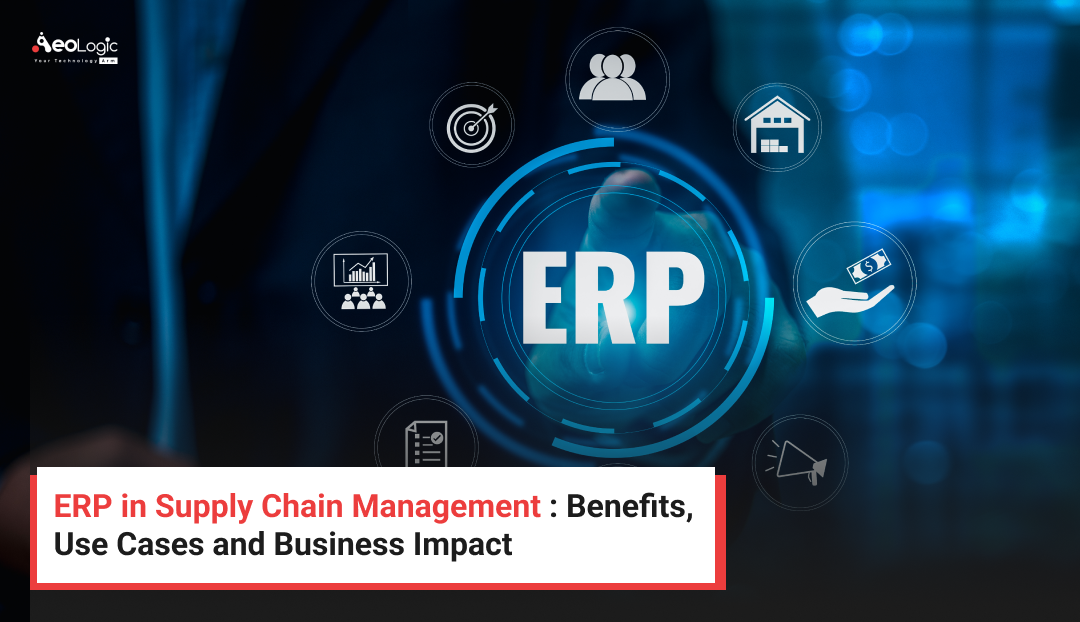
Today’s supply chains are more interconnected, data-driven and customer-centric than ever. Companies today must be able to manage services such as procurement, inventory, warehousing, transportation, production and customer fulfillment in an efficient and accurate manner. When operating in such an environment, ERP in Supply Chain Management has become a vital business solution that assists businesses to integrate operations, enhance visibility, and streamline decision making throughout the supply chain ecosystem.
As industries face rising customer expectations, market volatility, and global operational complexities, companies can no longer rely on disconnected systems or manual workflows. Enterprises require a centralized platform that enables real-time coordination between departments, suppliers, logistics partners, and distribution networks. Enterprise Resource Planning systems help organizations achieve this by bringing operational data, planning, analytics, and automation into a single ecosystem that improves efficiency and business performance.
What is ERP in Supply Chain Management?
Enterprise Resource Planning (ERP) for Supply Chain Management involves the implementation of ERP software to manage, automate and optimise supply chain processes from procurement to production, inventory to warehousing, transport to sales and distribution. It is a single system that stores all the business information in a unified place and provides a real-time view for each department, thus eliminating data silos and improving the coordination of work.
The traditional way of doing business functions in the supply chain is with a number of independent tools, spreadsheets and manual methods. This frequently caused problems with communication, stock inaccuracies, late deliveries, and poor forecasting. ERP platforms overcome these problems by connecting all supply chain activities into one single platform.
An ERP solution typically connects purchasing teams, warehouse managers, finance departments, production units, suppliers, and logistics partners through shared workflows and centralized databases. This enables companies to monitor the flow of goods, manage the procurement process, predict demand, oversee supplier interactions, and gain insights into their operations, all in a single place.
Why ERP Systems Matter in Modern Supply Chains?
Global supply chains are getting more and more complex, as markets are expanding, operations are multi-location, expectations from customers are rising, and the growth of digital commerce is increasing. Today, businesses require systems which offer end to end visibility and faster decision making. ERP in Supply Chain Management is vital in assisting organizations to handle these challenges efficiently.
Centralizing information is one of the main advantages that ERP systems offer. When procurement, inventory, finance, logistics, and manufacturing teams work with disconnected systems, organizations often face delays, duplicated efforts, and inaccurate reporting. By having every department on the same platform with access to real-time data, ERP systems help to create operational alignment.
Other than that, it is volatility in demand too. The lines of business need to adjust their responses to the evolving needs of the customers, disruptions in the supply chain and fluctuations in the inventories in a timely manner. By leveraging historical trends, sales patterns, supplier performance, and operational data, ERP solutions enhance forecasting and planning accuracy.
Core Components of ERP in Supply Chain Management Systems
ERP platforms are designed with a collection of various integrated modules that work together to support the operations of supply chains. The modules are all geared to a particular operational region with shared data throughout the organisation.
Procurement Management
Procurement modules will assist businesses in the selection of suppliers, the creation of purchase requests, purchase orders, communication with vendors, processing of invoices, and procurement analytics. The systems provide transparency in the supplier’s operations and minimize delays in procurement and avoid unnecessary costs.
An organization can track supplier performance, negotiate better contracts, enable automation of procurement approvals, and keep compliance and auditing records.
Inventory Management
One of the most crucial features of ERP platforms is inventory management. Businesses can keep track of inventory, know the movement of stock in their warehouses, manage the restocking process and stay accurate with inventory across multiple locations.
Predictive Analytics and Demand Forecasting are core features of Advanced ERP systems that help optimize inventory levels, reducing stock shortages and overstocking problems.
Warehouse Management
ERP in Supply Chain Management with Warehouse Management modules enhances the control of the operations within warehouses and distribution centers. Centralized workflow management and real-time visibility of inventory enable businesses to track goods movement, maximize storage space, automate picking and packing tasks, and enhance shipment accuracy.
Production Planning
ERP systems are used by manufacturing companies to control production schedules, allocation of raw materials, utilization of machines, quality control and production forecasting.
These systems are designed to minimize downtime, optimize resource management and ensure production efficiency for meeting customer demand requirements.
Transportation and Logistics Management
Transportation modules are designed to help with future transportation planning, optimization, fleet tracking, freight management, and delivery coordination. In real-time, businesses can track shipments and enhance transportation efficiency and logistics costs.
Logistics visibility also enhances customer communication, allowing for accurate delivery updates and proactive solution to issues.
Financial Integration
There is a link between supply chains and financial management in ERP systems. Procurement costs, inventory value, transportation costs, invoicing and revenue data are all synced automatically, ensuring financial accuracy and transparency.
This integration will allow for quicker reporting, budget control, profitability analysis, and strategic planning.
Benefits of ERP for Supply Chain Operations
By integrating all aspects of the supply chain into one system, ERP systems provide businesses with greater visibility and control throughout the entire process, from procurement to inventory management, production, logistics, and finance. Organizations can have real-time operational data in a single system, rather than in disconnected software or manual spreadsheets. This ensures better inter-departmental coordination, minimises communication gaps and helps expedite decision making. Real-time stock management, shipment tracking, supplier tracking, and troubleshooting bottlenecks is all more efficient and effective for businesses, allowing for smoother and more reliable business operations.
One other great benefit of ERP solutions is operational effectiveness and cost reduction. Automated workflows minimize manual processes like purchase order creation, stock updates, invoicing and shipping. This reduces errors by humans and increases productivity and process speed. ERP systems can also improve inventory management, minimizing overstocking and stockout situations by analyzing demand and providing up-to-the-minute inventory data. With more effective resource planning, managing warehouses and coordinating transportation costs, overall expenses are reduced and profitability is increased.
 ERP in Supply Chain Management for Different Industries
ERP platforms are utilized in a variety of different ways across various industry sectors, as their operations, customer demands, and supply chains differ.
Manufacturing Industry
ERP systems are utilized by manufacturers in a variety of production-related tasks, such as production planning, raw material procurement, quality control, inventory optimization, and equipment utilization monitoring.
This will enable manufacturers to streamline operations and reduce downtime, optimizing resources across factories and warehouses.
Retail and eCommerce
Forecasting and inventories visibility is critical to retail operations. ERP solutions can assist retailers in connecting inventory data from both their retail and warehouse locations to their online channels, as well as enhancing the speed of order fulfillment.
Retailers also benefit from the ability to keep track of inventory in real time and the sales analytics.
Healthcare and Pharmaceuticals
There are strict requirements for compliance, traceability and inventory accuracy within healthcare supply chains. By providing hospitals, pharmaceutical firms, and health-care distributors with centralized visibility and automation of operations, ERP in Supply Chain Management streamlines the management of medical inventory, procurement processes, and suppliers, along with regulatory compliance.
These systems not only enhance the control of operations but also help ensure product safety and compliance.
Logistics and Transportation
ERP systems are used by logistics companies to track and optimize their delivery schedules, coordinate their warehouses, manage their shipping routes, and monitor their fleets.
Real-time logistics visibility can optimise transportation and decrease the delays and operational costs.
Step-by-Step ERP Implementation Strategy for Supply Chain Operations
Implementing ERP requires strategy, alignment and constant optimisation. Those businesses that take a systematic approach to implementation have better long term outcomes.
Step 1 : Define Business Objectives
The first step in planning for business is to define operational issues, gaps in the supply chain and strategic objectives. It is important for businesses to determine their end goal for implementing inventory visibility, whether they are looking to enhance inventory visibility, automate their procurement workflows, lower logistics expenses or improve forecasting accuracy.
Having clear objectives is important when choosing the right ERP platform and implementation strategy.
Step 2 : Analyze Existing Processes
The businesses need to understand and assess the current workflow processes, system constraints, operational blockages and data handling methods to ensure the successful implementation of ERP in Supply Chain Management for their procurement, inventory, warehousing, logistics and operational planning processes.
This analysis can be used to help an organization determine where they need to improve processes and integrate systems.
Step 3 : Select the Right ERP Platform
The key to success is to select the right ERP solution. Considerability should be given to scalability, industry compatibility, customization options, cloud integration, cloud compatibility, analytics options, and industry experience.
Businesses should keep the elements in mind when choosing the platforms that match the level of complexity and growth plans.
Step 4 : Plan Data Migration
One of the challenges of ERP implementation is the data transfer from existing systems like spreadsheets and legacy applications.
Businesses need to ensure that the data will be accurate, consistent and secure during the migration process in order to avoid any disruption in operations.
Step 5 : Train Employees
Successful implementation of ERP requires the adoption of the program by its employees. Organizations should provide detailed training programs for procurement teams, warehouse staff, logistics managers, finance departments, and operational leaders.
Training can overcome resistance to change and make systems easier to utilize.
Step 6 : Monitor and Optimize Performance
The ERP implementation process shouldn’t stop at deployment. Performance, operational KPIs, user adoption, and workflow efficiency must be continually tracked by a business.
Optimization on an ongoing basis ensures long-term operational improvements and return on investment.
Real-World Use Cases and Business Impact
ERP in Supply Chain Management has revolutionized the way companies manage their supply chains, making them more efficient, visible, and effective.
A manufacturing company facing inventory problems and production delays decided to put in place an ERP system to coordinate all procurement, inventory and production planning. The company achieved significant improvements in inventory accuracy, reduced raw material shortages, and improved production efficiency within months.
A retail business with several warehouses and online channels implemented ERP technology to help them keep their inventory in order and handle order fulfillment processes. Real-time inventory visibility improved the business by providing real-time visibility into inventory, which reduced inconsistencies in stock and boosted customer satisfaction by delivering faster deliveries.
A logistics company integrated transportation management, warehouse operations, and shipment tracking into a unified ERP platform. The organization improved route optimization, reduced fuel costs, and increased delivery efficiency while improving communication with customers.
Technologies Driving Modern ERP Supply Chain Solutions
Digital technology advances have been driving significant changes in ERP platforms, such as improving automation, analytics, and operational intelligence.
Artificial Intelligence and Machine Learning
AI-driven ERP systems enhance forecasting precision, streamline decision-making processes, identify operational irregularities, and optimize inventory management.
Machine learning algorithms continuously analyze operational data to improve supply chain efficiency over time.
Cloud Computing
Cloud ERP offers scalability, remote access, quicker implementation, and reduced infrastructure expenses. It is a solution that allows businesses to operate in multiple locations without spending significant funds on on-premise infrastructure.
Cloud ERP solutions also facilitate better software information and integration capabilities.
Internet of Things (IoT)
With the help of IoT devices, ERP in Supply Chain Management becomes smarter, more connected and more responsive to changes in the business.
By incorporating ERP systems with IoT sensors, businesses can gain a more comprehensive view of their operations and implement predictive maintenance and real-time monitoring.
Predictive Analytics
Predictive analytics assists businesses to forecast future variations in demand, supplier risks, stockouts, and operational disruptions.
This ability helps to enhance strategic planning and decrease supply chain uncertainties.
Robotic Process Automation
RPA eliminates repetitive administrative tasks like invoice processing, procurement approvals, order updates, and notifications about shipment.
Automation enhances the speed of operations and decreases manual effort.
Common Challenges in ERP in Supply Chain Management Adoption
Although there are many advantages, ERP implementation may face a number of operational and organizational hurdles if it is not taken care of.
One major challenge is resistance to change. Resistance/hesitation may be encountered from employees who are not used to new processes and systems/workflows. To boost adoption, organisations need to concentrate on change management and staff training.
Another common issue is poor implementation planning. When a business rushes to deploy without any clear goals or process analysis, it can result in disruptions to the business and integration issues.
Data migration complexity can also pose challenges. The systems may be less reliable and efficient if the data is inaccurate or not consistent.
Best Practices for Successful ERP Deployment
By adhering to structured implementation and optimization practices, organizations can increase their chances of achieving success with ERP in Supply Chain Management.
It is important for businesses to focus on the ERP goals and make them the part of the overall business plans and strategies, rather than considering implementation as a separate IT project.
Engagement from executive leadership is crucial as transformation of the supply chain can be a cross-department effort and one that takes time to invest.
It is crucial for organizations to focus on scalable ERP systems that can accommodate the growth of their businesses and the changing needs in their operations.
Ongoing training and tracking of employee performance also ensure optimum utilization and efficiency of the system.
Future Trends in ERP and Supply Chain Operations
The supply chain management of the future will be more and more data-driven, automated, and predictive. ERP platforms will keep going to facilitate smarter working environments and also real-time decision making abilities.
Blockchain technology can enhance transparency and traceability in global supply chains by providing a secure and trustworthy record of transactions.
Digital twins will be used in supply chain simulation and operational forecasting more extensively in the future. Virtual operational models are going to be used in business to assess risks, optimize workflow, and enhance strategic planning.
Sustainability monitoring will also be a key feature of ERP.
Conclusion
ERP in the context of Supply Chain Management is an essential technology for businesses that want to stay efficient, have visibility, and expand their operations. In today’s era of longer procurement to customer delivery timelines and increasing customer expectations, organizations must have systems that integrate procurement, inventory, warehousing, logistics, production, and financial processes in a single eco-system. By better coordinating processes and making decisions based on data, modern ERP platforms can help businesses to be more accurate with their forecasts, automate their workflows, optimize their inventory, lower their operational costs, and improve customer satisfaction.
In an era of rapid digital transformation, companies with a focus on intelligent ERP solutions will have a solid foundation for navigating market shifts, boosting operational agility, and ensuring sustainable growth. If your company is interested in upgrading their supply chain operations, you can consider advanced enterprise solutions from Aeologic Technologies to create smarter, more connected and future ready supply chain ecosystems.
People Also Ask
Q1. What are the benefits of ERP in Supply Chain Management?
ERP systems improve operational visibility, inventory accuracy, procurement efficiency, and logistics coordination. They centralize business data, automate workflows, reduce manual errors, and support faster decision-making through real-time analytics. Businesses also benefit from lower operational costs, improved productivity, and better customer satisfaction.
Q2. How does ERP improve inventory management?
ERP improves inventory management through real-time stock tracking, automated replenishment, and demand forecasting. Businesses can monitor inventory across multiple locations, reduce overstocking and shortages, and improve warehouse efficiency using barcode scanning, RFID integration, and centralized inventory visibility.
Q3. Is ERP suitable for small and medium-sized businesses?
Yes, modern cloud-based ERP solutions are highly suitable for small and medium-sized businesses. They offer scalable, cost-effective deployment options that help automate operations, improve inventory visibility, streamline accounting, and support business growth without requiring large infrastructure investments.
Q4. What industries benefit most from ERP systems?
Industries such as manufacturing, retail, healthcare, logistics, food and beverage, pharmaceuticals, automotive, and eCommerce benefit significantly from ERP systems. These industries rely on inventory management, supplier coordination, operational visibility, and process automation to improve efficiency and customer service.
Q5. What challenges do companies face during ERP implementation?
Common ERP implementation challenges include employee resistance, poor planning, data migration issues, integration complexity, and insufficient training. Businesses may also face operational disruptions if workflows are not properly analyzed before deployment. Strong planning and change management help minimize these risks.
Q6. How does cloud ERP differ from traditional ERP systems?
Cloud ERP systems are hosted online and accessed remotely, while traditional ERP systems are installed on on-premise infrastructure. Cloud ERP offers better scalability, lower infrastructure costs, faster deployment, easier updates, and remote accessibility, making it ideal for modern digital operations.
Q7. What is the future of ERP in supply chain operations?
The future of ERP includes AI-driven automation, predictive analytics, IoT integration, blockchain technology, and advanced real-time visibility. Businesses will increasingly use intelligent ERP systems to improve forecasting, automate decision-making, enhance supply chain resilience, and support sustainable operations.

With a strong foundation in software and a growing expertise in AI, I specialize in building smart, scalable solutions that drive digital transformation