
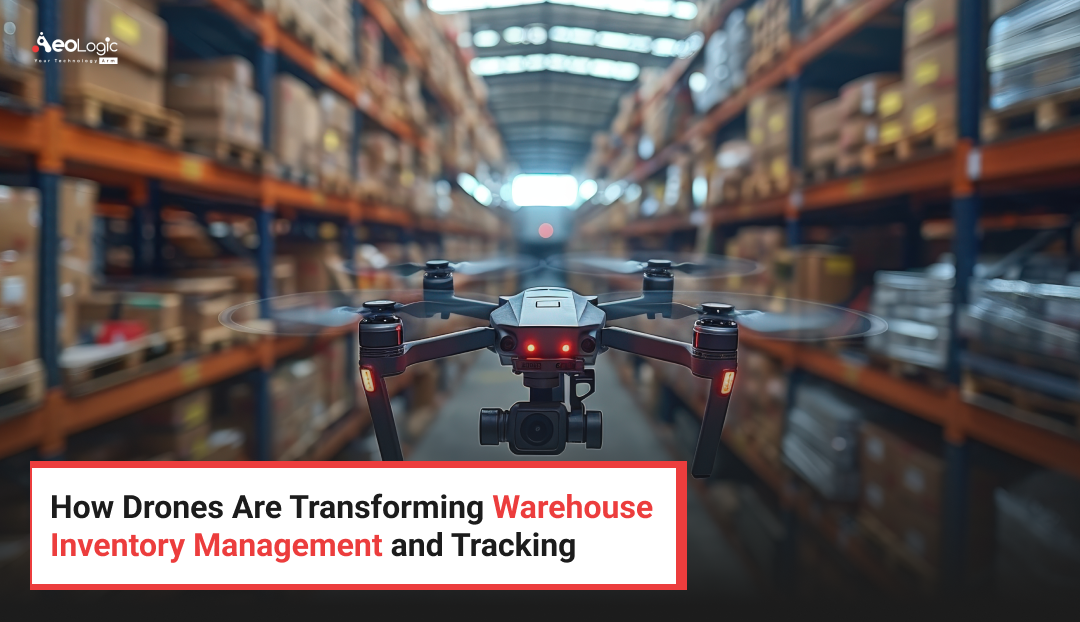
Warehouse inventory management sits at the core of supply chain efficiency, shaping how warehouses control stock, fulfil orders, and maintain operational visibility. As businesses grow, product lines expand, and customer expectations tighten, warehouses are under more pressure than ever to operate quickly and accurately. Traditional inventory methods such as manual counts, barcode scanning, and spreadsheet-based tracking are increasingly struggling to meet modern demands, often resulting in delays, errors, and limited real-time insight.
Here, drones are subtly but significantly altering the game for warehouse inventory management. Once primarily associated with aerial photography and military applications, drones are now becoming a transformative force in modern warehouse inventory management. They bring automation, intelligence, and real-time visibility to environments that were previously labour-intensive and error-prone. From rapid stock audits to pallet location tracking in high-bay warehouses, drones are redefining how inventory is counted, monitored, and managed.
The Definition of Drone-Based Warehouse Inventory Management
Drone-based warehouse inventory management is essentially the tracking, verification, and management of inventory within warehouses using autonomous or semi-autonomous aerial drones that are outfitted with cameras, sensors, and scanning technologies.
Drones can navigate warehouse aisles, scan shelves, read barcodes or RFID tags, and send inventory data straight into warehouse management systems, in contrast to traditional inventory processes that mainly rely on handheld scanners, forklifts, and human labour.
These drones are made especially to be used indoors. They follow predetermined flight paths and regulations while operating safely in structured warehouse environments. In addition to counting stock, their goal is to provide precise, up-to-date inventory intelligence that enhances operational choices.
To put it simply, drones make inventory management a proactive, data-driven process instead of a reactive one.
Why Inventory Management in Warehouses Is More Important Than Ever
Supply chains today are neither predictable nor linear. Inventory accuracy is now a crucial business requirement rather than an operational luxury due to the growth of e-commerce, same-day delivery expectations, global sourcing, and frequent demand fluctuations in warehouse inventory management.
Stockouts, overstocking, delayed shipments, lost sales, and irate customers are all consequences of poor inventory visibility. Production scheduling, order fulfilment, and financial forecasting can all be impacted by even minor errors that spread throughout the supply chain.
In the current setting, warehouse inventory management needs to provide:
- Visibility in real time across thousands of SKUs
- Excellent precision in dynamic storage locations
- Quicker inventory cycles without interfering with business operations
- Scalability as warehouses expand both horizontally and vertically
Conventional inventory techniques are unable to meet these demands. Manual cycle counts are time-consuming, necessitate downtime, and put workers’ safety at risk. Drone-based inventory tracking is becoming more popular across industries for this exact reason.
Also read : The Role of Drones in Enhancing Supply Chain Efficiency
The main advantages of using drones for inventory management in warehouses
Quicker Inventory Audits Without Interrupting Operations
Speed is one of the main benefits of drones in warehouse inventory management. Thousands of storage locations can be scanned by a drone in a fraction of the time required by manual teams. Inventory counts that used to take days or weekends can now be finished in a matter of hours, frequently without interfering with regular business operations.
This makes it possible for warehouses to perform inventory audits more frequently, which enhances data accuracy and lessens surprises during times of high demand.
Enhanced Data Quality and Inventory Accuracy
Errors resulting from fatigue, incorrect data entry, or mis-scanning are common in human-led inventory counts. Drones always produce reliable results by following preprogrammed routes and scanning guidelines.
Drones that are integrated with warehouse management systems automatically update inventory records, which lowers inconsistencies and increases confidence in data used for forecasting and planning.
Increased Safety for Workers
Warehouses are dangerous places by nature because of their high racks, small aisles, and moving machinery. Conventional inventory counting frequently necessitates that employees use elevators or ascend to higher storage areas.
Drones greatly lower the risk of accidents by removing the need for workers to operate at heights. As a result, warehouse inventory management is both safer and more effective.
Optimisation of Costs Over Time
Although there is an upfront cost associated with drone deployment, there are significant long-term financial advantages. Reduced labor requirements, fewer counting errors, lower downtime, and improved inventory utilization all contribute to operational savings.
Over time, drones help warehouses achieve a lower cost per inventory count while improving service levels.
Inventory Visibility in Real Time
Drones make it possible to track the location and movement of stock almost instantly. Warehouse managers can react swiftly to shortages, misplaced goods, or shifts in demand thanks to this visibility.
Businesses get ongoing insight into the health of their inventory rather than depending on sporadic counts.
How Warehouse Inventory Management Uses Drones
Self-Driving Flight and Navigation
Advanced positioning systems are used to program warehouse drones to navigate aisles. Drones use visual markers, LiDAR, and simultaneous localisation and mapping technologies to move precisely within the warehouse, unlike GPS, which has trouble indoors.
When tasks are finished, they safely return to charging stations, fly predetermined routes, and avoid obstacles.
Identification of Inventory and Data Collection
Drones have high-resolution cameras and scanners that can read RFID tags, barcodes, and QR codes. As they move through aisles, they capture inventory data without requiring physical contact.
This data is instantly transmitted to backend systems, ensuring records are always up to date.
Connectivity to Warehouse Management Systems
When drones are seamlessly integrated with current warehouse management software, their true potential becomes apparent. Drone data updates quantities, locations, and movement history directly into inventory dashboards.
Drones are no longer a stand-alone tool but rather an extension of the digital warehouse ecosystem thanks to this integration.
Alerts and Exception Detection
Drones are used for more than just inventory counting; they can also be used to spot anomalies like blocked aisles, lost pallets, damaged packaging, and empty spaces. Teams can resolve issues before they become operational problems thanks to automated alerts.
The overall performance of warehouse inventory management is strengthened by this proactive approach.
Also read : Top Warehouse Automation Companies in 2025
Drone-Based Inventory Tracking Applications in Industry
Retail warehousing and online sales
Large SKU assortments with high turnover rates are managed by e-commerce warehouses. Drones help maintain accurate stock levels, prevent overselling, and support rapid order fulfillment during peak seasons.
Production Facilities
To prevent production delays, manufacturing environments depend on precise material availability. Drones monitor components, raw materials, and completed goods to maintain production schedules.
Providers of Third-Party Logistics
Under stringent service-level agreements, 3PL providers oversee inventory for several clients. Transparency, reporting accuracy, and customer trust are all enhanced by drone-powered warehouse inventory management.
Hazardous Warehouses and Cold Storage
Drones offer a dependable substitute for inventory tracking without subjecting workers to hazardous conditions in settings where human access is restricted because of temperature extremes or safety hazards.
Technologies Driving Inventory Management in Drone-Based Warehouses
Image Recognition and Computer Vision
Drones can read codes, recognize storage patterns, and identify labels thanks to advanced computer vision. Even in intricate warehouse layouts, this technology guarantees accurate data capture.
Machine Learning and Artificial Intelligence
AI algorithms analyze drone-collected data to detect anomalies, predict inventory trends, and optimize storage strategies. Over time, the system becomes smarter, improving efficiency with each scan.
Systems for Indoor Positioning
Drones employ alternative positioning techniques like visual markers, LiDAR mapping, and sensor fusion to navigate precisely because GPS is unreliable indoors.
Cloud-Based Information Systems
Inventory data collected by drones is stored and processed in cloud platforms, enabling real-time access, analytics, and integration with enterprise systems.
Difficulties with Drone-Based Inventory Management in Warehouses
Complexity of Initial Implementation
Drone adoption necessitates staff training, software integration, and modifications to warehouse layouts. Organizations that are not accustomed to automation may find this shift intimidating.
Solution: As confidence and knowledge increase, start with pilot projects in small areas and scale them up gradually.
Safety and Regulation
Drone operations must adhere to safety regulations even indoors to prevent collisions with people or equipment.
Solution: Use drones designed specifically for indoor industrial environments with obstacle avoidance and emergency shutdown features.
Accuracy of Data in Difficult Situations
Poor lighting, damaged labels, or reflective surfaces can affect scanning accuracy.
Solution: Increase labeling standards for uniformity and integrate drones with complementary technologies like RFID.
Workforce Adoption and Change Management
Workers may oppose new technology or worry about losing their jobs.
Solution: Instead of viewing drones as replacements, present them as instruments that improve worker productivity and safety. Upskill employees for more valuable positions.
The Best Ways to Adopt Drones Successfully
Match Drone Strategy to Business Objectives
Drone deployment should support clear objectives such as improved inventory accuracy, reduced cycle time, or enhanced safety. Avoid adopting technology without defined outcomes.
Assure Smooth System Integration
To realize their full potential, drones should seamlessly integrate with ERP platforms, analytics software, and warehouse management systems.
Invest in Governance and Training
Clear operational guidelines and well-trained teams guarantee the safe, efficient, and consistent use of drones.
Integrate Drones With Additional Intelligent Technologies
Drones function best when integrated into a larger Warehouse Inventory Management ecosystem that also incorporates advanced analytics, RFID, and IoT sensors.
Also read : Top Automation Solution Providers in 2025
Future Developments in Drone-Assisted Warehouse Inventory Management
Completely Independent Inventory Management
Future warehouses will feature drones operating continuously without human intervention, delivering real-time inventory updates around the clock.
Inventory Predictive Intelligence
In addition to tracking inventory, AI-powered drones will forecast demand trends, replenishment requirements, and possible disruptions.
Drone Swarm Technology
Multiple drones working collaboratively will enable faster coverage of large warehouses with minimal downtime.
Increased Smart Warehouse Integration
Drones will integrate with robotic picking systems, automated storage, and digital twins to create fully intelligent warehouse ecosystems.
Conclusion
Drones are becoming indispensable parts of contemporary warehouse inventory management strategies; they are no longer merely experimental tools. Drones assist warehouses in transitioning from reactive operations to proactive intelligence-driven environments by providing quicker counts, greater accuracy, enhanced safety, and real-time visibility.
Businesses that use drone technology will have more control, resilience, and scalability as supply chains continue to change. A long-term vision for digital transformation, careful implementation, and integration with current systems are crucial.
By providing clever, scalable, and future-ready manufacturing and warehouse technology solutions that match innovation with actual operational needs, companies like Aeologic Technologies are assisting companies in navigating this transition.
Frequently Asked Questions
Q1. How can drones increase the accuracy of warehouse inventory?
By employing automated scanning and reliable flight paths, drones minimise human error and produce extremely accurate inventory data.
Q2. Is it safe to use drones in warehouses?
Yes, indoor drones are designed with obstacle detection, controlled navigation, and safety protocols suitable for warehouse environments.
Q3. Are current warehouse management systems compatible with drones?
Indeed, using APIs, contemporary drone solutions easily interface with well-known WMS, ERP, and inventory platforms to enable real-time data synchronisation, reporting, and analytics without altering current workflows.
Q4. How often can drones perform inventory counts?
Drones can count inventory on a daily, weekly, or even continuous basis. They can scan shelves on their own without interfering with warehouse operations, increasing accuracy while lowering labour costs and downtime.
Q5. Do drones replace warehouse workers?
No, workers are not replaced by drones; rather, they increase productivity and safety by taking care of tedious inventory tasks, freeing up staff members to concentrate on higher-value operational, strategic, and supervisory tasks.
Q6. Are drones suitable for small warehouses?
Indeed, small warehouses can benefit from scalable and affordable drone solutions that offer flexible deployment, low infrastructure requirements, and notable increases in inventory accuracy and efficiency.
Q7. Which sectors stand to gain the most from inventory management using drones?
Because drone-based inventory management improves accuracy, safety, and speed, industries like retail, e-commerce, manufacturing, logistics, cold storage, pharmaceuticals, and hazardous materials greatly benefit from it.

Manoj Kumar is a seasoned Digital Marketing Manager and passionate Tech Blogger with deep expertise in SEO, AI trends, and emerging digital technologies. He writes about innovative solutions that drive growth and transformation across industry.
Featured on – YOURSTORY | TECHSLING | ELEARNINGINDUSTRY | DATASCIENCECENTRAL | TIMESOFINDIA | MEDIUM | DATAFLOQ