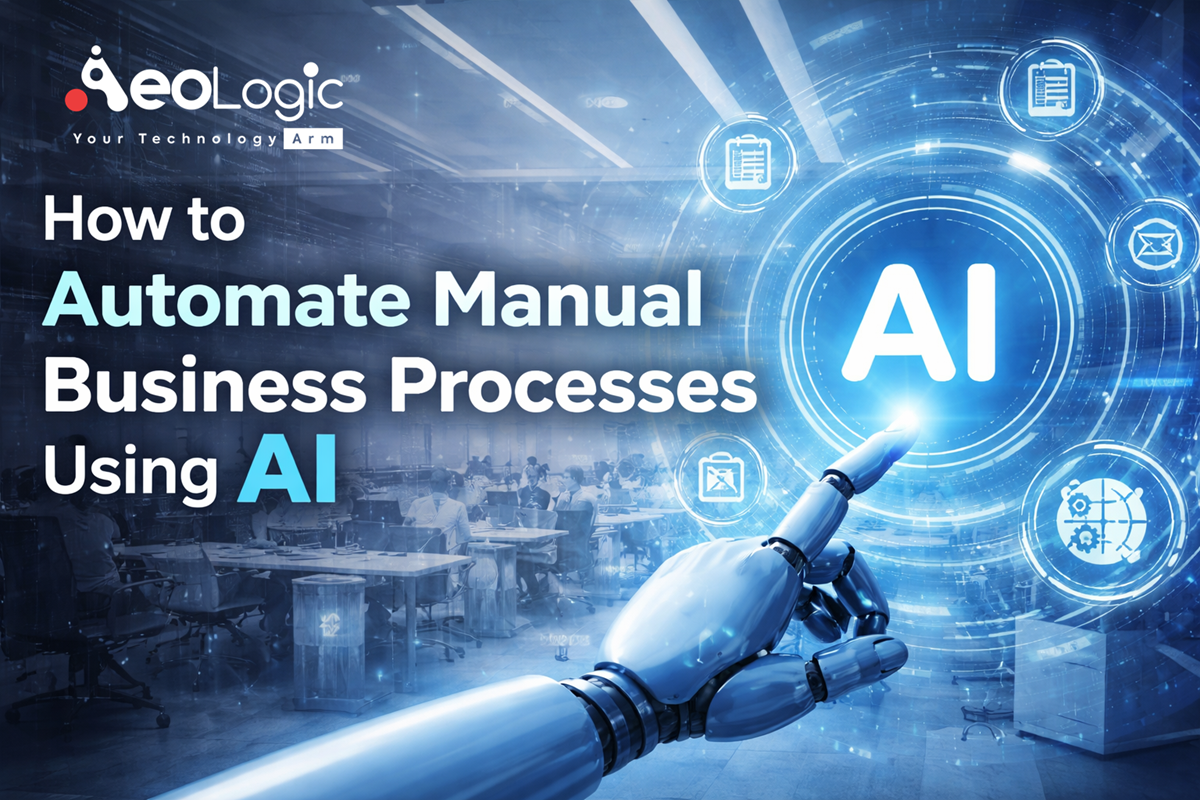
In today’s competitive business landscape, manual processes are one of the biggest barriers to growth, efficiency, and scalability. From data entry and approvals to customer support and reporting, repetitive tasks consume valuable time and increase the risk of human error. This is where How to Automate Manual Business Processes Using AI becomes a game-changing strategy for modern enterprises.
AI-powered automation enables organizations to replace slow, error-prone workflows with intelligent, self-optimizing systems. By leveraging artificial intelligence, businesses can not only automate tasks but also improve decision-making, enhance customer experiences, and unlock new levels of productivity.
What is Automating Manual Business Processes Using AI?
Automating manual business processes using AI refers to the use of advanced technologies like machine learning (ML), natural language processing (NLP), and robotic process automation (RPA) to handle repetitive, rule-based, and decision-driven tasks without human intervention.
Unlike traditional automation, AI systems can learn from historical data, adapt to changing inputs, process unstructured information such as emails and documents, and make intelligent, context-aware decisions.
In simple terms, AI transforms manual workflows into smart, automated systems that continuously improve over time.
Why Automating Manual Processes with AI Matters
Manual processes often lead to inefficiencies, delays, and operational bottlenecks. Businesses that continue to rely on them struggle to scale and compete in a digital-first world.
Key reasons why it matters:
-
Time savings by eliminating repetitive tasks and speeding up operations
-
Cost reduction through reduced manual effort
-
Improved accuracy with fewer human errors
-
Better scalability without increasing workforce
-
Faster decision-making with real-time insights
Organizations that automate manual processes gain a strong competitive advantage.
Core Technologies Behind AI Automation
To successfully implement How to Automate Manual Business Processes Using AI, it’s important to understand the key technologies involved.
Machine Learning (ML)
ML enables systems to learn from data and improve performance without explicit programming.
Natural Language Processing (NLP)
NLP allows AI to understand and process human language, making it ideal for chatbots, emails, and document automation.
Robotic Process Automation (RPA)
RPA automates repetitive, rule-based tasks such as data entry, form filling, and system updates.
Computer Vision
Used for image and video analysis, enabling automation in quality inspection, document scanning, and surveillance.
Predictive Analytics
AI analyzes historical data to forecast outcomes and optimize decision-making.
Step-by-Step Guide: How to Automate Manual Business Processes Using AI
A structured approach ensures successful implementation and maximum ROI.
Step 1: Identify Manual Processes to Automate
Start by analyzing workflows that are repetitive, time-consuming, error-prone, and data-heavy. Focus on processes with high impact and quick wins.
Step 2: Map Existing Workflows
Document current processes to understand task flow, bottlenecks, and dependencies. This helps design an optimized automation strategy.
Step 3: Define Clear Objectives
Set measurable KPIs such as reduction in processing time, improved accuracy, cost savings, and productivity gains.
Step 4: Select the Right AI Tools
Choose tools that integrate well with your systems and meet your business needs, including AI platforms and RPA tools.
Step 5: Train AI Models with Data
Provide high-quality data to improve accuracy, enable better predictions, and ensure reliable automation.
Step 6: Implement and Test
Run pilot projects to validate performance, identify gaps, and optimize workflows before full deployment.
Step 7: Integrate and Scale
Integrate AI solutions with existing systems and expand automation across departments.
Key Benefits of Automating Manual Business Processes Using AI
-
Increased efficiency and productivity
-
Lower operational costs
-
Faster processing and turnaround time
-
Improved data accuracy and insights
-
Continuous process optimization
-
Enhanced customer experience
Real-World Use Cases
Customer Support Automation
AI chatbots handle queries instantly, reducing workload on support teams.
Finance & Accounting
Automation streamlines invoice processing, expense tracking, and fraud detection, ensuring accuracy and compliance.
HR & Recruitment
AI screens resumes, schedules interviews, and automates onboarding processes.
Operations & Supply Chain
AI predicts demand, optimizes inventory, and prevents downtime through predictive maintenance.
Marketing Automation
AI personalizes campaigns and improves customer targeting.
Tools and Platforms for AI Automation
Popular AI platforms include Microsoft Azure AI, Google Cloud AI, and AWS AI Services. Automation tools such as UiPath, Automation Anywhere, and Blue Prism support workflow execution.
Supporting technologies include low-code and no-code platforms, APIs, and cloud infrastructure that enable scalable AI adoption.
Common Challenges and Mistakes
Challenges include poor data quality, integration issues with legacy systems, high initial investment, skill gaps, and resistance to change.
Common mistakes to avoid:
-
Automating inefficient processes
-
Ignoring data preparation
-
Skipping pilot testing
-
Lack of clear KPIs
-
Overcomplicating initial implementation
Best Practices for Success
-
Start with small, high-impact processes
-
Ensure clean and structured data
-
Invest in employee training
-
Monitor performance continuously
-
Align AI strategy with business goals
Future Trends in AI Automation
The future of How to Automate Manual Business Processes Using AI is rapidly evolving.
Key trends include hyperautomation, autonomous AI agents, generative AI integration, real-time analytics, and no-code AI platforms.
Businesses that adopt these innovations will gain a strong competitive advantage.
Conclusion
Understanding How to Automate Manual Business Processes Using AI is essential for organizations aiming to improve efficiency, reduce costs, and scale operations effectively.
AI automation is not just about replacing manual tasks—it’s about transforming how businesses operate, make decisions, and deliver value.
Ready to eliminate manual workflows and embrace intelligent automation? Start leveraging How to Automate Manual Business Processes Using AI today and future-proof your business operations.
Frequently Asked Questions (FAQs)
What does it mean to automate manual business processes using AI?
It means using AI technologies to replace repetitive, manual tasks with intelligent systems that can learn, adapt, and make decisions. This improves efficiency, reduces errors, and enables businesses to operate more effectively.
Which business processes can be automated using AI?
Processes like customer support, finance operations, HR recruitment, marketing campaigns, and supply chain management can be automated because they involve repetitive tasks and large datasets.
Is AI automation expensive to implement?
The cost varies depending on the complexity and scale of implementation, but businesses often achieve strong ROI through cost savings, efficiency, and reduced errors over time.
How long does it take to implement AI automation?
Simple automation projects can take a few weeks, while more complex enterprise solutions may take several months. Starting with pilot projects helps accelerate implementation.
What tools are used for AI business process automation?
Common tools include AI platforms like AWS, Azure, and Google Cloud, along with RPA tools such as UiPath and Automation Anywhere.
What are the biggest challenges in AI automation?
Key challenges include poor data quality, integration issues, lack of expertise, and resistance to change. These can be addressed with proper planning and training.
What is the future of AI in business process automation?
The future includes hyperautomation, autonomous systems, and real-time decision-making, making automation more intelligent and accessible across industries.

Manoj Kumar is a seasoned Digital Marketing Manager and passionate Tech Blogger with deep expertise in SEO, AI trends, and emerging digital technologies. He writes about innovative solutions that drive growth and transformation across industry.
Featured on – YOURSTORY | TECHSLING | ELEARNINGINDUSTRY | DATASCIENCECENTRAL | TIMESOFINDIA | MEDIUM | DATAFLOQ