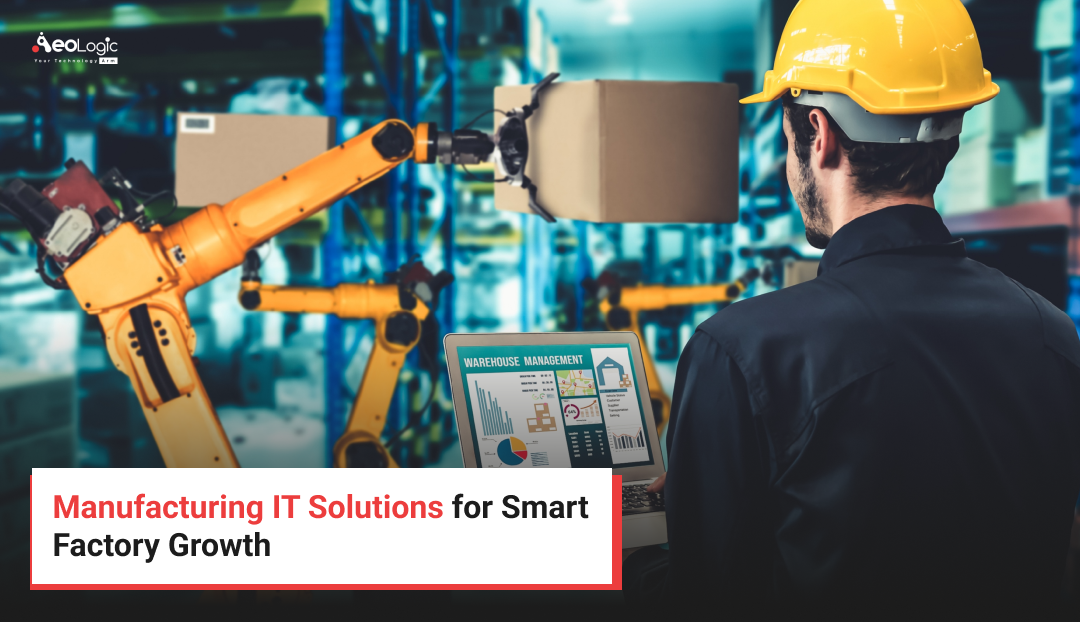
Machines, labour, and materials are no longer the only factors that define manufacturing. Factories are becoming faster, smarter, and more connected than ever in today’s technologically advanced and competitive world. Manufacturing IT solutions, which give manufacturers real-time visibility, boost productivity, cut expenses, and scale operations with confidence, are at the core of this change.
The manufacturing sector is changing dramatically, moving from conventional production lines to digitally connected smart factories. Consumers anticipate more rapid delivery, personalised goods, superior quality, and total transparency. In the meantime, labour shortages, supply chain interruptions, growing operating costs, and stringent compliance regulations put pressure on manufacturers. Spreadsheets, manual procedures, and disjointed systems are no longer viable.
Manufacturing IT Solutions: An Overview
A collection of digital tools, platforms, and software systems intended to support, automate, integrate, and improve manufacturing operations are referred to as manufacturing IT solutions. These solutions serve as a link between enterprise-level decision-making and shop floor operations.
Fundamentally, Manufacturing IT Solutions gather information from sensors, machines, production lines, and operators and transform it into insightful knowledge. This enables manufacturers to continuously improve performance, spot inefficiencies, anticipate problems before they arise, and monitor operations in real time.
They are made to support intricate manufacturing workflows, integrate with industrial hardware, and manage large amounts of operational data.
Manufacturing IT solutions include, for instance:
-
Manufacturing Execution Systems (MES)
-
Enterprise Resource Planning (ERP) for manufacturing
-
Industrial IoT platforms
-
Production planning and scheduling systems
-
Quality management systems
Together, these solutions create a connected manufacturing ecosystem that supports smart factory growth. Manufacturing IT Solutions’ Significance in the Modern World
Over the past ten years, the manufacturing landscape has undergone significant change. Efficiency and agility are now non-negotiable due to global competition, shorter product lifecycles, and rising customer expectations. IT solutions for manufacturing are now necessary rather than optional.
Real-time visibility is one of the main factors contributing to their significance. Poor decision-making, excess inventory, machine downtime, and missed deadlines are frequently the results of this. By offering real-time insights into each stage of production, Manufacturing IT Solutions removes this blind spot.
Digital transformation is another important factor. Manufacturers that embrace contemporary, sustainable, and transparent practices are increasingly favoured by governments, investors, and consumers. IT-driven manufacturing enables better energy management, reduced waste, and improved compliance with industry regulations.
 Principal Advantages of Producing IT Solutions
Enhanced Efficiency in Operations
Manufacturing IT solutions reduce errors, automate repetitive tasks, and do away with manual data entry to streamline workflows. Resources are used more efficiently, production schedules are more precise, and bottlenecks are found early.
Manufacturers can operate at maximum efficiency without needless delays if departments like production, procurement, quality, and logistics are better coordinated.
Production Visibility in Real Time
Real-time production activity monitoring is one of the most potent advantages. From a single dashboard, managers can monitor work-in-progress, output levels, downtime causes, and machine performance.
Faster decision-making and prompt remedial action when problems emerge are made possible by this visibility, which keeps minor issues from turning into expensive disruptions.
Improved Quality Assurance
Throughout the production cycle, manufacturing IT solutions support process standardisation and quality parameter monitoring. Early defect detection is ensured by digital inspections, automated quality checks, and traceability.
This enhances overall product consistency and brand reputation while lowering rework, scrap, and customer complaints.
Decreased Maintenance Expenses and Downtime
Manufacturing IT Solutions assists in identifying early indicators of equipment failure through asset monitoring and predictive maintenance. Instead of responding to malfunctions, maintenance teams can plan repairs in advance.
Unplanned downtime is reduced, equipment lifespan is increased, and maintenance expenses are better managed as a result.
Making Decisions Based on Data
Manufacturers can make decisions based on precise, up-to-date data rather than relying on intuition or out-of-date reports. Cost analyses, production metrics, and performance trends all offer insightful information for ongoing development.
This data-driven approach supports smarter investments, better forecasting, and more strategic planning.
How Manufacturing IT Solutions Are Used by Businesses
From the procurement of raw materials to the delivery of completed goods, manufacturers employ IT solutions throughout the whole value chain. Together, these systems enable smooth information and operation flow.
Manufacturing IT Solutions connects operators, sensors, and machines on the shop floor. Accuracy is increased and manual labour is decreased when production data is automatically recorded. Operators are able to work more effectively because they receive digital work instructions, alerts, and performance feedback.
IT solutions incorporate production capacity, inventory levels, and demand projections at the planning stage. This enables companies to meet delivery obligations, cut excess inventory, and develop realistic production plans.
Manufacturing IT Solutions connect to ERP systems at the corporate level to offer compliance reporting, cost tracking, and financial visibility. This alignment between operations and business goals is critical for sustainable growth.
Manufacturing IT Solutions’ Industry Applications
Automobile Production
Manufacturing IT solutions are used in the automotive industry to track thousands of components, manage intricate assembly lines, and guarantee stringent quality standards. Production cycle optimization, defect reduction, and supply chain traceability are all aided by real-time data.
High-Tech Manufacturing and Electronics
To manage high-mix, low-volume production with extreme precision, electronics manufacturers rely on IT solutions. Manufacturing IT solutions facilitate international standards compliance, thorough quality inspections, and quick product changes.
Food and Drink Production
Traceability and compliance are crucial for food and beverage producers. Tracking raw materials, keeping an eye on production conditions, and making sure food safety laws are followed are all made possible by manufacturing IT solutions. Additionally, they facilitate recall management and batch tracking.
Life Sciences and Pharmaceuticals
In regulated industries like pharmaceuticals, Manufacturing IT Solutions ensure compliance with strict documentation and validation requirements. Digital records, audit trails, and quality controls support regulatory approvals and product safety.
Heavy Machinery and Industrial Equipment
Manufacturers of heavy machinery use IT solutions to manage long production cycles, custom configurations, and complex supply chains. Real-time project tracking and asset management improve delivery timelines and cost control.
Technology and Methods Involved in Manufacturing IT Solutions
Manufacturing IT Solutions are powered by a combination of modern technologies that work together to enable smart factory operations.
Industrial IoT connects machines and sensors to collect real-time data from the shop floor. Cloud computing provides scalable storage and processing power for large volumes of manufacturing data. Advanced analytics and dashboards turn raw data into actionable insights.
Integration technologies play a crucial role by connecting IT systems with operational technology. This ensures seamless data flow between machines, MES, ERP, and other enterprise applications.
Automation and workflow engines standardize processes and reduce manual intervention. Cybersecurity measures protect sensitive manufacturing data and ensure system reliability.
Together, these technologies form a strong foundation for smart manufacturing growth.
Challenges in Adopting Manufacturing IT Solutions and Practical Solutions
While Manufacturing IT Solutions offer significant advantages, adoption is not always straightforward. Many manufacturers face operational, technical, and cultural challenges during implementation. Understanding these challenges and addressing them strategically is essential for successful smart factory growth.
Resistance to Change on the Shop Floor
One of the most common challenges is resistance from employees who are used to traditional ways of working. Operators and supervisors may fear job loss, increased monitoring, or complexity introduced by digital systems.
The solution lies in involving teams early in the transformation process. Training programs, hands-on demonstrations, and clear communication about how Manufacturing IT Solutions support—not replace—human roles help build trust. When employees see how digital tools make their jobs easier and safer, adoption improves significantly.
Integration with Legacy Systems
Many manufacturing plants still operate with legacy machines and outdated software that were never designed to connect digitally. Integrating these systems with modern Manufacturing IT Solutions can be complex.
A phased integration approach works best. Using middleware, APIs, and industrial gateways allows legacy equipment to communicate with new platforms. Gradual modernization minimizes disruption while ensuring long-term scalability.
Data Overload Without Clear Insights
Collecting data is easy, but turning it into meaningful insights is often a challenge. Without proper structure, manufacturers can end up with massive amounts of data that provide little value.
To overcome this, businesses should define clear objectives before implementing Manufacturing IT Solutions. Dashboards and analytics should focus on actionable metrics such as uptime, yield, quality, and energy consumption. This ensures data supports decision-making rather than overwhelming teams.
Cybersecurity Risks
As factories become more connected, cybersecurity becomes a critical concern. Unauthorized access, data breaches, or system failures can disrupt operations and compromise sensitive information.
Strong cybersecurity frameworks, regular system updates, access controls, and employee awareness training are essential.
Best Practices for Implementing Manufacturing IT Solutions
Adopting Manufacturing IT Solutions successfully requires a structured and strategic approach. Following best practices helps manufacturers maximize value and avoid common pitfalls.
Start with Clear Business Goals
Technology should never be implemented for its own sake. Manufacturers should begin by identifying specific challenges or objectives, such as reducing downtime, improving quality, or increasing throughput.
Aligning Manufacturing IT Solutions with measurable business goals ensures that every investment delivers tangible results.
Take a Phased Implementation Approach
Rather than attempting a full-scale transformation at once, manufacturers should implement IT solutions in phases. Starting with pilot projects allows teams to test systems, gather feedback, and make improvements before scaling.
This approach reduces risk, builds confidence, and ensures smoother adoption across the organization.
Ensure Cross-Functional Collaboration
Manufacturing IT Solutions impact multiple departments, including production, quality, maintenance, IT, and management. Collaboration across these teams is essential.
Regular communication, shared ownership, and clearly defined roles help ensure systems meet operational needs while aligning with IT standards and business objectives.
Invest in Training and Skill Development
Technology is only as effective as the people using it. Comprehensive training ensures employees understand how to use Manufacturing IT Solutions effectively and confidently.
Ongoing skill development helps organizations adapt to new features, updates, and evolving manufacturing requirements.
Focus on Scalability and Flexibility
Manufacturing environments change rapidly. Choosing IT solutions that are scalable and flexible allows businesses to adapt to new products, increased volumes, and future technologies without major rework.
Future Trends Shaping Manufacturing IT Solutions
Manufacturing IT Solutions continue to evolve as new technologies and business models emerge. Understanding future trends helps manufacturers prepare for long-term success.
AI-Driven Smart Manufacturing
Artificial intelligence is becoming a key component of Manufacturing IT Solutions. AI-powered systems analyze historical and real-time data to predict equipment failures, optimize production schedules, and improve quality outcomes.
As AI adoption grows, factories will become more autonomous, self-optimizing, and resilient.
Digital Twins for Manufacturing Operations
Digital twins create virtual replicas of physical assets, processes, or entire factories. These models allow manufacturers to simulate scenarios, test improvements, and identify risks before making real-world changes.
Digital twins integrated with Manufacturing IT Solutions enable smarter planning and faster innovation.
Increased Use of Cloud-Based Manufacturing Platforms
Cloud-based Manufacturing IT Solutions offer scalability, remote access, and faster deployment compared to on-premise systems. They also support collaboration across multiple plants and geographies.
As connectivity improves, more manufacturers will adopt cloud and hybrid models to support global operations.
Greater Focus on Sustainability and Energy Management
Sustainability is becoming a top priority in manufacturing. IT solutions help monitor energy usage, reduce waste, and track environmental performance.
Manufacturing IT Solutions will play a crucial role in meeting sustainability goals while reducing operational costs.
Human-Centric Smart Factories
The future of manufacturing is not just about automation but also about empowering people. User-friendly interfaces, mobile access, and augmented reality tools will make Manufacturing IT Solutions more accessible to operators and engineers.
This human-centric approach improves productivity, safety, and job satisfaction.
Conclusion
Manufacturing is at a turning point. Traditional methods can no longer keep pace with modern market demands, operational complexity, and global competition. Manufacturing provide the foundation needed to build smart, connected, and future-ready factories.
By enabling real-time visibility, data-driven decision-making, predictive maintenance, and seamless integration across operations, these solutions help manufacturers improve efficiency, quality, and agility. More importantly, they create a culture of continuous improvement where technology and people work together to achieve sustainable growth.
Organizations like Aeologic Technologies support manufacturers on this journey by delivering tailored Manufacturing IT Solutions that align with business goals, operational needs, and future growth strategies, helping factories evolve into truly smart manufacturing ecosystems.
Frequently Asked Questions
Q1.What are Manufacturing IT Solutions used for?
Manufacturing IT Solutions are used to automate, integrate, and optimize manufacturing operations by connecting machines, systems, and people through data-driven platforms.
Q2. How do Manufacturing IT Solutions support smart factories?
They provide real-time visibility, predictive insights, and seamless integration across production, quality, maintenance, and supply chain processes, enabling smarter and faster decision-making.
Q3. Are Manufacturing IT Solutions suitable for small and mid-sized manufacturers?
Yes, scalable Manufacturing IT Solutions can be tailored to suit manufacturers of all sizes, allowing gradual adoption based on business needs and budgets.
Q4. How long does it take to implement Manufacturing IT Solutions?
Implementation timelines vary depending on complexity, scope, and existing systems. Phased approaches often deliver results within a few months while allowing long-term scalability.
Q5. Do Manufacturing IT Solutions replace human workers?
No, they enhance human capabilities by reducing manual tasks, improving accuracy, and providing decision-support tools that help employees work more effectively.
Q6. How do these solutions improve product quality?
Manufacturing IT Solutions monitor quality parameters in real time, standardize processes, and provide traceability, helping detect and prevent defects early.
Q7. What should manufacturers consider when choosing Manufacturing IT Solutions?
Manufacturers should evaluate scalability, integration capability, ease of use, security, and alignment with business goals before selecting a solution.

Manoj Kumar is a seasoned Digital Marketing Manager and passionate Tech Blogger with deep expertise in SEO, AI trends, and emerging digital technologies. He writes about innovative solutions that drive growth and transformation across industry.
Featured on – YOURSTORY | TECHSLING | ELEARNINGINDUSTRY | DATASCIENCECENTRAL | TIMESOFINDIA | MEDIUM | DATAFLOQ