
The logistics and supply chain industry is undergoing a major transformation as businesses look for better ways to track goods, monitor assets, improve warehouse visibility, and respond quickly to operational changes. Traditional tracking methods such as manual records, barcodes, and periodic inventory checks can provide useful information, but they often struggle to deliver continuous visibility across complex supply chain environments. The combination of Radio Frequency Identification (RFID) and the Internet of Things (IoT) is helping organizations move toward more connected and intelligent asset tracking.
RFID IoT Tags are becoming an important part of this transition because they can connect physical assets with digital systems and make asset information easier to capture, monitor, and analyze. When integrated with IoT platforms, enterprise software, sensors, and analytics tools, these tags can support more accurate inventory management, real-time visibility, automated identification, and smarter logistics operations.
Understanding RFID and IoT in Modern Logistics
RFID technology uses radio waves to identify and track objects equipped with RFID tags. Unlike conventional barcodes, RFID does not always require direct line-of-sight scanning, allowing multiple tagged items to be identified within a suitable reading range. This makes RFID particularly useful in warehouses, distribution centers, manufacturing facilities, retail operations, and transportation environments.
IoT extends this capability by connecting physical devices and assets to digital networks. An IoT-enabled logistics environment can collect information from tags, sensors, gateways, GPS systems, warehouse management platforms, and other connected technologies. The resulting data can then be transferred to centralized software platforms for monitoring and analysis.
When these technologies work together, organizations can create a more connected tracking environment in which physical assets generate useful digital information throughout their operational lifecycle.
How RFID IoT Tags Are Changing Asset Tracking
The growing adoption of RFID IoT Tags is closely connected to the increasing demand for asset visibility. Logistics companies may manage thousands of products, containers, pallets, vehicles, tools, returnable transport items, and other assets across multiple locations. Knowing where an asset is located and whether it has moved through the expected process can be difficult when information is collected manually.
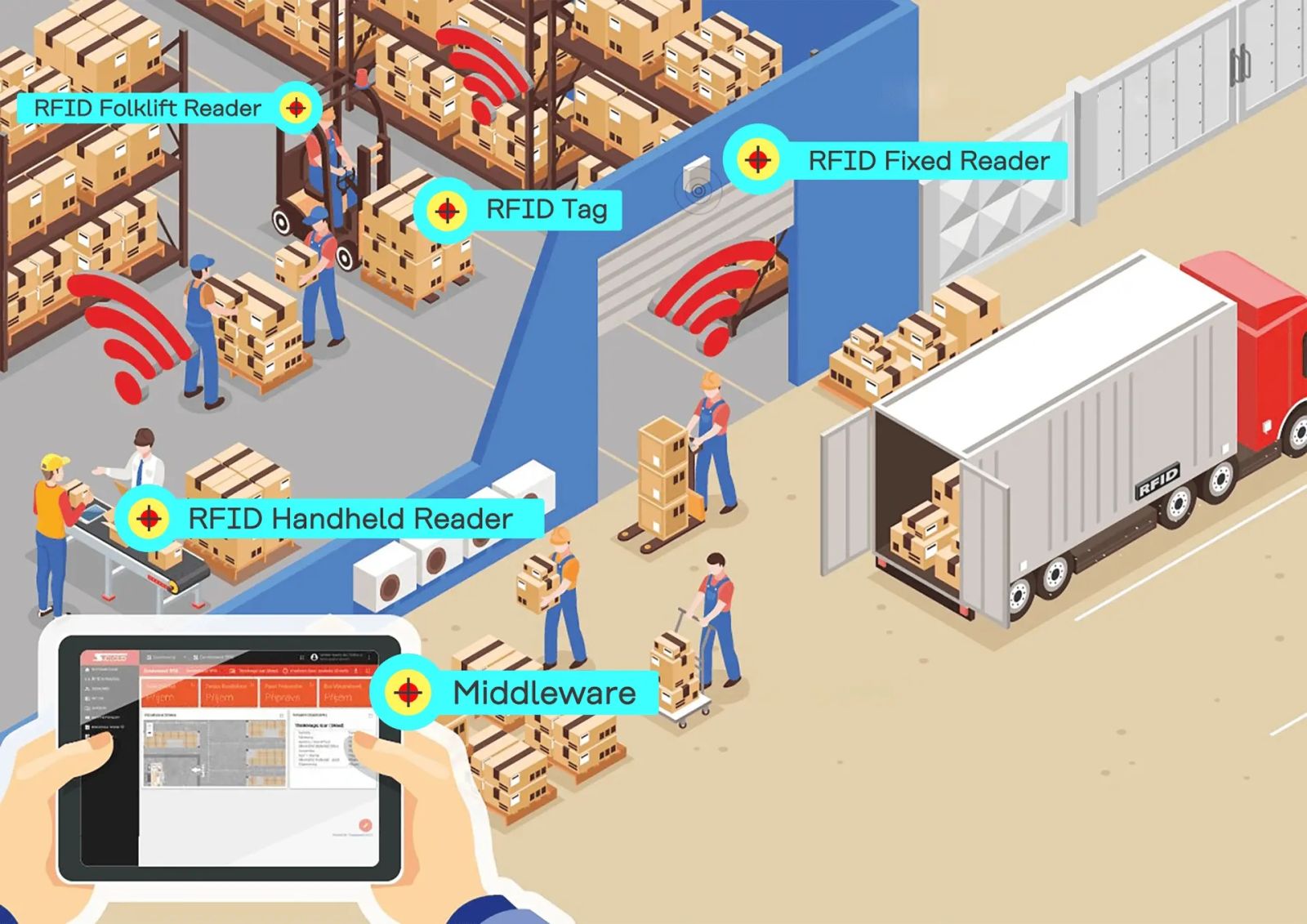
Connected tagging can help automate identification and improve the flow of asset information. When a tagged item passes through an RFID reader or connected gateway, its identification data can be captured and transferred to the relevant software platform. This reduces dependence on manual scanning and enables businesses to maintain more consistent records. Working with an experienced RFID solutions provider company in India can also help organizations integrate RFID infrastructure with existing warehouse, inventory, ERP, and IoT systems for more efficient asset tracking and operational visibility.
The value becomes even greater when tracking information is combined with other IoT data. For example, a logistics organization could associate an asset’s identity with location, movement, environmental conditions, or handling events. This creates a more comprehensive picture of what is happening across the supply chain.
From Identification to Continuous Visibility
Traditional inventory processes often provide snapshots of asset status at specific points in time. Connected tracking can move organizations toward continuous or event-based visibility. Instead of waiting for employees to conduct physical checks, businesses can receive information when relevant tracking events occur.
This can help logistics teams identify misplaced assets, detect unexpected movements, confirm receiving and dispatch activities, and maintain better awareness of inventory conditions. It also creates a stronger foundation for analytics because operational data can be collected consistently rather than relying entirely on manual updates.
Key Applications Across Smart Logistics
RFID IoT Tags can support a wide range of logistics and asset management applications. Their usefulness extends beyond simple inventory identification because connected data can become part of broader operational workflows.
Warehouse Inventory Management
Warehouses often face challenges involving inaccurate stock records, misplaced inventory, slow counting processes, and limited visibility into item movement. RFID-enabled tracking can automate the identification of tagged goods as they enter, leave, or move within a facility.
When integrated with warehouse management software, tracking events can update inventory records and provide employees with more accurate information about asset locations. This can reduce the time required for inventory checks and help organizations improve warehouse processes.
Pallet and Container Tracking
Reusable pallets, containers, crates, and other logistics assets can be difficult to monitor when they move between warehouses, suppliers, customers, and transportation networks. Losing these assets can create unnecessary replacement costs and operational delays.
RFID-based identification provides each asset with a digital identity that can be captured during movement. IoT connectivity can extend this visibility across multiple locations, allowing organizations to understand where reusable assets are being used and when they return.
Fleet and Transportation Visibility
The movement of goods does not stop when products leave the warehouse. Transportation networks introduce additional complexity because assets can pass through multiple facilities, vehicles, and distribution points.
By combining RFID identification with IoT connectivity, logistics operators can connect asset information with transportation events. This can help organizations understand when goods are loaded, transferred, received, or delayed and can support better coordination between warehouse and transportation teams.
Manufacturing and Industrial Asset Tracking
Manufacturing organizations manage tools, components, work-in-progress materials, finished products, and equipment across production environments. Tracking these assets manually can become increasingly difficult as operations expand.
Connected identification can provide visibility into asset movement across production stages. This can support material availability, work-in-progress monitoring, equipment utilization, and more efficient production workflows.
 Benefits for Logistics and Supply Chain Operations
The adoption of RFID IoT Tags can deliver several operational benefits when the technology is properly integrated into business processes. One major advantage is improved visibility. Organizations can gain a clearer understanding of where assets are located and how they move through different operational stages.
Automation is another important benefit. Automated identification reduces the need for employees to manually record every movement or scan individual items. This can save time while reducing the risk of human error associated with repetitive data-entry activities.
Better data accuracy can also improve decision-making. When logistics teams have access to timely and reliable asset information, they can respond more effectively to inventory discrepancies, delays, and operational exceptions.
Connected tracking can also support cost management. Improved visibility into reusable assets may help organizations reduce losses, unnecessary purchases, and inefficient asset utilization. Over time, the data generated through connected tracking can also reveal patterns that help companies optimize processes.
The Role of IoT Platforms and Analytics
The real potential of RFID-enabled tracking becomes clearer when identification data is connected to broader IoT platforms and analytics systems. A tag itself provides identification information, but the surrounding technology ecosystem determines how useful that information becomes.
IoT gateways can collect data from RFID readers and other connected devices before transmitting it to centralized platforms. Cloud systems can store and process this information, while analytics tools can turn operational data into insights.
For example, organizations can analyze asset movement patterns to identify bottlenecks within warehouses or distribution networks. Historical data can also help businesses understand asset utilization, recurring delays, and inventory movement patterns.
Artificial intelligence and machine learning can further enhance these capabilities by identifying unusual patterns and supporting predictive models. This creates an opportunity to move from simply knowing where an asset is toward understanding what may happen next.
Challenges in Implementing Connected RFID Tracking
Despite the potential benefits, implementing RFID and IoT-based tracking requires careful planning. Businesses need to consider the physical environment, reader placement, tag performance, network connectivity, software integration, and data management requirements.
RFID performance can also vary depending on factors such as materials, operating conditions, tag positioning, and the characteristics of the deployment environment. Metal surfaces and liquids, for example, can affect RFID performance depending on the technology and equipment being used.
Integration is another important consideration. Tracking technology delivers greater value when it can communicate effectively with warehouse management systems, enterprise resource planning platforms, transportation management systems, inventory applications, and analytics tools.
Organizations must therefore approach implementation as a broader digital transformation project rather than treating tagging technology as an isolated hardware deployment.
Building a Smarter Asset Tracking Strategy
A successful implementation begins with clearly defining the business problem. Organizations should identify which assets require tracking, where visibility gaps currently exist, and what information decision-makers need.
The next step is selecting the appropriate combination of tags, readers, gateways, connectivity, and software. A warehouse deployment may require a different architecture from a transportation or industrial environment.
Pilot projects can also help businesses evaluate performance before expanding across multiple facilities. By measuring factors such as identification accuracy, process efficiency, inventory visibility, and operational savings, organizations can determine whether the solution meets their requirements.
Data governance and security should also be considered from the beginning. Connected logistics environments generate significant amounts of operational information, making appropriate access controls, network security, system monitoring, and data management practices important parts of the overall architecture.
The Future of Connected Logistics
The future of smart logistics is moving toward increasingly connected and automated operations. RFID IoT Tags are likely to become part of broader ecosystems that combine identification technologies with sensors, edge computing, cloud platforms, artificial intelligence, digital twins, and advanced analytics.
As supply chains become more complex, organizations will need greater visibility across warehouses, transportation networks, suppliers, and customer-facing operations. Connected tracking can help create a digital thread linking physical assets with enterprise systems.
Future solutions may also make greater use of edge processing, allowing tracking data to be analyzed closer to where events occur. This can support faster responses in environments where immediate operational decisions are important.
The convergence of RFID and IoT can ultimately help organizations build supply chains that are more visible, data-driven, automated, and responsive. Rather than simply tracking an asset’s identity, businesses can use connected information to understand movement, improve processes, reduce inefficiencies, and make better operational decisions.
Conclusion
The rise of RFID IoT Tags reflects a broader shift from traditional asset identification toward connected and intelligent logistics. By combining RFID-based identification with IoT connectivity, organizations can improve visibility across warehouses, transportation networks, manufacturing facilities, and supply chains.
The technology is particularly valuable when it is integrated with enterprise applications, IoT platforms, analytics, and automated workflows. While implementation requires careful consideration of infrastructure, integration, security, and deployment conditions, the long-term opportunity is significant.
As logistics operations continue to become more digital, connected asset tracking will play an increasingly important role in helping businesses understand their physical operations and connect them with digital decision-making systems. Aeologic Technologies helps organizations build this foundation with connected technology solutions that support more transparent, responsive, and efficient supply chains capable of adapting to changing operational demands.
FAQs
Q1. What are RFID IoT Tags?
RFID IoT Tags are connected identification devices that combine RFID technology with IoT-based systems to help businesses identify, monitor, and track physical assets. They can support automated data collection across warehouses, logistics networks, manufacturing facilities, and supply chains.
Q2. How do RFID IoT Tags improve asset tracking?
They improve asset tracking by enabling automated identification and movement monitoring without requiring manual data entry for every tracking event. When connected with IoT platforms and business applications, the collected information can provide better visibility into asset locations, movements, and operational activities.
Q3. How are RFID and IoT used together in logistics?
RFID can identify tagged objects using radio-frequency communication, while IoT infrastructure can connect the collected information with software platforms, cloud systems, sensors, and analytics tools. Together, they can create a connected environment for monitoring inventory, pallets, containers, equipment, and other logistics assets.
Q4. Can RFID IoT Tags be used for warehouse inventory management?
Yes. They can help warehouses automate the identification of products and assets as they enter, leave, or move through different areas. When integrated with warehouse management systems, tracking information can support more accurate inventory records and improve visibility across warehouse operations.
Q5. What are the main benefits of RFID IoT Tags for supply chains?
Key benefits include improved asset visibility, automated identification, better inventory accuracy, reduced manual tracking, faster information collection, and improved operational decision-making. Organizations can also analyze historical tracking data to identify inefficiencies and optimize logistics processes.
Q6. What challenges should businesses consider before implementing RFID IoT Tags?
Businesses should consider tag selection, RFID reader placement, environmental conditions, network connectivity, software integration, data security, and deployment costs. Materials such as metal and liquids can also affect RFID performance in certain environments, so testing and proper system design are important.
Q7. What is the future of RFID and IoT in logistics?
The future is likely to involve deeper integration with cloud platforms, edge computing, artificial intelligence, digital twins, advanced analytics, and automated workflows. As supply chains become more connected, RFID and IoT technologies can contribute to greater visibility and more data-driven logistics operations.

Project Lead with 9+ years of experience in Web Technologies and AI. Expert in leading end-to-end development of scalable, AI-driven solutions. Driving innovation through smart architecture, agile execution, and team leadership.