Businesses are always searching for ways to increase visibility, automation, and operational efficiency in the data-driven world of today. For modern businesses, real-time asset, product, and equipment tracking and identification technologies have become indispensable. RFID is one of the most potent technologies facilitating this change. Understanding what is RFID helps organizations explore how automated identification systems can streamline inventory management, enhance supply chain transparency, and reduce manual errors across operations.
RFID technology is being widely used to track items, monitor assets, and enhance decision-making in a variety of industries, including manufacturing, logistics, healthcare, and retail. In contrast to conventional barcode systems, RFID enables wireless communication between tags and readers, allowing for quicker data collection without the need for direct line-of-sight scanning.
This article explains the fundamentals of RFID technology, how it works, its components, benefits, practical applications, and how businesses can implement it effectively.
What is RFID Technology?
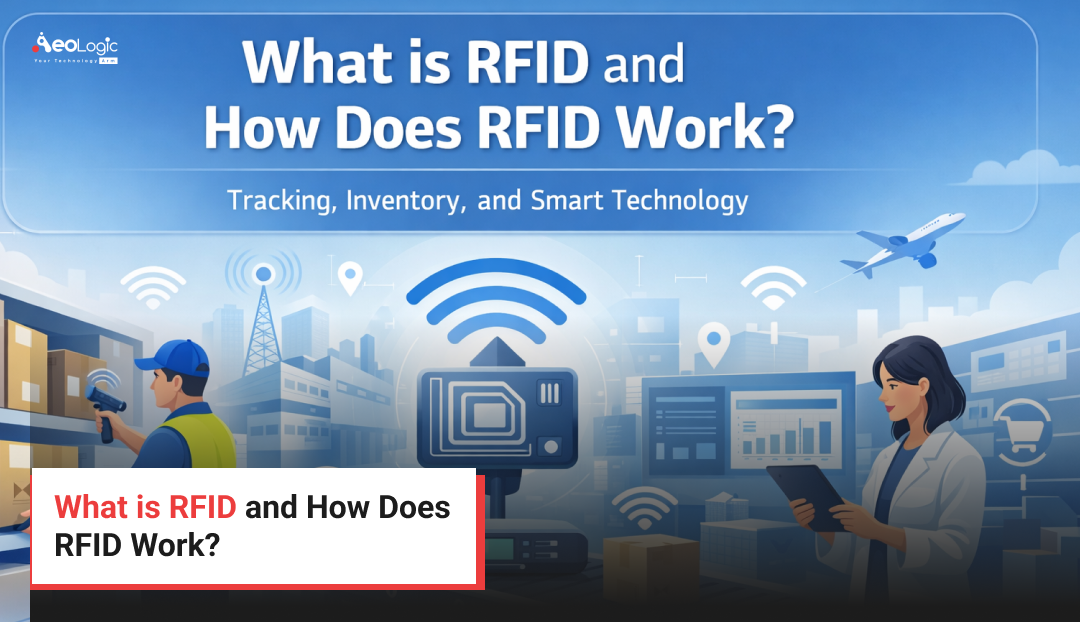
Radio Frequency Identification (RFID) is a wireless communication technology used to automatically identify and track objects using radio waves. When organizations explore what is RFID, they discover that it is essentially a system that connects physical objects with digital information using tags and readers.
RFID systems use tiny devices known as tags to electronically store data. These tags are affixed to items like goods, machinery, automobiles, or inventory. The stored data is retrieved by a reader device that uses radio signals to communicate with the tag. Backend software systems then process the data.
Because RFID technology does not require direct visibility between the scanner and the label, it is very different from traditional barcode systems. It is perfect for high-volume settings like supply chains, retail stores, and warehouses because it can scan multiple items at once.
 Why RFID Matters for Modern Businesses
Organizations have been compelled by digital transformation to implement technologies that enhance operational visibility and minimize manual intervention. Automated identification and data collection are made possible by Wireless Identification Technology systems, which greatly improves accuracy and efficiency.
Wireless Identification Technology offers real-time tracking of goods and assets, which is very beneficial for businesses with big inventories or intricate supply chains. This visibility enhances resource planning, minimizes theft or loss, and lowers stock discrepancies.
Wireless Identification Technology technology helps businesses in industries like manufacturing, logistics, retail, and healthcare automate procedures that were previously laborious and prone to human error. Additionally, it promotes improved operational transparency, traceability, and compliance.
As companies scale operations, Wireless Identification Technology becomes a key tool in building smarter, more connected supply chain ecosystems.
How Does RFID Work?
To understand what is RFID, it is equally important to understand the mechanism behind how RFID systems operate. RFID works through wireless communication between tags and readers using radio frequency signals.
An RFID reader starts the process by sending out radio waves via its antenna. An RFID tag is activated and sends its stored data back to the reader when it comes into contact with the electromagnetic field produced by the reader. After that, the reader transmits this data to a centralized software system for processing and analysis.
Real-time tracking and identification of tagged objects are made possible by the system’s nearly instantaneous operation. RFID tags can transmit a straightforward identification number or comprehensive information about the object, depending on the type of system.
RFID is very effective for large-scale operations because of this wireless interaction, which allows for the automated scanning of multiple items at once.
Core Components of an RFID System
An RFID system is made up of a number of crucial parts that cooperate to provide automated tracking and identification.
RFID Tags
RFID tags are tiny electronic devices that are affixed to items that require tracking or identification. These tags can interact with RFID readers thanks to a microchip and an antenna.
Passive, active, and semi-passive tags are all possible. Passive tags rely on the signal from the reader to transmit data because they lack an internal power source. Active tags are useful for tracking valuable assets or automobiles because they have a battery and can transmit signals over greater distances.
RFID Readers
Devices that transmit radio waves and receive signals from RFID tags are known as RFID readers. These readers gather data from tags and forward it to a backend system for processing.
Readers can be handheld devices used by employees for mobile scanning, or they can be fixed, like those placed at warehouse entry points.
Antennas
Radio signals between tags and readers are sent and received by antennas. The RFID system’s read range and coverage are determined by antenna placement and design.
RFID Software
The system’s brain is RFID software. It gathers information from readers, processes it, and connects to business systems like supply chain platforms, ERP, and warehouse management systems.
Step-by-Step Process of RFID Operation
Understanding what is RFID becomes easier when looking at the workflow behind how RFID systems operate in real environments.
Step 1: Tagging the Asset
Attaching RFID tags to objects, assets, or goods that must be tracked is the first step. Every tag has a distinct identifier that is connected to a database.
Step 2: Reader Activation
RFID readers installed in strategic locations emit radio waves continuously or when triggered.
Step 3: Tag Detection
The tag transmits stored data in response to a tagged object entering the reader’s signal field.
Step 4: Data Transmission
The transmitted data is captured by the RFID reader and sent via a network connection to a backend system.
Step 5: Data Processing
After processing the data, the system instantly updates databases, inventory management systems, or tracking dashboards.
Key Benefits of RFID Technology
RFID technology is very valuable for modern businesses because it has many benefits.
Real-time asset and inventory visibility is one of the main advantages. Businesses receive immediate information about the locations of equipment or goods within their buildings.
Increased operational efficiency is another significant benefit. RFID speeds up workflows and lowers labor costs by doing away with manual scanning procedures.
Accuracy is also significantly improved. Wireless Identification Technology systems significantly lower the possibility of human error in inventory tracking because they automatically capture data.
By keeping thorough records of the movement of items between facilities, Wireless Identification Technology systems also improve security and traceability.
Lastly, RFID’s scalability makes it a desirable investment for expanding companies since systems can readily grow as operations do.
Real-World Applications of RFID
In retail, RFID helps companies manage inventory more accurately and prevent stockouts. Retailers use RFID tags to track products across warehouses and store shelves.
In logistics and supply chain management, Wireless Identification Technology enables real-time shipment tracking, automated warehouse operations, and improved inventory control.
Healthcare organizations use Wireless Identification Technology to track medical equipment, pharmaceuticals, and patient records, improving safety and compliance.
Manufacturing companies rely on Wireless Identification Technology to monitor production workflows, manage tools and machinery, and maintain accurate inventory levels.
Transportation systems use Wireless Identification Technology for toll collection, vehicle identification, and fleet management.
Technologies and Tools Used in RFID Systems
Modern RFID solutions integrate with various digital technologies that enhance their capabilities.
Cloud-based platforms allow organizations to store and analyze RFID-generated data remotely. Connected devices can exchange tracking data across networks thanks to integration with IoT platforms.
Advanced analytics tools help organizations extract valuable insights from Wireless Identification Technology data, enabling predictive inventory management and operational optimization.
RFID systems are also commonly integrated with enterprise platforms such as ERP systems, warehouse management systems, and logistics software to automate business workflows.
Common Challenges and Best Practices
Despite its benefits, implementing Radio Frequency Tracking can have certain drawbacks that businesses need to carefully consider.
The initial infrastructure investment needed for tags, readers, and software systems is one frequent problem. However, long-term operational savings frequently outweigh this expense.
Liquids or environments with metal surfaces can also cause signal interference. Proper system design and testing help mitigate these issues.
To guarantee smooth operation, data integration with current enterprise systems may call for technical know-how.
Best practices for successful Radio Frequency Tracking implementation include conducting pilot projects, selecting the right tag types, optimizing reader placement, and ensuring proper software integration with existing systems.
Future Trends in RFID Technology
As industries transition to more intelligent and interconnected ecosystems, RFID technology keeps developing.
Radio Frequency Tracking systems can join more extensive intelligent networks where devices automatically exchange data and initiate actions thanks to integration with Internet of Things (IoT) platforms.
Ultra-high-frequency Radio Frequency Tracking systems are also improving read ranges and performance, enabling faster tracking across larger facilities.
RFID will continue to be essential for enabling intelligent asset management and smart supply chains as companies adopt Industry 4.0 initiatives.
Conclusion
Understanding what is RFID provides businesses with valuable insight into one of the most powerful identification and tracking technologies available today. Wireless Identification Technology enables organizations to automate data capture, improve operational visibility, and optimize asset and inventory management across industries.
As businesses continue adopting digital transformation strategies, Wireless Identification Technology will remain a key technology for building smarter supply chains, intelligent infrastructure, and data-driven operations. Organizations looking to implement advanced RFID solutions often partner with experienced technology providers such as Aeologic Technologies, which help design, deploy, and integrate Radio Frequency Tracking systems tailored to modern enterprise needs.
People Also Ask (FAQs)
Q1. What is RFID and how is it used in business?
Many organizations researching what is RFID want to understand how it applies to real business operations. RFID is a popular technology that uses radio waves to automatically identify and track objects. Companies affix Radio Frequency Tracking tags to products or assets, and readers wirelessly record the tag data. This enables businesses to monitor equipment, keep track of inventory, and increase operational effectiveness.
Q2. How does RFID technology differ from barcodes?
Although they function differently, barcode and Radio Frequency Tracking systems both aid in item tracking and identification. Line-of-sight scanning is necessary for barcode systems, which means the scanner must face the barcode label. On the other hand, Wireless Identification Technology technology does not require direct visibility because it uses radio waves. Radio Frequency Tracking is much faster and more effective in large-scale settings because it can scan multiple items at once.
Q3. What are the main types of RFID tags?
Passive, active, and semi-passive Wireless Identification Technology tags are the three main types. In order to transmit data, passive tags rely on signals from Wireless Identification Technology readers rather than a battery. Active tags are useful for asset tracking because they have an integrated battery and can transmit signals over longer distances. Semi-passive tags combine features of both and use a battery to power the chip while still relying on readers for communication. The choice of tag type depends on the application, tracking range, and environmental conditions.
Q4. Is RFID technology secure?
Radio Frequency Tracking systems can be secure when implemented correctly. Security measures such as encryption, authentication protocols, and access controls can protect data transmitted between tags and readers. Businesses often use secure Radio Frequency Tracking chips that prevent unauthorized access or cloning of tag information. Additionally, backend systems can include monitoring tools that detect suspicious activity. By combining secure hardware with strong software policies, organizations can protect sensitive operational data and maintain reliable tracking systems.
Q5. What industries use RFID technology the most?
RFID technology is used across many industries where tracking and automation are essential. Retail companies use Radio Frequency Tracking to manage inventory and reduce stock discrepancies. Logistics providers rely on Radio Frequency Tracking for shipment tracking and warehouse automation. Healthcare organizations use it to monitor medical equipment and pharmaceuticals. Manufacturing companies use Radio Frequency Tracking to track tools, raw materials, and production workflows. Transportation and automotive industries also use Radio Frequency Tracking for vehicle identification and automated toll systems.
Q6. How expensive is RFID implementation?
The scale of deployment and the kinds of tags and readers used determine how much it costs to implement Radio Frequency Tracking systems. While active tags and specialized readers may be more expensive, passive Radio Frequency Tracking tags are comparatively cheap. System design, training, and software integration are examples of infrastructure expenses. Nonetheless, many companies are able to recoup these expenditures through increased operational visibility, decreased inventory loss, and increased efficiency. By simplifying procedures and enhancing decision-making, Radio Frequency Tracking systems frequently provide a substantial return on investment over time.

Currently, as a Senior Manager of Technology, I oversee a dynamic team, ensuring the delivery of high-quality software solutions that meet the evolving needs of our clients. A seasoned technology leader with over a decade of experience in the software development industry, I have been instrumental in driving the end-to-end software development lifecycle since my career inception in 2011.