Walk onto almost any modern shop floor today and you’ll notice something that wasn’t there a decade ago: sensors quietly humming on motors, vibration monitors clipped to bearings, and dashboards glowing in the control room showing machine health in real time. This shift didn’t happen by accident. Manufacturers got tired of losing money to unplanned downtime, and Industrial IoT Monitoring Solutions became the practical answer to a problem that used to feel unsolvable.
If you’re evaluating how to modernize your plant in 2026, this guide breaks down exactly what these systems are, how they work, what they cost, and how to pick the right one for your operation — without the marketing fluff.
What are Industrial IoT Monitoring Solutions?
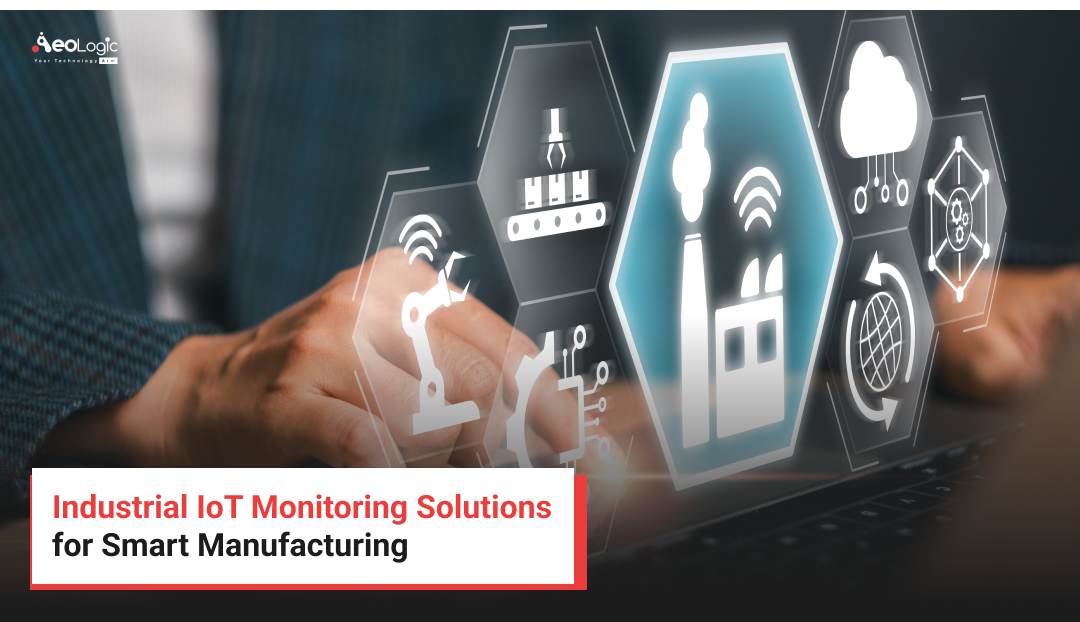
Industrial IoT Monitoring Solutions are networks of connected sensors, gateways, and software platforms that continuously collect data from machines, production lines, and facility systems — then turn that raw data into insights operators and engineers can actually act on.
In plain terms: instead of a technician walking the floor with a clipboard checking temperatures and vibration levels once a shift, sensors do it every second, automatically, and flag problems before they turn into breakdowns.
A typical setup includes:
- Sensors — vibration, temperature, pressure, humidity, current, and acoustic sensors attached to critical equipment
- Edge gateways — devices that collect sensor data locally and do initial processing before sending it onward
- Connectivity — Wi-Fi, cellular (4G/5G), LoRaWAN, or wired Ethernet linking sensors to the cloud
- Cloud or on-premises software — dashboards, analytics engines, and alerting systems
- Integration layer — connections into existing systems like ERP, MES, and CMMS platforms
Why Manufacturers Are Investing in Industrial IoT Monitoring Solutions Now
A few forces are converging in 2026 that make this the right moment for factories to act, rather than wait.
1. Downtime Is Getting More Expensive
Supply chains are tighter than they were five years ago, and a single unplanned stoppage now ripples through customer commitments faster than it used to. Even a few hours of lost production can mean missed shipping windows.
2. Skilled Labor Is Harder to Find
Experienced maintenance technicians are retiring, and there simply aren’t enough new hires to replace that institutional knowledge. Sensor-driven monitoring captures some of that expertise in data and rules, so newer staff can make good decisions faster.
3. Hardware Costs Have Dropped Significantly
Sensor and connectivity costs have fallen year over year, while cloud computing and AI-based analytics have become far more accessible. What used to require a six-figure investment can now be piloted on a single production line for a fraction of that.
4. Sustainability and Energy Reporting Requirements
Regulators and customers increasingly expect manufacturers to report energy use and emissions accurately. Monitoring systems that already track machine performance can extend naturally into energy monitoring.
 How Industrial IoT Monitoring Solutions Actually Work
It helps to think of the process in four stages:
Stage 1: Sense
Sensors mounted on or near equipment capture physical signals — vibration frequency, surface temperature, current draw, oil quality, sound signatures, and more.
Stage 2: Transmit
That data moves from the sensor to a local gateway, then across a network (wired or wireless) to a central platform, whether that’s a private cloud, a public cloud like AWS or Azure, or an on-premises server for facilities with strict data policies.
Stage 3: Analyze
This is where the real value shows up. Modern platforms apply rules-based alerts (e.g., “temperature exceeded 85°C”) alongside machine learning models that learn what “normal” looks like for a specific machine and flag subtle deviations a human might miss.
Stage 4: Act
Alerts route to the right person via dashboard, SMS, or integration with a maintenance ticketing system, so a technician can inspect or repair the equipment before it fails — this is the foundation of predictive maintenance.
Core Benefits of Industrial IoT Monitoring Solutions
| Benefit | What It Means on the Floor |
|---|---|
| Reduced unplanned downtime | Problems get caught during the “early warning” stage instead of after a breakdown |
| Lower maintenance costs | Parts get replaced based on actual wear, not a fixed calendar schedule |
| Extended equipment lifespan | Machines run within safer operating parameters, reducing accumulated stress |
| Improved worker safety | Remote monitoring reduces the need for manual inspections near hazardous equipment |
| Better production planning | Real-time visibility into machine status improves scheduling accuracy |
| Energy efficiency gains | Continuous data reveals which equipment is drawing excess power |
| Faster root-cause analysis | Historical data makes it easier to trace recurring failures back to their source |
Manufacturers that deploy well-designed Industrial IoT Monitoring Solutions typically report measurable reductions in unplanned downtime within the first year, though the exact figure depends heavily on the equipment mix, the maturity of the existing maintenance program, and how well the system is configured.
Key Use Cases Across Industries
Industrial IoT Monitoring Solutions aren’t limited to one type of factory. Here’s how different sectors put them to work:
- Automotive manufacturing — monitoring robotic welding arms and stamping presses for vibration anomalies that predict tooling wear
- Food and beverage — tracking refrigeration units and cold-chain temperatures to prevent spoilage and maintain compliance
- Pharmaceuticals — monitoring cleanroom environmental conditions (temperature, humidity, particulate levels) for regulatory compliance
- Oil and gas — remote monitoring of pumps, compressors, and pipelines in locations too hazardous or remote for frequent manual checks
- Heavy equipment and mining — tracking engine health and hydraulic system performance on vehicles operating in harsh conditions
- Packaging and CPG — monitoring conveyor systems and packaging lines for micro-stoppages that quietly eat into throughput
Choosing the Right Industrial IoT Monitoring Solution: What to Look For
Not all platforms are built the same, and the right choice depends heavily on your existing infrastructure, budget, and goals. Here’s a practical checklist.
1. Sensor Compatibility
Can the platform work with sensors you already own, or does it lock you into proprietary hardware? Open, standards-based systems (using protocols like MQTT or OPC-UA) tend to offer more long-term flexibility.
2. Scalability
Start with one line, but ask whether the system can scale to the whole plant — or across multiple sites — without a costly re-architecture.
3. Integration With Existing Systems
Your monitoring platform should talk to your ERP, MES, and CMMS systems, not create another isolated data silo.
4. Edge vs. Cloud Processing
Facilities with unreliable internet or strict data residency requirements may need strong edge-computing capabilities that can process and act on data locally, even if connectivity drops.
5. Analytics Depth
Basic threshold alerts are a starting point, but platforms offering predictive analytics and anomaly detection deliver significantly more long-term value.
6. Cybersecurity
Connected equipment expands your attack surface. Look for end-to-end encryption, role-based access control, and a vendor with a clear security track record.
7. Total Cost of Ownership
Look beyond the sticker price. Factor in sensor hardware, connectivity fees, software subscriptions, integration work, and ongoing support.
Industrial IoT Monitoring Solutions vs. Traditional Maintenance Approaches
| Factor | Traditional (Reactive/Scheduled) Maintenance | Industrial IoT Monitoring Solutions |
|---|---|---|
| Data collection | Manual, periodic (daily/weekly) | Continuous, real-time |
| Failure detection | Often after symptoms appear | Early warning before failure |
| Maintenance timing | Fixed calendar or run-to-failure | Condition-based, as-needed |
| Labor requirement | High (manual inspection rounds) | Lower, redirected to higher-value work |
| Data for root-cause analysis | Limited, inconsistent | Rich historical trend data |
| Upfront investment | Low | Moderate to high, with faster payback over time |
Common Challenges When Implementing Industrial IoT Monitoring Solutions
It’s worth being honest about the friction points, because most rollouts hit at least one of these.
- Legacy equipment retrofitting — older machines weren’t designed with sensors in mind, so retrofit kits or wireless add-on sensors are often needed
- Data overload — collecting data is easy; building alerts that matter (instead of alert fatigue) takes tuning
- Workforce adoption — technicians accustomed to manual routines need training and, sometimes, convincing
- Network reliability — industrial environments have metal structures, electrical interference, and dead zones that can disrupt wireless signals
- Cybersecurity exposure — every connected sensor is a potential entry point, so IT and OT teams need to collaborate on security from day one
None of these are dealbreakers — they’re simply planning items. Manufacturers who succeed with Industrial IoT Monitoring Solutions tend to start with a pilot on a small number of critical assets, prove the value, and expand from there rather than attempting a plant-wide rollout on day one.
Best Practices for a Successful Rollout
- Start with your most critical or failure-prone assets — target equipment where downtime hurts the most.
- Set clear success metrics upfront — define what “success” looks like (e.g., a target reduction in unplanned downtime) before you deploy.
- Involve maintenance technicians early — the people who’ll use the system daily should help shape how alerts are configured.
- Pilot before you scale — a 90-day pilot on one line reveals integration issues before they become expensive at scale.
- Plan your data strategy — decide who owns the data, where it’s stored, and how long it’s retained.
- Review and retune alerts regularly — thresholds that made sense at deployment may need adjusting as you learn more about normal operating ranges.
How to Build a Business Case for Industrial IoT Monitoring Solutions
Getting budget approved for new technology often comes down to how clearly you can connect it to numbers leadership already cares about. Here’s a practical framework for building that case.
Step 1: Quantify the Cost of the Status Quo
Pull historical maintenance records and calculate the cost of unplanned downtime on your most problematic assets — lost production hours, overtime labor, expedited parts shipping, and missed delivery penalties all count.
Step 2: Identify a Pilot Scope
Rather than pitching a plant-wide rollout, propose monitoring a small number of high-impact assets. A narrower scope is easier to approve, faster to deploy, and gives you real data to support a larger request later.
Step 3: Define Measurable Success Criteria
Set specific, time-bound goals — for example, a target percentage reduction in unplanned downtime on the pilot assets within six months — so the results of the pilot can be evaluated objectively.
Step 4: Present a Phased Investment Plan
Break the total cost into phases tied to measurable milestones: pilot, validation, and full-scale rollout. This reduces perceived risk and makes it easier for finance teams to approve incremental spending.
Step 5: Involve Both Operations and IT/OT Security Early
Cross-functional buy-in from the start avoids the common trap of choosing a technically sound platform that stalls in procurement because security or IT integration wasn’t addressed upfront.
Overlooked Considerations That Affect Long-Term Success
A few factors don’t get enough attention in most buying guides, but they quietly determine whether a monitoring program sticks or fades out after year one.
- Alert fatigue management. If every sensor reading generates a notification, technicians will start ignoring alerts altogether. Successful deployments invest time in tuning thresholds so alerts represent genuine, actionable issues.
- Ownership and accountability. Someone on the team needs to own the monitoring program — reviewing dashboards, adjusting rules, and championing adoption. Without a clear owner, even a well-implemented system can quietly go unused.
- Data retention strategy. Decide early how long historical data needs to be kept for trend analysis, audits, or warranty claims, since storage costs and retrieval speed both scale with retention length.
- Change management with the workforce. Technicians who’ve spent years trusting their own senses and experience may be skeptical of sensor-driven alerts at first. Framing the system as a tool that supports their judgment — not replaces it — tends to improve adoption.
- Vendor lock-in risk. Proprietary sensor ecosystems can be convenient at first but expensive to unwind later if you want to switch platforms or expand with a different vendor’s hardware.
What’s Changing in Industrial IoT Monitoring Solutions for 2026
A few trends are shaping where the technology is headed this year:
- AI-driven anomaly detection is maturing beyond simple thresholds, learning the unique “fingerprint” of individual machines.
- 5G private networks are making high-bandwidth, low-latency wireless monitoring practical even in large industrial facilities.
- Digital twins are increasingly paired with monitoring data to simulate “what-if” scenarios before making changes on the physical floor.
- Sustainability dashboards are being built on top of existing monitoring infrastructure to track energy and carbon metrics alongside machine health.
- No-code/low-code configuration is lowering the technical barrier, letting plant engineers build custom alerts and dashboards without needing a data science team.
Conclusion
Smart manufacturing in 2026 isn’t about chasing every new piece of technology — it’s about using the right tools to solve real, expensive problems like unplanned downtime, rising maintenance costs, and a shrinking skilled workforce. Industrial IoT Monitoring Solutions address all three at once by turning silent machine data into decisions your team can act on before a small issue becomes a costly one.
Whether you’re just starting to explore condition monitoring or looking to expand an existing pilot across your facility, the path forward is the same: start with your most critical assets, define clear success metrics, and choose a platform that can grow with your operation. Aeologic Technologies helps businesses implement tailored Industrial IoT Monitoring Solutions designed around their operational requirements. Ready to see what an Industrial IoT Monitoring Solution could do for your plant? Reach out to our team for a free assessment of your facility’s monitoring readiness.
FAQs
Q1. What is the difference between IoT monitoring and predictive maintenance?
IoT monitoring is the data-collection layer — sensors and connectivity that capture real-time equipment data. Predictive maintenance is the outcome: using that data (often with machine learning) to forecast failures before they happen. Monitoring is the foundation predictive maintenance is built on.
Q2. How much do Industrial IoT Monitoring Solutions cost?
Costs vary widely based on scope, from a few thousand dollars for a single-line pilot with wireless sensors to six or seven figures for plant-wide deployments with full analytics platforms. Most vendors offer tiered pricing based on sensor count and data volume.
Q3. Can Industrial IoT Monitoring Solutions work with older, non-connected machines?
Yes. Retrofit sensor kits — often wireless, battery-powered vibration or temperature sensors — can be attached to legacy equipment without modifying the machine itself, making monitoring possible even on decades-old assets.
Q4. How long does it take to implement an IoT monitoring system?
A focused pilot on a handful of critical machines can typically go live within a few weeks. Plant-wide rollouts with deep ERP/MES integration usually take several months, depending on network infrastructure and change management needs.
Q5. Do Industrial IoT Monitoring Solutions require internet connectivity to work?
Not entirely. Many platforms use edge computing to process data locally and continue generating alerts even during internet outages, syncing historical data to the cloud once connectivity is restored.
Q6. What ROI can manufacturers expect from IoT monitoring?
ROI depends on the facility’s starting point, but common gains include fewer unplanned outages, lower emergency repair costs, and longer equipment lifespan. Facilities with a history of frequent breakdowns typically see the fastest payback.
Q7. Is cybersecurity a major concern with industrial IoT monitoring?
Yes — connected sensors expand the network’s attack surface, so it’s important to choose platforms with encrypted data transmission, strong access controls, and a vendor with a demonstrated security track record, and to involve IT/OT teams jointly.