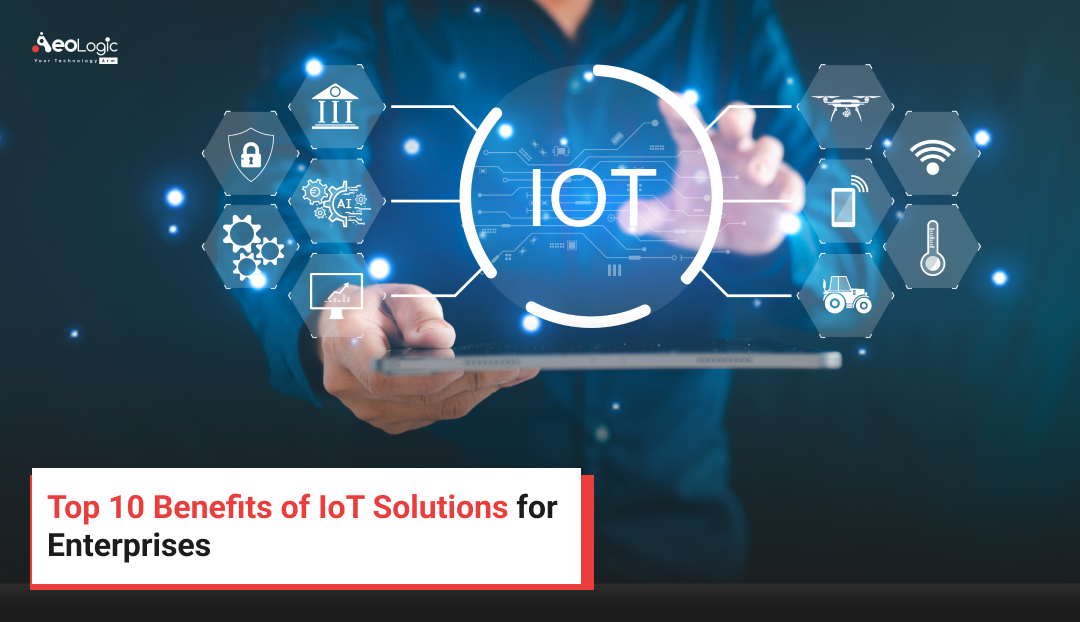
If you have been weighing whether connected devices are worth the investment, the top 10 benefits of IoT solutions are a good place to start the conversation. From predictive maintenance on a factory floor to real-time inventory tracking in a warehouse, the Internet of Things (IoT) has moved from buzzword to business necessity. Enterprises across manufacturing, logistics, healthcare, retail, and energy are using connected sensors, devices, and platforms to cut costs, reduce downtime, and make faster, data-backed decisions.
In this guide, we will walk through the top 10 benefits of IoT solutions for enterprises, explain why each one matters, and share practical examples of how organizations are putting these benefits to work. Whether you are evaluating your first IoT pilot or scaling an existing deployment, understanding the top 10 benefits of IoT solutions will help you build a stronger business case and avoid common pitfalls along the way.
What is Enterprise IoT, and Why Does It Matter Right Now?
Enterprise IoT refers to networks of connected sensors, devices, machines, and software platforms that collect, transmit, and analyze data to support business operations. Unlike consumer IoT (smart speakers, fitness trackers), enterprise IoT is built for scale, security, and integration with existing business systems like ERP, CRM, and supply chain software.
The reason the top 10 benefits of IoT solutions matter right now comes down to timing. Sensor costs have dropped, cloud computing has made large-scale data processing affordable, and 5G connectivity has made real-time data transfer practical even in remote locations. Enterprises that delay adoption risk falling behind competitors who are already using IoT to shrink operating costs and improve customer experience.
For readers who want the short version first: the top 10 benefits of IoT solutions for enterprises are improved operational efficiency, predictive maintenance, real-time data visibility, cost reduction, enhanced safety, better customer experience, smarter supply chain management, remote monitoring and control, data-driven decision-making, and new revenue opportunities through connected products and services.
Below, we break down each of these in detail, with real-world context and practical guidance for implementation.
Key Takeaways
- The top 10 benefits of IoT solutions range from hard financial gains, like cost reduction and predictive maintenance, to softer but equally valuable outcomes like safety and customer experience.
- Most benefits are interconnected: better real-time data visibility is what makes predictive maintenance, smarter supply chains, and faster decision-making possible in the first place.
- Enterprises that start with a focused, well-measured pilot project tend to capture the top 10 benefits of IoT solutions faster than those attempting an all-at-once rollout.
- Security, integration with legacy systems, and skills gaps are the most common obstacles, but each has well-established mitigation strategies.
 1. Improved Operational Efficiency
Operational efficiency is usually the first and most measurable benefit enterprises notice. IoT sensors placed on equipment, vehicles, and production lines continuously collect data on performance, usage patterns, and bottlenecks.
A manufacturer can use connected sensors to track machine cycle times and immediately flag when a line is running slower than expected. A logistics company can monitor fleet routes in real time and reroute drivers around traffic or delays. In both cases, the business gains visibility it simply did not have before, and that visibility translates directly into time and cost savings.
Key ways IoT improves efficiency:
- Automated data collection removes the need for manual logging and spreadsheets.
- Real-time dashboards highlight bottlenecks before they escalate into bigger problems.
- Process automation reduces repetitive manual tasks, freeing staff for higher-value work.
2. Predictive Maintenance and Reduced Downtime
Unplanned downtime is one of the most expensive problems in manufacturing, energy, and transportation. Traditional maintenance schedules are based on fixed time intervals, which means equipment is sometimes serviced too early (wasting money) or too late (risking failure).
IoT-enabled predictive maintenance changes this by using sensors to monitor vibration, temperature, and other performance indicators, then applying analytics to detect early signs of wear before a breakdown happens. Instead of reacting to failures, maintenance teams can schedule repairs at the optimal time, extending equipment life and reducing emergency repair costs.
This is consistently ranked among the top 10 benefits of IoT solutions because downtime costs are so visible on a balance sheet, and the return on investment is easy to demonstrate to leadership.
3. Real-Time Data Visibility Across the Organization
One of the quieter but most transformative advantages of connected systems is real-time visibility. Instead of waiting for end-of-day or end-of-week reports, decision-makers can see what is happening across facilities, fleets, or stores as it happens.
This matters because delayed information often means delayed action. A warehouse manager who sees a stock discrepancy in real time can correct it before it affects customer orders. A hospital administrator who can see equipment utilization live can redistribute resources where they are needed most. Real-time visibility is a foundational piece of the top 10 benefits of IoT solutions because nearly every other benefit on this list depends on having accurate, timely data in the first place.
4. Significant Cost Reduction
Cost reduction is often the benefit that gets IoT projects approved in the first place. Savings typically come from several directions at once: lower energy consumption through smart monitoring, reduced maintenance costs through predictive servicing, less waste through better inventory accuracy, and reduced labor costs through automation of routine tasks.
For example, smart building sensors can automatically adjust heating, cooling, and lighting based on occupancy, cutting energy bills without sacrificing comfort. Smart metering in manufacturing plants can pinpoint exactly which equipment is consuming excess power, allowing targeted efficiency upgrades rather than broad, expensive overhauls.
5. Enhanced Workplace Safety
Enterprise IoT plays a growing role in protecting employees, especially in industries like construction, mining, oil and gas, and manufacturing. Wearable sensors can monitor worker vital signs, detect falls, and alert supervisors to hazardous conditions such as gas leaks or extreme temperatures.
Connected safety systems do not just respond to incidents; they help prevent them. Geofencing can keep workers out of dangerous zones, and environmental sensors can trigger automatic shutdowns when conditions become unsafe. Safety improvements are among the top 10 benefits of IoT solutions that are hardest to put a dollar figure on, yet they are often the most important to employees and regulators alike.
6. Better Customer Experience
IoT is not only an internal efficiency tool, it also shapes how customers experience a brand. Connected products give companies insight into how customers actually use what they buy, which informs better product design and more relevant support.
Retailers use IoT-enabled shelf sensors and smart carts to reduce checkout friction and keep popular products in stock. Equipment manufacturers use connected machinery to offer proactive service, sometimes fixing an issue remotely before the customer even notices a problem. This kind of responsiveness builds loyalty and differentiates a brand in a competitive market.
7. Smarter Supply Chain and Inventory Management
Supply chains are complex, multi-party systems where a single delay can ripple across an entire network. IoT sensors on shipping containers, pallets, and vehicles provide continuous location and condition data, including temperature and humidity for sensitive goods like pharmaceuticals or fresh produce.
This level of tracking allows enterprises to:
- Identify delays earlier and adjust plans proactively.
- Verify that sensitive goods stayed within required conditions during transit.
- Reduce stockouts and overstocking through more accurate demand forecasting.
Supply chain visibility is frequently cited by analysts as one of the top 10 benefits of IoT solutions because it directly affects customer satisfaction and working capital.
8. Remote Monitoring and Control
The ability to monitor and control assets from anywhere has become essential, particularly for enterprises with distributed operations. Remote monitoring allows a single team to oversee multiple facilities, pieces of equipment, or vehicle fleets without being physically present at each location.
In utilities, remote monitoring of pipelines and grids helps detect leaks or faults quickly. In agriculture, connected irrigation systems can be adjusted remotely based on soil moisture data, saving water and labor. This flexibility is one of the top 10 benefits of IoT solutions that has become increasingly important as hybrid and distributed workforces become the norm.
9. Data-Driven Decision-Making
Every sensor, device, and connected system generates data, and that data becomes genuinely valuable when it is turned into insight. IoT platforms aggregate information from across the enterprise and, combined with analytics or machine learning, surface patterns that would be impossible to spot manually.
Instead of relying on intuition or outdated reports, leadership teams can base decisions on current, accurate data: which product lines are underperforming, which routes are least efficient, or which customer segments are most profitable. This shift toward evidence-based decision-making is one of the top 10 benefits of IoT solutions that compounds over time, as more historical data improves forecasting accuracy.
10. New Revenue Opportunities and Business Models
Finally, IoT does not just cut costs, it can open entirely new revenue streams. Connected products allow manufacturers to offer subscription-based services, usage-based pricing, or outcome-based contracts instead of one-time sales.
A construction equipment maker, for instance, can sell “uptime guarantees” backed by predictive maintenance data rather than just selling machinery. A software company can bundle IoT-enabled monitoring as a premium service tier. These new models are a less obvious but increasingly important entry among the top 10 benefits of IoT solutions, especially for enterprises looking to diversify revenue beyond traditional product sales.
Common Challenges Enterprises Face When Adopting IoT
Understanding the top 10 benefits of IoT solutions is only half the picture. Enterprises should also plan for the challenges that come with implementation:
| Challenge | Why It Happens | How to Address It |
|---|---|---|
| Security risks | More connected devices mean a larger attack surface | Use network segmentation, strong authentication, and regular firmware updates |
| Integration complexity | Legacy systems were not built to talk to IoT platforms | Choose middleware and APIs designed for legacy integration |
| High upfront costs | Sensors, connectivity, and platforms require capital investment | Start with a focused pilot project to prove ROI before scaling |
| Data overload | More devices generate more data than teams can manually review | Invest in analytics and automation to surface only actionable insights |
| Skills gaps | IoT requires a mix of IT, OT, and data skills | Partner with experienced vendors or invest in targeted training |
Best Practices for a Successful Enterprise IoT Rollout
- Start small and scale deliberately. A focused pilot in one facility or product line proves value before a company-wide rollout.
- Prioritize security from day one. Treat every connected device as a potential entry point and secure it accordingly.
- Align IoT goals with business outcomes. Tie every deployment to a specific metric, such as reduced downtime or lower energy costs.
- Choose interoperable platforms. Avoid vendor lock-in by selecting solutions that integrate with existing enterprise systems.
- Involve frontline teams early. The people using the equipment daily often spot practical issues that leadership might miss.
How to Measure ROI From the Top 10 Benefits of IoT Solutions
Enterprises often struggle to quantify IoT’s impact because the benefits span multiple departments. A practical approach is to track a small set of metrics tied directly to business goals: downtime hours avoided, energy cost reduction, inventory accuracy improvement, and safety incident rates. By measuring these consistently before and after deployment, leadership teams can see, in concrete terms, how the top 10 benefits of IoT solutions translate into financial results.
Which Industries Benefit Most From IoT Adoption?
While the top 10 benefits of IoT solutions apply broadly, some industries see faster, more measurable returns than others:
- Manufacturing: Predictive maintenance and production-line monitoring reduce downtime and scrap rates.
- Logistics and transportation: Fleet tracking and route optimization cut fuel costs and improve delivery accuracy.
- Healthcare: Connected medical devices support remote patient monitoring and more efficient equipment utilization.
- Retail: Smart shelves, inventory sensors, and foot-traffic analytics improve stocking decisions and in-store experience.
- Energy and utilities: Smart grids and remote sensors help detect faults and reduce energy waste across large networks.
- Agriculture: Soil, weather, and irrigation sensors support precision farming and resource conservation.
Enterprises in these sectors tend to realize the top 10 benefits of IoT solutions more quickly because their operations already generate large volumes of operational data that IoT platforms can tap into immediately.
IoT Solutions vs. Traditional Monitoring: A Quick Comparison
| Factor | Traditional Monitoring | IoT-Enabled Monitoring |
|---|---|---|
| Data frequency | Periodic, manual checks | Continuous, real-time |
| Maintenance approach | Scheduled or reactive | Predictive, condition-based |
| Visibility | Siloed, delayed reporting | Centralized dashboards, instant alerts |
| Scalability | Labor-intensive to expand | Sensors and software scale more easily |
| Decision speed | Days to weeks | Minutes to hours |
This comparison highlights why so many enterprises are shifting investment toward connected systems: the top 10 benefits of IoT solutions are difficult to replicate with manual, traditional processes at any meaningful scale.
Getting Started: A Practical First Step for Enterprises
Enterprises new to IoT do not need to overhaul every system at once. A practical first step is to identify one high-impact, well-understood problem, such as unplanned equipment downtime or inventory inaccuracy, and run a focused pilot with clear success metrics. Early wins build internal confidence, generate the data needed to justify a larger rollout, and give technical teams hands-on experience before tackling more complex integrations. This phased approach is one of the most reliable ways enterprises actually capture the top 10 benefits of IoT solutions instead of stalling at the planning stage.
Conclusion
The top 10 benefits of IoT solutions for enterprises, improved efficiency, predictive maintenance, real-time visibility, cost reduction, enhanced safety, better customer experience, smarter supply chains, remote monitoring, data-driven decisions, and new revenue models, together make a compelling case for adoption. None of these benefits exist in isolation; they reinforce one another, with better data visibility feeding into smarter decisions, and smarter decisions feeding into lower costs and safer operations.
Enterprises that approach IoT adoption strategically by starting with a focused pilot, prioritizing security, and connecting every deployment to measurable business outcomes are best positioned to realize the full top 10 benefits of IoT solutions. Aeologic Technologies helps businesses explore tailored IoT strategies that align with their operational goals, improve efficiency, and support long-term growth. If your organization is ready to unlock the potential of IoT, now is the time to start the conversation with the right technology partner.
FAQs
1. What are the top 10 benefits of IoT solutions for enterprises?
The top 10 benefits of IoT solutions include improved efficiency, predictive maintenance, real-time visibility, cost reduction, enhanced safety, better customer experience, smarter supply chains, remote monitoring, data-driven decisions, and new revenue models. Together, they help enterprises cut costs while improving reliability and customer satisfaction.
2. How much does enterprise IoT implementation typically cost?
Costs vary widely based on scale, number of sensors, connectivity type, and platform choice. Most enterprises start with a focused pilot in one facility or process to validate ROI before committing to a larger, more expensive company-wide deployment.
3. Is IoT adoption worth it for small and mid-size enterprises?
Yes, scaled-down IoT pilots can deliver meaningful returns for mid-size enterprises, particularly in areas like energy monitoring or inventory tracking, where cloud-based platforms have lowered the cost of entry significantly compared to a few years ago.
4. What industries benefit most from IoT solutions?
Manufacturing, logistics, healthcare, retail, energy, and agriculture tend to see the fastest returns, largely because these industries already generate large volumes of operational data that IoT sensors and platforms can capture and analyze immediately.
5. How does IoT support predictive maintenance?
IoT sensors monitor indicators like vibration, temperature, and usage patterns in real time. Analytics platforms then flag early signs of equipment wear, allowing maintenance teams to schedule repairs proactively instead of reacting to unexpected failures.
6. What are the main security risks of enterprise IoT?
Every connected device expands the potential attack surface. Common risks include weak device authentication, outdated firmware, and unsecured network segments. Enterprises typically mitigate this through network segmentation, regular updates, and strong access controls.
7. How long does it take to see ROI from an IoT deployment?
Timelines vary by use case, but many predictive maintenance and energy-monitoring pilots show measurable results within three to six months, while broader, organization-wide benefits often take twelve months or longer to fully materialize.

Manoj Kumar is a seasoned Digital Marketing Manager and passionate Tech Blogger with deep expertise in SEO, AI trends, and emerging digital technologies. He writes about innovative solutions that drive growth and transformation across industry.
Featured on – YOURSTORY | TECHSLING | ELEARNINGINDUSTRY | DATASCIENCECENTRAL | TIMESOFINDIA | MEDIUM | DATAFLOQ