
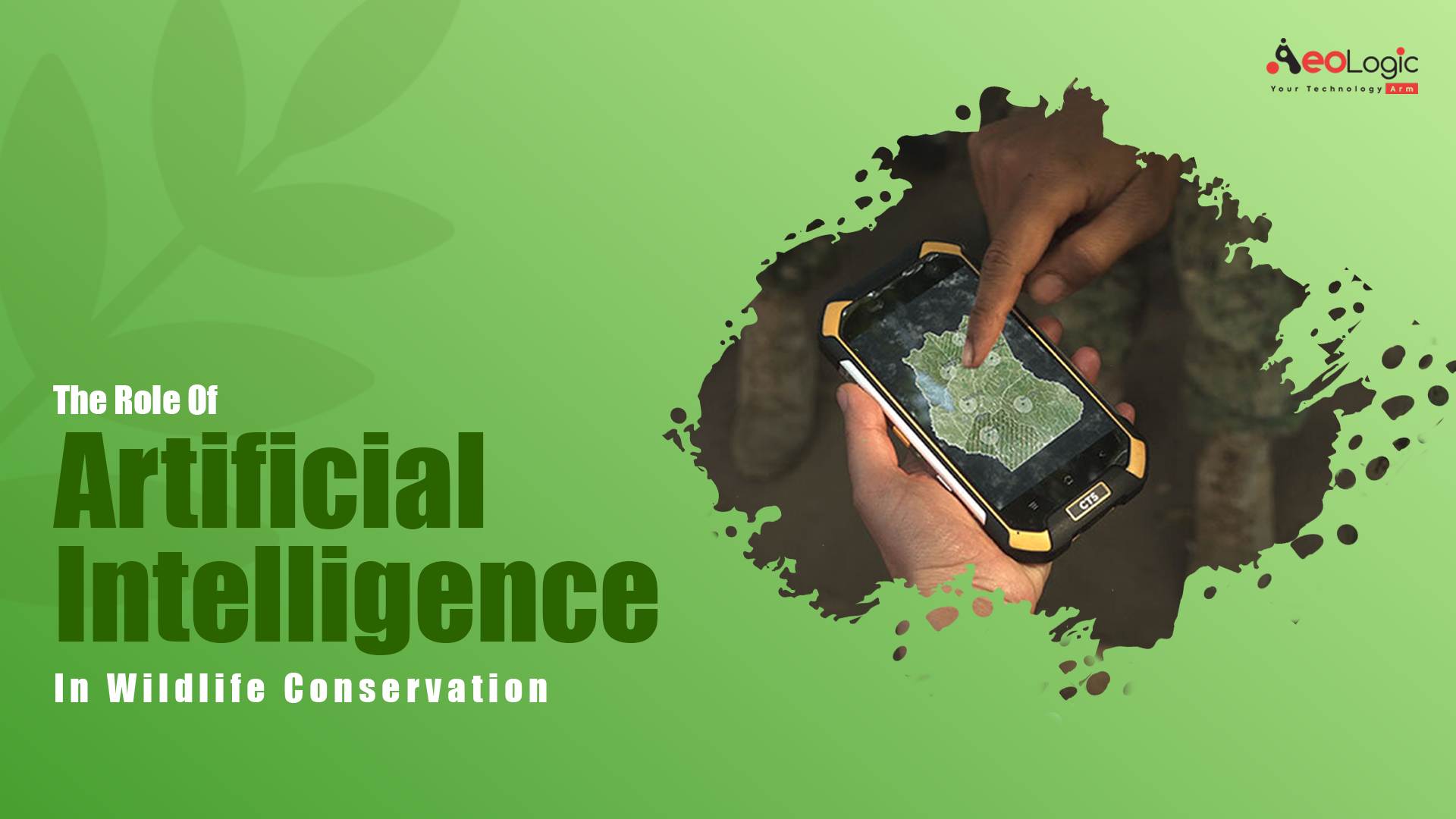
For centuries, technology has played a critical role in protecting endangered species and responding to emerging threats to wildlife. Today, the Role of AI in Wildlife Conservation is becoming increasingly significant, transforming traditional conservation methods into smarter, faster, and more data-driven approaches. Wildlife conservation efforts are now more rigorous and efficient due to advancements in Artificial Intelligence (AI), enabling researchers and environmental organizations to monitor ecosystems with greater accuracy.
AI is used by conservationists to track and protect animals in their natural settings. AI has the potential to help save endangered plants and animals. If forest rangers observe such species, they can be safeguarded against natural disasters like wildfires and floods and illegal actions like poaching. To achieve accurate forecasts, AI-enabled devices, applications, and analytic or surveillance systems are used.
AI Camera Traps and Automated Species Identification
One of the most transformative applications of Artificial Intelligence in wildlife conservation is the development of AI-powered camera traps. Traditional camera traps capture thousands of images daily, requiring researchers to manually review photographs—a time-consuming process prone to human error. AI-enabled camera traps automate species recognition using computer vision and deep learning algorithms.
Machine learning models can identify animal species, estimate age groups, determine gender, and even detect unusual behavior patterns from images captured in forests. These intelligent systems significantly reduce processing time and improve monitoring accuracy.
Organizations such as Wildlife Insights have deployed AI tools capable of analyzing millions of wildlife photographs in hours instead of months. AI camera traps are helping researchers monitor endangered species including snow leopards, tigers, jaguars, rhinos, and elephants.
Benefits include:
- Faster identification of endangered species
- Real-time monitoring of animal movement
- Reduced manual workload
- Improved biodiversity assessment
- Early detection of threats and habitat disturbances
AI camera traps have become particularly useful in dense forests where direct human observation is difficult.
Role of Artificial Intelligence in Wildlife Conservation
This blog highlights the benefits of using AI in wildlife conservation, with examples of some AI-enabled technologies.
1) – AI has a significant role in the conservation of species that are on the verge of extinction. Machine Learning in Robotics and Drone Image Dataset are two examples of AI-enabled technology that can monitor these species, assisting animal conservation organizations in demographic management.
2) – Scientists are evaluating data linked to the number and well-being of whales utilizing marine robots, remote–sensing, and machine–learning models on Microsoft Azure.
3) – Environmentalists are using AI with predictive statistical modelling to monitor Antarctic penguins on a real-time basis.
4) – The World Wildlife Fund and Intel are working with academics on a mission to use artificial intelligence to preserve and assess Siberian tigers in China.
5) – AI is also being used to recognize and analyze elephant call recordings, assisting in the creation of an “elephant dictionary” by correlating sounds to behavior, designed to safeguard elephants against poachers. The Elephant Listening Project involves collecting and classifying data about Savannah Elephants living in Central Africa’s deep rainforests using neural networks.
6) – To aid rangers in combating poachers, an AI-enabled program called Protection Assistant for Wildlife Security (PAWS) has been established. PAWS connects to another technology, called the Spatial Monitoring and Reporting Tool (SMART), which maintains information on poacher movements. The PAWS software finds patterns of animal behavior using AI and machine learning, as well as inputs from SMART. PAWS have been adopted into over 100 wildlife sanctuaries in Africa and Asia, as well as 300 to 600 globally, thanks to its connection with SMART.
7) – Through a sentient monitoring system, AI can also aid in the administration of illegal operations. Poachers can be detected on the ground using AI-enabled UAVs (Unmanned Aerial Vehicles) and night vision cameras, alerting forest rangers to intervene before any animals are killed. AI-enabled cameras with a quick warning system can easily identify humans carrying firearms and participating in other suspicious behaviors. To prevent wildlife poaching, AI cameras have been developed utilizing Intel’s neural network techniques.
8) – Computer vision cameras are excellent tools for park rangers and other organizations to use in detecting and preventing wildlife poaching. TrailGuard AI has cameras that can chase down poachers and halt them in their path. It is already being utilized in national parks to safeguard wildlife, catch poachers, and even assist government agencies in breaking up criminal animal-trafficking networks. The cameras are compact enough to be hidden along paths. TrailGuard AI can detect people in photos and send them to park headquarters via the Global System for Mobiles (GSM), long-range radio, or satellite networks. The image pre-processing inside the TrailGuard AI camera is handled by small Intel Movidius Vision Processing Units (VPUs), which execute deep neural network algorithms for object identification and picture categorization. When the system recognizes individuals among the photos activated by movement, it sends out electronic notifications to park staff, allowing them to dispatch rangers.
9) – Convolutional Neural Networks are being used by researchers to find waste products floating or sinking in the water bodies and to warn marine animal conservation organizations so that they can be collected and removed.
10) – AI can also be used as a fire alert system, detecting flames and smoke from cameras on steep mountain peaks. AI program analyzes high-resolution satellite photographs to forecast the degree of burning of plants during a fire and then works with the data to aid in fire prediction. Because factors such as moisture and wind might have a negative impact on fire, the desired meteorological data is sent into the algorithm to aid in the forecast. Recurrent neural networks have been applied in the United States, and systems such as WIFIRE, IGNIS, Wireless Sensor Network (WSN), and Fire Weather Index (FWI) are now assisting in predicting where fires will originate and how big they will become.
 Machine Learning for Species Population Prediction
Predicting future wildlife population trends is critical for conservation planning. Machine Learning algorithms analyze historical data, climate conditions, habitat changes, breeding patterns, food availability, and migration behavior to forecast population growth or decline.
These predictive models help conservationists answer questions such as:
- Will a species become endangered in the next decade?
- Which regions require urgent protection?
- How will climate change affect animal survival?
Predictive analytics enables governments and conservation agencies to implement early intervention strategies before populations reach critical levels.
For example, ML models have been used to estimate whale populations, predict elephant migration routes, and monitor penguin survival in changing environments.
Population forecasting improves:
- Conservation policy decisions
- Habitat restoration planning
- Resource allocation
- Species recovery programs
Drone-Based Anti-Poaching Surveillance Systems
Illegal poaching remains one of the biggest threats to wildlife conservation. AI-powered drones equipped with thermal imaging cameras, computer vision, GPS tracking, and real-time analytics are increasingly used to combat poaching activities.
Unlike traditional patrol methods, drones can cover large areas quickly and operate during nighttime conditions.
AI drones help by:
- Detecting suspicious human movement
- Identifying firearms and vehicles
- Tracking animal herds
- Monitoring protected regions
- Sending instant alerts to forest rangers
Thermal sensors combined with machine learning enable drones to distinguish humans from animals even in dense vegetation.
Several African reserves and Asian wildlife sanctuaries already use drone surveillance to protect endangered species.
AI for Biodiversity Monitoring and Ecosystem Analysis
Biodiversity monitoring involves assessing species diversity and ecosystem health. Artificial Intelligence can process satellite images, audio recordings, environmental DNA (eDNA), and sensor data to understand ecosystem changes.
AI supports biodiversity conservation through:
- Habitat mapping
- Vegetation monitoring
- Detection of invasive species
- Monitoring climate impact
- Ecosystem risk prediction
Acoustic AI systems analyze bird songs, insect sounds, and animal calls to estimate biodiversity levels in forests.
Satellite-based AI monitoring also helps detect:
- Deforestation
- Illegal mining
- Habitat destruction
- Water pollution
These technologies allow conservation agencies to respond rapidly to ecological threats.
AI in Wildlife Conservation in India: Project Tiger and Elephant Protection
India hosts rich biodiversity, including Bengal tigers, Asiatic elephants, leopards, rhinos, and numerous endangered species. Artificial Intelligence is increasingly becoming part of India’s wildlife protection efforts.
Project Tiger and AI Monitoring
AI-powered surveillance cameras, remote sensing tools, and predictive analytics are being used to monitor tiger populations and detect illegal activities in protected reserves.
Camera traps supported by machine learning help identify individual tigers using stripe pattern recognition technology. This improves population estimation accuracy and habitat management.
Elephant Conservation Using AI
Human-elephant conflict is a major issue in several Indian states. AI systems analyze elephant movement patterns and provide early warnings to nearby communities.
Smart sensors and predictive models help:
- Track elephant migration
- Reduce human-animal conflicts
- Prevent accidental deaths
- Protect elephant corridors
Forest Monitoring
Satellite imagery and AI models support detection of:
- Forest fires
- Encroachment
- Illegal logging
- Habitat degradation
The adoption of AI in Indian conservation programs can significantly strengthen biodiversity protection efforts.
Conclusion
The Role of AI in Wildlife Conservation is becoming increasingly significant as advanced technologies transform how endangered species are monitored, protected, and preserved. The application of Artificial Intelligence in wildlife conservation is still in its early stages, yet it already surpasses many traditional approaches that are time-consuming, labor-intensive, and prone to human error. From predictive analytics and AI-powered camera traps to anti-poaching systems and biodiversity monitoring, AI is enabling faster, smarter, and more accurate conservation efforts. As wildlife conservation remains one of the world’s most urgent environmental challenges, continued research, innovation, and investment in AI-driven solutions will be essential to protecting ecosystems and ensuring the survival of vulnerable species for future generations.
As AI continues to reshape environmental protection strategies, businesses and organizations are exploring innovative technologies to support sustainability and conservation initiatives. At Aeologic Technologies, we develop advanced AI-powered solutions that help industries leverage intelligent automation, predictive analytics, computer vision, and data-driven decision-making. Connect with our experts to discover how emerging AI technologies can drive impactful solutions across diverse sectors and contribute to a smarter, more sustainable future.
This blog is written by Ms. Mayanglambam Pooja Devi, Student TERI School of Advanced Studies (TSAS), New Delhi. Presently, she is doing her internship with Aeologic Technologies Pvt.Ltd.

Manoj Kumar is a seasoned Digital Marketing Manager and passionate Tech Blogger with deep expertise in SEO, AI trends, and emerging digital technologies. He writes about innovative solutions that drive growth and transformation across industry.
Featured on – YOURSTORY | TECHSLING | ELEARNINGINDUSTRY | DATASCIENCECENTRAL | TIMESOFINDIA | MEDIUM | DATAFLOQ