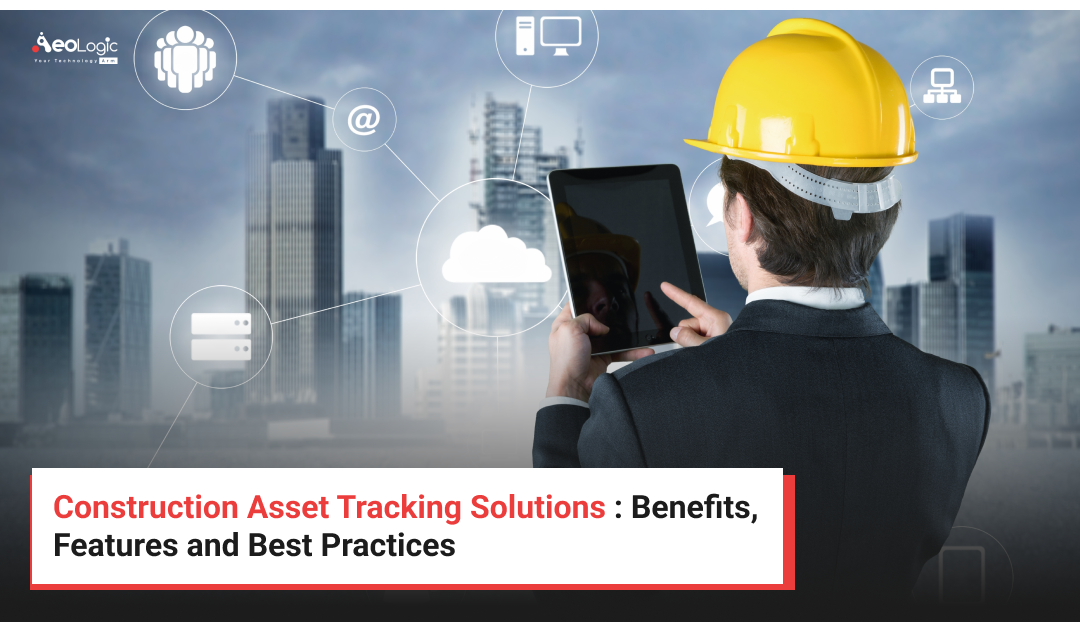
The construction industry has a highly dynamic environment that sees equipment, machinery, tools and materials frequently travel between different job sites. Manual management of these assets can lead to lost equipment, project delays, undue rentals, higher operational expenses, and lower productivity. With increasingly complicated construction projects and tighter schedules, businesses are turning to Construction Asset Tracking Solutions to achieve full visibility of their assets and boost efficiency.
The construction industry is characterized by the use of numerous assets, including machines, equipment, and materials, which are essential for the successful completion of projects.In the construction sector, there are many construction assets that play a crucial role in the successful completion of construction projects, including machines, equipment, materials, and other resources. Construction managers can easily pinpoint the location of all assets, who is using them and if they are available for use on the next project without spreadsheets or manual inventory checks. This degree of transparency allows organizations to make quicker decisions, minimize losses and maximize equipment investments.
Despite the ongoing transformation of the construction industry with the digitization of tools and processes, asset tracking has gained increased importance as a strategy. With the evolution of digitalization in the construction industry, asset tracking has become an essential strategy rather than a convenience.
What is Construction Asset Tracking Solutions?
Construction Asset Tracking Solutions are software or digital tools that help track, identify, and manage physical assets from start to finish. These solutions provide a central solution for the registration, monitoring, maintenance and analysis of all assets from procurement to retirement.
Unlike traditional asset management methods that depend on manual documentation, modern tracking systems automate data collection using connected technologies. Every piece of equipment is assigned an identity and has a data stream that records its location, status, maintenance plans, and usage history. Each asset is individually identified, with a stream of data constantly updating its location, operational status, maintenance schedule and usage history. Project managers, equipment supervisors, and field workers can access this information from desktop dashboards or mobile applications, enabling informed decisions without delays.
These solutions can be used for all kinds of construction equipment, power tools, vehicles, generators, scaffolding, safety equipment, materials and temporary infrastructure. Construction companies can ensure full visibility from various sites to avoid guesswork and optimize resource usage.
Why Construction Companies Need Asset Tracking?
Construction projects often have hundreds or thousands of valuable assets distributed across widely-spaced locations. Without a good tracking system, equipment may get lost, and the workers may end up being idle and project work may be delayed.
Stealing construction equipment is another problem for construction companies globally. Often, expensive tools and equipment are targeted and result in significant insurance claims and monetary losses. Construction Asset Tracking Solutions offer live tracking, geofencing alerts, and asset movements notifications, all of which help minimize thievery and enhance asset recovery.
Many organizations have to deal with underutilization of equipment in addition to security issues. In some workplaces, there’s equipment in short supply while in others, there’s equal equipment that isn’t being used. Accurate utilization data through asset tracking lets organizations efficiently re-distribute assets rather than buying unnecessary equipment.
When all assets’ operational history is recorded digitally, maintenance management becomes much easier. Automated preventive maintenance schedules can help to minimize equipment downtime and prolong its lifespan.
Key Features of Construction Asset Tracking Solutions
Real-Time Asset Visibility
Real-time Asset visibility allows construction companies to track equipment, machinery, and tools in real-time on various job sites. This functionality reduces the amount of time spent locating assets, and enhances resource allocation and project efficiency.
Automated Maintenance Management
Automated maintenance management plans preventive maintenance according to usage, operating hours or set time intervals. Deskhero’s proactive maintenance notifications prevent equipment failures, prolong asset life and decrease repair expenses.
GPS, RFID, and IoT Integration
Today’s Construction Asset Tracking Solutions combine GPS, RFID and IoT technologies to provide accurate tracking and ongoing surveillance. These technologies offer real-time data on asset in-transit, use, and health.
Centralized Cloud-Based Dashboard
Project managers and field teams can access up-to-date data from anywhere, anytime with a cloud-based dashboard that keeps all asset information in one place. This helps to coordinate and quicken decision-making.
Asset Utilization and Performance Analytics
Advanced analytics give comprehensive reports on asset usage, idle time, maintenance records, and operational performance. The knowledge gained from these insights can be used by construction companies to improve their equipment utilization, decrease unnecessary equipment buying and enhance general output.
Technologies Powering Modern Construction Asset Tracking Solutions
Multiple sophisticated technologies come together to provide precise and dependable asset tracking in construction sites.
RFID greatly enhances site inspections and equipment verification for inventory management.
Global Positioning System (GPS) technology is used to provide continuous tracking on vehicles, heavy machinery and mobile equipment on those grounds working in multiple locations across the country. GPS is used for route optimization, theft prevention and equipment utilization analysis.
Operational data is gathered by Internet of Things (IoT) sensors including the engine hours, vibration, temperature, fuel consumption, and equipment health. This real-time data enables predictive maintenance and enhances the reliability of the equipment.
QR codes and barcode systems are cost-effective ways of tracking smaller tools and consumables. Mobile devices enable workers to easily check on equipment to update its status and location.
Advanced analytics and Artificial Intelligence convert collected asset information to actionable intelligence. Based on the historical performance, organizations can gain insights into usage trends, anticipate maintenance needs, optimize fleet allocation, and make better investment choices for the future.
 Benefits of Implementing Construction Asset Tracking Solutions
Improved Operational Efficiency
Construction Asset Tracking Solutions allow for easy access and instant asset information. This means fewer delays, no manual tracking and resources being available when required.
Reduced Equipment Loss and Theft
Real time monitoring, geofencing and movement alerts drastically reduces the risk of equipment theft and lost assets. Organizations can react rapidly to unauthorized movements and enhance the security of their assets in construction sites.
Lower Maintenance and Operational Costs
Routine upkeep and ongoing equipment monitoring prevent untimely equipment failures and expensive emergency repairs. Better maintenance planning also extends the operational life of valuable construction assets.
Better Resource Utilization
Knowing where assets are and how often they are being used can help construction companies allocate equipment more effectively. This helps to keep assets idle to a minimum, cut down on rentals, and maximize returns.
Enhanced Project Planning and Decision-Making
Having the right, up-to-date information on assets allows project managers to make sound decisions on equipment scheduling, procurement, and resource planning. This results in a more streamlined project process, greater productivity, and more effective project schedule management.
Best Practices for Successful Implementation
To use Construction Asset Tracking Solutions successfully, it’s not enough to implement the technology. To begin with, though, it’s important to have an exhaustive list of all current assets, assigning a unique digital identity to each before tracking is done.
Choosing the right tracking technology for your asset, project and operational needs depends on your environmental requirements and project size.
Training of the employees is also a critical role. Reliable data is provided by a consistent user uptake. With integrated data, there are no duplication and a full operational overview from departments.
Frequent audits help ensure accurate tracking, and also locate missing or inactive assets. Periodic reviews also help to keep the records of the assets updated throughout the equipment’s life cycle.
Preventive maintenance schedules should be configured based on actual equipment usage rather than fixed calendar intervals. A usage-based maintenance system not only helps to enhance reliability but also helps to cut down on unnecessary maintenance expenses.
Challenges in Construction Asset Tracking
While Construction Asset Tracking Solutions offer many benefits, there are potential challenges to implementation that need to be addressed.
Connectivity challenges can occur at large construction sites, impacting real-time data transfer. Offline functionality and synchronized updates help maintain operational continuity in remote environments.
Up-front deployment expenses can seem high especially for organisations with thousands of assets in many sites across the country. Another factor is if the employees aren’t on board with new technology then its implementation can be slow. Practical training and benefits of operation, as well as user-friendly interfaces, promote increased uptake.
Tracking devices can be affected by the environment like dust, vibration, moisture, and extreme temperatures.
Environmental conditions such as dust, vibration, moisture, and extreme temperatures may impact tracking devices. Selecting industrial-grade hardware designed specifically for construction environments helps ensure long-term reliability.
Future Trends in Construction Asset Tracking Solutions
In the years to come, Construction Asset Tracking Solutions will continue to evolve with the integration of automation, AI, and other connected infrastructure.
AI-driven analytics will be more and more predicting equipment failures before they even happen, enabling organizations to plan proactively for maintenance and avoid unplanned downtime.
Digital twins are expected to become more common, providing virtual representations of physical assets that enable continuous monitoring, performance simulation, and lifecycle optimization.
The ability to track assets in real-time will be crucial for coordinating autonomous construction equipment, enhancing safety, and optimizing project workflows.
Edge computing will improve the tracking performance by handling sensor data at the edge, minimizing latency and response times in remote locations, closer to the construction site.
Conclusion
The construction industry is becoming more competitive, with a focus on productivity, efficiency, and maximizing resources to ensure project success. Businesses with complex operations involving several job sites need more effective methods than manual ones to manage their assets. Construction Asset Tracking Solutions offer the visibility, automation, intelligence, and other benefits to keep valuable equipment tracked, curb operational expenses, optimize maintenance schedules, and enhance project delivery.
Combining the latest technologies like GPS, RFID, IoT, cloud computing and AI, these solutions enable a digitalized, connected asset management system for smarter decision making. By implementing Construction Asset Tracking Solutions, organizations can optimize equipment usage, reduce losses and gain a competitive advantage for long-term operational excellence in a digital construction industry. Aeologic Technologies is a reliable technology provider that assists business in adopting intelligent asset tracking solutions that help improve visibility, boost efficiency and foster sustainable business growth. Continuous technological advancements will maintain the significance of asset tracking in effective and secure construction management in the future.
Frequently Asked Questions (FAQs)
Q1. What are Construction Asset Tracking Solutions?
Construction Asset Tracking Solutions are digital systems that help construction companies monitor, manage, and optimize physical assets such as heavy machinery, tools, vehicles, and materials. Using technologies like GPS, RFID, IoT sensors, and cloud-based software, these solutions provide real-time visibility into asset location, utilization, maintenance, and overall performance.
Q2. Why are Construction Asset Tracking Solutions important for construction companies?
Construction Asset Tracking Solutions help reduce equipment loss, prevent theft, improve asset utilization, streamline maintenance scheduling, and increase operational efficiency. They also enable project managers to make informed decisions based on accurate, real-time asset data, ultimately reducing costs and improving project delivery.
Q3. Which technologies are commonly used in Construction Asset Tracking Solutions?
Modern Construction Asset Tracking Solutions typically use GPS for location tracking, RFID for asset identification, IoT sensors for monitoring equipment health, QR codes and barcodes for inventory management, and cloud platforms for centralized data access and reporting.
Q4. How do Construction Asset Tracking Solutions improve equipment maintenance?
These solutions automatically monitor equipment usage and operating hours, allowing organizations to schedule preventive maintenance before failures occur. Timely servicing helps minimize downtime, extend equipment lifespan, reduce repair costs, and improve workplace safety.
Q5. Can Construction Asset Tracking Solutions help prevent equipment theft?
Yes. Construction Asset Tracking Solutions provide real-time location tracking, geofencing, and instant alerts when assets move outside designated areas. These capabilities improve asset security, increase the chances of recovering stolen equipment, and reduce financial losses.
Q6. Are Construction Asset Tracking Solutions suitable for small and medium-sized construction businesses?
Absolutely. Construction Asset Tracking Solutions are scalable and can be customized for businesses of all sizes. Small and medium-sized construction companies can start by tracking their most valuable equipment and gradually expand the system as their operations grow.
Q7. What should companies consider when choosing Construction Asset Tracking Solutions?
Organizations should evaluate factors such as tracking technology, scalability, ease of integration with existing systems, mobile accessibility, reporting capabilities, security features, customer support, and the ability to support future business growth. Choosing a solution that aligns with operational requirements ensures better long-term value and return on investment.

I’m a Software Developer with 9 years of experience building scalable web and mobile applications. Currently focused on React.js and React Native, I specialize in creating high-performance, user-friendly interfaces that drive business outcomes.
My background spans cross-platform development using Flutter, and native Android development, giving me a strong understanding of the entire mobile ecosystem. I’ve contributed to products in EdTech, Healthcare, and Enterprise SaaS—helping scale apps to 100K+ users and improving performance, reliability, and user engagement.
I’m passionate about clean architecture, modular design, and seamless user experiences. Whether it’s setting up robust state management with Redux Toolkit, optimizing API integrations with GraphQL/REST, or automating workflows with CI/CD pipelines (GitHub Actions)—I focus on writing maintainable code and delivering value to both users and stakeholders.