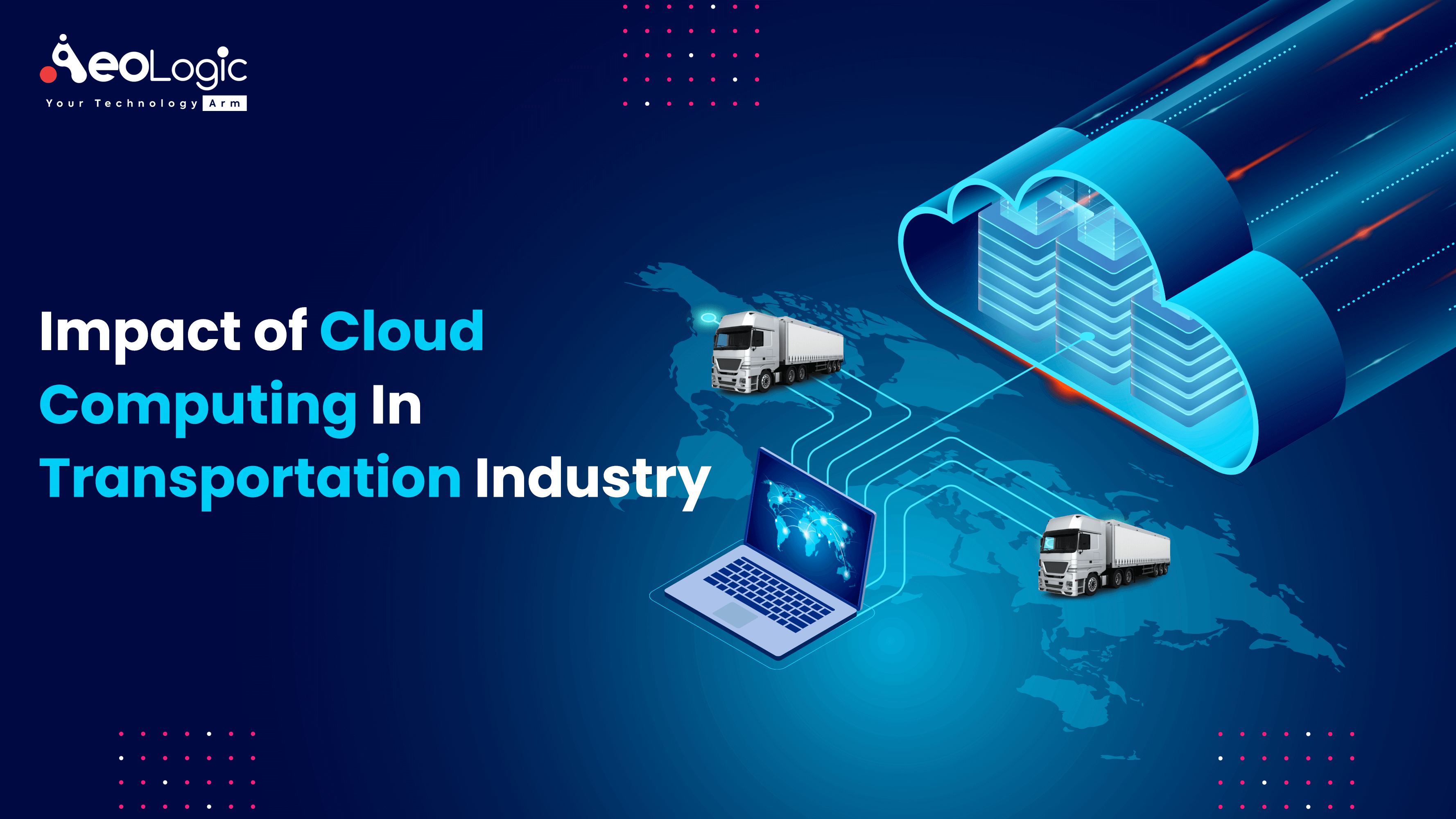
The transportation industry is undergoing a massive digital transformation driven by emerging technologies, real-time data, and increasing customer expectations. Among these innovations, cloud computing has emerged as a powerful enabler of efficiency, scalability, and operational intelligence. The Impact of Cloud Computing In Transportation is reshaping how logistics providers, fleet operators, and mobility companies manage their operations, deliver services, and make strategic decisions.
Transportation is a highly fragmented industry where it takes a little more than a commercial driver’s license and a truck to get into business.
The covid-19 pandemic has delivered its own challenges like lockdowns, restrictions, troubles in the supply chain, and shocks to the broader economy.
In this blog, you’ll get to know about the astonishing impact of cloud computing in the transportation industry.
What is Cloud Computing in Transportation?
Cloud computing in transportation refers to the use of internet-based platforms to store, manage, process, and analyze data related to transportation operations. Instead of relying on on-premise infrastructure, companies leverage cloud services to access scalable resources, applications, and analytics tools.
These platforms enable real-time data sharing between various stakeholders, including drivers, fleet managers, warehouse teams, and customers. Cloud-based transportation systems often integrate with GPS devices, IoT sensors, and enterprise software to create a unified ecosystem.
The Impact of Cloud Computing In Transportation lies in its ability to streamline operations, reduce costs, and improve visibility across the entire supply chain. By centralizing data and enabling automation, cloud solutions help businesses operate more efficiently and adapt quickly to changing market demands.
Why the Impact of Cloud Computing In Transportation Matters?
Transportation companies operate in a highly dynamic environment where delays, inefficiencies, and lack of visibility can lead to significant losses. Cloud computing addresses these challenges by providing real-time insights and enabling better decision-making.
The importance of cloud computing in transportation is evident in several areas. It enhances operational visibility, allowing businesses to monitor fleet movement and asset utilization in real time. It also improves collaboration between different departments and stakeholders, ensuring smoother workflows.
Moreover, the Cloud computing in transportation industry extends to customer satisfaction. With real-time tracking and accurate delivery updates, businesses can meet customer expectations more effectively. This leads to increased trust, loyalty, and competitive advantage in the market.
The Impacts Are as Follows:
1. The Vehicle Tracking:
Earlier, real-time vehicle tracking in the transportation industry required the involvement of specialized service providers. These systems relied heavily on expensive hardware installations within vehicles, along with infrastructure deployed at company premises. This setup not only demanded high initial investments but also required ongoing maintenance, upgrades, and operational costs.
With the Impact of Cloud Computing In Transportation, this model has evolved significantly. Cloud-based tracking solutions operate on a Software-as-a-Service (SaaS) model, eliminating the need for heavy hardware installations. Transportation companies can now track their fleet in real time using cloud platforms that provide seamless access to data from anywhere.
This transformation has reduced operational costs while improving efficiency. Companies can monitor routes, optimize fuel usage, and ensure timely deliveries without investing in complex infrastructure. Additionally, cloud-based tracking systems offer scalability, allowing businesses to expand their operations without significant additional costs.
2. Implementation of E-ticketing:
The adoption of digital solutions has revolutionized how transportation services are accessed by customers. In earlier times, e-ticketing was either unavailable or limited to a few large organizations. Booking tickets was often a time-consuming process, especially during peak seasons such as holidays or festivals. Companies had to invest heavily in servers and infrastructure to manage high demand, which often remained underutilized during off-peak periods.
The Impact of Cloud Computing In Transportation has addressed these challenges effectively. Cloud platforms provide built-in scalability, allowing transportation companies to handle fluctuating demand without investing in additional hardware. During peak periods, cloud service providers automatically allocate more resources to ensure smooth operations.
This creates a win-win situation for both businesses and customers. Companies reduce infrastructure costs and improve efficiency, while customers benefit from seamless booking experiences from the comfort of their homes. The flexibility and reliability of cloud-based e-ticketing systems have significantly enhanced customer satisfaction.
3. Logistics Planning:
Logistics planning is a complex process that involves managing the movement of goods, optimizing routes, and ensuring timely deliveries. For transportation companies, expanding into logistics offers a competitive advantage but also introduces additional challenges.
Traditionally, logistics planning required dedicated hardware systems to manage data related to weight distribution, cargo placement, and route optimization. These systems involved high procurement and maintenance costs, making them less accessible for smaller businesses.
With the Cloud computing in transportation industry, logistics planning has become more efficient and accessible. Cloud service providers offer advanced virtual modeling and analytics tools that enable companies to simulate logistics scenarios without investing in physical infrastructure. These tools use real-time data to optimize operations, reduce costs, and improve delivery accuracy.
Cloud-based logistics solutions also enhance collaboration across supply chains by providing centralized data access. This ensures better coordination between suppliers, transporters, and customers, ultimately improving overall efficiency.
4. Comfort for The Passenger:
Passenger experience has become a key differentiator in the transportation industry. Companies are constantly looking for ways to enhance customer satisfaction and provide a comfortable travel experience.
Cloud computing has played a crucial role in improving passenger comfort. Transportation companies no longer need to invest heavily in onboard entertainment systems. Instead, they can leverage cloud-based streaming services to provide entertainment options to passengers.
The Cloud computing in transportation industry extends to enabling seamless connectivity, allowing passengers to access content such as movies, music, and live updates during their journey. This not only enhances the travel experience but also adds value to the services offered by transportation providers.
5. The Real-Time Updates:
One of the major challenges faced by passengers is the lack of real-time information regarding delays, route changes, or unexpected disruptions. Factors such as traffic congestion, road closures, and weather conditions can significantly impact travel schedules.
Cloud-based systems address this issue by providing real-time updates to passengers and operators. The Cloud computing in transportation industry is evident in how data is collected, processed, and shared instantly across platforms.
Passengers receive timely notifications about delays or changes, allowing them to plan accordingly. For transportation companies, this improves communication and enhances customer trust. Additionally, real-time data helps in optimizing routes and reducing operational inefficiencies.
6. Maintenance of The Vehicles:
Vehicle maintenance is critical for ensuring safety, reliability, and operational efficiency. Traditional maintenance approaches often rely on scheduled servicing, which may not accurately reflect the actual condition of the vehicle.
Cloud computing, combined with IoT sensors, has introduced predictive maintenance capabilities. Sensors installed in vehicles collect data on engine performance, fuel consumption, and component health. This data is transmitted to cloud platforms for analysis.
The Impact of Cloud Computing In Transportation in this area is transformative. Cloud-powered analytics can identify potential issues before they lead to failures, enabling proactive maintenance. This reduces downtime, improves safety, and extends the lifespan of vehicles.
Predictive maintenance also helps companies optimize their resources by scheduling repairs only when necessary, thereby reducing costs and improving efficiency.
7. Integrating AI and ML:
Artificial Intelligence (AI) and Machine Learning (ML) are becoming integral to modern transportation systems. These technologies enable companies to analyze large volumes of data and extract actionable insights.
Cloud computing provides the infrastructure required to run AI and ML algorithms efficiently. The Impact of Cloud Computing In Transportation is evident in how companies use these technologies to predict demand, optimize routes, and improve decision-making.
By analyzing historical data and travel patterns, AI-powered systems can forecast future demand and allocate resources accordingly. This not only improves operational efficiency but also enhances customer satisfaction by ensuring timely services.
2026 Fleet Management Statistics You Should Know
The transportation industry is undergoing a data-driven transformation, with cloud computing playing a central role in this evolution. The global cloud logistics market is projected to reach $46.3 billion by 2030, growing at a CAGR of approximately 13.9 percent. By 2025, the market has already surpassed $24.9 billion, indicating rapid adoption across industries.
In India, the cloud logistics market is expected to reach $2.3 billion by 2030. This growth is driven by increasing digitalization, government initiatives, and the expansion of e-commerce. More than 60 percent of logistics enterprises worldwide are already leveraging cloud-based platforms to streamline operations.
These statistics highlight the growing Impact of Cloud Computing In Transportation, emphasizing the importance of adopting cloud solutions to remain competitive in a rapidly evolving market.
What This Means
Fleet management is no longer limited to basic tracking and monitoring. It has evolved into a sophisticated ecosystem powered by cloud computing, data analytics, and automation.
The Cloud technology in transportation sector is redefining how companies manage their fleets. Cloud platforms provide centralized dashboards, real-time insights, and predictive analytics, enabling businesses to make informed decisions.
This transformation allows transportation companies to improve efficiency, reduce costs, and enhance service quality. It also enables better coordination across operations, leading to improved productivity and profitability.
IoT + Cloud Integration in Fleet Management
How It Works
Modern transportation systems rely heavily on the integration of IoT devices with cloud platforms. Sensors installed in vehicles continuously collect data such as location, speed, fuel usage, and driver behavior. This data is transmitted to cloud systems, where it is processed and analyzed in real time.
The Impact of Cloud Computing In Transportation is evident in how this integration enables seamless data flow and real-time intelligence. Cloud platforms act as the central hub, connecting various components of the transportation ecosystem.
Key Capabilities
Cloud-enabled fleet management systems offer a wide range of capabilities, including real-time tracking, predictive maintenance, route optimization, and centralized monitoring. These features help companies improve efficiency and reduce operational costs.
The integration of IoT and cloud computing also enhances visibility across the supply chain, enabling better coordination and decision-making.
Cloud Adoption in Indian Transportation Industry
Key Trends
The transportation industry in India is rapidly adopting cloud-based solutions to improve efficiency and transparency. The demand for real-time tracking and data-driven decision-making is driving this transformation.
The Cloud technology in transportation sector is reflected in the increasing use of AI-powered analytics, SaaS platforms, and digital logistics solutions. Companies are leveraging these technologies to meet the growing demands of e-commerce and improve service delivery.
Challenges
Despite the benefits, cloud adoption in the transportation industry faces several challenges. Small and medium-sized businesses often struggle with the initial cost of implementation and integration.
There is also a lack of technical expertise, which can hinder the effective use of cloud solutions. Additionally, concerns related to data security and compliance need to be addressed.
Opportunities
Cloud computing presents significant opportunities for the transportation industry. It enables businesses to access advanced technologies without heavy investments in infrastructure.
The Impact of Cloud Computing In Transportation is making logistics operations more efficient, scalable, and cost-effective. Companies that embrace cloud solutions can gain a competitive advantage and drive innovation in their operations.
Conclusion
In conclusion, the Impact of Cloud Computing In Transportation is transformative, enabling companies to modernize operations, reduce costs, and enhance customer experiences. From real-time tracking and predictive maintenance to AI-driven insights and scalable infrastructure, cloud computing is redefining the transportation landscape.
As the industry continues to evolve, adopting cloud technology is no longer optional but essential for staying competitive. Organizations that embrace this transformation will be better positioned to navigate challenges and seize new opportunities.
For businesses looking to leverage the full potential of cloud computing in transportation, partnering with experts like Aeologic Technologies can provide the expertise and solutions needed to achieve sustainable growth and innovation.
FAQs
Q1. How is cloud computing used in transportation?
Cloud computing is widely used in transportation to manage real-time data, optimize routes, and improve operational efficiency. Transportation companies leverage cloud platforms to track vehicles, monitor fuel usage, and manage logistics from centralized dashboards. It enables seamless communication between drivers, managers, and systems while supporting advanced technologies like IoT and AI. With cloud-based solutions, businesses can access data anytime, automate workflows, and enhance decision-making. The Impact of Cloud Computing In Transportation is clearly visible in improved visibility, reduced delays, and better coordination across supply chain operations.
Q2. What are benefits of cloud for fleet management?
Cloud computing significantly enhances fleet management by providing real-time tracking, predictive maintenance insights, and centralized control. Fleet managers can monitor vehicle performance, driver behavior, and route efficiency using cloud-based platforms. It reduces downtime by enabling proactive maintenance alerts and improves fuel efficiency through optimized routing. Additionally, cloud systems allow remote access, making it easier to manage fleets across multiple locations. The Cloud technology in transportation sector is evident in improved operational efficiency, reduced manual work, and enhanced scalability for growing fleet operations.
Q3. Is cloud computing safe for logistics data?
Yes, cloud computing is generally safe for logistics data when implemented with proper security measures. Leading cloud providers offer advanced security features such as data encryption, multi-factor authentication, and regular security updates. These measures help protect sensitive logistics information from cyber threats and unauthorized access. Additionally, cloud platforms ensure data backup and disaster recovery, minimizing the risk of data loss. The Cloud technology in transportation sector includes improved data security and reliability, making it a trusted solution for modern logistics operations.
Q4. How does cloud reduce transport costs?
Cloud computing helps reduce transportation costs by improving efficiency and minimizing operational waste. It enables route optimization, reducing fuel consumption and travel time. Automated systems eliminate manual processes, lowering labor costs and reducing errors. Cloud-based analytics provide insights into performance, helping companies identify inefficiencies and make cost-effective decisions. Additionally, the pay-as-you-go pricing model reduces the need for heavy infrastructure investments. The Cloud technology in transportation sector is reflected in significant cost savings and improved resource utilization across operations.
Q5. Which cloud platform is best for transport companies?
The best cloud platform for transport companies depends on specific business needs, scalability requirements, and budget. Popular options include AWS, Microsoft Azure, and Google Cloud, all of which offer robust tools for data analytics, IoT integration, and fleet management. These platforms provide high scalability, strong security features, and seamless integration with transportation systems. Companies should evaluate factors such as performance, pricing, and support before choosing a platform. The Impact of Cloud Computing In Transportation is maximized when businesses select a platform aligned with their operational goals.

Manoj Kumar is a seasoned Digital Marketing Manager and passionate Tech Blogger with deep expertise in SEO, AI trends, and emerging digital technologies. He writes about innovative solutions that drive growth and transformation across industry.
Featured on – YOURSTORY | TECHSLING | ELEARNINGINDUSTRY | DATASCIENCECENTRAL | TIMESOFINDIA | MEDIUM | DATAFLOQ