
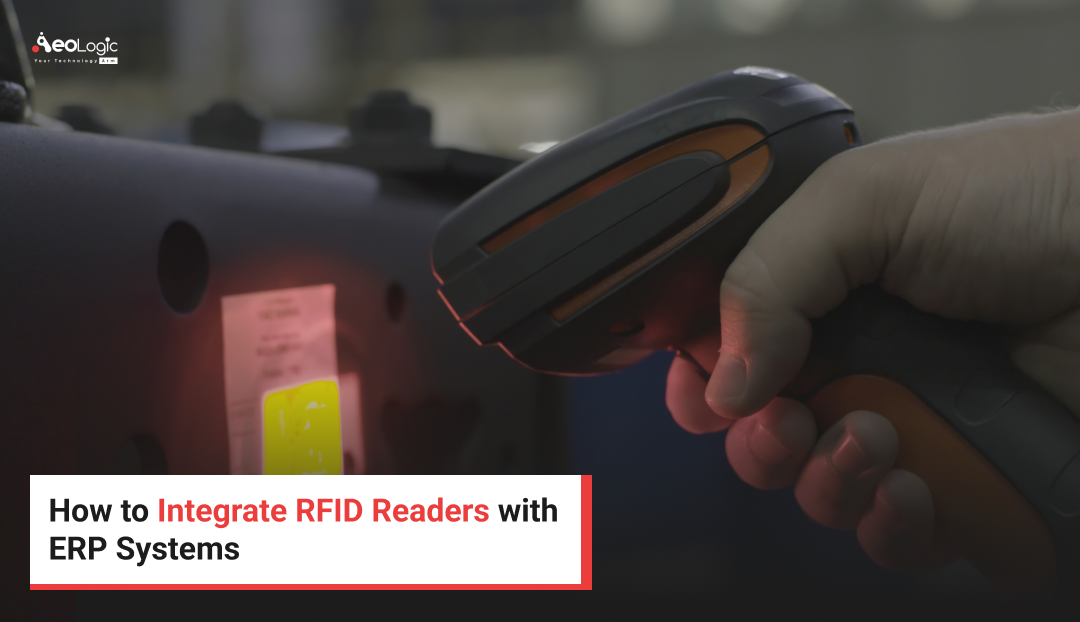
As businesses continue to embrace digital transformation, the need for real-time data and automated business processes has become more important than ever. The use of RFID is spreading across industries, particularly in the fields of manufacturing, warehousing, retail, healthcare, and logistics, where it is helping to enhance inventory accuracy, asset visibility, and operational efficiency. However, the true value of RFID is realized when organizations Integrate RFID Readers with their Enterprise Resource Planning (ERP) systems.
ERP software serves as a central system where all the business operations like Inventory, Procurement, Finance, Production and Supply Chain Management are controlled. RFID readers, however, automatically read the data from the RFID tags without human involvement. Combining these two technologies means companies have immediate visibility into inventory movements, reduce manual data entry and make quicker, data-driven decisions.
This guide explains how to integrate RFID readers with ERP systems, the benefits of integration, common challenges, implementation steps, and best practices for achieving a successful deployment.
Understanding RFID Readers and ERP Systems
It is crucial to recognize the operation of these technologies without integration before entering into the discussion of integration. Prior to entering the discussion of integration, it is important to understand how these technologies operate independently.
RFID readers are hardware devices that send and receive with an RFID tag via radio frequency. All tags emit a specific identification number, which identifies a product, asset, equipment or pallet without it being scanned directly in the line of sight.
An ERP system is the central business management tool of the organization. It combines all the data from different departments like inventory management, procurement, finance, production planning, warehousing, and customer service in one system.
By Integrate RFID Readers with ERP software, the information from the RFID tags is automatically fed into the ERP database, allowing for up-to-the-minute updates throughout business operations.
Why Businesses Need to Integrate RFID Readers with ERP Systems
A lot of companies are already employing ERP software to control operations. However, inventory updates are frequently dependent on barcode scanning or manual data entry, that can slow down the processes, introduce human errors and result in incorrect information.
By incorporating RFID readers, these restrictions can be overcome, and data can be collected automatically across all warehouses, manufacturing plants, retail stores and distribution centers.
The ERP system is automatically updated with inventory information as tagged items pass through the RFID reading zones. This automation enhances inventory visibility, speeds up business processes, and provides up-to-date and accurate data for all departments.
How RFID Reader Integration Works
RFID Data Capture
RFID readers are used to continuously read the RFID tags around them as products pass through specific checkpoints like receiving docks, warehouse aisles, production lines, etc., or shipping stations.
Each tag detected provides valuable information such as product identification, location, time, and movement.
Middleware Processes the Data
The majority of ERP systems are not able to talk directly to the RFID hardware. The role of the RFID middleware is to connect readers and ERP application.
There are a number of important functions that the middleware plays before it makes its way to ERP. It eliminates duplicate reads, validates data, enforces business rules, transforms raw RFID data into meaningful formats and handles communication with multiple RFID devices.
This processing makes sure that only relevant and correct information is stored in the ERP database.
ERP Updates Business Records
Once validated, the middleware passes on the processed RFID data to the ERP system via APIs, Web services, or connectors.
Based on the organization’s business process, the ERP software will automatically update inventory quantities, warehouse location, asset records, production status, purchase orders, shipping information, or work orders.
Steps to Integrate RFID Readers with ERP Systems
Assess Business Requirements
The very first step in any RFID implementation project is to have a clear vision of the business goals you wish to achieve.
Organizations need to pinpoint the operational issues they wish to address, such as improving stock accuracy, warehouse automation, asset tracking, decreasing stock losses, and optimizing production processes. Organizations need to identify the operational challenges that they wish to address, such as improving inventory accuracy, automating warehouse operations, tracking assets, reducing stock losses, and optimizing production workflows.
A comprehensive requirements analysis makes sure that the integration delivers measurable business results, and not just more technology.
Identify Critical Business Processes
The businesses should consider the most valuable application points of RFID. The common areas include receiving, put away, inventory management, production tracking, shipping and asset monitoring.
An understanding of these workflows can help clarify the relationships between RFID data and ERP modules.
 Choose the Right RFID Hardware
One of the key implementation choices is choosing the appropriate RFID readers.
The choice depends on factors such as reading distance, environmental conditions, facility layout, tag density, and business applications.
Fixed RFID readers are used in gates in the warehouse and in conveyor belts, and handheld readers are more popular for inventory counting and tracking mobile assets.
The selected hardware should also support industry-standard communication protocols for seamless ERP integration.
Select Compatible RFID Middleware
The middleware is the conduit that connects the RFID hardware and ERP software.
The middleware platform should ensure device management, event filtering, data validation, security, system monitoring and API integration capabilities.
It should also grow with the organization and expand the use of RFID throughout its facilities.
Configure ERP Integration
ERP integration usually entails integrating middleware and ERP modules that handle inventory management, warehouse management, procurement, manufacturing, and finances.
Developers will set up APIs, integration services, database mappings and business workflows in such a way that whenever an RFID event occurs, it initiates an ERP transaction.
When a pallet comes into the warehouse via an RFID gate, for instance, the ERP system could automatically update the inventory level and then automatically create instructions for the warehouse put away.
Test the Integration
Comprehensive testing will make sure that RFID readers and ERP software communicate in the right way across a variety of operational situations.
High volume tag reading, duplicate filter, exception handling, inventory reconciliation, user acceptance and performance evaluation are all forms of testing that should be included.
Apart from this, businesses should also ensure that ERP transactions happen correctly as and when RFID events come in.
Deploy and Monitor
Once the system is successfully tested, organizations can slowly roll out the RFID integration across the various departments or warehouse units.
By continuously monitoring, you can detect communication problems, reader performance issues, network delays, or even mismappings in ERP before they affect business operations.
Benefits of Integrating RFID Readers with ERP Systems
Real-Time Inventory Visibility
Continuous inventory visibility is one of the major benefits of integrating RFID.
Since RFID readers automatically capture inventory movements, ERP systems always display current stock levels without waiting for manual updates.
This enhances inventory planning, reordering, and order fulfillment.
Improved Inventory Accuracy
Manual inventory has the potential of introducing data entry errors and lag time.
When businesses Integrate RFID Readers with ERP software, inventory records are updated automatically, significantly reducing errors while improving stock accuracy.
Accurate inventory information also minimizes stock shortages and excess inventory.
Faster Warehouse Operations
All warehouse staff members don’t have to enter each individual item by hand.
RFID readers identify multiple tagged products simultaneously, allowing receiving, picking, packing, and shipping processes to move much faster.
This will help to achieve greater efficiency and boost productivity in the operations, saving on the labour cost.
Better Asset Tracking
RFID integration is highly beneficial to organizations that have equipment, machinery, tools, or reusable containers that have value.
When tagged assets arrive at the RFID checkpoints, they automatically update ERP systems, simplifying asset utilization tracking, loss prevention and maintenance scheduling.
Enhanced Supply Chain Visibility
RFID integration gives complete visibility of the product movement in the supply chain.
Real-time ERP dashboards help managers keep track of goods moving from suppliers to warehouses, production facilities, distribution centers and customer delivery destinations.
This transparency helps with planning and avoids disruption in operations.
Common Challenges During RFID ERP Integration
Legacy ERP Compatibility
Some ERP systems may not have the latest APIs or integration options.
Organizations may need to implement extra middleware or custom software development to create reliable communications between the RFID hardware and the legacy software.
Data Quality Management
RFID readers generate large volumes of data, including duplicate tag reads and unnecessary events.
If left unfiltered and un-validated, too much data can lead to inaccurate reporting and overwhelmed ERP systems.
Middleware is crucial to clean and meaningful data.
Network Infrastructure
For the successful implementation of RFID systems, the network should be stable, enabling the connection between readers, middleware and ERP servers.
Limited wireless connectivity or network connectivity failures could cause delays in data synchronization and impact workflow.
An adequate infrastructure plan is critical prior to deployment.
Security Considerations
Because RFID systems will share operational data with ERP systems, businesses need to take the necessary steps to ensure high levels of cyber security.
This protects important business data from unauthorized use through encrypted communication, secure authentication, user access controls and constant monitoring.
Best Practices for Successful RFID ERP Integration
Plan the Integration Architecture Carefully
It is important for organizations to establish the entire system architecture prior to implementation, encompassing RFID hardware, middleware, network infrastructure, ERP modules, APIs and reporting needs.
A good architecture helps to minimize future maintenance and scalability issues.
Standardize RFID Processes
The implementation of RFID is consistent throughout facilities through SOP.
Businesses need to implement tagging standards, placement guidelines for readers, data validation policies, and workflow automation policies.
Train Employees
While technology is a crucial ingredient for successful integration, it is also crucial that employees are willing to adopt technology.
For warehouse workers, IT departments, inventory managers, and ERP administrators, it is essential to be familiar with the RFID processes and the impact of automated workflows on their operations.
Proper training minimizes operational errors and increases user confidence.
Monitor System Performance
Businesses should regularly monitor RFID reader health, middleware performance, ERP synchronization, and network connectivity.
Analyzing performance regularly can help you find out about the bottlenecks before they affect productivity.
Future of RFID and ERP Integration
New technologies are paving the way for more intelligent integration of RFID and ERP.
AI, predictive analytics, Industrial IoT, cloud ERP systems, and digital twins are helping organizations to turn RFID data into business insights.
Looking forward, the integration of RFID technology with machine learning algorithms will enable ERP systems to make increasingly intelligent decisions, such as forecasting inventory levels, optimizing warehouse operations, and enhancing the supply chain’s resilience.
Cloud ERP is continually evolving and RFID integrations will increasingly be easier to implement, more scalable, and able to handle enterprise-wide automation initiatives.
Conclusion
The decision to Integrate RFID Readers with ERP systems is no longer just a technology upgrade—it is a strategic investment in operational efficiency, data accuracy, and business automation. By connecting RFID hardware with ERP software through reliable middleware and well-designed workflows, organizations can eliminate manual processes, gain real-time visibility into inventory and assets, and improve overall business performance.
Whether operating in manufacturing, retail, healthcare, logistics, or warehousing, businesses that successfully integrate RFID readers with ERP systems are better equipped to streamline operations, reduce costs, and respond quickly to changing market demands. With careful planning, the right technology stack, and ongoing system optimization, RFID-ERP integration can deliver long-term value and support future digital transformation initiatives. Organizations looking to implement reliable RFID and ERP integration solutions can partner with Aeologic Technologies to build scalable, customized systems that enhance operational efficiency and drive business growth.
Frequently Asked Questions (FAQs)
Q1. Why should businesses integrate RFID readers with ERP systems?
Businesses integrate RFID readers with ERP systems to automate data collection, improve inventory accuracy, enable real-time asset tracking, reduce manual data entry, and streamline warehouse and supply chain operations. This integration helps organizations make faster and more informed business decisions.
Q2. Can RFID readers be integrated with any ERP software?
Yes, most modern ERP systems can be integrated with RFID readers using APIs, middleware, or custom integration services. Popular ERP platforms such as SAP, Oracle, Microsoft Dynamics 365, and Odoo support RFID integration, although the implementation approach may vary depending on the system.
Q3. What role does RFID middleware play in ERP integration?
RFID middleware acts as the communication bridge between RFID readers and the ERP system. It filters duplicate reads, validates captured data, applies business rules, and sends accurate information to the ERP, ensuring reliable and efficient data synchronization.
Q4. Which industries benefit the most from RFID and ERP integration?
Industries such as manufacturing, logistics, warehousing, retail, healthcare, automotive, pharmaceuticals, and asset-intensive enterprises benefit significantly from RFID and ERP integration. These sectors use the technology to improve inventory management, asset tracking, production monitoring, and supply chain visibility.
Q5. What are the key challenges when integrating RFID readers with ERP systems?
Some common challenges include ensuring compatibility with legacy ERP systems, selecting the right RFID hardware, managing large volumes of RFID data, maintaining network reliability, and implementing proper security measures. Careful planning and the use of reliable middleware can help overcome these challenges.

Project Lead with 9+ years of experience in Web Technologies and AI. Expert in leading end-to-end development of scalable, AI-driven solutions. Driving innovation through smart architecture, agile execution, and team leadership.