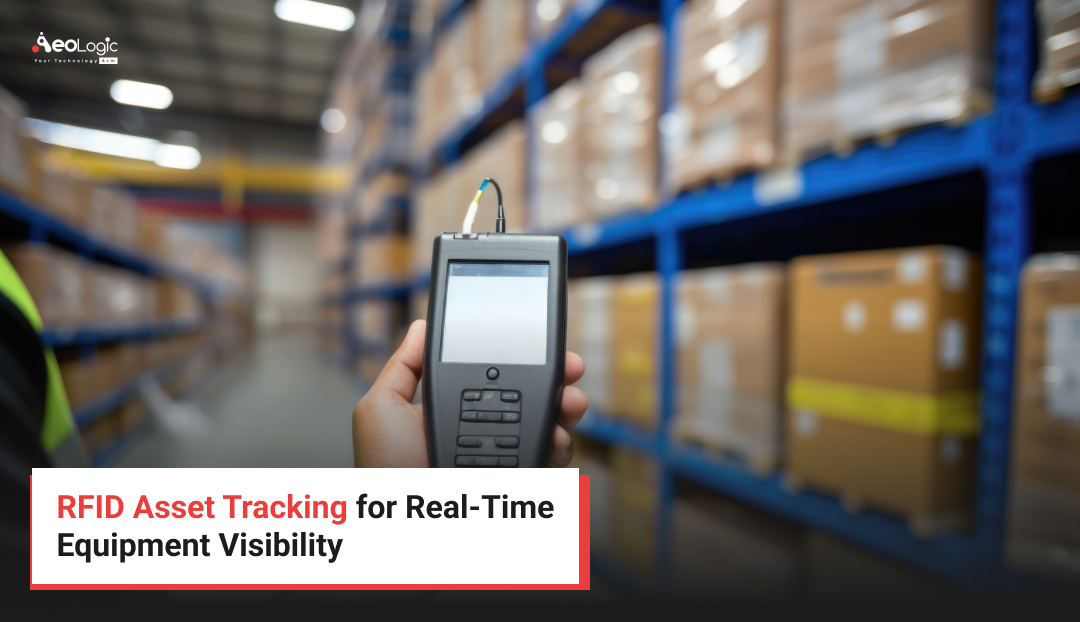
Organisations can no longer afford equipment management blind spots in today’s asset-intensive, fast-paced business environments. By removing inefficiencies brought on by manual tracking, misplaced equipment, and delayed decision-making, RFID-based tracking solution has become a potent way to obtain real-time visibility into vital assets. Businesses require intelligent systems that offer immediate insight into the location, usage, and availability of assets as operations grow in complexity and scale.
Real-time equipment visibility has a direct impact on productivity, cost control, and service quality everywhere from manufacturing floors and warehouses to hospitals and building sites. While RFID-enabled systems automate asset identification and monitoring without human intervention, traditional tracking methods are unable to meet the demands of modern operations. By bridging the gap between physical assets and digital intelligence, RFID Asset Tracking empowers organizations to operate with greater accuracy, agility, and confidence.
What is RFID Asset Tracking System?
Using radio waves to automatically identify, track, and manage physical assets is known as RFID Asset Tracking. In contrast to barcodes, RFID tracks assets in real time or almost real time without the need for human intervention and does not require line-of-sight scanning.
Fundamentally, RFID Asset creates a real-time data stream that reflects asset location, status, movement, and usage by connecting physical equipment to digital systems. Every asset has an RFID tag that connects to RFID readers placed in key spots. Software platforms receive the gathered data, analyse it, visualise it, and use it to make operational decisions.
Knowing “where something is” is just one aspect of RFID tracking. Additionally, contemporary systems offer information about how long equipment is in use, whether it is idle, how often it moves, and whether it is being used effectively.
Why RFID Asset Tracking isimportant in Modern Business?
As operational complexity and business expectations have increased, RFID asset has become increasingly important.
Today, businesses oversee thousands or even millions of movable assets in plants, warehouses, hospitals, campuses, and construction sites. Assets frequently disappear, are underutilised, or cause bottlenecks that impede operations in the absence of real-time visibility.
- Asset tracking system tackles a number of contemporary issues:
- The need for operational visibility in real time
- Growing expenses related to theft and asset loss
- Lack of workers that renders manual tracking ineffective
-
Compliance requirements demanding accurate asset records
-
The need for data-driven optimization
Asset tracking system is no longer a “nice-to-have” in a world where speed, accuracy, and automation are paramount. For companies to stay competitive, it has become a strategic requirement.
 Key Benefits of RFID Asset Tracking
Equipment Visibility in Real Time
Instant visibility into the location and movement of assets is one of the most potent advantages of RFID tracking. Whether equipment is in use, in transit, or idle, businesses can see its precise location at all times.
This guarantees that resources are available when needed and saves time spent looking for tools, equipment, or devices.
Enhanced Use of Assets
Due to a lack of visibility into their current assets, many organisations own more equipment than is necessary. RFID asset allows companies to redistribute underutilised or idle equipment.
Improved utilization directly translates into cost savings and higher return on asset investment.
Decreased Theft and Loss
Across all industries, asset loss is a serious concern. By establishing accountability and traceability, RFID asset makes it much more difficult for assets to vanish without being noticed.
Automated movement logs, geofencing, and alerts all aid in preventing theft and unauthorised use.
Increased Effectiveness of Operations
Businesses can minimise errors, speed up workflows, and reduce manual labour by automating asset tracking. Instead of keeping manual records, maintenance teams, warehouse employees, and operations managers can concentrate on higher-value tasks.
Improved Upkeep and Adherence
By integrating with maintenance schedules, Asset tracking systems can guarantee that equipment is serviced on schedule. By keeping accurate audit trails, this lowers unplanned malfunctions and promotes regulatory compliance.
How Real-World Operations Use RFID Asset Tracking
In order for Asset tracking system to function, hardware, software, and data analytics.
Equipment with RFID Tags
An RFID tag with a unique identifier is attached to every asset. Depending on the tracking needs, these tags can be semi-passive, active, or passive.
While active tags are perfect for real-time equipment visibility over wider areas, passive tags are typically used for inventory and inexpensive assets.
Sensors and RFID Readers
Key locations like entrances, exits, work zones, storage areas, and production lines have RFID readers installed. Readers automatically record the data of tagged assets as they move through these zones.
Readers continuously track asset movement in real time in advanced deployments.
Software Platforms and Data Transmission
Software for centralised asset management receives the collected data. In this case, RFID Asset dashboards offer performance metrics, alerts, historical reports, and real-time visibility.
Integration with ERP, CMMS, WMS, or IoT platforms enables end-to-end operational intelligence.
How Companies Track RFID Assets?
RFID-based tracking solution is used by businesses in useful, goal-oriented ways throughout everyday operations.
To avoid production delays, manufacturers monitor their equipment and tools. Hospitals keep an eye on medical equipment to make sure it’s available at crucial times. Pallets and containers are tracked by logistics firms to maximize supply chains. High-value equipment is dispersed throughout construction sites by construction companies.
RFID Asset enables quicker and more intelligent decision-making in each situation by substituting real-time data for speculation.
RFID Asset Tracking Applications in Industry
Facilities for Manufacturing and Industry
RFID-based tracking solution offers visibility into tools, molds, fixtures, and production equipment in manufacturing settings. Real-time tracking enhances production scheduling, minimizes downtime, and avoids tool shortages.
RFID data is also used by manufacturers to optimize asset allocation and examine equipment usage trends.
Medical and Biological Sciences
RFID-based tracking solution is used by hospitals and other healthcare facilities to manage surgical instruments, diagnostic equipment, and medical devices. Real-time visibility guarantees that vital equipment is always accessible when needed, enhancing staff productivity and patient care.
Additionally, RFID facilitates adherence to maintenance requirements and healthcare regulations.
Transportation and Storage
RFID-based tracking solution enables accurate tracking of pallets, containers, forklifts, and high-value goods. By having complete visibility throughout warehouses and distribution centers, logistics operators can lower errors and increase throughput.
The result is faster order fulfillment and lower operational costs.
Building and Infrastructure
Construction companies use RFID Asset to locate equipment across multiple sites. Tools and machinery are often moved frequently, making manual tracking unreliable.
RFID Asset Tracking Technology and Techniques
Modern digital platforms and tried-and-true technologies are the foundation of RFID asset systems.
RFID Technology Types
For short-range tracking where real-time updates are not necessary, passive RFID is an affordable option.
Active RFID is perfect for real-time equipment visibility over wide areas because it uses battery-powered tags that continuously transmit signals.
Ultra-High Frequency (UHF) RFID is widely used due to its longer read range and faster data transmission.
IoT and Analytics Integration
Modern RFID Tracking systems often integrate with IoT sensors and analytics platforms. This enables predictive maintenance, usage analytics, and automated alerts based on asset behavior.
RFID and AI-powered analytics work together to turn unprocessed tracking data into useful insights.
Challenges in RFID Asset Tracking and Solutions
Costs of Initial Implementation
The initial cost of RFID tags, readers, and software is one frequent worry. Businesses can get around this, though, by beginning with high-value assets and progressively growing.
The long-term ROI from reduced losses and improved efficiency typically outweighs initial costs.
Interference from the Environment
Metal surfaces, liquids, and signal interference can impact RFID performance. Choosing the right tag type and reader placement helps mitigate these challenges.
Experienced solution design ensures reliable performance even in complex environments.
Complexity of Data Management
Large-scale RFID Asset generates vast amounts of data. This data can become overwhelming in the absence of appropriate analytics.
Using intelligent dashboards and automated reporting helps convert data into meaningful insights.
Best Practices for RFID Asset Tracking Implementation
Successful RFID-based tracking solution starts with clear objectives. It’s crucial to select the appropriate RFID technology for the setting. Matching tag types to use cases lowers costs because not all assets need real-time tracking.
Integration with existing systems ensures seamless workflows and maximum value. Regular audits and system optimization further improve accuracy and performance.
Equally crucial is teaching employees how to use RFID data efficiently. Technology is only useful when people comprehend it.
Future Trends in RFID Asset Tracking
AI, IoT, and automation developments will have a significant impact on RFID asset in the future.
Organizations will be able to anticipate equipment failures and maximize asset lifecycles thanks to the increased use of predictive analytics.
Cloud-based RFID systems will provide increased accessibility and scalability for international operations.
Businesses will be able to simulate asset behavior and optimize layouts, workflows, and resource planning with the help of digital twins powered by RFID data.
Mid-sized and even small businesses will have easier access to RFID-based tracking solution as costs continue to drop.
Conclusion
RFID asset tracking has developed into a potent tool for data-driven decision-making, operational effectiveness, and real-time equipment visibility. It helps businesses cut expenses, increase utilisation, and improve overall performance by doing away with manual processes and offering precise, real-time insights.
RFID-based tracking solution will continue to be a key technology for intelligently managing physical assets as industries embrace automation and digital transformation. Experienced technology partners like Aeologic Technologies, who comprehend both the technical and operational aspects of RFID-based tracking solution deployments, can help businesses looking to implement or scale RFID-based solutions.
Frequently Asked Questions
Q1. What is RFID-based tracking solution used for?
RFID-based tracking solution is used to monitor the location, movement, and usage of physical assets in real time, improving visibility and operational efficiency.
Q2. Is RFID-based tracking solution superior to barcodes?
Indeed, unlike barcodes, RFID tracking does not require line-of-sight scanning and enables automated, real-time tracking, making it quicker, more effective, and appropriate for large-scale operations.
Q3. Which sectors stand to gain the most from RFID-based tracking solution?
RFID-based tracking solution greatly improves visibility, accuracy, compliance, and overall operational productivity in manufacturing, healthcare, logistics, construction, and warehousing.
Q4. How accurate is asset tracking system?
Even in complex environments with high asset movement, RFID can provide extremely accurate, real-time data with little human error when implemented correctly.
Q5. Is it possible for asset tracking system to work with current systems?
Indeed, the majority of RFID tracking systems easily interface with IoT, ERP, WMS, and CMMS platforms, guaranteeing efficient data transfer and centralised management.
Q6. Is it possible to scale asset tracking system?
Because asset tracking system systems are so scalable, they can expand to accommodate growing assets, locations, and operational complexity.
Q7. What is asset tracking system’s return on investment?

Manoj Kumar is a seasoned Digital Marketing Manager and passionate Tech Blogger with deep expertise in SEO, AI trends, and emerging digital technologies. He writes about innovative solutions that drive growth and transformation across industry.
Featured on – YOURSTORY | TECHSLING | ELEARNINGINDUSTRY | DATASCIENCECENTRAL | TIMESOFINDIA | MEDIUM | DATAFLOQ