
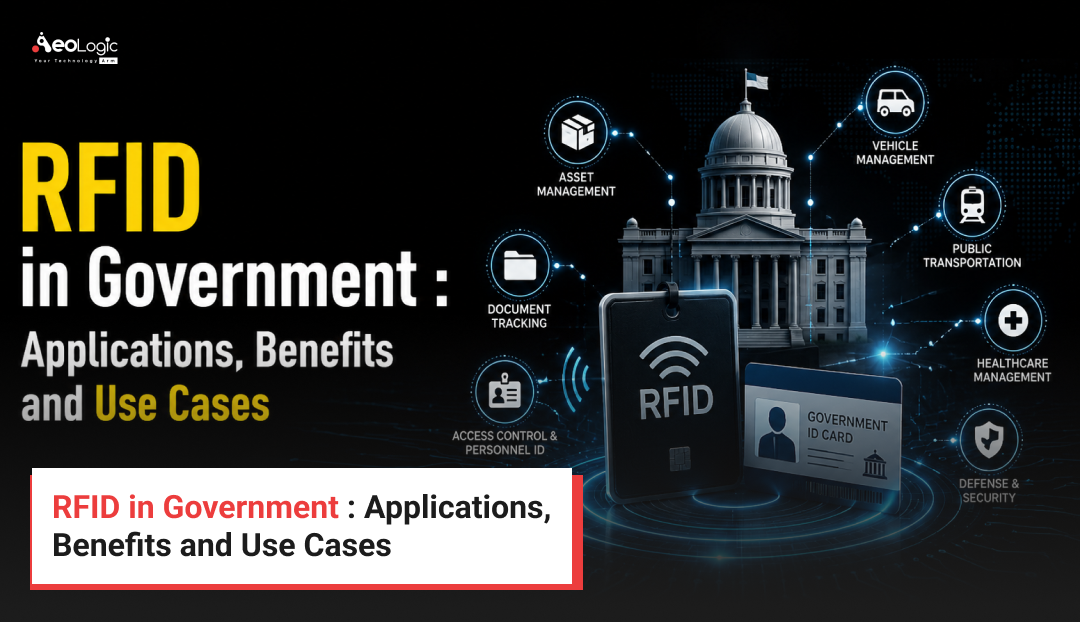
The use of advanced technology is increasingly becoming essential in the effort of governments around the world to become more efficient at providing public services, be they of better quality or more transparent. Of these, RFID in Government has proven itself to be a potent solution for managing assets, tracking resources, streamlining administration and enhancing security in the government sector. Radio Frequency Identification (RFID) technology allows automatic identification and data capture without the use of manual tracking and data entry, using wireless communication between the RFID tags and readers.
Keeping accurate and accountable records is a big challenge for government agencies that deal with a huge volume of assets, documents, vehicles, staff records and public infrastructure. RFID technology can be a solution to these challenges by offering real-time visibility, automation, and enhanced data accuracy. Governments are growing more efficient in the use of RFID, from local governments to defense departments, healthcare to public transportation.
This article explores the major applications, benefits, and use cases of RFID for Government Agencies and explains why public sector organizations are increasingly investing in RFID-enabled solutions.
Understanding RFID Technology in Government Operations
RFID technology is composed of three parts: RFID tags, RFID readers and software systems. The tags are affixed to assets, vehicles, documents or identification cards. Each of these tags has unique information that can be remotely read by RFID readers without a line of sight scan.
With the integration of government information and management platforms, RFID in Government forms an automated ecosystem where the real-time knowledge of resources’ position, condition, movement. The ability to optimize the use of resources, minimize losses, ensure compliance and optimize decision-making processes are among the benefits that this capability offers government agencies. RFID technology offers the public sector the ability to improve efficiency and accountability in a number of administrative processes by giving them real-time access to asset, employee and operations information.
Applications of RFID in Government
RFID for Government Asset Management
There are thousands of assets, such as vehicles, communication devices, furniture, specialized machinery, computers, etc., that are managed by government agencies. It may be tedious and error-prone to track these assets manually.
RFID asset management solutions give real-time visibility of assets locations and usage. Government departments can easily locate lost equipment, track the movement of assets and keep up to date with inventory. It minimizes risk of asset loss, unauthorized use and facilitates accountability between the various departments.
The technology also makes auditing easier, as it allows for quick verification of the assets without going into the detailed manual inspection.
RFID in Government Document Tracking
There are lots of documents, legal records, permits, licenses and administrative files that are handled in government offices and are very sensitive. Loss or delay of records can have a negative effect on delivery of services and operational effectiveness.
Agencies can track the movement of files from their creation to their completion by using document tracking systems with RFID technology. The location of any document, who has been reading it, and its flow from department to department can be known at a moments notice by officials. This is not only more transparent, it’s also less likely for records to be lost or misplaced.
The use of RFID for document tracking also aids complying with the requirements and improves overall record management processes.
RFID for Personnel Identification and Access Control
Security is a prime concern at government buildings. Identification cards with RFID technology aid in access control to secure buildings, restricted areas and operational sensitive zones.
Authorized government employees, contractors and visitors can be issued smart cards with RFID technology that are used for granted access, depending on the preprogrammed permissions. The system automatically logs the time of entering and exiting, providing a more effective security monitoring and staff management.
RFID in Government Vehicle Management
Government agencies have large fleet vehicles that are used in various transportation, emergency response, public works and law enforcement activities. Efficiently managing these fleets is dependent on accurate tracking and monitoring.
The use of RFID technology in vehicle management contributes to optimizing the use of vehicles, increasing operational efficiency, and minimizing administrative expenses.
RFID in Public Transportation Systems
Transit agencies around the world have implemented RFID systems in order to enhance the comfort of the passengers and to better manage the operations. Smart card technology is used to enable contactless fare collection, which helps to shorten transaction times and alleviate congestion.
Transportation authorities can collect valuable data regarding passenger traffic patterns, route utilization, and service performance. This information supports better planning and resource allocation while improving the overall passenger experience.
The technology also eliminates the need for cash handling and improves revenue management processes.
RFID in Healthcare and Public Hospitals
The challenges in government hospital and health care institutions are constant in regards to equipment management, patient tracking, and inventory control. RFID technology plays a crucial role in improving logistics management and supply chain visibility.
RFID can improve the visibility and resource allocation to achieve better patient care and operational efficiency. Healthcare administrators can easily find the essential equipment, avoid shortages, and better adhere to healthcare regulations.
RFID in Defense and Military Operations
Defense organizations manage high-value equipment, weapons, vehicles, and supplies across multiple locations. In the logistics and supply chain, RFID technology is playing a significant role in enhancing logistics management and supply chain visibility.
Military agencies use RFID to track equipment deployment, monitor inventory levels, and manage maintenance schedules. Real time tracking helps mission preparedness and minimises the risk of losing or stealing assets.
The technology also adds to the logistics efficiency by giving accurate information about the location and status of critical resources.
 Benefits of RFID in Government
Improved Operational Efficiency
The automation of routine processes is one of the most important advantage of Government RFID systems. Automated data capture cuts manual loads, speeds things up and reduces administrative delays.
Employees of government offices can concentrate on important work tasks rather than time-consuming non-automated record-keeping and asset tracking tasks. This results in quicker service and higher productivity within the organization.
Enhanced Transparency and Accountability
Transparency is essential for public sector organizations. RFID in Government generates comprehensive audit trails that track all asset movements, document transfers and access events.
This transparency provides government agencies more visibility to keep them accountable, support compliance efforts, and build public trust. Decision-makers have access to timely, accurate information to help them make informed decisions.
Reduced Asset Loss and Theft
There is a significant investment in infrastructure, equipment and technology by government agencies. RFID technology helps protect these investments by providing continuous monitoring and location tracking.
Organizations can easily discover missing assets, unauthorized movements and take corrective actions before losses mount. This can save a lot of money in the long run.
Better Inventory Management
It isn’t always easy to coordinate inventory in a multi-department, multi-facility situation. RFID systems eliminate manual inventory tracking and offer instant information on the level of stock and availability of assets.
Government entities can minimize discrepancies in their inventory, prevent shortages and optimize resource allocation. Complete and up-to-date inventory information also enables better procurement planning.
Faster Audits and Compliance Reporting
Traditional audits often require extensive manual verification processes. RFID technology aids in the streamlining of auditing by allowing for faster and more efficient identification of assets and automated data collection.
Auditors can carry out inspections quicker, and with greater accuracy. Automated reporting capabilities also simplify compliance management and regulatory documentation.
Improved Security and Access Control
The government is using the RFID-based security systems to safeguard the sensitive information, facilities and resources. Controlled access mechanisms ensure that only authorized personnel can enter restricted areas.
Real-time monitoring ensures security teams can detect any anomalies and take immediate action on potential threats. This increases the general organization security.
Real-World Use Cases of Government RFID systems
Smart City Initiatives
Many smart city projects incorporate RFID technology to improve urban management and public services. Waste management, public transportation, parking systems, and public asset tracking are among the many applications of RFID.
The use of RFID in Government programs and initiatives, combined with digital infrastructure, can lead to optimal use of operations, cost savings and improved services for citizens.
Border Control and Immigration Management
Governments use RFID-enabled passports and identification documents to streamline border crossings and improve security. Automated verification process speeds up processing and boosts authentication of identities.
These systems enable that authorities handle a large number of travelers effectively while keeping stern security measures.
Public Library Management
Government-funded libraries use RFID systems to automate book circulation, inventory management, and theft prevention. RFID libraries offer a faster check-in and out process, and enhance the management of resources.
Library staff can devote more of their time to user services, and less to administration, which creates a better user experience.
Emergency Response and Disaster Management
In emergencies, there is a need for quick and correct information about personnel, equipment and supplies from the government agencies. The real-time tracking of emergency resources with RFID technology aids in more rapid response and coordination.
This capability contributes to the effective management of disaster and better outcomes for public safety.
Future of RFID in Government
The future of RFID in government is closely linked with advancements in the Internet of Things (IoT), artificial intelligence, cloud computing, and data analytics. With governments still underway with digital transformation, RFID will play a growing role in connected public sector ecosystems.
More sophisticated RFID systems will deliver more detailed information on asset usage, infrastructure performance and service results. Seamless integration with AI-driven analytics will empower predictive maintenance, intelligent resource deployment, and improved operational planning.
With the spread of smart governance around the globe, the RFID technology will be a key factor in developing effective and transparent government agencies focused on the citizen.
Conclusion
The adoption of RFID in Government is transforming public sector operations by improving efficiency, transparency, security, and resource management. From asset tracking and document management to healthcare, transportation, defense, and smart city initiatives, RFID technology delivers measurable benefits across a wide range of government functions.
As governments strive to modernise their services and accelerate digital transformation, the adoption of RFID technology will continue to play a crucial role in enabling data-driven decision-making, improving operational efficiency, and enhancing citizen services. Partnering with a trusted RFID Solutions Company in India ensures access to advanced technologies, scalable implementations, and industry-specific expertise. Aeologic Technologies helps government agencies and public sector institutions deploy innovative RFID solutions tailored to their unique operational and service delivery requirements.
Frequently Asked Questions (FAQs)
Q1. What is RFID in Government?
RFID Solutions for Government refers to the use of Radio Frequency Identification technology by government agencies to automatically identify, track, and manage assets, documents, vehicles, personnel, and public infrastructure. RFID helps improve operational efficiency, transparency, and security through real-time data collection and tracking.
Q2. How is RFID used in government asset management?
Government organizations use RFID tags and readers to track assets such as computers, office equipment, vehicles, and machinery. RFID enables real-time asset visibility, reduces losses, simplifies audits, and helps maintain accurate inventory records across departments and facilities.
Q3. What are the main benefits of RFID Solutions for Government?
The primary benefits of RFID Solutions for Government include improved operational efficiency, enhanced transparency, better inventory management, reduced asset theft and loss, faster auditing processes, stronger security, and more accurate data collection for decision-making.
Q4. Can RFID improve security in government facilities?
Yes, RFID significantly improves security by enabling access control systems that restrict entry to authorized personnel only. RFID-enabled identification cards can track entry and exit activities, monitor restricted areas, and create detailed audit trails for enhanced security management.
Q5. Which government sectors commonly use RFID technology?
RFID technology is widely used across various government sectors, including public administration, transportation, healthcare, defense, law enforcement, municipal services, libraries, border control, and smart city initiatives. Its versatility makes it suitable for numerous public sector applications.
Q6. What is the future of RFID Solutions for Government?
The future of RFID Solutions for Government is expected to involve greater integration with IoT, artificial intelligence, cloud platforms, and data analytics. These advancements will enable smarter asset management, predictive maintenance, automated workflows, and more efficient delivery of public services.

With a strong foundation in software and a growing expertise in AI, I specialize in building smart, scalable solutions that drive digital transformation