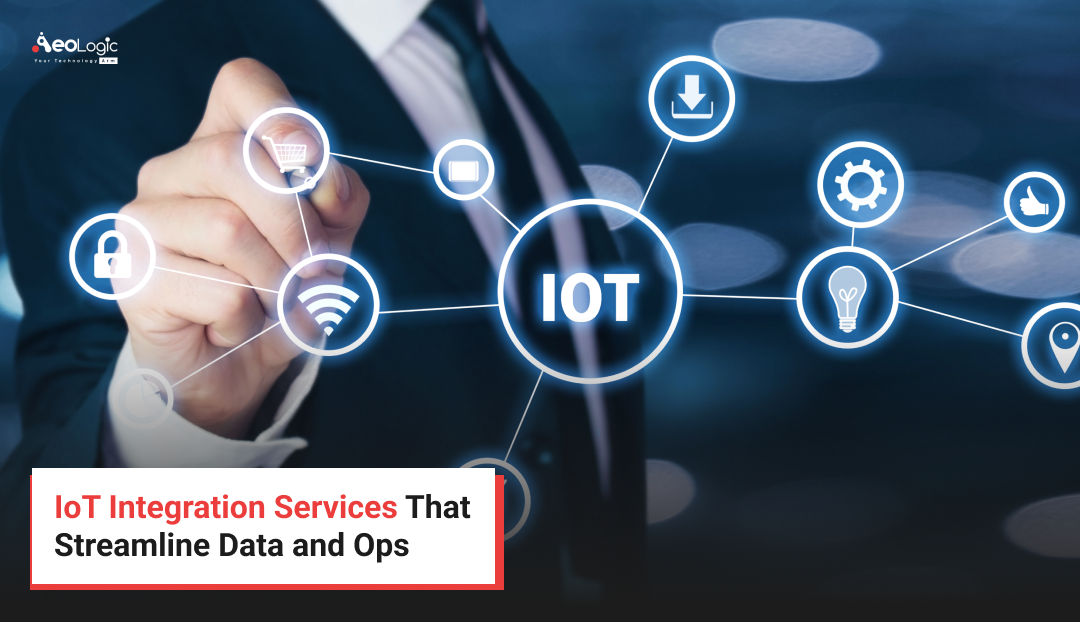
Data is all around modern businesses, flowing from machines, applications, sensors, and digital platforms every second. Yet, despite this abundance, many organizations still struggle to turn raw information into meaningful operational insights. The challenge is rarely a lack of technology. Instead, it stems from disconnected systems, fragmented platforms, and devices that do not communicate effectively. This is where IoT Integration Services play a critical role—bridging gaps between data sources, enabling seamless connectivity, and transforming scattered data into actionable intelligence that drives smarter operations.
IoT Integration Services become crucial in this situation. Businesses can integrate their entire ecosystem into a single, intelligent network rather than running disparate sensors, standalone apps, and compartmentalised databases. Faster decisions, lower costs, and more intelligent automation are made possible by seamless data flow across operations when IoT systems are properly integrated.
IoT integration is now a necessary upgrade for everything from manufacturing floors and logistics networks to healthcare systems and smart cities. It is the backbone of efficient digital operations.
Comprehending IoT Integration Services
IoT Integration Services: An Overview
The process of integrating IoT devices, sensors, platforms, apps, and enterprise systems into a single operational framework is known as IoT Integration Services. Every component communicates with every other component in real time rather than operating independently.
IoT integration fundamentally closes the gap between digital systems and physical devices. Sensors gather information from devices, surroundings, or resources. Networks are used to transfer that data, which is then processed by platforms and sent to business applications like dashboards, analytics tools, ERP, and CRM.
IoT data is isolated and underutilised in the absence of appropriate integration. It becomes actionable intelligence with integration.
The Distinction Between IoT Integration and IoT Deployment
Installing sensors is necessary for IoT device deployment. Integration goes much further.
IoT Integration Services guarantee:
- Device data is usable and standardised.
- Platforms can interact with each other without any problems.
- Modern IoT solutions coexist with legacy systems.
To put it simply, integration converts data into operational value, whereas deployment gathers data.
 Why IoT Integration Services Are Important in the Modern World
Increasing Digital Operations Complexity
Today’s businesses use a variety of platforms, locations, and technologies. A manufacturing company may use mobile apps for field teams, on-premise ERP systems, cloud platforms for analytics, and sensors on machines. These systems function independently in the absence of integration.
By guaranteeing that every system speaks the same language, IoT Integration Services simplify this complexity.
Making Decisions in Real Time Is Now Required
The markets move quickly. Missed opportunities, inventory shortages, and production downtime can result from data sharing delays. Real-time visibility across operations is provided by integrated IoT ecosystems, enabling leaders to take immediate action rather than waiting too long.
Automation and Smart Operations’ Ascent
Accurate, real-time data is essential for automation. Workflows, software, and machines can all initiate actions automatically thanks to IoT integration services. This lessens the need for manual intervention and enhances process consistency.
Gaining a Competitive Edge with Operational Intelligence
Businesses that successfully incorporate IoT systems obtain insights that others are unable to. They have a deeper understanding of supply chain movements, energy consumption, customer behaviour, and equipment performance. Profitability and scalability are directly impacted by this intelligence.
IoT Integration Services’ Principal Advantages
Consolidated Information Throughout the Company
Centralised data access is one of the main benefits of IoT Integration Services. Integration produces a single source of truth rather than dispersed data across several platforms.
This permits:
- Precise reporting
- Improved prediction
- Making decisions consistently across departments
Enhanced Efficiency in Operations
Processes become quicker and more effective when IoT data is seamlessly integrated into business systems. Alerts are sent to maintenance teams prior to malfunctions. Systems for inventory automatically update. Real-time changes are made to logistics routes.
Manual monitoring is no longer necessary for efficiency.
Lower Operating Expenses
Inefficiencies like energy waste, excessive equipment use, or idle assets can be found with the aid of integrated IoT ecosystems. Companies can minimise wasteful spending and maximise resource utilisation.
By averting unplanned malfunctions, predictive maintenance on its own can save businesses a substantial amount of money.
Improved Scalability
Scaling operations is made simpler by IoT Integration Services. It is possible to add new systems, locations, or devices without interfering with current workflows. As the company expands, integration frameworks guarantee steady performance.
Improved Client Experiences
Customer-facing services automatically improve when backend operations are streamlined. Integrated IoT systems lead to faster deliveries, precise order tracking, customised services, and better product quality.
How IoT Integration Services Operate in Actual Business Settings
Linking Platforms and Devices
Connecting devices to centralised platforms is the first stage of IoT integration. Using protocols like MQTT, HTTP, or CoAP, sensors, machines, and smart equipment send data through gateways.
Integration services guarantee secure and dependable data collection.
Processing and Normalisation of Data
IoT data in its raw form is frequently available in various formats. This data is standardised by integration layers so that enterprise systems and analytics tools can use it.
For applications to be accurate and consistent, this step is essential.
Connecting to Enterprise Systems
Data streams are connected to ERP, CRM, SCM, and other enterprise platforms through IoT integration services. This makes it possible for real-time data to impact business operations like customer service, production scheduling, and procurement.
Workflow Enablement and Automation
Automation rules can be used after systems are integrated. For instance:
- A maintenance work order is initiated by a machine alert.
- Automatic replenishment is triggered by inventory levels
- Safety procedures are triggered by temperature variations.
IoT data is transformed into instantaneous action through automation.
IoT Integration Services’ Industry Applications
Production and Industrial Activities
One of the main industries that benefits from IoT Integration Services is manufacturing. Predictive maintenance, production optimisation, quality control, and energy management are all made possible by integrated systems.
By communicating with maintenance systems, machines increase throughput and decrease downtime.
Medical Systems and Healthcare
IoT Integration Services are used by healthcare organisations to link hospital information platforms, medical devices, and patient monitoring systems. Integrated data facilitates remote monitoring, lowers errors, and enhances patient care.
Smart commerce and retail
IoT sensors, point-of-sale systems, inventory software, and customer analytics tools are all integrated by retailers. This enables automated stock management, personalized experiences, and optimized store operations.
Utilities and Energy
For grid monitoring, consumption control, and fault detection, energy providers depend on integrated IoT systems. Improved energy efficiency and dependable service delivery are guaranteed by integration.
IoT Integration Services Powered by Technologies
Edge and Cloud Computing
While edge computing processes data closer to the source, cloud platforms store and analyse IoT data at scale.
Middleware and APIs
Middleware and APIs serve as links between enterprise systems and devices. They facilitate smooth cross-platform data exchange and communication.
Analytics and Visualisation of Data
Analytics engines that deliver insights through dashboards and reports are fed by integrated IoT data. This makes it easier for decision-makers to recognise patterns and trends.
Frameworks for Data Governance and Security
An essential part of IoT integration services is security. Data is kept safe throughout the ecosystem thanks to encryption, access control, and compliance measures.
IoT Integration Difficulties and Solutions
Handling Data Silos
Disjointed systems are a problem for many organizations. By standardizing data flows, a well-designed integration architecture dismantles silos.
Maintaining Compliance and Security
New security risks are introduced by IoT systems. To prevent breaches, integration services must incorporate strong security measures and ongoing monitoring.
Including Legacy Systems
Older systems may not support modern IoT protocols. Integration layers and custom connectors help bridge this gap without replacing existing infrastructure.
Managing Performance and Scalability
Systems must scale effectively as data volume increases. Even with high workloads, cloud-native integration frameworks guarantee steady performance.
Top Techniques for Effective IoT Integration Services
Establish Specific Business Goals
IoT integration should be in line with particular business objectives like lowering costs, increasing productivity, or improving customer satisfaction.
Select the Appropriate Integration Architecture
Long-term scalability is ensured by choosing the appropriate combination of cloud, edge, and middleware technologies.
Make security a top priority right away
Instead of being added after the fact, security should be incorporated into each layer of the integration process.
Begin Small and Increase Gradually
Before implementing integration strategies on a large scale, companies can test them through pilot projects.
IoT Integration Services: Upcoming Trends
Integration strategies are evolving from basic connectivity to intelligent, self-optimizing ecosystems as businesses become more data-driven.
IoT Integration Driven by AI
An increasingly important part of IoT Integration Services is artificial intelligence. Integrated systems can now learn from data rather than just transmit and store it. Without human assistance, AI models identify trends, forecast results, and initiate automated reactions.
For instance, AI-powered IoT integration in manufacturing can automatically schedule maintenance and forecast equipment failures days in advance. AI has the ability to evaluate route data in logistics and dynamically optimize deliveries in real time.
Increased Use of Edge Intelligence
More processing is getting closer to devices, even though cloud computing is still crucial. IoT data can be processed locally thanks to edge intelligence, which lowers latency and bandwidth consumption.
IoT Integration Services are increasingly built to support hybrid architectures, in which long-term analytics and storage are kept in the cloud while crucial decisions are made at the edge.
Unification of IoT Ecosystems
Standardization is becoming more important as IoT adoption increases. Integrating devices from various vendors is made simpler by open standards and interoperable frameworks.
Organizations can scale IoT initiatives without being restricted to a single provider thanks to this trend, which lessens reliance on proprietary systems.
Increased Attention to Data Privacy and Compliance
Globally, regulations pertaining to data privacy are getting more stringent. Future IoT integration services will prioritize compliance, auditability, and governance.
Integration frameworks that offer transparency and control over data collection, storage, and sharing will become more and more important to businesses.
Advanced Simulation and Digital Twins
Digital twin technology is becoming more popular in many sectors. Before putting changes into practice in the real world, organizations can test them, simulate scenarios, and optimize operations by incorporating IoT data into virtual models.
IoT Integration Services are essential for providing these digital twins with precise, up-to-date data.
Practical Advice for Companies Using IoT Integration Services
Evaluate Your Readiness for Integration
Organizations should assess their existing infrastructure before making an investment in IoT integration. Determining a practical integration roadmap requires an understanding of current systems, data sources, and operational difficulties.
Put Value First, Not Just Technology
Every integration endeavor should directly contribute to quantifiable objectives like decreased downtime, quicker reaction times, or higher customer satisfaction.
Develop Cross-Functional Cooperation
IT, operations, finance, and leadership teams are all impacted by IoT integration. Cooperation between departments prevents fragmented implementations and guarantees alignment.
Make a Long-Term Scalability Investment
Integration frameworks should be adaptable enough to support new devices, emerging technologies, and changing business requirements.
IoT Integration Services’ Strategic Function in Digital Transformation
IoT Integration Services are no longer stand-alone IT initiatives. They serve as the cornerstone of industry-wide digital transformation initiatives. By connecting physical assets with digital intelligence, organizations gain unprecedented visibility and control over operations.
IoT ecosystems that are integrated allow:
- Every level of decision-making based on data
- Quicker cycles of innovation
- Enhanced resistance to interruptions
- Eco-friendly and effective operations
Businesses that don’t incorporate IoT systems run the risk of falling behind rivals who use automated workflows and real-time intelligence as digital maturity rises.
Conclusion
Disconnected systems are a liability in a world where data drives all strategic decisions. By converting dispersed data into insightful knowledge and automated action, IoT Integration Services fill the gap between platforms, devices, and business operations.
IoT integration helps businesses run more effectively, cut expenses, and scale with confidence by simplifying data flow, providing real-time visibility, and fostering intelligent automation. It is not just about connecting devices—it is about creating a cohesive digital ecosystem that supports long-term growth.
Aeologic Technologies offers extensive experience in creating connected solutions that match technology with actual operational objectives for companies wishing to put strong and scalable IoT integration strategies into practice.
Frequently Asked Questions
Q1. What is the purpose of IoT Integration Services?
IoT platforms, enterprise systems, and devices are all connected into a single ecosystem through IoT integration services. They facilitate smooth data transfer, automation, real-time monitoring, and well-informed decision-making throughout corporate operations.
Q2. In what ways do IoT Integration Services enhance operational effectiveness?
Organisations can automate workflows, anticipate problems before they arise, and do away with manual processes by integrating IoT data with business systems. Faster operations and less downtime result from this.
Q3. Do small businesses benefit from IoT integration services?
It is possible to scale IoT integration services to accommodate companies of all sizes. Small businesses often start with focused use cases and expand integration as their operations grow.
Q4. What challenges do companies face during IoT integration?
Data silos, security issues, compatibility with legacy systems, and scalability problems are common problems. A structured integration approach helps overcome these obstacles.
Q5. How secure are IoT Integration Services?
An essential element of IoT integration is security. Encryption, access controls, and continuous monitoring are used to protect data and ensure compliance with regulations.
Q6. Are IoT Integration Services compatible with current systems?
Indeed, integration frameworks are designed to connect modern IoT platforms with legacy systems through APIs and middleware, avoiding the need for complete system replacement.
Q7. What prospects do IoT Integration Services have for the future?
AI-driven automation, edge intelligence, standardised frameworks, and deeper integration with digital transformation projects are all part of the future of IoT integration services.

Manoj Kumar is a seasoned Digital Marketing Manager and passionate Tech Blogger with deep expertise in SEO, AI trends, and emerging digital technologies. He writes about innovative solutions that drive growth and transformation across industry.
Featured on – YOURSTORY | TECHSLING | ELEARNINGINDUSTRY | DATASCIENCECENTRAL | TIMESOFINDIA | MEDIUM | DATAFLOQ