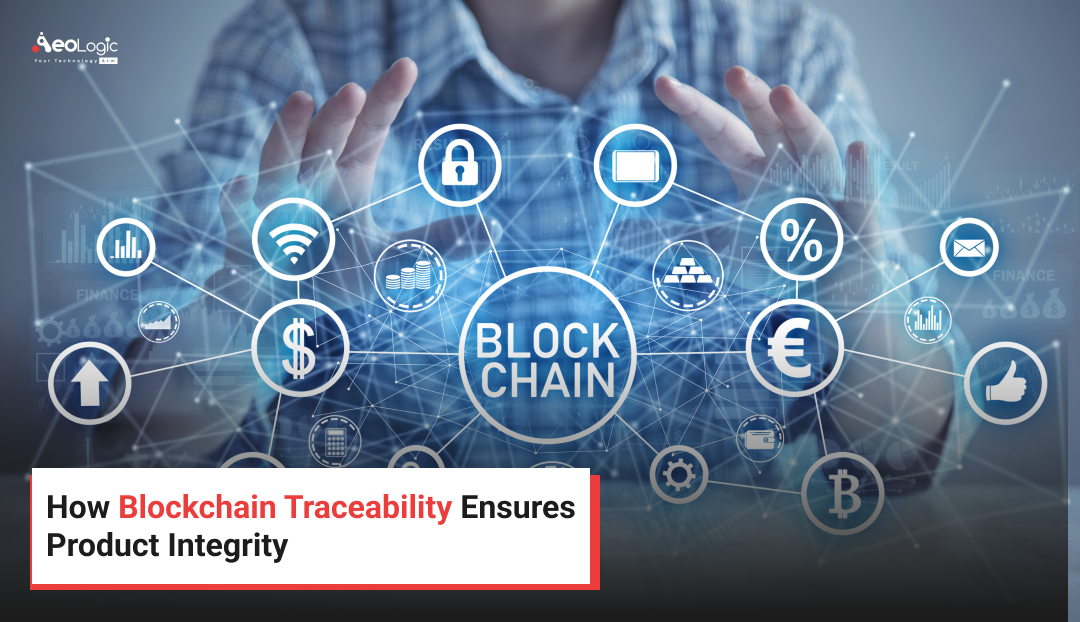
Product integrity has become a crucial concern for both businesses and consumers in today’s interconnected and rapidly evolving global economy. Organisations are constantly under pressure to demonstrate the provenance, handling, and authenticity of products, ranging from food and pharmaceuticals to luxury goods and industrial equipment. Because they rely on manual records, siloed databases, or middlemen who may introduce errors or manipulation, traditional tracking systems frequently fall short. Blockchain traceability is no longer an option as customer expectations rise and regulatory requirements become more stringent.
Here, Blockchain Traceability is revolutionising how companies guarantee accountability, transparency, and trust throughout supply chains. Blockchain allows businesses to confirm product integrity from point of origin to final customer by generating a shared, tamper-proof record of product movement and transformation.
Blockchain Traceability: An Overview
The use of blockchain technology to monitor and document a product’s entire lifecycle throughout the supply chain is known as “blockchain traceability.” Every event is documented as a transaction on a distributed ledger, including sourcing, manufacturing, transportation, storage, and delivery.
Blockchain records are immutable, which means that once data is written, it cannot be changed or removed, in contrast to traditional databases. This guarantees consistent and verifiable product information by establishing a single source of truth that is available to authorised stakeholders.
Practically speaking, blockchain traceability enables companies to provide prompt answers to important queries:
- Where did this product come from?
- At every stage, who was in charge of it?
- Was it transported or stored in an appropriate manner?
- Has it been changed, replaced, or faked?
By providing end-to-end visibility, blockchain traceability strengthens product integrity and builds trust across the value chain.
 The Significance of Blockchain Traceability in the Modern World
The complexity of global supply chains has increased. A single product may be manufactured in one nation, distributed throughout several regions, and have raw materials sourced from another. The likelihood of fraud, counterfeiting, poor quality, and compliance problems is increased by this complexity.
Customers are also growing more aware and knowledgeable. They want to know if products are sourced ethically, where their food comes from, and whether medications are genuine. Additionally, governments and regulatory agencies are imposing more stringent reporting and traceability regulations.
These issues are addressed by blockchain traceability, which provides:
- Openness in intricate, multi-party supply networks
- Accountability via unchangeable documentation
- Quicker handling of disputes, audits, and recalls
- Increased consumer confidence with verifiable data
In industries where product integrity can directly impact health, safety, and brand reputation, blockchain traceability is becoming a cornerstone of operational resilience.
How Product Integrity Is Ensured by Blockchain Traceability
When a product maintains its authenticity, safety, and compliance throughout its lifecycle, it is said to have product integrity. Product integrity is strengthened by blockchain in a number of important ways.
On a blockchain, each transaction is time-stamped and protected by cryptography. This keeps historical data intact and stops unauthorised changes. The precise point of failure can be promptly determined if a product is compromised at any point.
Additionally, blockchain traceability removes the need for a single governing body. Rather, data is distributed throughout a decentralised network, which lowers the possibility of data silos or manipulation. All parties involved—from manufacturers and suppliers to distributors and regulators—are guaranteed to be in agreement on the same verified information thanks to this shared visibility.
When combined with technologies such as IoT sensors, RFID, and QR codes, blockchain traceability provides real-time insights into product conditions, further strengthening integrity and compliance.
Principal Advantages of Blockchain Traceability
Increased supply chain transparency
Blockchain traceability provides a clear, end-to-end view of product movement. Without depending on disjointed systems or manual reconciliation, stakeholders can track every stage of the process.
More robust defence against fraud and counterfeiting
In sectors like electronics, luxury goods, and pharmaceuticals, counterfeit goods are a serious threat. By connecting goods to unchangeable digital records, blockchain allows for immediate authenticity verification.
Accurate and quicker recalls
Businesses are able to promptly identify impacted batches and locations when a quality issue occurs. This reduces recall expenses, safeguards consumers, and minimises harm to one’s reputation.
Enhanced adherence to regulations
Many regulations require detailed traceability records. By preserving auditable, tamper-proof documentation that regulators can rely on, blockchain streamlines compliance.
A rise in customer confidence
Brands can exhibit authenticity, sustainability, and ethical sourcing—all of which are important factors in today’s purchasing decisions—by providing consumers with verified product information.
How Companies Utilise Blockchain Traceability
Companies incorporate blockchain traceability into their current supply chain processes. Every stakeholder keeps track of pertinent information when they interact with the product.
A raw material supplier, for instance, records the materials’ quality and place of origin. A manufacturer keeps track of batch numbers and production information. Logistics providers add transportation and storage data. Retailers confirm delivery and availability.
The blockchain creates a continuous chain of custody by securely connecting all of this data. Authorized users can access real-time or historical data as needed, ensuring transparency and accountability without compromising data security.
Blockchain Traceability Applications in Industry
Agriculture and food
Blockchain traceability in the food industry guarantees food authenticity, quality, and safety. From farm to fork, every step is recorded, helping prevent contamination, fraud, and mislabeling.
Medicines and medical care
In order to prevent counterfeit medications and guarantee patient safety, blockchain traceability is essential. Throughout the supply chain, it enables stakeholders to confirm the provenance, handling, and authenticity of medications.
Manufacturing and industrial products
Manufacturers use blockchain traceability to track components, ensure quality control, and meet compliance requirements. It also supports predictive maintenance and warranty validation.
Fashion and luxury goods
Authenticity is a key component of brand value in luxury markets. Customers can confirm the origin and ownership of products thanks to blockchain traceability, which lowers gray market and counterfeiting activity.
Global trade and logistics
Blockchain traceability increases trust between trading partners in global supply chains, decreases delays, and improves documentation accuracy.
Blockchain Traceability-Enabling Technologies
It functions best when paired with complementary technologies that gather and send data from the real world.
Real-time environmental data, including temperature, humidity, and location, is provided by IoT sensors. Products are uniquely identified by RFID and NFC tags, which also automate data collection. QR codes make it simple for partners and customers to obtain traceability data.
Smart contracts automate processes such as compliance checks, payments, or alerts when conditions deviate from predefined standards. When combined, these technologies form a strong ecosystem that guarantees the integrity of the product.
Implementing Blockchain Traceability Presents Difficulties
Blockchain traceability has benefits, but there are drawbacks that businesses need to carefully consider.
Data accuracy at the point of entry is one prevalent problem. Although blockchain guarantees data immutability, it is unable to confirm the accuracy of the data entered. Poor data quality can undermine the entire system.
Another difficulty is integrating with legacy systems. Many businesses rely on existing ERP, WMS, or SCM platforms that were not designed for blockchain connectivity.
Performance and scalability issues can also arise, particularly in large supply chains with high transaction volumes. Stakeholders may also be reluctant to share data because of mistrust or worries about confidentiality.
Realistic Solutions for Typical Problems
Businesses should concentrate on a phased and cooperative approach to guarantee the successful adoption of blockchain traceability.
Data integrity can be improved by automating data capture using IoT, RFID, or barcode scanning, reducing manual input errors. Clear data standards and validation rules also help maintain consistency.
APIs and middleware that link blockchain platforms with current enterprise systems can solve system integration issues. Selecting scalable blockchain frameworks guarantees flexibility and long-term performance.
Organizations should establish explicit governance models, access controls, and incentives in order to overcome stakeholder resistance. Permissioned blockchains enable controlled data sharing, so transparency does not entail disclosing private information.
Top Techniques for Effective Blockchain Traceability
Effective blockchain traceability requires strong governance. Companies should clearly define data ownership, roles, and responsibilities throughout the network.
Prior to scaling, it is helpful to validate assumptions and show value by starting with a pilot project. Selecting the right use case—such as high-value or high-risk products—maximizes early impact.
Another important component is cooperation. As crucial as the technology itself is fostering alignment and trust among partners.
Regular audits, performance monitoring, and continuous improvement ensure that the traceability system remains accurate, secure, and aligned with business goals.
Blockchain Traceability’s Future Trends
Blockchain traceability’s future is intimately related to more general trends in digital transformation. As AI and advanced analytics integrate with blockchain data, businesses will gain predictive insights rather than just historical visibility.
Applications for consumer-facing traceability will keep expanding, giving consumers access to verified product details via smart labels or mobile apps. Sustainability and ESG reporting will also drive adoption, as organizations seek credible ways to prove ethical sourcing and environmental responsibility.
Another new trend is blockchain network interoperability, which enables cross-border and cross-industry traceability. Blockchain will become more scalable and accessible for companies of all sizes as standards develop.
Conclusion
In a world that is becoming more complicated and transparent, blockchain traceability has become a potent way to guarantee product integrity. It tackles persistent issues with fraud, compliance, and inefficient supply chains by providing immutable records, real-time visibility, and shared trust.
Businesses that invest now will be in a better position to satisfy legal requirements, win over customers, and prepare for the future. Blockchain traceability becomes more than just a tracking tool with the correct approach, technology integration, and teamwork; it becomes a basis for operational excellence and trust.
Companies like Aeologic Technologies are helping businesses navigate this transformation by delivering innovative digital solutions that align blockchain traceability with real-world operational needs.
Frequently Asked Questions
Q1. What is the purpose of blockchain traceability?
Products are tracked throughout the supply chain using blockchain traceability, which increases visibility, accountability, and trust among all involved parties while guaranteeing transparency, authenticity, and product integrity.
Q2. How is counterfeiting prevented by blockchain traceability?
It enables instantaneous verification of origin and authenticity, preventing data alteration and swiftly and reliably exposing counterfeit goods by establishing immutable records linked to each product.
Q3. Can small businesses benefit from blockchain traceability?
Yes, small and medium-sized businesses can access blockchain thanks to scalable blockchain platforms and focused use cases, which facilitate cost-effective adoption, increased operational efficiency, and enhanced market credibility.
Q4. Does blockchain traceability take the place of current systems?
Instead of replacing current ERP and supply chain systems, blockchain enhances data transparency, auditability, and interoperability without interfering with established operational workflows.
Q5. How secure is blockchain traceability?
Blockchain ensures data integrity across distributed and trusted networks by utilising cryptographic security and decentralised architecture, which makes it extremely resistant to manipulation and unauthorised changes.
Q6. Which sectors stand to gain the most from blockchain traceability?
It has major advantages for the food, pharmaceutical, manufacturing, logistics, and luxury goods industries, especially in terms of compliance, quality control, safety assurance, and fraud prevention.
Q7. Is blockchain traceability data accessible to consumers?
Indeed, customers can access verified product information stored on the blockchain through digital interfaces or QR codes, boosting transparency, confidence, and trust in purchasing decisions.

Manoj Kumar is a seasoned Digital Marketing Manager and passionate Tech Blogger with deep expertise in SEO, AI trends, and emerging digital technologies. He writes about innovative solutions that drive growth and transformation across industry.
Featured on – YOURSTORY | TECHSLING | ELEARNINGINDUSTRY | DATASCIENCECENTRAL | TIMESOFINDIA | MEDIUM | DATAFLOQ