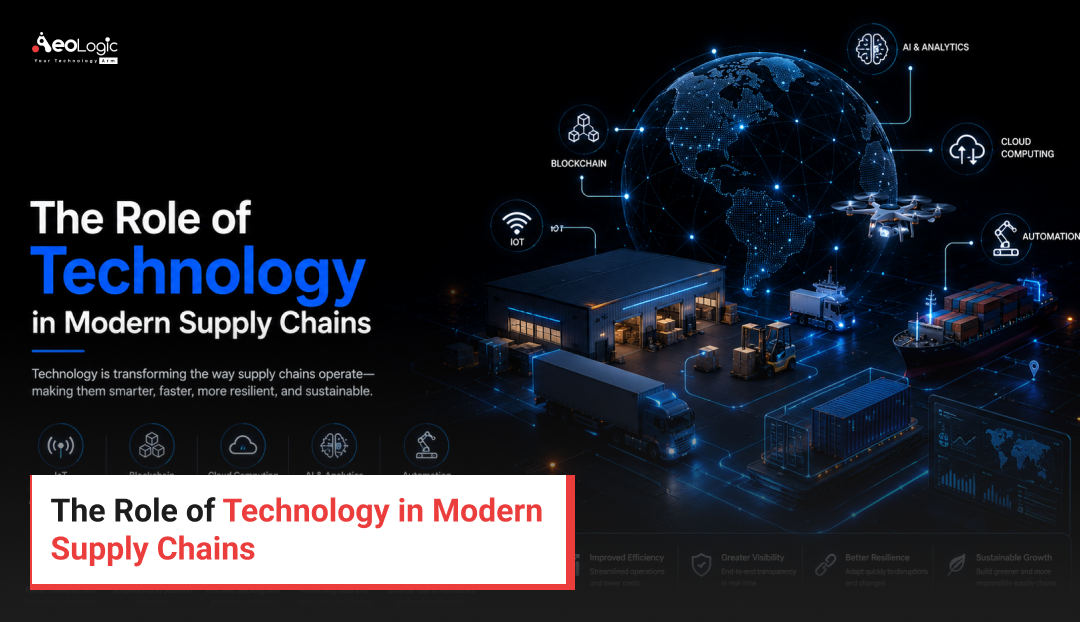
Today, supply chains are no longer just logistics and transportation assets, but are part of a highly competitive and interdependent business world. In order to deliver these expectations, companies and organizations are turning to digital transformation for their supply chain operations. The growing importance of Technology in Modern Supply Chains has fundamentally changed how organizations plan, source, manufacture, distribute, and monitor goods.
Technology like Artificial Intelligence (AI), Internet of Things (IoT), cloud computing, blockchain, robotics, and data analytics are helping businesses create smarter, agiler, and very efficient supply chain ecosystems.
Understanding Modern Supply Chains
A supply chain is a series of suppliers, manufacturers, warehouses, transportation companies, distributors and retailers who are all connected and provide products and services to customers. Historically, the supply chain operated mainly in a siloed fashion, with manual methods, paper paperwork and a lack of visibility of the inventory and logistics processes.
But the growing customer expectations, global sourcing networks and unpredictable disruptions have cast a spotlight on the need for smarter and more agile supply chain systems. Technology is key to achieving these objectives, providing stakeholders with real-time visibility, automation, predictive insights, and improved collaboration.
Today supply chains are data-driven ecosystems, with information moving freely through all elements of the chain, which enables companies to make well-informed decisions and enhance the performance of their value chain.
Why Technology in Modern Supply Chains Matters?
Technology has emerged as a key element for achieving operational excellence in businesses. An investment in digital supply chain solutions equates to improved control of operations, increased resilience, and better customer experiences.
The relevance of Technology in the Modern Supply Chains is that it can remove inefficiency, minimize manual input, and furnish exact and real-time data. Organizations can monitor the products from the manufacturing plants to the end customers, anticipate possible disruption, optimize inventory levels, and enhance the relationship with the suppliers.
With the increasing complexity of global supply chains, technology is the basis for transparency, flexibility, and sustainability.
Artificial Intelligence and Machine Learning in Supply Chains
AI and Machine Learning are among the most powerful technologies that are revolutionizing how businesses manage today’s supply chain. These technologies can help businesses process and interpret huge amounts of data, and provide actionable intelligence to support decision-making processes.
AI algorithms leverage on past data, seasonal trends, and market conditions to continuously refine and enhance their forecasting accuracy.
Also, AI can be used for route optimization, warehouse management, procurement planning and risk assessment. The ability of automating repetitive tasks and boosting predictive capability will help organizations to operate more efficiently and save on costs.
Internet of Things (IoT) for Real-Time Visibility
The Internet of Things has had a significant impact on enhancing visibility in supply chains, bringing physical assets onto a digital network. Location, temperature, humidity and operational data is continuously gathered and passed on by a sensor embedded in vehicles, containers, machinery, and products.
The real-time data allows businesses to track shipments in real time and detect any problems early on. In sectors like pharmaceuticals, food and beverage, and the healthcare industry, IoT technology is vital for guaranteeing product quality by ensuring optimal storage and transport conditions.
IoT technology can give businesses end-to-end visibility, thereby optimizing inventory management, minimizing loss and boosting customer satisfaction.
 Cloud Computing and Supply Chain Collaboration
The way that supply chain partners share information and collaborate has been transformed by cloud computing. In traditional systems, the communication flow between suppliers, manufacturers and distributors was often difficult and time consuming, and there was often no integration.
Cloud-based platforms are used to consolidate supply chain information and to give authorized parties across the globe access to that information in a secure way. This allows for easy communication, quicker decision making and better coordination throughout the supply chain network.
With cloud technology, organizations can rapidly scale their operations, save infrastructure costs, and leverage state-of-the-art analytics tools, with little or no investment in on-premises infrastructure.
Big Data Analytics for Better Decision-Making
One of the most important assets in today’s supply chains is data. Each transaction, shipment, customer touchpoint and activity creates data that could be used to optimize performance.
By leveraging big data analytics, insights can be gained on patterns, inefficiencies, and data-driven decision-making within organizations. Businesses can analyze supplier performance, optimize transportation routes, forecast demand fluctuations, and assess operational risks more effectively.
By incorporating analytics into supply chain management, businesses can make proactive decisions, preparing them for market shifts and customer expectations.
Blockchain Technology and Supply Chain Transparency
The supply chain is a vital asset for effective management and transparency and trust are essential elements. The blockchain technology solves the above problems by providing a secure, decentralized and immutable record of transactions.
All transactions on a blockchain can be traced and verified, which increases transparency and traceability of products over their lifecycle. This is especially beneficial in sectors where authenticity and compliance are critical for products.
Blockchain helps to trace goods, prevents fraud, increases supplier accountability, and boosts trust among supply chain stakeholders. With businesses seeking transparency, the adoption of blockchain is likely to increase considerably in the coming years.
Automation and Robotics in Warehousing
Warehouses are becoming more and more automated, and companies are looking to cut down on their expenses and increase efficiency. Warehouse automation and robotics are changing the way warehouses work, making repetitive and labor-intensive jobs more efficient.
The automated guided vehicles, robotic picking systems, and smart sorting solutions enable warehouses to process orders quickly and accurately. These technologies eliminate human error, boost productivity, and allow business to process larger volumes at a lower cost of labor.
Warehouse automation will continue to play a crucial role in the efficiency and competitiveness of supply chain management in the years to come, especially with the growing importance of e-commerce.
Digital Twins and Supply Chain Simulation
Digital twin technology generates virtual copies of tangible assets, processes, and networks in the supply chain. It enable companies to detect bottlenecks, simulate what will happen in case of a disaster, optimize production timelines, and enhance resource management. This technology will improve strategic planning and aid in better decision making.
Visualization and modeling of complex operations in a supply chain are becoming more important in today’s fast-changing business world.
Enhancing Supply Chain Resilience Through Technology
Disruptions to the world have made it clear that supply chain resiliency matters. Natural hazards, political issues, epidemics and economic instability can have a substantial effect on the functioning of the supply chain. The benefits of technology include its ability to enable organizations to create resilient supply chains through real-time monitoring, predictive analytics, and risk management.
Thanks to the use of sophisticated digital tools, businesses are able to quickly adapt to unforeseen challenges and continue operations.
Sustainability and Green Supply Chains
Organizations all over the world are making sustainability a top priority. Consumers, stockholders and regulators are demanding that businesses reduce their environmental footprint and be responsible.
Through technology, the sustainable supply chain efforts can be supported to manage resources, reduce wastes and improve the efficiency of transportation. Advanced analytics provides organizations with a way to track carbon footprints, optimize energy usage and uncover carbon emission reduction opportunities.
Technology-based sustainability strategies, apart from the benefits to the environment, can also positively impact the brand’s reputation and future profitability.
Challenges in Adopting Technology in Modern Supply Chains
Though it has several benefits, there are also some challenges in introducing new technologies in the supply chains. Familiarity with legacy systems, security threats, data quality problems, and employee preparedness are common concerns that organizations encounter.
The startup costs to implement digital transformation can also be challenging, especially for SMEs. Furthermore, effective leadership, training of employees and good change management practices are necessary to ensure technology is adopted successfully.
Before adopting new technologies, businesses need to thoroughly consider their goals, infrastructure, and operations to ensure they get the most out of their investment.
The Future of Technology in Modern Supply Chains
Intelligent technologies and connected ecosystems will be the primary drivers of the future of supply chain management. Artificial Intelligence, autonomous vehicles, advanced robotics, 5G connectivity, edge computing, and predictive analytics will continue to transform supply chain operations.
Organizations will be more agile, resilient, and customer-centric in their supply chains and adapt to market demands quickly. Real time decisions, hyper automation and end-to-end visibility will be commonplace in today’s supply chain network.
In an era of digital transformation, companies that adapt and innovate will be more likely to excel in their operations and ensure sustainable growth.
Conclusion
As the significance of Technology in Modern Supply Chains is increasing, the way business contends with fluctuations, manages operations and provides service to customers is being transformed. Organizations are using technology to create smarter, faster and more resilient supply chain ecosystems, with Artificial Intelligence and IoT as the most recent addition, as well as blockchain, cloud computing and robotics.
The current trend of growing complexity of the supply chain makes the use of digital technologies essential to stay competitive. When your company is in the quest to modernize their supply chain processes and adopt cutting-edge digital solutions, Aeologic Technologies can help you implement advanced technologies that foster efficiency, transparency, and sustainable growth. Talk to us today to learn how we can change your supply chain for the future.
Frequently Asked Questions (FAQs)
Q1. What is the role of technology in modern supply chains?
Technology in modern supply chains improves visibility and operational control. It helps businesses automate workflows and streamline logistics activities. Companies can track shipments in real time and manage inventory more effectively. Technology also supports faster decision-making and reduces operational costs. As a result, organizations can respond quickly to changing customer and market demands.
Q2. How does Artificial Intelligence improve supply chain management?
Artificial Intelligence helps businesses analyze large amounts of supply chain data. It improves demand forecasting and inventory planning. AI can identify potential disruptions before they impact operations. It also automates repetitive tasks and supports faster decision-making. This leads to higher efficiency and better resource utilization.
Q3. Why is real-time visibility important in modern supply chains?
Real-time visibility gives businesses a clear view of their supply chain operations. Organizations can monitor inventory levels, shipments, and warehouse activities continuously. This helps identify issues before they become major problems. Better visibility also reduces delays and improves customer service. As a result, companies can make more informed decisions.
Q4. How does IoT contribute to supply chain efficiency?
The Internet of Things (IoT) connects devices, sensors, and equipment across the supply chain. These devices collect and share real-time data. Businesses can track assets, monitor product conditions, and improve inventory accuracy. IoT also helps optimize transportation and warehouse operations. This leads to greater efficiency and improved supply chain performance.
Q5. What are the main benefits of implementing technology in supply chains?
Technology provides several advantages for supply chain operations. It improves efficiency and increases transparency across the network. Businesses can reduce costs and enhance demand forecasting accuracy. Technology also strengthens risk management and collaboration with suppliers. These improvements contribute to better customer satisfaction and business growth.
Q6. What is the future of technology in modern supply chains?
The future of technology in modern supply chains will be driven by continuous innovation. Artificial Intelligence, blockchain, and robotics will play major roles. Predictive analytics and autonomous transportation will become more common. Businesses will gain greater visibility and operational agility. These advancements will create more resilient and sustainable supply chain networks.