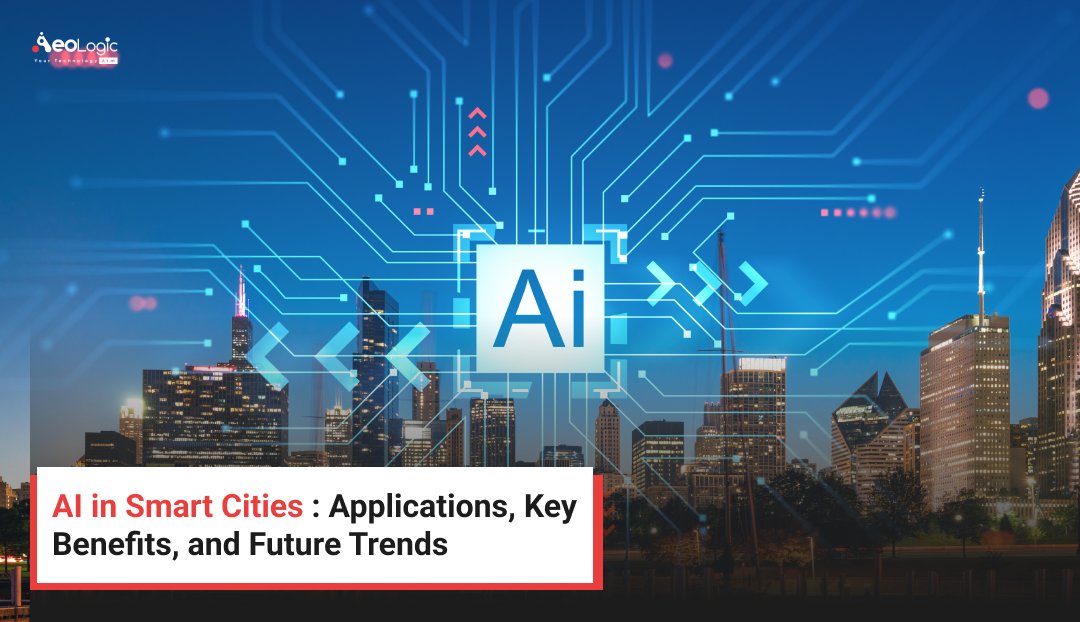
Urban populations are growing, which puts cities all over the world under pressure to improve transport, to use resources efficiently, to secure the safety of their citizens and to provide better services to citizens. City management in traditional ways can’t always keep pace with the complexity of the modern city. Here, AI in Smart Cities is proving to be a game-changer, as cities strive to become smarter, more connected, and more sustainable.
Cities are transforming the way they function, using Artificial Intelligence to analyze huge quantities of data collected by sensors, connected devices, cameras and public infrastructure. AI’s sophisticated analytics, machine learning algorithms and predictive power enables cities to enhance operations, cut costs, enhance citizen experiences and support long-term sustainability objectives. With the growing adoption of smart city initiatives across the world, AI is emerging as the building block for smart cities to be more responsive, efficient and resilient.
Understanding the Role of AI in Smart Cities
In the context of Smart Cities, AI involves the application of AI technologies to gather, collect, analyse and make decisions based on the data generated throughout the urban context. Smart cities are designed to be connected cities that can make intelligent decisions in real time by using the technologies of IoT devices, cloud computing, edge computing and advanced analytics.
The goal is to improve the quality of urban life while increasing operational efficiency. AI helps cities identify patterns, automate routine processes, and predict future challenges. These capabilities support better management of transportation, public safety, energy consumption, waste collection, and other critical services.
Why AI is Becoming Essential for Modern Smart Cities?
The demand for effective infrastructure, improved transportation systems, reliable public services and sustainable resource management has grown due to rapid urbanization. Cities are producing huge amounts of information on a daily basis, which is increasingly hard to analyze and take decisions on manually. AI has the power to solve this problem by turning raw data into valuable intelligence that can inform city planning and city operations strategies.
AI transforms raw data into actionable insights. These insights help city planners optimize resources, improve service delivery, and address problems before they become critical. This proactive approach reduces inefficiencies and supports sustainable urban growth.
Key Benefits of AI in Smart Cities
Improved Traffic Management and Mobility
One of the major problems in the urban areas around the world is traffic congestion. These AI-driven traffic control systems gather data from connected vehicles, GPS devices, sensors, and cameras to monitor real-time traffic conditions. These systems are able to automatically change the timing of the traffic lights, detect congestion areas, and suggest alternative routes to avoid congestion.
AI can optimize traffic patterns and minimize travel times to decrease fuel usage and emissions, and enhance the journey to and from work. Intelligent transportation systems also help to keep roads safer by accident detection, driver monitoring and quicker emergency response.
Enhanced Public Safety and Security
Public safety is a key, fundamental element of a smart city project. AI can be used to power sophisticated surveillance systems that can analyze video feeds, recognize suspicious activities, and alert security teams to potential threats in real time. Facial recognition, behavior analysis and predictive policing technologies assist police to be more effective in responding to incidents and enhance the prevention of crime.
Within AI in Smart Cities, AI-driven emergency response systems can analyze data from multiple sources to detect hazards such as natural disasters, fires, and infrastructure failures. This enables authorities to take preventive action, improve situational awareness, and coordinate emergency services more efficiently, ultimately enhancing public safety and urban resilience.
Efficient Energy Management
Rapidly growing cities are highly concerned with energy consumption. AI in Smart Cities helps optimize energy usage by analyzing consumption patterns and predicting demand fluctuations. AI-driven smart grids can help optimize energy distribution, minimize energy loss and enhance the integration of renewable energy sources, including solar and wind power.
Smart street lighting can automatically control the level of lighting in response to the demands of people on the street and weather, and energy can be saved significantly. These features help to reduce the operational expenses and promote sustainability goals.
Better Waste Management
The traditional waste collection system may lead to sub-optimal routes, overfull bins and unnecessary costs. Fitted with sensors and predictive analytics, AI-driven waste management systems can track the volume of waste and schedule maintenance trips accordingly.
Avoiding unnecessary waste collection by cities can help them save fuel, transportation expenses, and enhance sanitation. This approach is based on data and will aid the municipalities in having access to better resource management and improving environmental sustainability.
Improved Healthcare Services
Traffic congestion remains a major challenge in urban areas. AI-powered traffic management systems analyze data from sensors, cameras, GPS devices, and connected vehicles. This allows authorities to monitor road conditions in real time.
These systems can adjust traffic signals automatically and recommend alternative routes. They also help identify congestion hotspots before traffic conditions worsen. As a result, cities can reduce travel times and improve traffic flow.
AI also contributes to road safety. Intelligent transportation systems can detect accidents quickly and support faster emergency response. This improves commuter experiences while reducing fuel consumption and emissions.
Sustainable Urban Development
AI can support city planners in making informed decisions about infrastructure development, land use, and environmental conservation. AI uses demographic trends and transportation data to optimize urban planning strategies, while also leveraging resource consumption data.
It is a smart way that can help develop sustainable communities through its ability to minimize environmental effects, optimize resource use, and promote long-term economic development. In the quest for sustainability, AI becomes a powerful ally, helping cities to balance their development needs with environmental considerations.
Major Applications of AI in Smart Cities
Intelligent Transportation Systems
AI enabled mobility networks connect several data sources in real-time to enhance mobility and ease congestion. These systems enable intelligent traffic lights, intelligent vehicle systems, autonomous vehicle systems and predictive maintenance of transportation infrastructure.
Predicting traffic flow and fine-tuning routes leads to more efficient operations and reduced environmental damage. With the continued development of autonomous vehicle technology, the applications of AI will become even more critical in the future of urban transportation.
Smart Infrastructure Monitoring
There are a variety of structures in urban areas that must be monitored for safety and reliability, including bridges, roads, tunnels, and public buildings. These AI-driven monitoring systems are capable of identifying structural anomalies, forecasting maintenance needs, and even predicting potential failures before they occur.
These systems can identify structural issues early and predict maintenance requirements. As a result, cities can address problems before they become serious. This proactive approach reduces repair costs and extends infrastructure lifespan.
Smart Water Management
Lack of water and water loss due to poor distribution is an emerging issue in many cities. AI is used to track water usage, identify leaks, forecast demand, and improve the efficiency of water distribution systems. Water resource management in cities can be enhanced to decrease waste, and provide residents with access to clean water.
Advanced analytics powered by AI in Smart Cities also enable more efficient wastewater treatment and environmental protection programs, helping urban authorities achieve more sustainable water management and optimize the use of critical water resources.
Environmental Monitoring
AI-enabled environmental monitoring systems collect and analyze data related to air quality, noise pollution, weather conditions, and environmental hazards. This information enables authorities to develop targeted policies for environmental health and improve citizens’ quality of life.
Real-time monitoring can help urban areas make rapid responses to environmental challenges and design data-driven sustainability strategies.
Citizen Engagement and Digital Services
Citizen interaction with Government is changing with the advent of AI-powered chatbots and virtual assistants. These smart systems offer real-time access to info, support service requests and improve communication in between residents and local governments.
Challenges of Implementing AI in Smart Cities
Although AI offers significant benefits, implementation can be challenging. Data privacy and cybersecurity remain major concerns. Smart city ecosystems depend on connected devices and large volumes of data. Protecting sensitive information is essential for maintaining public trust.
Another challenge involves infrastructure investment and technology integration. To truly harness the power of AI, many cities need to upgrade current systems. Additionally, ensuring data accuracy, interoperability, and regulatory compliance requires careful planning and governance.
In addition, cities need skilled professionals who can manage AI technologies and analyze data effectively. Workforce development and digital literacy will play an important role in the success of future smart city initiatives.
Future Trends of AI for smart cities
AI and Digital Twins
Digital twin technology is the key technology which is expected to play a key role in future of smart cities. Digital twins are virtual copies of real infrastructure which can be experimented with, policies can be tested and infrastructure can be optimized before physical changes are made to it.
The combination of digital twins and AI creates a powerful solution that can help with better and more efficient urban planning and decision making through its powerful predictive capabilities.
Autonomous Public Transportation
In future smart cities, autonomous buses and shuttles as well as connected transportation systems are expected to be more commonly used. These vehicles are capable of driving themselves safely, optimizing routes, and enhancing transportation efficiency – all of this will be made possible by AI.
Advanced Predictive Analytics
AI in Smart Cities will continue to evolve as AI systems become better at anticipating urban challenges and issues. Advanced predictive analytics will enable cities to take proactive actions and improve resilience across various scenarios, including traffic congestion, energy demand fluctuations, infrastructure failures, and public health risks.
Integration of Edge AI
As urban data becomes more and more vast, edge AI will be a key asset in handling information nearer to the source. This way, the solution minimizes latency, accelerates responses, and optimizes the performance of real-time smart city applications.
Hyper-Connected Urban Ecosystems
This integration of AI into the Smart Cities’ various sectors – transportation, utilities, healthcare, public safety and environmental systems – will define the future of the technology in the Smart City context. This one, interconnected ecosystem will help cities function more effectively while providing highly personalized services to residents.
Conclusion
AI in Smart Cities is transforming urban environments by enabling smarter decision-making, improving operational efficiency, and enhancing the quality of life for citizens. AI is used to innovate in all facets of a city’s operations, from intelligent transportation and public safety to energy optimization and environmental sustainability.
As technologies continue to evolve, the role of AI for smart cities will become even more important. By leveraging advanced analytics, automation, and real-time intelligence, urban administrations can create smarter, safer, and more efficient environments for citizens. Organizations such as Aeologic Technologies are helping businesses and government bodies leverage advanced AI solutions to accelerate smart city transformation, improve operational efficiency, and create intelligent urban ecosystems.
By combining advanced analytics, automation, and real-time intelligence, AI is shaping the future of urban living. It is helping cities become more connected, efficient, and citizen-centric.
Frequently Asked Questions (FAQs)
Q1. What is AI in Smart Cities?
AI in Smart Cities refers to the application of artificial intelligence technologies to improve urban planning, infrastructure management, public services, and citizen experiences. By analyzing data from connected devices, sensors, and city systems, AI helps authorities make informed decisions, automate operations, and enhance overall urban efficiency.
Q2. How does AI improve transportation in smart cities?
AI improves transportation by analyzing real-time traffic data, optimizing traffic signal timings, predicting congestion patterns, and supporting intelligent route planning. It also enables connected and autonomous vehicle technologies, helping reduce travel times, improve road safety, lower fuel consumption, and create a more efficient transportation ecosystem.
Q3. What are the main benefits of AI for smart cities?
The primary benefits of AI for smart cities include improved public safety, optimized energy consumption, efficient waste management, enhanced healthcare services, better traffic control, and sustainable urban development. These advantages help cities reduce operational costs, improve service quality, and deliver a better quality of life.
Q4. What challenges do cities face when implementing AI?
Cities often face challenges such as data privacy concerns, cybersecurity risks, infrastructure modernization requirements, integration complexities, regulatory compliance issues, and a shortage of skilled professionals. Successfully addressing these challenges is essential for ensuring the long-term effectiveness and sustainability of AI-powered smart city initiatives.
Q5. What is the future of AI for smart cities?