The dynamic business environment has forced every company to continually seek methods of efficiency improvement, better transparency, and minimize errors. Introduce the RFID Attendance System, an effective tool that is transforming the way businesses keep track of the attendance of their employees as well as the management of human resources.
With the advances in automation and identification technologies, RFID systems offer a non-contact, efficient and precise manner of gathering attendance data in real time. This is becoming a necessity in both small and big organisations as it assists in reducing the administration expenses, and gives credible information to make sound decisions. Understanding its functionality and use can help in making future oriented investments.
What is an RFID Attendance System?
RFID Attendance System is a computerized technology based system which uses Radio Frequency Identification (RFID) to track and maintain attendance of employees. It relies on RFID tags embedded in ID cards and readers installed at entry or exit points to capture data without requiring physical contact.
The system automatically picks up the unique identifier of the tag and logs the attendance in a central database when an employee with an RFID-enabled card passes a reader. This is quicker and more sanitary as it does not require manual input or fingerprint scanning.
This compatibility is what renders RFID-based solutions to be of great value to the contemporary enterprises.
Why RFID attendance tracking system Matters for Businesses
Application of RFID Attendance System is so much more than just taking attendance. It is also vital in enhancing transparency of operations and employee accountability. Manual tracking is inefficient and prone to error in industries that have large teams working across shifts or in more than one location.
The businesses nowadays demand real time view of workforce mobility, timeliness, and productivity. In RFID technology, automated data capture is possible besides minimizing human errors, it offers managers actionable insights.
In addition, RFID systems are safer compared to biometric devices in the post-pandemic world where contactless solutions are a better choice. This provides one more degree of relevance, particularly to organizations that are concerned about the health and safety of the employees.
How RFID Attendance System Works
Understanding how an RFID attendance tracking system operates helps in appreciating its efficiency and scalability. The system is built on a simple yet powerful mechanism involving tags, readers, and software integration.
Core Working Mechanism
RFID tags, which are incorporated in employee IDs, are at the core of the system. The tags have a distinct identification number which makes one employee different to another.
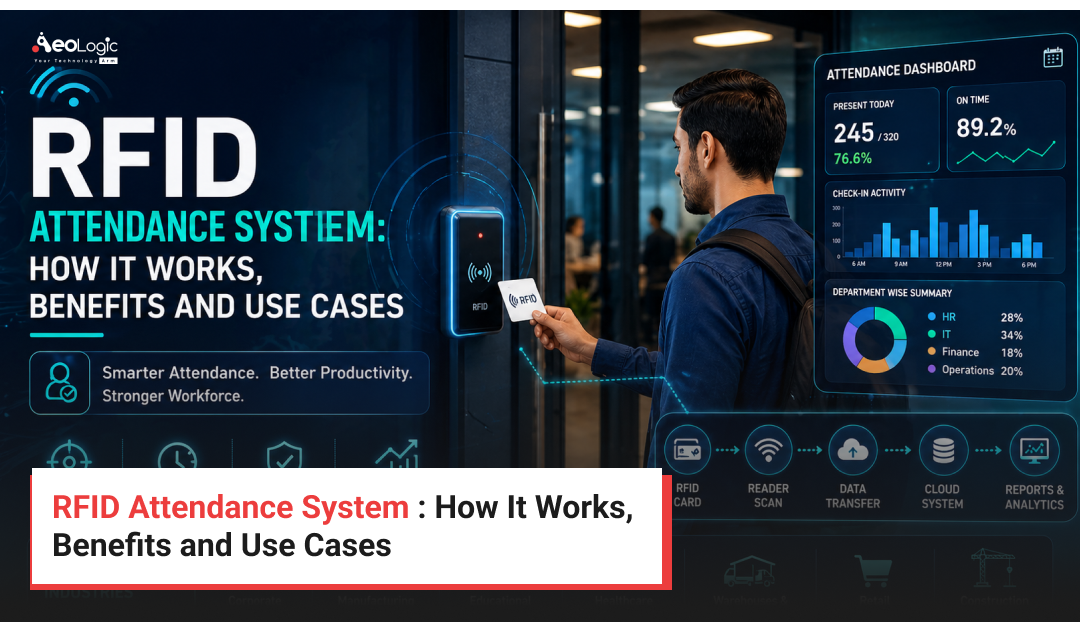
Once an employee enters the premises the RFID reader sends out radio waves that will power the tag. The tag then tells the reader its unique ID which forwards the data to the central system. The software records the timestamp and logs the attendance automatically.
Data Processing and Integration
Once the data is captured, it is stored in a centralized database where it can be accessed in real time. The system uses this information to produce the attendance reports, working hours and patterns of arrivals and departures.
Integration with HRMS and payroll systems ensures that attendance data flows seamlessly into salary calculations and compliance reports. This removes manual data entry and helps to save a lot of administration time.
 Key Components of an RFID attendance tracking system
An RFID Attendance System consists of several interconnected components that work together to deliver accurate and real-time attendance tracking. All the components are vital towards making the system effective.
RFID Tags and Cards
RFID tags are small electronic devices embedded in employee ID cards. They carry special identifying information and can communicate with the readers with the help of radio waves. These tags are durable, reusable, and capable of functioning over long periods without maintenance.
RFID Readers
Readers are installed at entry and exit points to detect RFID tags. They read information on the tags and send it to the central system. Depending on the setup, readers can be configured for short-range or long-range detection.
Middleware and Software
The software layer is the brain of the system. It manipulates the data obtained by readers, stores it in databases and produces reports. The advanced systems also offer dashboards, analytics, and integration with enterprise applications.
Database and Cloud Integration
To provide scalability and remote access, modern systems typically store data in the cloud. This will enable managers to have the data on attendance anywhere so that they can make better decisions.
Step-by-Step Implementation Strategy
To get the most out of an RFID attendance system and make sure it works as well as possible, you need to plan and carry it out carefully. To make sure a successful deployment, organizations should follow a structured plan.
Step 1: Requirement Analysis
The first step is to figure out what the organization needs, such as how many employees it has, how many locations it has, and how it needs to connect. This helps you choose the best system setup.
Step 2: Hardware Selection
It’s very important to pick the right RFID tags and readers. Factors such as reading range, durability, and environmental conditions must be considered to ensure optimal performance.
Step 3: Software Integration
The system should work with the HR and payroll software that is already in use. This makes sure that data flows smoothly and that no one has to do anything by hand.
Step 4: Installation and Setup
Readers are installed at strategic locations such as entry gates or office doors. The system is configured to capture and process attendance data accurately.
Step 5: Testing and Calibration
Before full deployment, the system is tested to ensure accuracy and reliability. This is the time to fix any problems so that they don’t cause problems later.
Step 6: Employee Training
Employees learn how to use RFID cards and what the system can do for them. This makes it easier for people to accept it and lessens their resistance.
Step 7: Go-Live and Monitoring
Once the system is operational, continuous monitoring is essential to ensure consistent performance and address any challenges promptly.
Benefits of RFID Attendance System
Organizations in all fields can benefit greatly from using an RFID attendance tracking system. It makes things run more smoothly, more accurately, and better overall.
One of the best things about it is that it gets rid of mistakes that people make by hand. Because attendance is automatically recorded, the chances of entering data incorrectly are low. This makes payroll processing and compliance reporting more accurate.
Another big benefit is that it saves time. Employees don’t have to wait in line for biometric scans or manual sign-ins, which saves time and makes them more productive.
The system also makes things safer by stopping buddy punching and unauthorized access.
Managers can make smart choices about how to assign workers, plan shifts, and evaluate performance when they have access to real-time data.
RFID technology is also better for modern workplaces because it doesn’t require physical contact, which makes it cleaner and reduces the number of places where people touch things.
Real-World Use Cases
The versatility of RFID Attendance System solutions makes them suitable for a wide range of industries and operational environments.
RFID systems help keep track of attendance in factories where a lot of people work in shifts without slowing down entry points. This makes sure that shifts go smoothly and that labor reports are correct.
The system makes it easier to keep track of who is at work and works well with access control systems in corporate offices. Employees can use one card to get in and mark their attendance.
Schools and colleges use RFID-based systems to keep track of who is on campus and make sure it is safe. Parents and administrators can see real-time data, which makes them more responsible.
RFID systems help healthcare facilities keep track of staff movement and make sure that shifts are managed correctly. This is very important for keeping things running smoothly in important places.
Technologies and Tools Behind RFID Attendance System
A mix of cutting-edge technologies and tools makes RFID-based attendance system solutions work well. These systems use radio frequency communication, cloud computing, and data analytics to give you useful and accurate information.
RFID technology uses electromagnetic fields to automatically identify and track tags. IoT features are built into modern systems, which lets devices talk to each other and share data easily.
Cloud-based platforms let businesses keep an eye on attendance data from anywhere because they can grow and be accessed from anywhere. Data analytics tools make the system even better by showing patterns and trends in the workforce.
Integration with business software like ERP and HRMS makes attendance data useful for making decisions and planning operations.
Challenges in RFID-Based Attendance Tracking Systems
Setting up RFID-based attendance systems can be expensive at first because you need to buy hardware, software, and set it up. Organizations may also face integration issues with existing HR systems, which can lead to data inconsistencies if not properly managed during deployment.
Another problem is making sure the system works well in different environments, since signal interference or putting readers in the wrong place can affect performance. Also, if employees aren’t trained and informed about new technology, they may be less likely to use it.
Best Practices for RFID-Based Attendance Systems
To make sure that implementation goes well, organizations should do a thorough needs assessment and choose solutions that can grow with their needs. Working with experienced vendors makes integration easier and reduces technical problems during deployment.
It is important to regularly maintain, update and monitor the system for performance to ensure its accuracy and efficiency. Proper employee training and clear communications about the benefits of the system will insure smooth adoption and maximize return on investment.
Future Trends in RFID Attendance Systems
Along with the progress of digital transformation and automation, RFID-based attendance system technology has evolved. As the businesses are adopting smart technologies more and more, RFID systems are becoming more integrated and smarter.
One of the greatest trends is the combination of RFID with AI and machine learning. This allows predictive analytics, enabling organizations to predict workforce trends and optimize operations.
Another rising trend is mobile-based RFID solutions that enable employees to use their smartphones as identification devices. This adds convenience and reduces the need for physical cards.
“The rising use of IoT and smart infrastructure is spurring innovation in RFID systems. Connected devices and sharing of data in real-time are making workforce management more efficient and responsive.
As companies move toward the fully automated workplace, RFID technology will continue to be a key element in driving efficiency, security and decision making.
Conclusion
Finally, RFID Attendance System is a revolutionary solution to overcome the limitations of traditional attendance tracking systems. It provides accuracy, efficiency and real-time visibility that empowers organizations to manage their workforce more effectively and make data-driven decisions.
With businesses continually evolving in a digital-first world, the adoption of advanced technologies such as RFID is no longer optional but essential to remain competitive. A reliable RFID Solutions Company in India can help organizations improve operational efficiency, enhance workforce management, and streamline attendance tracking processes. Aeologic Technologies helps businesses implement scalable and future-ready attendance systems tailored to their specific requirements.
People Also Ask (FAQs)
Q1. What is an RFID Attendance System and how does it work?
RFID Attendance System is the non-contact technology used to track employee attendance using the radio frequency identification technology. When the card is near the reader, the system automatically reads the data and marks the attendance. The process is fast and accurate and does not require manual input or biometric scanning, which is ideal for today’s workplaces.
Q2. Is RFID attendance better than biometric systems?
RFID based attendance systems have many advantages over biometric based systems such as faster processing, touch less operation and hygiene factors. Biometric systems require physical interaction, while employees can mark attendance in RFID systems without touching a device. This leads to higher efficiency in high-traffic environments, and makes them ideal for organizations that focus on speed and safety.
Q3. Can RFID systems integrate with payroll and HR software?
Yes, RFID attendance solutions are made to integrate with HRMS and payroll systems. This integration ensures attendance data is automatically linked to salary calculations, leave management and compliance reporting. It reduces the manual effort and improves the accuracy, allowing organizations to manage workforce data efficiently.
Q4. What industries benefit the most from RFID-based attendance system?
RFID-based attendance systems are employed extensively in manufacturing, corporate offices, healthcare, education, retail and logistics industries. Automated attendance tracking is a boon for any organization with a large workforce or multiple locations.
Q5. Are RFID-based attendance system secure?
RFID systems are very secure because each tag has a unique identifier that can’t easily be duplicated. More advanced systems also have encryption and authentication mechanisms to avoid unauthorized access. Thus, attendance data is accurate, tamper proof and reliable for business operations.
Q6. What are the costs involved in implementing RFID attendance?
The cost of implementing an RFID attendance system depends on the number of employees, the hardware requirements and the software features. While the initial cost may be higher than traditional systems, the long-term benefits like reduced administrative costs and enhanced efficiency make it a cost-effective solution.

Currently, as a Senior Manager of Technology, I oversee a dynamic team, ensuring the delivery of high-quality software solutions that meet the evolving needs of our clients. A seasoned technology leader with over a decade of experience in the software development industry, I have been instrumental in driving the end-to-end software development lifecycle since my career inception in 2011.