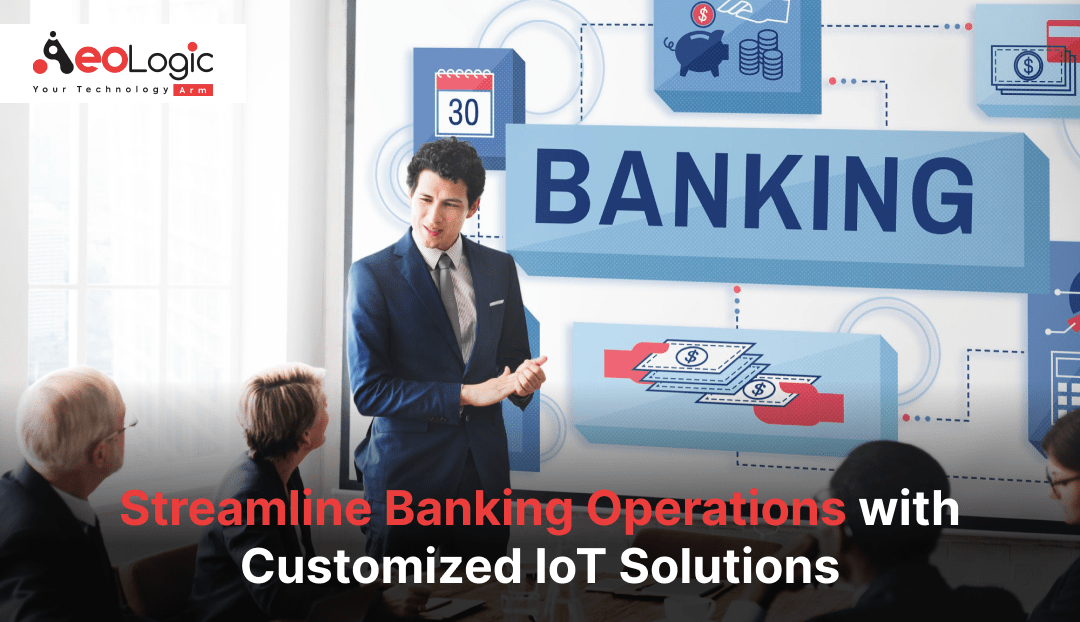
Banking operations are susceptible and need to be done prudently. There are a lot of banks around the world that have made up the banking tone there. The global retail banking market size was USD 2.08 trillion in 2023, accounted for USD 2.21 trillion in 2024, and is expected to reach around USD 3.97 trillion by 2034, expanding at a CAGR of 6% from 2024 to 2034. You can say that most businesses, industries, and sectors are dependent upon the bank for taking loans, investments, or any other finance-related operations.
Banking operations are not as much as only bank-specific economic activities that entail providing specialized financial services to recipients (bank clients or other third parties) in exchange for payment and accordance with a client agreement. As operations are totally for financial transactions, a small mistake can cost a lot. IT Solutions Revolutionizing Banking Operations are crucial in addressing these challenges. Card-related issues, unsatisfied customer support, slow processing of transactions, etc., are issues that banks are facing regularly.
How IoT Solutions are Transforming Banking Operations
To solve these banking operation-related issues, many technologies have been integrated into the banking sector. Internet of Things solution is one among them. IoT technology has established a well-reputed market size overall in the globe as the global Internet of Things (IoT) Market size reached US$ 64.8 Billion in 2024. Looking forward, expect the market to reach US$ 153.2 Billion by 2029, exhibiting a growth rate (CAGR) of 18.8% during 2024-2029. This is the total domination of IoT technology in many industries. So for banking operations, there is an option for customized IoT solutions. Custom IoT solutions generally refer to a specific operation related to IoT solutions. Many banks have integrated customized IoT solutions and are getting a lot of benefits.
Based on industry statistics, IoT in the banking and finance market is projected to undergo a significant compound annual growth rate (CAGR) of 50.1% between the years 2023 and 2030. This transformation has empowered the BFSI industry to leverage IoT-enabled devices and networks that reshaped traditional banking practices.
In this article, we will see the role of customized IoT solutions for streamlining banking operations. We will see other additional details like benefits, challenges, etc and in the end, give our conclusion on this topic.
What are Customized IoT Solutions for Banking Operations?
IoT solutions generally refer to the software applications that utilize data obtained from the Internet of Things (IoT). Sensors, cameras, and other Internet of Things (IoT)-based devices enable banks to monitor and maintain the security of their ATMs. To enhance customer experience, banks also utilize IoT technologies to monitor how clients use their services in branches. IoT also makes it possible for intelligent ATMs and other gadgets to communicate real-time data to banks, allowing them to effectively monitor maintenance requirements and cash flow.
Also Read: Benefits of Financial Automation Software For Banking
Benefits of Customized IoT Solutions to Streamline Banking Operations
There are a lot of benefits of customized IoT solutions for streamlining banking operations as here are a few key benefits mentioned below.
Real-Time Data Analysis
Real-time data analysis is a very beneficial aspect of IoT for the banking industry. It can be very crucial for customer accounts and transactions. This enables banks to dynamically evaluate the needs of their clients at any time or place. For example, banks could determine how long a consumer will have to wait in line or even notify customers when their account balance is about to go negative.
Personalized Customer Service
In the digital world, customers are doing online transactions a lot regularly. Banks can provide each consumer with individualized services based on their transaction history by utilizing data from mobile applications, the Internet, and other platforms where transactions take place. Financial counseling and customized budgeting are two examples of these individualized services.
Card Free Transactions
Contactless payment is another incredible benefit of customized IoT solutions. During the pandemic, contactless payment with the help of customized IoT solutions was a very important aspect that reduced the chance of spreading viruses.
Fraud Prevention
There is a lot of fraud happening regularly in the banking industry around the world. Customized IoT-based solutions can be an important factor in reducing fraud in the banking industry and enhancing security. A further technique is texting an authentication number to consumers’ phones, which they need to enter to validate their online purchases.
Smart Insurance
IoT customized solutions-based devices keep an eye on insured assets’ condition and notify insurance firms of any deviations, allowing for prompt risk mitigation. Insurance companies can forecast possible incidents and create preventive measures with the use of the data obtained. In this way, an insurer can reduce the frequency of insurance claims and avoid fraud by identifying impending asset breakdown and informing the policyholder before any damage happens.
Also Read: Cloud-Based Fraud Prevention Solutions for Banking Industry
Challenges with Customized IoT Solutions
1. Data Privacy and Cybersecurity Risks
IoT devices collect and transmit information across networks, creating additional points that may require protection. If devices are poorly configured, use outdated software, or communicate through insecure connections, attackers may exploit them to gain unauthorized access or disrupt banking operations.
Financial institutions must therefore implement strong authentication, encryption, secure device management, network segmentation, and regular software updates. Devices should be configured with appropriate permissions, and unnecessary services or connections should be disabled.
Banks should also evaluate the security practices of IoT vendors and ensure that connected systems comply with applicable privacy requirements. Collecting only necessary information and limiting access to authorized personnel can further reduce exposure.
2. Managing Large Volumes of Data
IoT devices can generate significant amounts of operational data, particularly when banks monitor thousands of ATMs, payment terminals, and branch systems. Without suitable infrastructure, processing and storing this information can increase costs and make it difficult to identify important events.
Banks need scalable data management systems that filter unnecessary information, prioritize critical alerts, and provide useful operational insights. Edge computing can process certain information closer to the device, reducing the need to transmit every data point to a central platform.
Data governance is equally important. Clear retention policies, data quality controls, and monitoring procedures help ensure that information remains accurate, accessible, and appropriately protected.
3. High Implementation and Maintenance Costs
Developing customized IoT solutions may require investment in sensors, connected devices, communication infrastructure, software development, system integration, cybersecurity, and employee training. Banks with extensive legacy infrastructure may also face additional expenses when connecting new systems to existing platforms.
Initial costs can be a challenge for smaller financial institutions with limited technology budgets. Ongoing expenses associated with device replacement, software updates, connectivity, and technical support must also be considered.
A phased implementation approach can help banks manage these costs. They can begin with a focused use case, such as ATM health monitoring or branch energy management, and evaluate the results before expanding the deployment.
Before investing, banks should compare implementation costs with expected benefits, including reduced downtime, improved maintenance planning, lower energy consumption, and better operational visibility.
4. Integration With Legacy Banking Systems
Many financial institutions operate established core banking platforms, older ATMs, and multiple applications developed over several years. Integrating IoT devices with these systems can be technically complex, especially when different platforms use incompatible protocols or data formats.
Banks should evaluate their existing infrastructure before choosing an IoT platform. Secure APIs, middleware, standardized communication protocols, and carefully planned integration architectures can help connected devices exchange information with approved enterprise systems.
Testing is essential to ensure that new integrations do not interrupt transaction processing, compromise sensitive information, or affect the performance of critical banking applications.
5. Connectivity and System Reliability
IoT solutions depend on reliable connectivity, but network interruptions, power failures, and device malfunctions can affect data transmission. If a connected ATM or sensor loses communication with a central platform, the bank may temporarily lose visibility into its operating condition.
To address this challenge, banks should consider redundant connectivity where appropriate, backup power, device health monitoring, and secure mechanisms for storing and forwarding data when connections are restored.
They should also establish clear procedures for handling missing data and system outages. Reliable infrastructure and regular testing help ensure that IoT monitoring remains useful even when individual components experience problems.
6. Regulatory Compliance and Vendor Management
Banks must protect customer information and maintain appropriate controls over the systems that support their operations. Introducing connected devices can create additional responsibilities related to data protection, access management, auditability, and third-party risk.
Financial institutions should assess the regulatory requirements applicable to their jurisdictions and business activities. Vendor agreements should clearly define security responsibilities, data handling practices, support arrangements, and procedures for responding to incidents.
Regular audits and documented risk assessments can help banks maintain oversight as their IoT environments expand.
Conclusion
Customized IoT solutions offer financial institutions new opportunities to improve operational efficiency, strengthen infrastructure monitoring, enhance customer experiences, and manage resources more effectively. From intelligent ATM monitoring and contactless payment infrastructure to predictive maintenance and smart energy management, connected technologies can help banks make informed decisions based on timely operational data.
However, successful implementation requires more than connecting devices to a network. Banks must address cybersecurity, data privacy, system integration, connectivity, regulatory compliance, and long-term maintenance costs. A carefully planned implementation strategy can help financial institutions introduce IoT capabilities while maintaining the reliability and security of essential banking services.
By selecting solutions that align with their operational requirements and integrating them with existing banking systems, financial institutions can build more connected, responsive, and efficient banking environments. With the right technology strategy and appropriate security controls, customized IoT solutions can support the continued modernization of banking operations. Aeologic Technologies helps businesses explore tailored technology solutions to improve operational efficiency and support digital transformation.
Also Read: Digital Transformation in Banking: Benefits and Examples
Final Words
The Internet of Things (IoT) is one of the dozens of technologies that have the potential to revolutionize the banking industry. Customized IoT solutions can bring new security levels, automate processes, and improve customer experience all of which have the potential to drastically change the industry landscape. IoT isn’t simply a fad; rather, it’s a crucial element that has the potential to completely transform the banking industry, as seen by its uses in asset management, real-time data analytics, and smart banking.
More Blogs:
- Use of RFID Technology in Banking Industry
- The Role of Automation in Streamlining Banking Operations
- Digital Transformation Examples in Banking
- The Future Of Mobile Wallet And Contactless Payments

I’m Deepika Pandey, an SEO strategist and content writer with 6+ years of experience. I create SEO-friendly content that drives traffic and engages readers. I combine data insights with creativity to help businesses grow their online presence effectively.