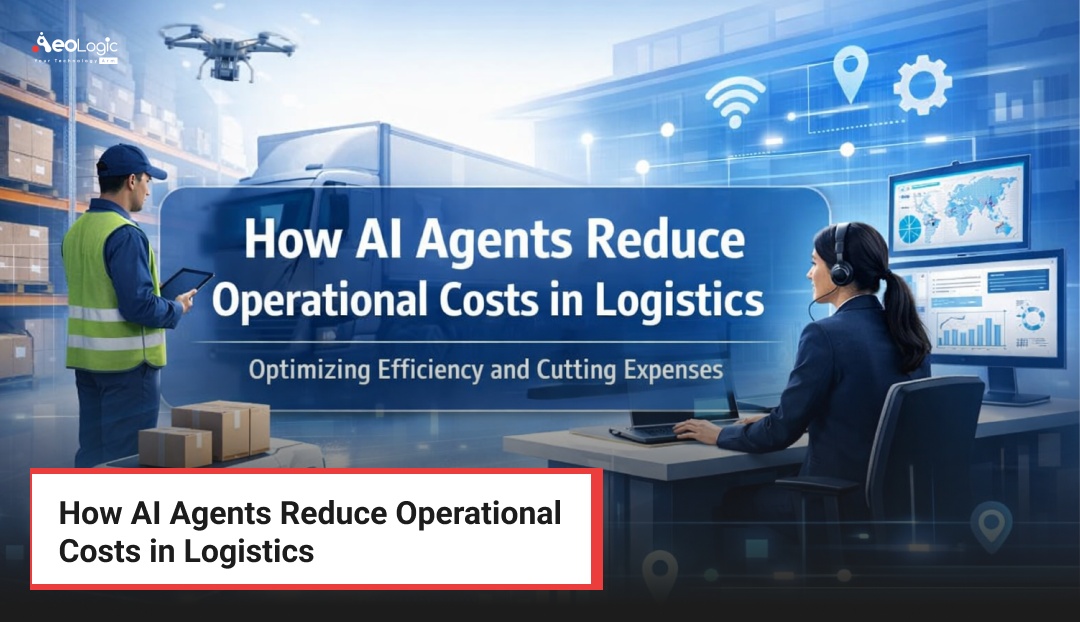
As companies expand across geographies, handle bigger inventories, and meet customers’ demands for quicker delivery, logistics operations are getting more complicated. Unnecessary operational costs are frequently caused by growing transportation costs, ineffective route planning, manual decision-making, and disjointed data systems. Organizations are now implementing intelligent automation technologies that can optimize logistics workflows in real time in order to remain competitive. AI agents in logistics are among the most revolutionary developments in this field.
Without constant human intervention, these intelligent systems are able to evaluate operational data, automate decision-making, and continuously optimize supply chain operations. AI agents help logistics companies lower operating costs while increasing productivity, visibility, and responsiveness by combining advanced analytics, automation, and machine learning capabilities.
This article explores how intelligent agents are transforming logistics operations, the technologies behind them, practical implementation strategies, and how enterprises can leverage them to achieve long-term operational efficiency.
What Are AI Agents in Logistics?
AI agents in logistics are autonomous or semi-autonomous software programs built to carry out operational duties, evaluate supply chain information, and make wise choices instantly. These agents monitor workflows and automatically optimize processes across logistics systems, including inventory databases, warehouse systems, and transportation management platforms.
AI agents constantly learn from operational data, in contrast to conventional automation tools that adhere to set rules. To suggest or carry out optimal actions, they examine shipping trends, demand variations, route conditions, and warehouse activity. These features enable logistics companies to minimize delays, get rid of inefficiencies, and improve supply chain operations.
These agents’ primary job is to convert massive amounts of operational data into intelligence that can be put to use. By connecting multiple logistics systems and automating decision-making, they create a more adaptive and cost-efficient logistics environment.
 Why Intelligent Logistics Agents Matter for Modern Supply Chains
Manufacturers, warehouses, carriers, and retailers are just a few of the many parties involved in modern logistics networks. Managing this intricate ecosystem by hand or with static software systems frequently results in cost inefficiencies and operational bottlenecks. By facilitating data-driven operational management, intelligent agents assist organizations in overcoming these constraints.
Businesses that use AI agents in logistics benefit from increased supply chain visibility. Businesses can react swiftly to disruptions by keeping an eye on shipments, inventory levels, and transportation routes in real-time. Additionally, by automating repetitive operational tasks, these systems lower labor costs and minimize human error, which can result in financial losses.
Predictive decision-making is another significant benefit. By analyzing past logistics data, AI agents can anticipate possible delays, spikes in demand, or disruptions to transportation before they happen. This proactive ability enables companies to make cost-saving adjustments such as route optimization, inventory reallocation, or dynamic scheduling.
As global logistics networks continue to expand, enterprises increasingly rely on intelligent agents to maintain operational efficiency while controlling costs.
Core Components of AI Agents in Logistics Systems
A number of interrelated technological elements that support intelligent automation and decision-making are necessary for Intelligent Logistics Agents to be effective.
Data Integration and Supply Chain Visibility
AI agents use data from various logistics systems, such as enterprise resource planning platforms, transportation management systems (TMS), and warehouse management systems (WMS). Agents are given a unified perspective of operations through the integration of these systems, which enables them to spot inefficiencies and make real-time recommendations for improvements.
Predictive Analytics and Machine Learning
Agents can examine past logistics data using machine learning algorithms to spot trends in delivery schedules, demand swings, and operational bottlenecks. Logistics managers can make proactive decisions that lower operational risks and wasteful spending thanks to these predictive insights.
Autonomous Decision Engines
Decision engines that carry out operational actions automatically are examples of advanced agents. These may include adjusting transportation routes, reallocating warehouse inventory, or scheduling shipments based on demand forecasts. Autonomous execution significantly reduces manual workload and operational delays.
Real-Time Monitoring and Optimization
AI agents use operational dashboards, tracking systems, and linked sensors to continuously monitor logistics operations. Instant reactions to disruptions like traffic jams, shipment delays, or warehouse capacity problems are made possible by real-time monitoring.
Step-by-Step Strategy to Implement Intelligent Logistics Agents Operations
Adopting intelligent logistics automation requires a structured implementation strategy to ensure successful integration with existing supply chain systems.
Step 1: Assess Operational Cost Drivers
Finding the regions with the highest logistics costs is the first step. These could include inefficient transportation, labor costs in the warehouse, or carrying costs for inventory. Determining where intelligent agents can provide the greatest value requires an understanding of these cost drivers.
Step 2: Integrate Logistics Data Sources
To establish a single data environment, organizations need to link their logistics data systems. AI agents will have access to thorough operational data if warehouse systems, transportation platforms, and inventory databases are integrated.
Step 3: Deploy AI-Driven Decision Systems
Businesses can use AI-driven operational models that examine logistics trends and suggest optimization tactics after data integration is finished. These systems help automate decisions such as route selection, shipment consolidation, and inventory allocation.
Step 4: Automate Operational Workflows
An essential part of optimizing logistics is automation. Businesses should give AI agents the ability to automate routine tasks like managing warehouse workflows, scheduling deliveries, and updating shipment statuses.
Step 5: Continuously Monitor and Optimize
Organizations must continuously assess system performance and improve optimization models after deployment. Over time, AI agents’ capacity for optimization and prediction accuracy increases as they handle more operational data.
Key Benefits of AI Agents in Logistics
One of the most significant advantages of AI-powered Logistics Agents is their ability to reduce operational costs across multiple areas of supply chain management.
By examining delivery windows, vehicle capacity, and traffic patterns, these systems greatly enhance route optimization. This guarantees quicker deliveries while lowering fuel consumption and transportation expenses.
When intelligent agents oversee workforce allocation, picking routes, and inventory placement, warehouse operations also become more efficient. These improvements boost operational throughput while lowering labor costs.
Another important benefit is improved demand forecasting. To more accurately forecast demand, AI agents examine past sales trends and market trends. This helps businesses maintain ideal inventory levels by minimizing stockouts and reducing excess inventory.
Finally, supply chain visibility is enhanced by intelligent agents. Organizations can identify problems early and take corrective action before they result in operational losses by monitoring shipments and logistics operations in real-time.
Real-World Use Cases of AI-powered Logistics Agents
Route Optimization for Transportation Networks
AI systems used by major logistics firms to dynamically modify delivery routes in response to current traffic, weather, and delivery priorities are a key example of AI Agents in Logistics. These intelligent systems analyze real-time operational data and automatically adjust delivery routes to optimize efficiency. As a result, they increase delivery performance across transportation networks while significantly lowering fuel consumption and operational costs.
Intelligent Warehouse Management
By automating inventory tracking, directing picking operations, and enhancing storage allocation strategies, AI agents are being used more and more to optimize warehouse operations.
Demand Forecasting and Inventory Planning
Intelligent agents are used by retailers and e-commerce businesses to predict product demand and maximize inventory distribution among warehouses. This lowers holding and storage expenses while assisting in maintaining appropriate inventory levels.
Automated Shipment Scheduling
AI agents automatically plan shipment schedules by analyzing delivery deadlines, carrier availability, and shipping schedules. This reduces transportation delays and guarantees better resource utilization.
Technologies That Enable AI-Driven Logistics Optimization
Modern logistics automation relies on several advanced technologies that support intelligent decision-making and real-time operational optimization.
Agents can recognize patterns and predict operational trends across supply chain activities thanks to machine learning and predictive analytics. These skills assist businesses in making proactive choices that lower expenses and boost productivity.
Because they provide real-time information on shipments, vehicle locations, and warehouse conditions, Internet of Things (IoT) devices are essential to logistics visibility. AI models that continuously improve logistics operations are fed this data.
Platforms for cloud computing offer scalable infrastructure for handling massive amounts of logistics data. Additionally, cloud environments enable businesses to effectively implement intelligent automation solutions and integrate various supply chain systems.
Challenges in Implementing AI Agents in Logistics Systems
Warehouse, transportation, and inventory platforms function independently in fragmented data systems, which is a problem for many logistics companies. AI systems are unable to access unified operational data due to this lack of integration, which makes it challenging to produce precise insights and automated decisions.
Workforce adaptation and organizational resistance to automation are two more prevalent issues. Adoption and the potential advantages of intelligent logistics systems may be slowed down by employees’ reluctance to trust AI-driven recommendations or their fear of disrupting current workflows.
Best Practices for Successful Implementation
Organizations should identify high-impact logistics areas, like inventory management or route optimization, and start with a phased implementation strategy. Before expanding automation to more extensive supply chain operations, teams can verify performance gains by beginning with targeted deployments.
It is equally crucial to maintain robust data governance and ongoing system monitoring. Accurate AI predictions are guaranteed by high-quality, structured logistics data, and continuous performance assessment aids businesses in improving models and operational effectiveness over time.
Future Trends: The Evolution of AI Agents in Logistics
More sophisticated and cooperative intelligent systems will propel logistics automation in the future. Logistics agents will become more independent and capable of handling intricate supply chain networks as machine learning algorithms continue to advance.
Future AI-powered Logistics Agents will likely collaborate with robotic warehouse systems, autonomous delivery vehicles, and smart infrastructure to create highly automated logistics ecosystems. These technologies will enable organizations to manage large-scale logistics operations with minimal manual intervention.
The use of digital twins in logistics management is another new trend. AI agents can simulate operational scenarios and determine the most effective strategies before putting them into practice in real operations thanks to digital twins, which replicate real-world logistics networks in virtual environments.
Global supply chains will continue to benefit from these innovations in terms of cost reduction, operational resilience, and real-time adaptability.
Conclusion
For logistics companies, cutting expenses without sacrificing effectiveness has become crucial. By enabling real-time decision-making, predictive analytics, and process optimization, intelligent automation technologies are revolutionizing supply chain operations. Businesses can increase supply chain visibility, optimize transportation planning, and boost warehouse productivity by deploying AI agents in logistics.
Organizations seeking to modernize their logistics infrastructure should explore intelligent automation solutions that integrate AI, data analytics, and real-time monitoring technologies. Technology partners such as Aeologic Technologies help enterprises implement advanced logistics solutions that drive efficiency, reduce operational costs, and build resilient supply chains for the future.
People Also Ask (FAQs)
Q1. What are AI agents in logistics?
Intelligent software programs that automate decision-making throughout supply chain operations are known as AI agents in logistics. To improve logistics workflows, these agents examine operational data like shipment schedules, inventory levels, and transportation routes. AI agents, in contrast to conventional automation tools, continuously learn from data and get better over time. AI-powered Logistics Agents assist businesses in lowering operational inefficiencies, boosting supply chain visibility, and improving delivery performance by facilitating real-time decision-making and predictive insights.
Q2. How do AI agents help reduce logistics costs?
By streamlining crucial operational procedures like inventory control, warehouse management, and transportation planning, AI agents lower logistics costs. To find inefficiencies in routes, delivery schedules, and warehouse workflows, they examine sizable datasets. Businesses can cut labor costs, storage costs, and fuel consumption by automating these decisions. Predictive analytics also helps prevent delays and disruptions that could lead to additional costs. As a result, organizations achieve more efficient logistics operations and improved resource utilization.
Q3. Can AI agents improve supply chain visibility?
by combining data from various logistics systems and tracking technologies, AI agents greatly increase supply chain visibility. They provide real-time operational insights by continuously monitoring shipments, warehouse operations, and transportation routes. Logistics managers can promptly spot interruptions, delays, or operational inefficiencies with the aid of these insights. Increased visibility enables companies to proactively address issues, resulting in more efficient logistics processes and increased service dependability.
Q4. What technologies support AI-driven logistics systems?
AI-driven logistics systems are supported by a number of cutting-edge technologies. In order to find patterns and forecast supply chain trends, machine learning algorithms examine operational data. Vehicles and shipments can be tracked in real time by IoT devices. Platforms for cloud computing provide scalable infrastructure for handling massive amounts of logistics data. When combined, these technologies produce intelligent systems that facilitate data-driven decision-making and automate logistics processes.
Q5. Are AI agents suitable for small logistics businesses?
Cloud-based platforms and scalable solutions have made AI-based logistics systems more accessible to small and medium-sized businesses. Route optimization and demand forecasting are two examples of targeted automation solutions that smaller logistics companies can begin with. They can progressively extend intelligent automation to other aspects of their logistics operations as they gather more operational data. Businesses of all sizes can profit from AI-driven efficiency gains with this strategy.
Q6. How long does it take to implement AI-powered Logistics Agents?
The intricacy of the company’s data systems and logistics infrastructure determines the implementation schedule. Within a few months, businesses with integrated logistics platforms may implement AI-driven solutions. Building automation workflows and integrating data sources may take more time for organizations with disjointed systems. It is frequently advised to implement changes gradually, beginning with high-impact areas like transportation optimization.