
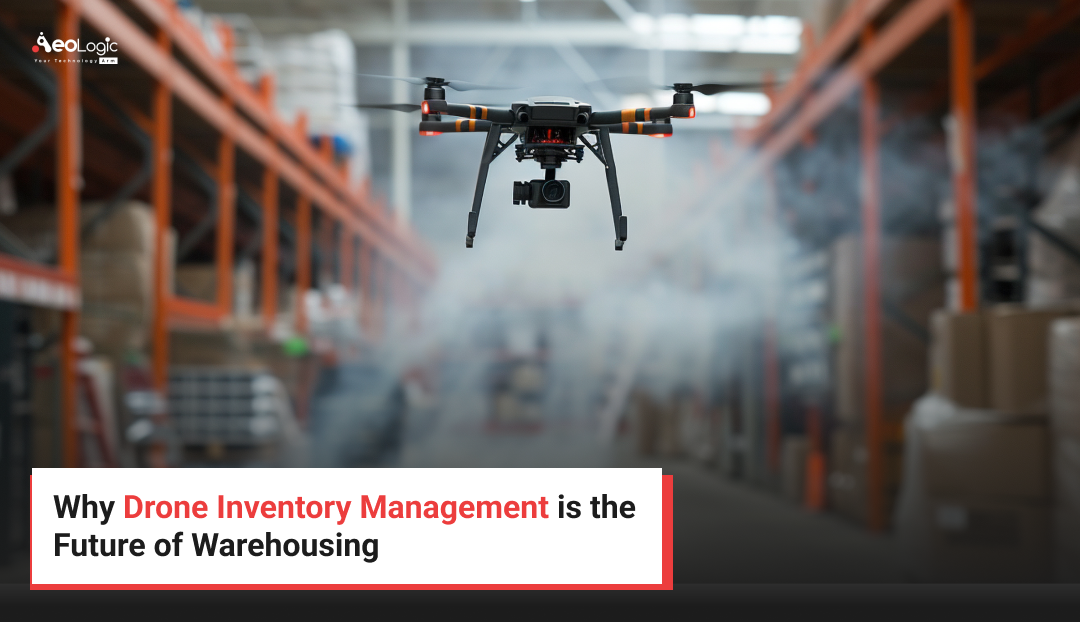
In the last decade, the warehousing industry has experienced a lot of changes, as the demand for faster delivery, higher inventory accuracy, and increased operational efficiency has increased. The companies operating in the warehouse sector are increasingly under pressure to maintain their stock levels with precision and reduce manpower expenses and disruptions in operations as the e-commerce, manufacturing, retail, and logistics sectors continue to grow. Drone Inventory Management is rapidly becoming a game-changer in today’s rapidly evolving environment, reshaping the way warehouses keep an eye on inventory, track its movement, and manage stock.
With the evolution of businesses towards intelligent and automated supply chain ecosystems, Drone Inventory Management is a vital part of the modern warehouse. This technology not only enhances inventory visibility but also enables data-driven decision-making, which is crucial for organisations to stay competitive in the ever-growing markets.
Understanding Drone Inventory Management
Drone Inventory Management is the use of autonomous or semi-autonomous drones, using advanced sensors, cameras, barcode scanners, RFID readers, and AI technologies to manage inventory in warehouses.
Drones can take inventory without much human involvement, in narrow aisles, at height and in large facilities, unlike traditional inventory counting methods which involve manually checking storage locations. In automating repetitive inventory verification tasks, warehouses can manage to save on repetitive processes and significantly increase their operational efficiency.
Today’s inventory drones can now fly on a set path, guaranteeing uniform and exact stock checks. Connecting to warehouse management systems ensures the accurate and timely management of inventory, minimizing discrepancies.
The Growing Need for Automation in Warehousing
E-commerce, omnichannel retailing, and consumers’ demands for quick deliveries are driving unprecedented growth in the global logistics industry. As warehouse operations become increasingly complex, maintaining inventory accuracy has become more challenging than ever.
In manual counting, a significant number of man-hours must be dedicated to the process and may lead to disruption of operations. Manual processes can lead to mistakes, including missed scans, incorrect counts, and data entry errors, which can cause discrepancies in the inventory and affect the order fulfillment process and the customer’s satisfaction.
Automation technologies are thus being increasingly sought that will reduce the time spent on managing inventories, while simultaneously ensuring high accuracy. Drone Inventory Management can help with this by streamlining manual inventory checks and giving real-time insights into stock levels.
With the invention of robotics, AI, IoT devices, and automation platforms, the inventory drone is an ideal technology for a mainstream application in warehousing. Organizations investing in warehouse automation increasingly view drones as a strategic asset rather than an experimental technology.
How Drone Inventory Management Works?
Autonomous Warehouse Navigation
It starts with autonomous drones flying along predetermined paths in the warehouse. The drones utilize sophisticated navigation methods like LiDAR, computer vision, sensors, and indoor positioning systems to navigate aisles, locate storage areas, and navigate around obstacles, all without the need for manual input.
Barcode and RFID Data Capture
The drones are equipped with scan capabilities to read barcodes, QR codes, or RFID tags that are placed on products and shelves as they move around the warehouse. Data on the inventory is captured from high up on shelves, even from areas that would require forklifts or elevated platforms, with high resolution cameras and integrated scanning systems. Collected data is then compared to current stock records to ensure stock accuracy.
Real-Time Inventory Verification
All the scanned data is sent straight to the warehouse management system (WMS) or enterprise resource planning (ERP) system. The real-time synch capability allows immediate inventory verification, allowing warehouse managers to spot any discrepancies, including missing items, misplaced products, or stock count errors. Access to inventory information instantly enables quicker and more informed business decisions.
AI-Powered Data Analysis
Modern Drone Inventory Management systems utilise AI and machine learning to analyse the gathered data on inventory. AI algorithms can identify irregularities, recognize inventory trends, optimise the scanning route and enhance overall inventory accuracy. The insights gained from these help businesses minimize stock inaccuracies, optimize stock management, and boost warehouse efficiency.
Automated Reporting and System Updates
Without manual data entry, warehouse managers get current information on stock levels, inventory movement and any discrepancies. This automation helps to automate administration and keeps inventory records accurate.
Continuous Inventory Monitoring
Drone Inventory Management is a continuous and frequent inventory monitoring solution, instead of traditional inventories which were done periodically. Drones can carry out routine checks on the warehouse at off-peak times or throughout the day, which provides instant access to the stock and reduces the chance of stock inaccuracies. This constant monitoring feature is one of the main factors that make it a vital part of today’s warehouse operations.
Why Drone Inventory Management is Transforming Warehousing
Drone Inventory Management is getting more popular, as it helps to resolve persistent inventory management problems. The greatest benefit is that it is fast. An inventory drone can survey thousands of storage locations in a matter of a few minutes, compared to the hours teams of human counters may take.
Accuracy is another major benefit. People can make counting mistakes because they get tired or are performing repetitive activities. Automated scanning technologies are used with drones to ensure consistent and precise data collection of inventory, minimizing discrepancies and enhancing stock reliability.
Additionally, the use of drones helps to reduce the need for human intervention in inventory audits, which also enhances operational efficiency. The drones can operate during regular functioning without any interruption.
Additionally, warehouse managers have access to real-time information about their stock, which helps them make faster decisions and optimise their inventory planning. This greater visibility minimizes out-of-stock scenarios, overstocked situations and fulfillment delays, which helps to enhance the performance of the supply chain.
 Key Benefits of Drone Inventory Management
Enhanced Inventory Accuracy
One of the best features of Drone Inventory Management is its capability to enhance inventory accuracy. However, traditional stock counting methods usually rely on manual practices which can be prone to human error, particularly in big warehouses that have thousands of stock points. With the use of technologies such as computer vision, barcode scanners, and RFID readers, drone technology can ensure accurate and consistent data collection of inventory, making it easier for organizations to maintain stock records and minimize discrepancies.
Faster Inventory Audits
The time required for manual inventory audits can range from days to weeks, depending on the size of the facility. Drone Inventory Management can greatly speed up this process by allowing drones to take multiple inventories of storage locations in one flight. With faster verification of inventory, warehouses can perform audits more often, keeping inventory records current and easily accessible for operations decision making.
Improved Workplace Safety
Workers in warehouse settings often have to access high storage levels in racks using ladders, forklifts or elevated platforms. These activities create a hazard for work accidents and injuries. Drones complete inventory checks independently, which helps to keep employees from working at height, providing a safer work environment in the warehouse and also minimizing the risks involved in operations.
Reduced Operational Costs
The use of Drone Inventory Management helps in reducing the need for labor-intensive counting, reduces inaccuracies in inventory, reduces downtime in the warehouse, and improve overall operational efficiency. The advantages of these benefits over time help to reduce operating expenses and increase the return on investment.
Real-Time Inventory Visibility
The modern inventory drones seamlessly integrate with WMSs and update inventory data in real-time. This improved visibility aids warehouse managers in real-time management of their stock, recognizing discrepancies promptly, and making well-informed decisions on restocking, order completion, and inventory optimization.
The Role of Artificial Intelligence in Drone Inventory Management
AI is driving the enhancement of Drone Inventory Management capabilities. AI-powered drones can scan the warehouse space, optimize flight paths, identify stock patterns, and enhance data collection precision.
Computer vision technologies allow drones to precisely locate products, labels and the location of storage. Machine learning algorithms learn from past scans and operational data to continually enhance performance.
Predictive analytics features equip businesses with insights into inventory patterns, stock forecasting, and anticipating potential problems in the supply chain. These smart analytics enable warehouse managers to make informed choices that optimize inventory and improve warehouse planning.
Industries Benefiting from Drone Inventory Management
Drone Inventory Management primary application is warehousing and logistics, but it is helping to add value in many areas. Retail businesses use inventory drones for better visibility and for enabling an omnichannel approach to fulfillment.
3PLs are using drones to oversee large distribution centres and compliance with service level agreements with their customers. Automotive manufacturers use inventory drones to monitor components and optimize manufacturing processes.
Additionally, there are discussions about using drones for inventory management in healthcare settings, such as delivering medical supplies and pharmaceuticals to remote areas, where the need for accurate stock levels is paramount for effective operations and regulatory adherence.
Challenges and Considerations for Implementation
System Integration Complexity
To truly maximize the value that can be gained from Drone Inventory Management, it’s important that it seamlessly integrates with current warehouse management systems, ERP platforms and inventory databases. Technical challenges may arise when implementing, especially if the drone-generated data needs to be integrated with existing systems that were not originally developed to support more advanced automation technologies.
Initial Investment Requirements
There are hardware costs, software costs, infrastructure costs, and costs for employee training associated with implementing inventory drones. The advantages are typically well worth the investment, but companies need to consider implementation expenses and possible returns before implementing inventory solutions with drones.
Warehouse Infrastructure Readiness
Drones are not necessarily a good fit for every warehouse. Other factors like aisle width, rack height, light conditions, and physical obstructions can affect drone performance. The facility layouts of organizations have to be evaluated and adjusted to facilitate the efficient and safe circulation of drones.
Employee Training and Change Management
However, for success, the employees need to know how to operate, monitor and maintain drone systems. Furthermore, companies will need to address employee apprehensions about automation, and position drone technology as a means to boost productivity instead of eliminate jobs.
Data Security and Regulatory Compliance
It is important for businesses to have robust cybersecurity protocols in place to safeguard their sensitive data from unauthorized access. Further, organisations should adhere to the relevant regulatory standards and safety rules of the industry as well as internal governance policies for the deployment of drone technology within its warehouse facilities.
The Future of Drone Inventory Management
The future of warehousing is becoming connected, intelligent and autonomous. Drone Inventory Management will become a more integral part of warehouse management across the globe as time goes on and the technologies advance.
New generation inventory drones will come with more AI capabilities, longer battery life, upgraded navigation systems, and greater integration with digital supply chain platforms. These developments will pave the way for even more automation and efficiency.
Drones, AI, IoT devices, robotics and real-time analytics will combine to make highly intelligent warehouse ecosystems that can self-monitor and self-optimize inventory operations. Companies that adopt these technological advancements will be more likely to adapt to the changing demands of customers and be efficient in their operations.
Given the ongoing challenges of labor shortage, high operational costs, and the complexity of inventory in businesses, Drone Inventory Management provides a flexible and future-proof solution that aligns with the next generation of warehousing strategies.
Conclusion
Automation, intelligence, and real-time visibility are playing a key role in the future of warehouses, where demands are constantly increasing. Overall, Drone Inventory Management is an innovative technology that offers significant potential for tackling key inventory management issues and enhancing accuracy, efficiency, safety, and scalability. Drones streamline inventory audits and offer real-time visibility into the product, helping businesses maximize warehouse efficiency and boost supply chain performance.
With the ongoing digital transformation across businesses, Drone Inventory Management is on the verge of becoming the norm in the world of modern warehouses. Companies that make an investment in this technology now will be more prepared to become operational, competitive and cost-effective in an automated logistics world. Aeologic Technologies‘ cutting-edge drone-based stock solution empowers businesses to benefit from more visibility, better accuracy and faster operational efficiency within warehouse environments.
FAQs
Q1. What is Drone Inventory Management?
Drone Inventory Management is the use of autonomous drones equipped with scanners, cameras, sensors, and software to automate inventory tracking, stock verification, and warehouse auditing processes.
Q2. How does Drone Inventory Management improve inventory accuracy?
Drones use automated scanning technologies and real-time data collection systems to reduce human errors and provide highly accurate inventory information.
Q3. Can drones operate while warehouse activities continue?
Yes. One of the key advantages of Drone Inventory Management is that drones can perform inventory audits without disrupting ongoing warehouse operations.
Q4. Is Drone Inventory Management suitable for large warehouses?
Yes. Drone technology is particularly valuable for large warehouses because it can quickly scan extensive storage areas and maintain accurate inventory records efficiently.
Q5. What technologies support Drone Inventory Management?
Drone Inventory Management typically combines drones, RFID technology, barcode scanning, artificial intelligence, computer vision, IoT connectivity, and warehouse management system integration.

Manoj Kumar is a seasoned Digital Marketing Manager and passionate Tech Blogger with deep expertise in SEO, AI trends, and emerging digital technologies. He writes about innovative solutions that drive growth and transformation across industry.
Featured on – YOURSTORY | TECHSLING | ELEARNINGINDUSTRY | DATASCIENCECENTRAL | TIMESOFINDIA | MEDIUM | DATAFLOQ